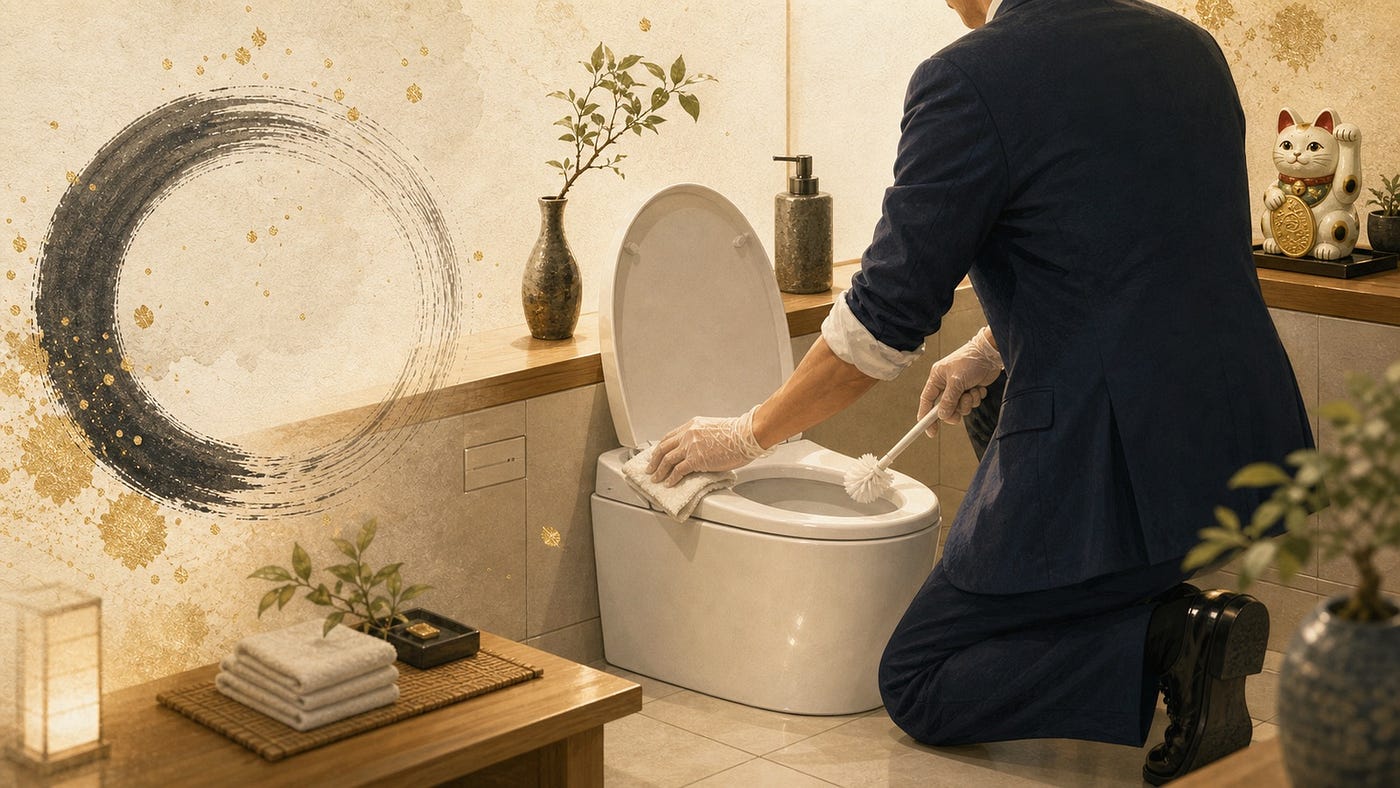
In Japan, There’s a “Right Season” to Buy a Wallet. Here’s Why.
Most of us buy a new wallet whenever the old one falls apart. In Japan, that would make people wince a little. Because there, when you buy…
In Japan, There’s a “Right Season” to Buy a Wallet. Here’s Why.
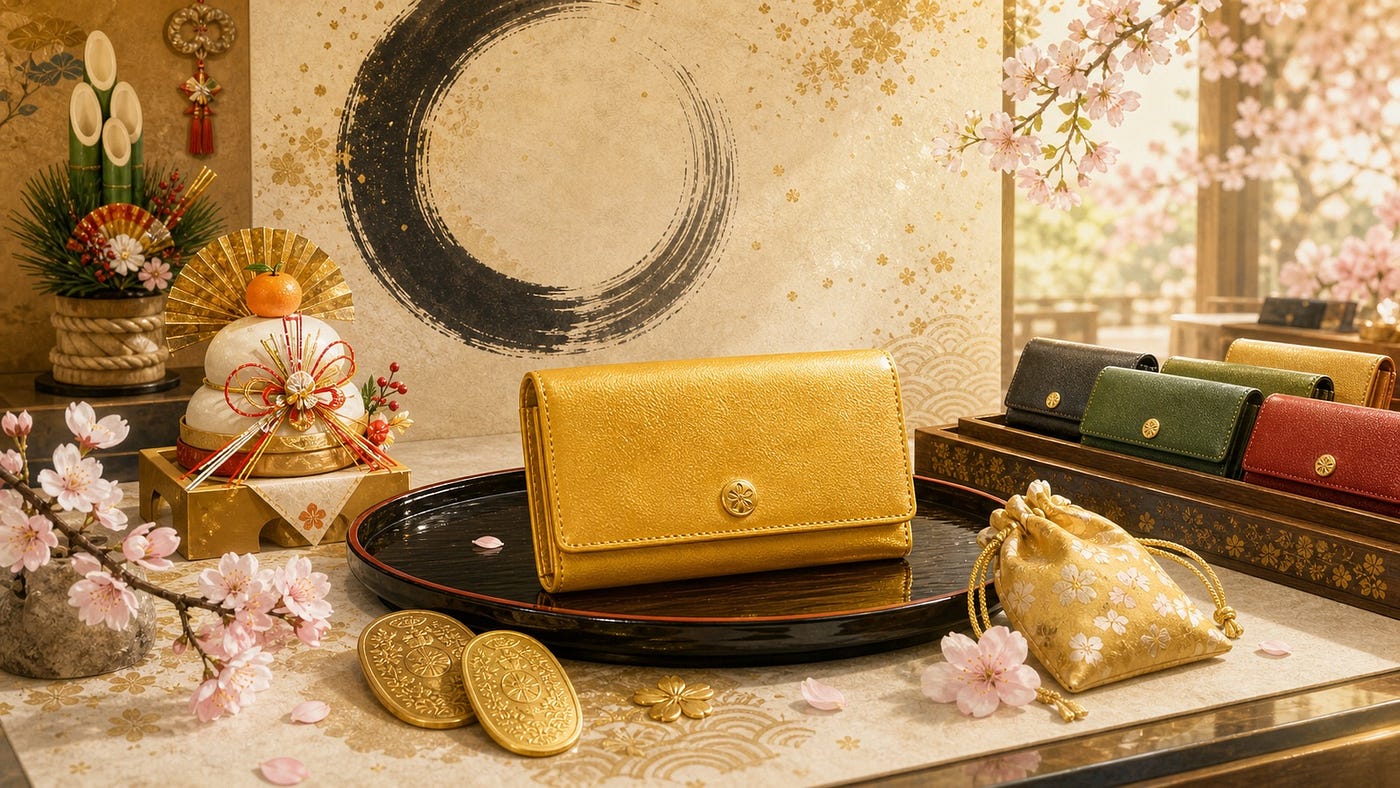
Most of us buy a new wallet whenever the old one falls apart. In Japan, that would make people wince a little. Because there, when you buy your wallet is considered part of the luck.
And the best season? Spring.
A pun that turned into a tradition
The reason is one of those wonderful Japanese word-games that somehow became real-life custom.
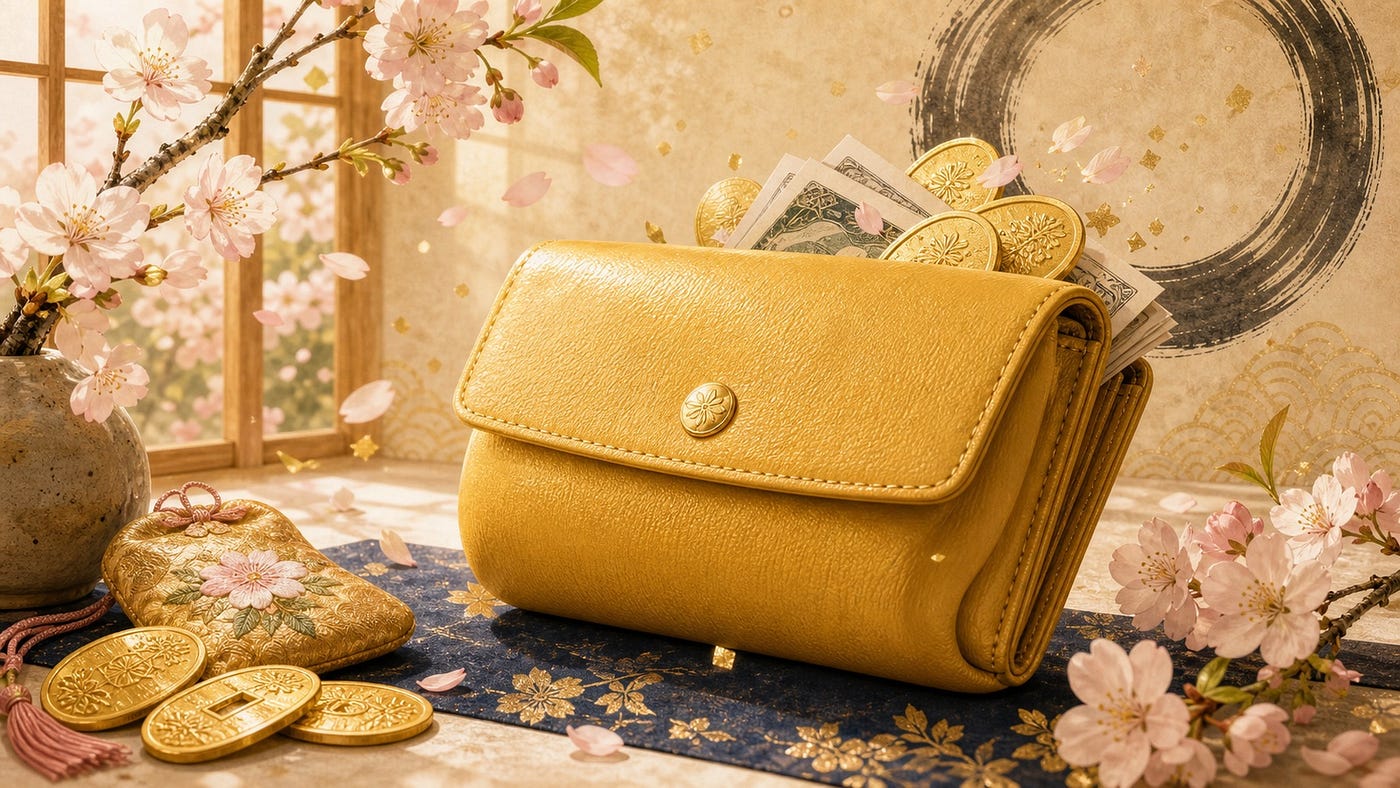
The Japanese word for spring is haru (春). But there’s another haru (張る) that means “to swell” or “to stretch full and taut.” So a “spring wallet” — haru-saifu — sounds exactly like a wallet that’s bursting full of money.
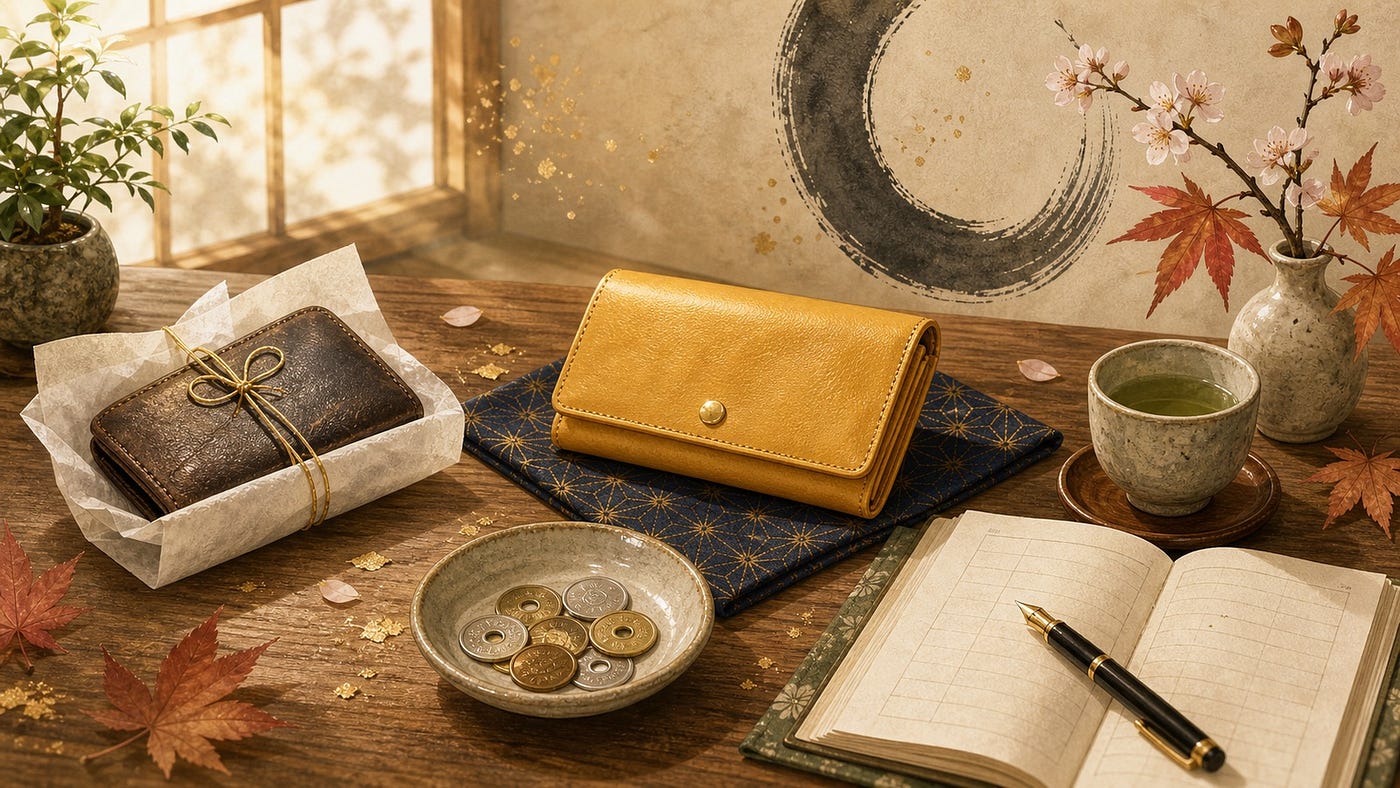
That’s it. That’s the whole logic. And Japanese people adore this kind of word-luck, so much that department stores build entire campaigns around it. Right after New Year, wallet displays appear labeled as haru-saifu promotions, often in lucky gold and yellow. Buying a wallet between the New Year and early spring is considered one of the easiest money-luck moves you can make.
There’s even a runner-up season. Autumn wallets could be called aki-saifu — but aki can also suggest “emptiness,” which sounds awful for a wallet. So clever marketers rebranded them as minori-saifu, “harvest wallets,” full of the year’s abundance. Either way, the message is the same: in Japan, even the timing is part of the ritual.
📖 There are 35 of these Japanese money-luck rituals. See them all in one book →
And there’s a right time to say goodbye, too
If there’s a lucky time to buy a wallet, you won’t be surprised that there’s a rule for retiring one, too.
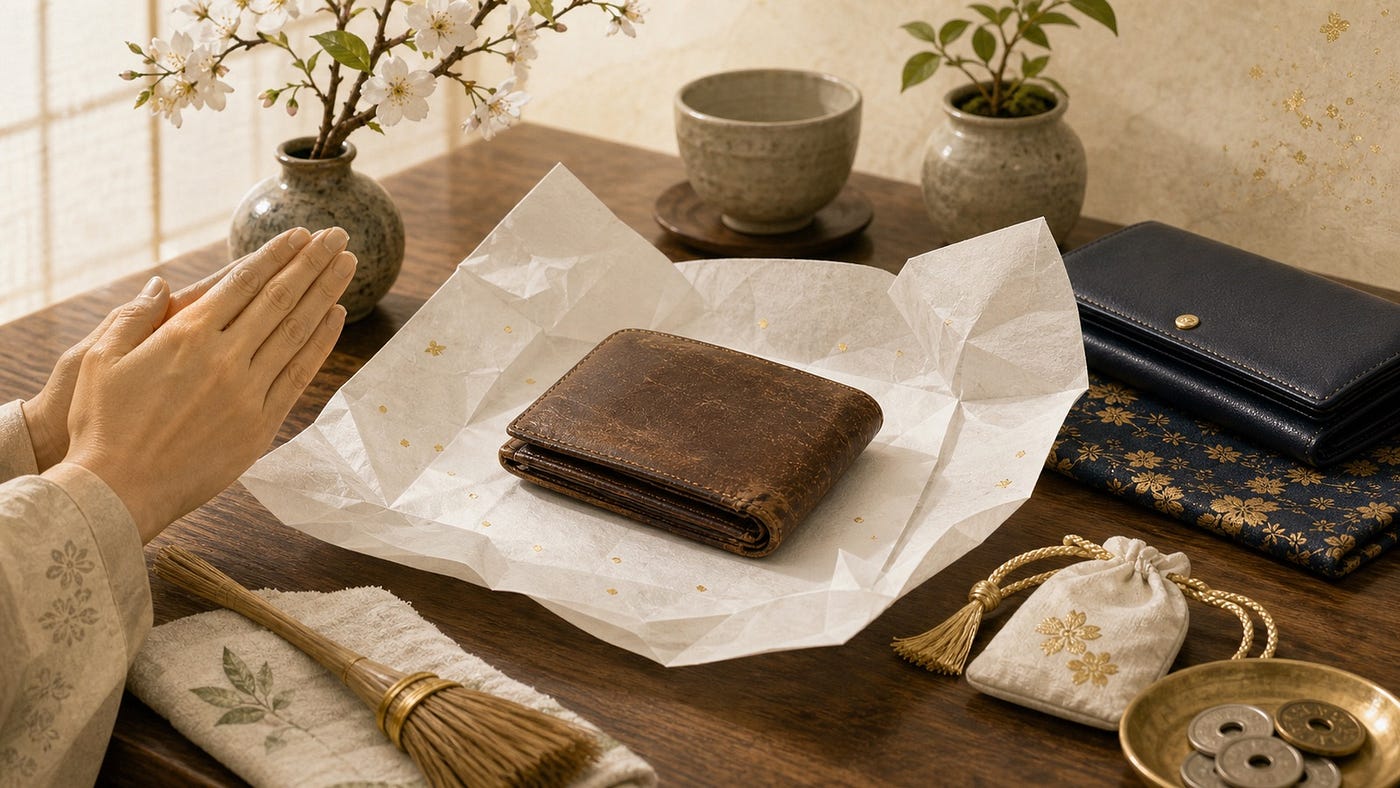
Japanese money wisdom treats a wallet like a battery: it comes charged with luck, and the charge slowly runs down. The commonly quoted lifespan is about three years (sometimes counted as 1,000 days). After that, the wallet is said to be “tired” — the material worn, the shape sagging — and a tired home isn’t somewhere money wants to live.
But here’s the detail I find lovely. You don’t just toss the old one in the bin. The proper way to retire a wallet is with gratitude — thanking it for the money it held and the years it served. Some people wrap it in white paper before letting it go. A few shrines even hold wallet memorial services. You don’t have to go that far, but the underlying idea is worth keeping: things that carried your money deserve a respectful goodbye.
The quiet wisdom underneath
Strip away the puns, and what’s left is a genuinely healthy habit. Buying a wallet with intention, on purpose, at a meaningful moment — and letting go of the old one with thanks — turns a throwaway object into something you actually care for. And people tend to manage money more carefully when the container itself feels valued.
That’s the beauty of Japanese money luck: a smile-worthy superstition on top, a sensible idea underneath.
The season you buy, the color you choose, the three-year rule, even where your wallet “sleeps” at night — the wallet alone fills a whole chapter. I gathered 35 of these Japanese money-luck rituals into one book, and the wallet is only Chapter 1.
The Japanese Art of Money Luck
35 Traditional Japanese Practices for Money Luck and Prosperity — Book 1 of the Japanese Luck Rituals Series.
Available on Kindle and free with Kindle Unlimited.
New to Japanese money luck? Start here →
메타데이터
- post_id
- bed7b8fec4c9
- slug
- in-japan-theres-a-right-season-to-buy-a-wallet-here-s-why-bed7b8fec4c9
- url
- https://medium.com/@ai.art.wakitaitai/in-japan-theres-a-right-season-to-buy-a-wallet-here-s-why-bed7b8fec4c9
- canonical_url
- https://medium.com/@ai.art.wakitaitai/in-japan-theres-a-right-season-to-buy-a-wallet-here-s-why-bed7b8fec4c9
- author_url
- https://medium.com/@ai.art.wakitaitai
- status
- ok
- fetched_at
- 2026-07-13 14:44:14