Medicine River: A Story of Survival and the Legacy of Indian Boarding Schools — A Book Review
My mother filled my childhood with constant cleaning and scrubbing. Get down on those prayer bones, girl, she’d say as she instructed me on…
Medicine River: A Story of Survival and the Legacy of Indian Boarding Schools — A Book Review
My mother filled my childhood with constant cleaning and scrubbing. Get down on those prayer bones, girl, she’d say as she instructed me on how to clean the floor. Often she muttered, We may be Indian, but by God we ain’t dirty! — Mary Annette Pember, Medicine River (pg. 16)
“Dirty and lazy” — that’s what the nuns called her. Mary Annette Pember grew up haunted by the ghosts of her mother’s past and what she experienced in a Catholic Indian boarding school. But there were many secrets still to uncover.
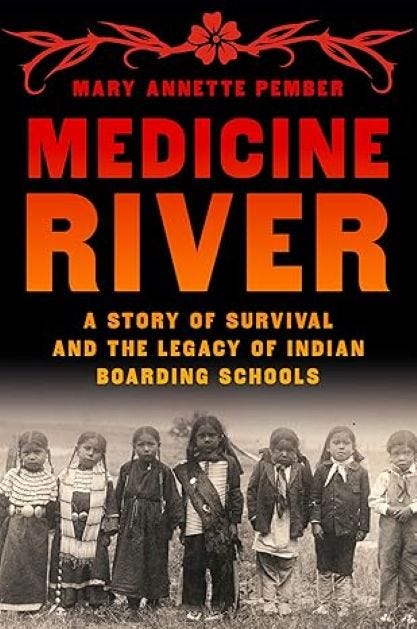
In her memoir, *Medicine River: A Story of Survival and the Legacy of Indian Boarding Schools*, Pember recounts her tumultuous relationship with her mother, Bernice, as she also seeks to discover the traumatic experiences that laid its foundations. But the book covers much more ground than her personal story.
Medicine River is part memoir and part history text. Pember interweaves her mother’s stories and other boarding school survivors’ experiences with an in-depth history of America’s Indian boarding school movement. That policy, she explains, was part of a years-long government policy of subjugation, assimilation, and religious conversion perpetrated against America’s Indigenous peoples.
Bernice and her four siblings, enrolled members of the Bad River Ojibwe tribe, were sent to St. Mary’s Catholic Mission School, locally called the “Sister School,” in 1930 after their parents’ marriage came to a violent end. Bernice was only 5 years old. The school, in northern Wisconsin, was established on the Bad River Reservation in 1883 by the Franciscan order of nuns, the Sisters of Perpetual Adoration.
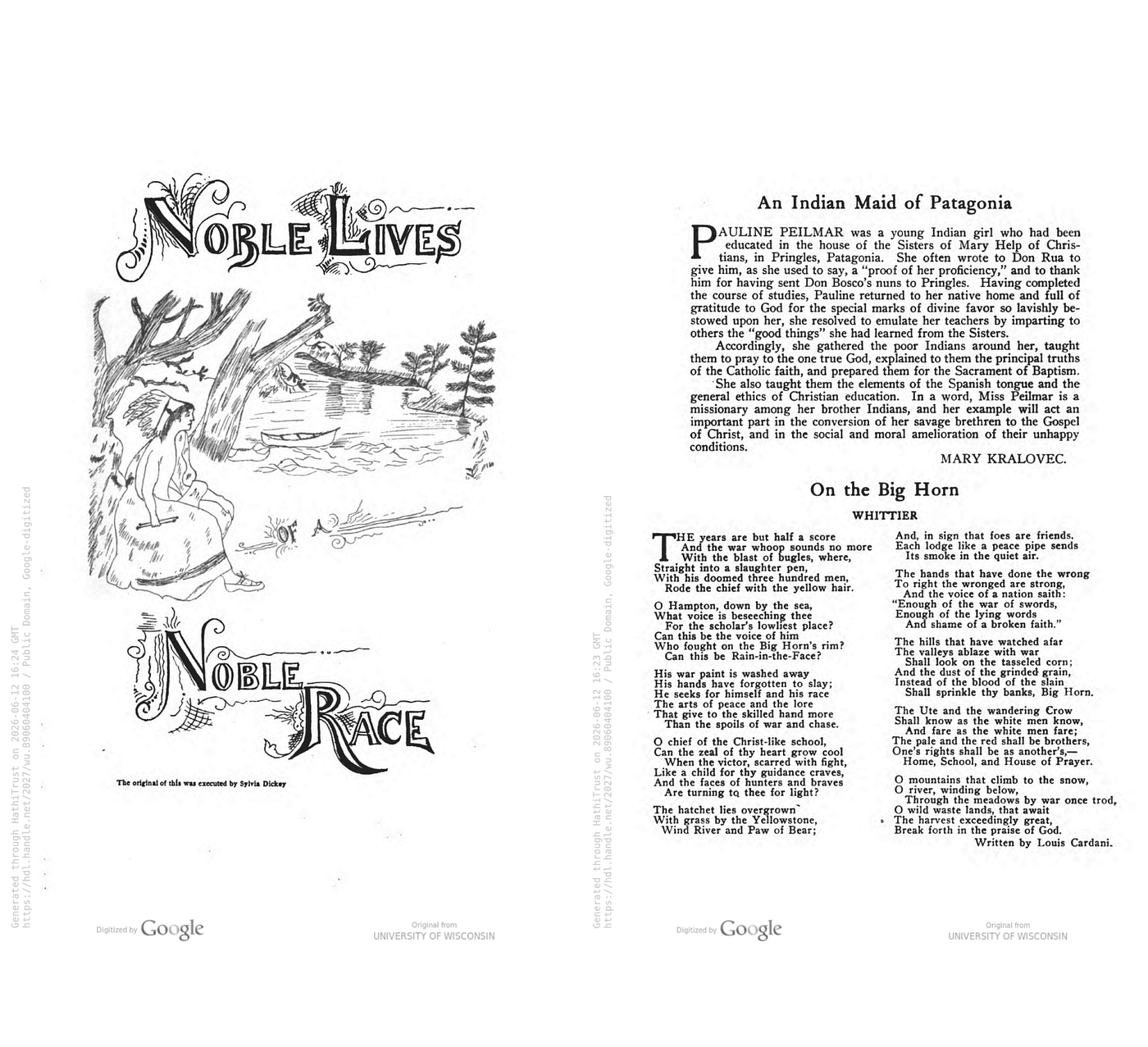
Noble Lives of a Noble Race: A Series of Reproductions by the Pupils of St. Mary’s, Odanah, Wis. (1909). The volume’s “object was simply to acquaint the pupils with the noble qualities and characters of their race…”
During their time at the Sister School the siblings received inhumane and harsh treatment while under a strict daily regimen. Pember describes a scene where Bernice’s brother, nicknamed Rags, was held down while the nuns stuffed stewed onions in his mouth and left him nailed to the meal table overnight. The children there were denied food, publicly beaten, locked in the cellar, and worse. Bernice, in her later years, described vague memories of sexual abuse. Through intensive records searches, Pember reports on widespread illness and horrible living conditions at the schools.
Pember adds to the subject matter by telling the history of her mother’s fractured family outside the school. She also includes a chapter on intergenerational trauma and comes to better understand why her mother behaved the way she did, writing, “For my mother, the triad of bitterness, fear, and shame was a physical presence like thorns forever embedded in the soft tissue of her body. Repeated trauma and the lack of parental affection, essential to our physical development, blunted her ability to show affection and express empathy for her own children.” (pg. 163)
[embed]LaCrosse (Wisconsin) Public Library provides a historical program on the St. Mary’s Catholic Mission School
Eventually Pember deals with her own trauma through drinking. She explains, “Drinking in my family was our only coping mechanism and I embraced it enthusiastically. And it worked. Until it didn’t.” (pg. 154) She tells of her recovery and finds solace in reconnecting with Ojibwe culture and spirituality, sobriety being a requisite for participating in ceremony.
For readers who enjoy both the memoir and history genres, Medicine River is a must read. Difficult as the subject matter is, the reader comes away with a better understanding of the role the government played in tearing Indian families apart through forced separation. And it lays bare the trauma that Indians are still reckoning with today.
More with Mary Annette Pember:
‘Our ancestors risked their lives and freedom’ (Indian Country Today)
The US at 250: A Native Perspective with reporter Mary Annette Pember (KALW’s Your Call)
Woman-Made, Nature-Inspired: Mary Annette Pember (Great Parks Blog)
Q&A: Mary Annette Pember’s New Book Traces the Violent Legacy of Forced Assimilation (The Daily Yonder)
For more information about the history of Indian boarding schools read our blog post here. (SC)
메타데이터
- post_id
- bedb76cf92e5
- slug
- medicine-river-a-story-of-survival-and-the-legacy-of-indian-boarding-schools-a-book-review-bedb76cf92e5
- url
- https://medium.com/walawlibrary/medicine-river-a-story-of-survival-and-the-legacy-of-indian-boarding-schools-a-book-review-bedb76cf92e5
- canonical_url
- https://medium.com/walawlibrary/medicine-river-a-story-of-survival-and-the-legacy-of-indian-boarding-schools-a-book-review-bedb76cf92e5
- author_url
- https://medium.com/@LibraryStaff
- status
- ok
- fetched_at
- 2026-06-13 16:00:06