Primary Data Collection Service Explained for Academic Research
Strong doctoral research depends on evidence that is original, accurate, and well structured. For many scholars, the most demanding phase…
Primary Data Collection Service Explained for Academic Research
Strong doctoral research depends on evidence that is original, accurate, and well structured. For many scholars, the most demanding phase of a PhD is collecting information directly from participants, organizations, or experiments. This is where **Primary Data Collection Service From PhD Assistance **plays a practical role in shaping credible research outcomes. When supported by expert driven PhD courses support services, scholars gain clarity on methods, tools, and execution, helping them move forward with confidence from coursework to thesis submission.
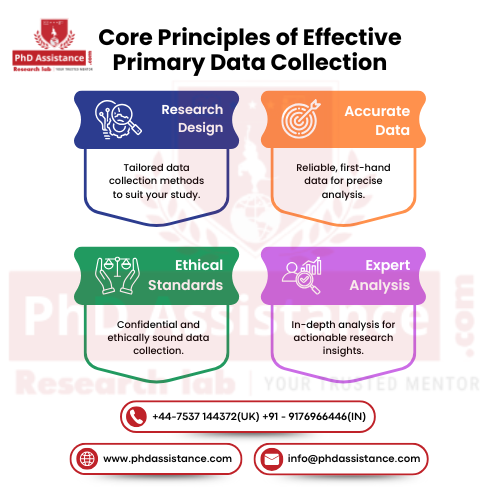
Understanding the value of original data in PhD research
Original data reflects the researcher’s independent effort and analytical thinking. Universities and review committees expect doctoral scholars to justify their arguments using firsthand evidence rather than relying only on published studies. Surveys, interviews, observations, and experiments allow researchers to answer research questions with direct inputs aligned to their objectives.
Without proper guidance, scholars may face issues such as weak questionnaires, unsuitable samples, or inconsistent responses. These problems often lead to repeated revisions or delays. Structured academic support ensures that data collection aligns with the research design taught during PhD coursework.
How PhD courses support services guide research scholars
PhD courses support services connect theoretical learning with real research practice. During coursework, scholars learn about research methodology, sampling techniques, and ethics. Applying these concepts in real settings can be complex. Expert support bridges this gap by offering step by step assistance that follows university guidelines.
From selecting the right research approach to validating tools, scholars receive direction that helps maintain academic standards. This approach also prepares them for discussions with supervisors and research committees.
Key components of an effective data collection process
A systematic approach to collecting original data improves accuracy and reliability. Support services usually focus on the following areas:
Clarifying research objectives Clear objectives determine what data needs to be collected and from whom. Scholars are guided to refine their research questions so that each variable is measurable.
Designing data collection tools Questionnaires, interview schedules, and observation formats are developed based on research variables. Pilot testing helps identify gaps before full scale collection.
Choosing appropriate sampling methods Selecting the right population and sample size is critical for valid results. Scholars learn how to justify their sampling choices based on research scope.
Executing fieldwork efficiently During data gathering, consistency and ethical conduct are monitored. This reduces missing data and response bias.
Preparing data for analysis Collected information is reviewed, cleaned, and organized so it is ready for statistical or qualitative analysis.

Benefits of expert guided primary research support
Using a structured Primary Data Collection Service offers several academic advantages. Scholars save time, avoid common methodological errors, and improve the overall quality of their thesis. Properly collected data strengthens analysis chapters and makes findings more convincing.
Another benefit is reduced stress. Many scholars juggle coursework, publications, and personal responsibilities. Professional guidance helps them follow a realistic timeline without compromising research quality.
Methods commonly supported for doctoral studies
Different disciplines require different data collection methods. PhD courses support services usually assist with:
- Survey based research for management, commerce, education, and social sciences
- Interview driven studies for qualitative and exploratory research
- Experimental data collection for science, engineering, and technology fields
- Case study and observational approaches for applied research areas
Each method is selected based on research objectives, not convenience, which improves academic credibility.
Ethical standards and institutional compliance
Ethical approval is a mandatory part of doctoral research. Scholars must follow rules related to consent, confidentiality, and data protection. Support services guide researchers in preparing ethics applications, consent forms, and participant information sheets.
Following ethical standards not only protects participants but also strengthens the researcher’s academic reputation. Reviewers and examiners closely examine this aspect during evaluation.
Impact of quality data on thesis evaluation
Examiners focus heavily on methodology and data integrity. Clear justification of tools, samples, and procedures reflects strong research training. When data collection is well planned, analysis becomes more meaningful and conclusions more reliable.
High quality data also supports future journal publications and conference presentations. It helps scholars defend their work confidently during viva voce and peer review discussions.
Choosing the right academic support for data collection
Selecting the right **Primary Data Collection Service** within PhD courses support services requires careful consideration. Scholars should look for academic focused guidance, subject specific expertise, and transparent processes. Support should enhance research skills rather than replace the scholar’s involvement.
Reliable services emphasize learning, ethical conduct, and methodological accuracy, which are essential for long term academic growth.
Conclusion
Primary research is the backbone of doctoral studies, but it requires careful planning and execution. With structured guidance from PhD courses support services, scholars can transform complex fieldwork into a systematic and rewarding process.
Effective data collection strengthens the thesis, improves evaluation outcomes, and supports timely completion. Investing in the right academic support helps scholars build research that stands up to scrutiny and contributes meaningful knowledge to their field.
메타데이터
- post_id
- bee6ad75ff46
- slug
- phd-courses-support-services-that-turn-field-research-into-academic-strength-bee6ad75ff46
- url
- https://medium.com/@phdassistance100/phd-courses-support-services-that-turn-field-research-into-academic-strength-bee6ad75ff46
- canonical_url
- https://medium.com/@phdassistance100/phd-courses-support-services-that-turn-field-research-into-academic-strength-bee6ad75ff46
- author_url
- https://medium.com/@phdassistance100
- status
- ok
- fetched_at
- 2026-07-08 07:00:21