What is a UAV? Understanding the Basics
In the last decade, technology has seen explosive growth in the field of unmanned aerial systems. One term that has consistently captured…
What is a UAV? Understanding the Basics
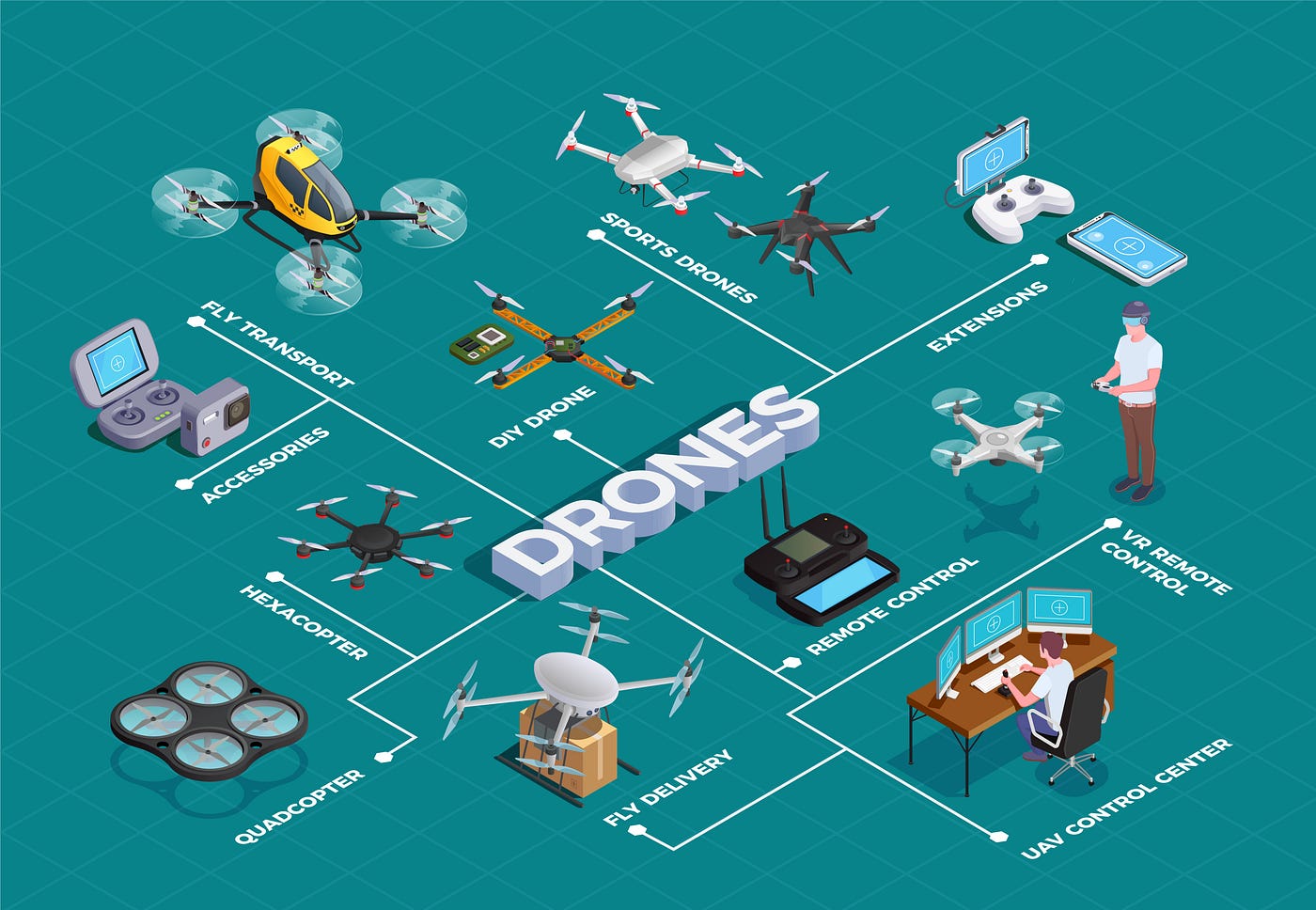
In the last decade, technology has seen explosive growth in the field of unmanned aerial systems. One term that has consistently captured public and industry attention is UAV — short for Unmanned Aerial Vehicle. Whether you’ve seen hobbyists flying drones in parks or read about military-grade surveillance aircraft, UAVs are playing a major role in shaping our future. But what exactly is a UAV, and how do these machines work?
This blog dives deep into the fundamentals of UAVs, their types, components, applications, and how they’re changing the world.
— -
✅ What is a UAV?
A UAV (Unmanned Aerial Vehicle) is an aircraft that can fly without a human pilot onboard. Instead of being directly controlled from inside the vehicle like a traditional aircraft, UAVs are controlled remotely by an operator or autonomously using pre-programmed instructions and onboard systems.
UAVs are a component of a UAS (Unmanned Aerial System), which includes:
The UAV itself A Ground Control Station (GCS) Communication links (radio, satellite, etc.) Launch and recovery equipment Data processing software (in advanced setups)
— -
🧩 Key Components of a UAV
Every UAV, from a small hobby drone to a sophisticated military aircraft, includes several essential components:
- Airframe
The structural design of the UAV. This includes the body, wings, landing gear, and protective casing. Airframes vary depending on use:
Fixed-wing UAV for long-range missions Rotary-wing (quadcopters, hex copters) for hovering and vertical take-off Hybrid VTOLs (Vertical Take-Off and Landing) for both capabilities
- Propulsion System
Enables the UAV to fly. Includes:
Motors or engines Propellers or rotors Power source (usually lithium-polymer batteries or small gas engines)
- Flight Controller
The brain of the drone. It processes:
Sensor data (gyroscope, accelerometer, magnetometer) GPS information User commands Stabilizes the aircraft automatically
- GPS and Navigation System
Allows the UAV to determine its position and follow pre-set routes or waypoints autonomously.
- Sensors and Payload
UAVs can carry a wide variety of sensors depending on their mission:
Cameras (HD, thermal, infrared) LiDAR (Light Detection and Ranging) Multispectral sensors Gas and radiation detectors
- Communication System
Handles data transmission between the UAV and ground control. Can include:
Radio frequency links (common for hobby drones) Satellite communication (for long-range or military drones) Cellular or Wi-Fi links (emerging in delivery drones)
- Power Supply
Typically rechargeable lithium-polymer (Li-Po) batteries, but advanced UAVs may use:
Solar panels Hydrogen fuel cells Combustion engines
— -
🛠️ Types of UAVs
UAVs come in various shapes and sizes, designed for different applications:
➤ Based on Size
Nano UAVs — palm-sized drones used for indoor navigation or surveillance Micro UAVs — commonly used for recreational and semi-professional purposes Small UAVs — used by military or industries for field operations Medium UAVs— ( Long Endurance) drones for strategic missions and Higher PAYLOAD capacity
➤ Based on Wing Type
Fixed-Wing Drones — resemble traditional airplanes; long endurance and efficient for large area coverage Rotary-Wing Drones— includes quadcopters and helicopters; suitable for hovering and precise maneuvering Hybrid Drones — combine the best of both types, capable of VTOL and efficient cruising
➤ Based on Range
Short-range UAVs— 5–150 km, usually for consumer or commercial use Medium-range UAVs — up to 650 km, used in agriculture, surveillance, etc. Long-range UAVs — military or scientific research applications, often satellite-linked
— -
🌐 Real-World Applications of UAVs
UAVs are being deployed across dozens of industries. Here are some major areas where they make a big impact:
📸 Aerial Photography & Videography
Used by filmmakers, journalists, and content creators Enables unique shots previously only possible by helicopters
🚜 Agriculture
Precision farming: monitoring crop health, soil analysis, and irrigation planning UAVs equipped with multispectral sensors detect plant diseases early
🏗️ Construction & Infrastructure
Mapping construction sites Inspecting bridges, towers, pipelines, and rooftops without manual labor
🛰️ Surveillance & Security
Border monitoring and urban surveillance Crowd control and event monitoring
🏥 Emergency Response
Delivering medicines, vaccines, or defibrillators in hard-to-reach areas Assessing natural disaster damage or locating victims
📦 Logistics & Delivery
Companies like Amazon, Zipline, and UPS are testing drones for same-day delivery Efficient in remote areas where traditional transport is slow
🛡️ Military & Defense
Reconnaissance, target tracking, and even combat missions Some UAVs are designed to carry weapons or electronic warfare equipment
— -
⚖️ Advantages of UAVs
Lower Operational Costs: No need for pilots or expensive aviation infrastructure Reduced Risk: Safe deployment in dangerous or inaccessible areas High Accuracy: Equipped with precise GPS and sensors Scalability: Drones can be deployed in fleets for widespread coverage Real-time Data: Immediate feedback and live-streaming capabilities
— -
⚠️ Challenges & Considerations
Despite their promise, UAVs face several hurdles:
Battery Limitations: Most consumer drones fly for 20–40 minutes only Weather Sensitivity: Many UAVs can’t operate well in rain, wind, or snow Regulatory Restrictions: Flight zones, altitude, and data use are regulated Privacy & Security: Potential for misuse, surveillance, or cyberattacks Airspace Integration: Risk of collisions with manned aircraft
— -
🔮 The Future of UAVs
The UAV industry is expected to grow exponentially. Advances in AI, machine learning, 5G communication, and battery technology are enabling drones to:
Fly longer distances Operate autonomously Handle complex missions like swarm operations Carry heavier payloads, including people (in the case of air taxis)
Government agencies worldwide are also working to build UAV Traffic Management (UTM) systems to safely integrate drones into national airspaces.
— -📝 Conclusion
Unmanned Aerial Vehicles are more than just flying gadgets; they are a critical technology of the 21st century. From simplifying delivery logistics to transforming agriculture and surveillance, UAVs are here to stay. As the technology matures and regulations adapt, UAVs will continue to reshape the sky — and the way we interact with it.
— -
Looking to learn more about UAVs or start a drone-related project? Stay tuned for our upcoming posts on drone regulations, how to get certified, and the best drones for beginners.
— -
메타데이터
- post_id
- bee82d8a7ab6
- slug
- what-is-a-uav-understanding-the-basics-bee82d8a7ab6
- url
- https://medium.com/@vipintdt/what-is-a-uav-understanding-the-basics-bee82d8a7ab6
- canonical_url
- https://medium.com/@vipintdt/what-is-a-uav-understanding-the-basics-bee82d8a7ab6
- author_url
- https://medium.com/@vipintdt
- status
- ok
- fetched_at
- 2026-07-23 18:10:52