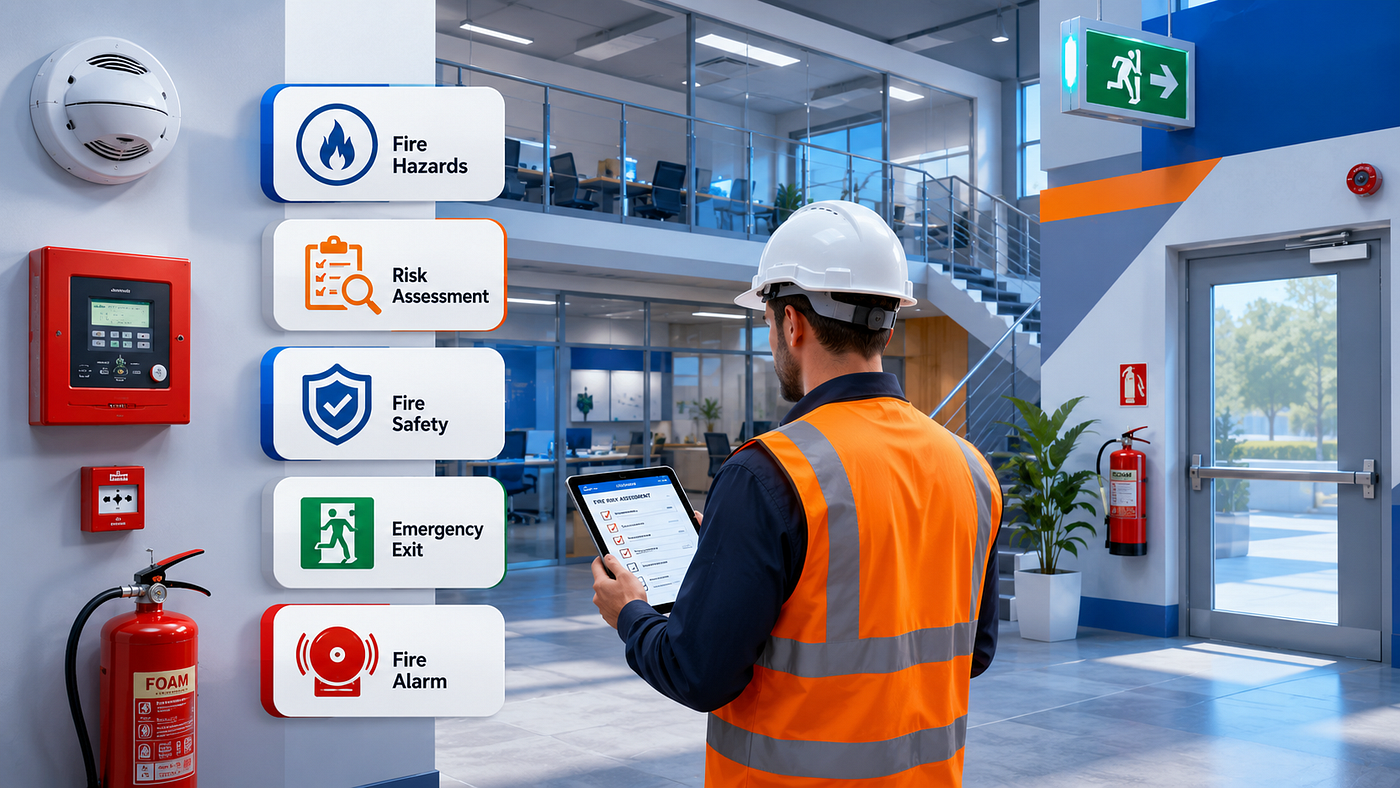
How Fire Risk Assessment Improves Business Continuity
Every business faces risks that can disrupt daily operations, but fire remains one of the most destructive and costly threats. A single…
How Fire Risk Assessment Improves Business Continuity
Every business faces risks that can disrupt daily operations, but fire remains one of the most destructive and costly threats. A single fire incident can damage property, halt production, interrupt customer services, compromise employee safety, and lead to significant financial losses. Whether operating a small office, a manufacturing facility, a healthcare centre, a retail store, or a large industrial site, organisations must prepare for fire-related risks before they become business-critical emergencies.
Many organisations view a fire risk assessment simply as a legal requirement. While compliance with fire safety legislation is essential, its value extends far beyond meeting regulatory obligations. A professionally conducted fire risk assessment helps organisations identify hazards, reduce the likelihood of fire incidents, protect valuable assets, minimise operational disruptions, and strengthen long-term business resilience.
Business continuity depends on an organisation’s ability to continue delivering products and services during unexpected events. Fire risk assessments contribute directly to this objective by preventing avoidable incidents, supporting emergency preparedness, improving recovery planning, and reducing downtime after an emergency. Instead of reacting to disasters, businesses can take proactive measures that protect employees, customers, operations, and reputation.
In today’s competitive environment, clients, insurers, investors, and regulatory authorities increasingly expect businesses to demonstrate effective risk management practices. Companies that invest in comprehensive fire risk assessments are often better positioned to maintain customer confidence, secure insurance coverage, comply with legal requirements, and recover more quickly from disruptive events.
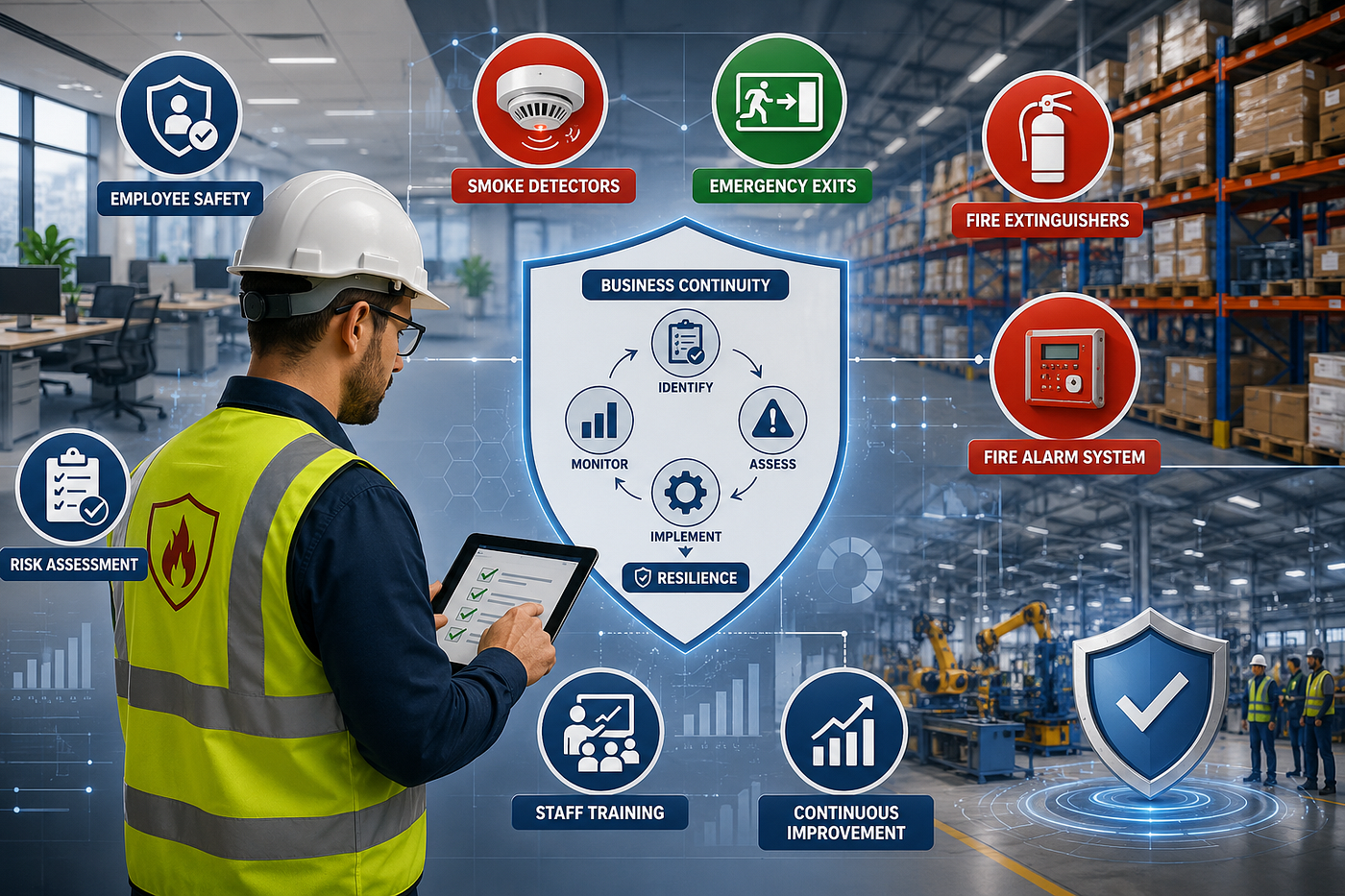
What Is Business Continuity?
Business continuity refers to an organisation’s ability to maintain essential operations before, during, and after disruptive events. The objective is not only to survive an incident but also to minimise operational interruptions, protect people and assets, and restore normal business activities as quickly as possible.
Disruptions can result from various incidents, including:
- Fires
- Electrical failures
- Flooding
- Cyberattacks
- Equipment breakdowns
- Natural disasters
- Utility failures
- Hazardous material incidents
- Supply chain disruptions
- Human error
A well-prepared organisation develops systems and procedures that allow critical operations to continue even when unexpected events occur.
The Core Objectives of Business Continuity
An effective business continuity strategy focuses on several key objectives:
- Protecting employees and visitors
- Safeguarding physical and digital assets
- Maintaining customer services
- Minimising operational downtime
- Reducing financial losses
- Preserving organisational reputation
- Meeting legal and regulatory obligations
- Supporting rapid recovery after incidents
Fire risk assessments play an important role in achieving each of these objectives by reducing the likelihood and impact of fire-related disruptions.
Why Fire Is One of the Greatest Threats to Business Continuity
Fire incidents often develop rapidly and can affect every aspect of an organisation simultaneously. Unlike many other operational risks, fires can damage buildings, destroy equipment, interrupt communications, halt production, and endanger lives within minutes.
The consequences may include:
- Temporary or permanent business closure
- Loss of inventory and stock
- Damage to machinery and infrastructure
- Injury to employees or visitors
- Lost customer confidence
- Delayed projects
- Contract penalties
- Insurance claims
- Regulatory investigations
- Legal liabilities
Even relatively small fires can disrupt operations for weeks if emergency planning is inadequate.
For organisations operating in sectors such as manufacturing, healthcare, logistics, construction, hospitality, education, and retail, prolonged downtime can have severe financial and operational consequences.
What Is a Fire Risk Assessment?
A fire risk assessment is a systematic process used to identify fire hazards, evaluate potential risks, determine who may be affected, and implement suitable control measures to reduce the likelihood and consequences of a fire.
Rather than focusing solely on fire prevention, a fire risk assessment evaluates how effectively an organisation can prevent, detect, contain, and respond to fire incidents.
It provides decision-makers with practical recommendations that improve workplace safety while supporting uninterrupted business operations.
The Primary Goals of a Fire Risk Assessment
A comprehensive fire risk assessment aims to:
- Identify potential fire hazards
- Evaluate ignition sources
- Assess combustible materials
- Review fire detection systems
- Examine emergency escape routes
- Verify fire protection equipment
- Assess evacuation procedures
- Identify vulnerable occupants
- Recommend corrective actions
- Reduce overall organisational risk
Each recommendation contributes to reducing the likelihood of operational disruption caused by fire.
Why Fire Risk Assessments Are More Than a Legal Requirement
Many organisations complete fire risk assessments only because legislation requires them to do so. While compliance is important, this approach often overlooks the broader business value of effective fire risk management.
A proactive fire risk assessment supports:
- Business resilience
- Operational continuity
- Financial stability
- Employee confidence
- Investor assurance
- Customer trust
- Insurance risk reduction
- Organisational sustainability
Businesses that treat fire risk assessments as strategic management tools often experience fewer disruptions and recover more efficiently when incidents occur.
How Fire Risk Assessment Supports Business Continuity
Business continuity begins long before an emergency occurs. Preparation, prevention, and planning determine how successfully an organisation responds to unexpected events.
A fire risk assessment strengthens every stage of the business continuity lifecycle.
Stage 1: Identifying Potential Threats
Every workplace contains unique fire hazards.
Examples include:
- Faulty electrical installations
- Overloaded power outlets
- Poor housekeeping
- Flammable liquids
- Gas cylinders
- Hot work activities
- Cooking equipment
- Heating systems
- Smoking areas
- Chemical storage
By identifying these hazards early, organisations can reduce the likelihood of incidents that interrupt business operations.
Stage 2: Evaluating Business Impact
Not every fire hazard presents the same level of organisational risk.
During the assessment, professionals evaluate:
- Likelihood of ignition
- Potential fire spread
- Number of people at risk
- Value of affected assets
- Operational importance of affected areas
- Recovery complexity
- Possible financial impact
This enables organisations to prioritise resources where they are needed most.
Stage 3: Implementing Preventive Measures
Once hazards have been identified, suitable control measures are introduced.
Examples include:
- Improving electrical safety
- Installing fire-resistant materials
- Upgrading fire detection systems
- Maintaining extinguishers
- Improving housekeeping
- Controlling ignition sources
- Enhancing emergency lighting
- Protecting escape routes
Preventive measures significantly reduce operational risk.
Stage 4: Preparing for Emergencies
Even with effective prevention, some fire incidents may still occur.
Fire risk assessments help organisations prepare through:
- Emergency evacuation planning
- Staff training
- Fire drills
- Incident response procedures
- Communication protocols
- Emergency equipment inspections
- Assembly point planning
Prepared organisations respond more efficiently during emergencies, reducing injuries and operational delays.
Stage 5: Continuous Improvement
Business environments constantly change.
Examples include:
- Office renovations
- New production equipment
- Increased occupancy
- Process changes
- New chemicals
- Warehouse expansion
- Updated legislation
Fire risk assessments should therefore be reviewed regularly to ensure fire safety measures remain effective and aligned with operational needs.
The Connection Between Fire Risk Assessment and Operational Resilience
Operational resilience refers to an organisation’s ability to continue delivering critical services despite disruptions.
Fire risk assessments contribute to operational resilience by helping organisations:
- Prevent avoidable incidents
- Protect critical infrastructure
- Reduce emergency response time
- Improve decision-making
- Support crisis management
- Strengthen recovery planning
- Protect essential services
- Maintain customer commitments
Instead of reacting to emergencies, resilient organisations anticipate risks and implement controls before problems occur.
Key Business Functions Protected by Fire Risk Assessments
Every organisation relies on essential functions that keep operations running smoothly.
A fire risk assessment helps protect:
- Production facilities
- Office operations
- Warehouses
- Data and IT infrastructure
- Customer service centres
- Supply chain operations
- Distribution networks
- Financial systems
- Communication systems
- Critical documentation
Protecting these functions ensures that businesses can continue operating even when unexpected incidents occur.
Fire Risk Assessment as Part of Enterprise Risk Management
Modern organisations no longer manage fire safety in isolation. Instead, fire risk assessments are integrated into wider enterprise risk management (ERM) frameworks.
This approach allows leaders to evaluate fire risks alongside other strategic threats such as cybersecurity, environmental hazards, financial risks, and operational disruptions.
By incorporating fire risk assessments into broader risk management processes, organisations can:
- Make informed investment decisions
- Allocate resources more effectively
- Improve governance and compliance
- Enhance organisational resilience
- Support long-term business sustainability
This strategic perspective transforms fire risk assessment from a compliance activity into a valuable management tool that supports overall business performance.
Benefits of Taking a Proactive Rather Than Reactive Approach
Many organisations only review fire safety after an incident has occurred. Unfortunately, waiting until after a fire often results in higher costs, longer downtime, and greater reputational damage.
A proactive approach offers significant advantages.
Proactive Fire Risk Assessment Reactive Fire Management Identifies hazards before incidents occurResponds only after damage has occurredReduces likelihood of business interruptionFaces unexpected operational shutdownsProtects employees and visitorsIncreases safety risksMinimises repair and recovery costsOften results in expensive emergency repairsSupports insurance and complianceMay lead to higher premiums or legal actionStrengthens business continuityProlongs recovery after incidents
Businesses that invest in prevention are generally better equipped to maintain operations, protect stakeholders, and recover quickly from unforeseen events.
Why Business Leaders Should View Fire Risk Assessments as an Investment
The cost of conducting a professional fire risk assessment is typically small when compared with the financial impact of a serious fire incident.
A single assessment can help organisations:
- Avoid costly operational downtime
- Protect valuable assets
- Reduce insurance-related risks
- Prevent legal penalties
- Improve employee confidence
- Safeguard customer relationships
- Strengthen long-term business resilience
- Support sustainable growth
Rather than being viewed solely as a compliance expense, a fire risk assessment should be recognised as an investment in operational stability and business continuity.
- Documents
- IT infrastructure
- Data centres
- Electrical systems
- Specialist equipment
Once risks have been identified, suitable control measures can be introduced to minimise damage during a fire.
Protecting High-Value Equipment
In industries such as manufacturing, healthcare, engineering, and research, specialised equipment represents a significant investment.
Fire risk assessments may recommend:
- Automatic fire suppression systems
- Fire-resistant storage rooms
- Electrical load monitoring
- Improved ventilation
- Routine maintenance schedules
- Heat detection systems
Protecting critical equipment reduces recovery time and prevents lengthy operational shutdowns.
Improving Employee Safety and Business Resilience
Employees are the most valuable resource in any organisation. Their safety directly affects business continuity.
When workers feel confident that fire risks are managed effectively, they are more likely to remain productive, engaged, and prepared during emergencies.
Fire risk assessments improve employee safety by:
- Identifying workplace hazards
- Improving evacuation procedures
- Providing safer working environments
- Supporting fire safety training
- Reducing confusion during emergencies
- Protecting vulnerable individuals
- Enhancing emergency communication
A well-trained workforce responds more effectively during incidents, reducing injuries and minimising operational disruption.
The Role of Fire Safety Training
Even the most detailed fire risk assessment cannot protect an organisation if employees do not understand their responsibilities.
Training should cover:
- Recognising fire hazards
- Safe evacuation procedures
- Fire alarm response
- Use of fire extinguishers where appropriate
- Emergency reporting procedures
- Responsibilities of fire wardens
- Assembly point procedures
Regular training ensures that emergency plans remain effective as the organisation grows and changes.
Protecting Business Reputation
Reputation is one of the most valuable assets a business owns. A serious fire incident can quickly damage public confidence, especially if investigations reveal poor fire safety and risk management.
Customers, investors, regulators, and business partners increasingly expect organisations to demonstrate responsible risk management.
A professional fire risk assessment helps businesses:
- Demonstrate commitment to safety
- Meet client compliance requirements
- Build stakeholder confidence
- Support regulatory inspections
- Protect brand reputation
- Strengthen investor trust
Businesses with strong safety records often enjoy greater customer loyalty and improved commercial opportunities.
Why Reputation Matters After a Fire
Following a fire incident, organisations may face questions such as:
- Were fire hazards identified?
- Were legal responsibilities fulfilled?
- Were employees properly trained?
- Was emergency equipment maintained?
- Were evacuation procedures effective?
A documented and regularly reviewed fire risk assessment provides evidence that reasonable steps were taken to manage fire risks responsibly.
Supporting Insurance and Risk Management
Insurance providers assess the level of risk before determining policy terms and premiums. Businesses with effective fire safety management often present a lower insurance risk than organisations with poor fire prevention practices.
Although premiums depend on many factors, fire risk assessments can support insurance discussions by demonstrating that an organisation actively manages fire-related risks.
Benefits may include:
- Improved insurer confidence
- Better documentation during claims
- Reduced likelihood of uninsured losses
- Evidence of preventive maintenance
- Support for risk improvement programmes
Maintaining accurate fire safety records also simplifies post-incident investigations and claims management.
Strengthening Supply Chain Resilience
Modern businesses depend on complex supply chains. A fire affecting one facility can interrupt deliveries, delay production, and impact customers across multiple locations.
Fire risk assessments help organisations identify supply chain vulnerabilities before disruptions occur.
Areas to consider include:
- Warehouses storing critical inventory
- Distribution centres
- Loading bays
- Supplier facilities
- Manufacturing plants
- Cold storage facilities
- Transport hubs
By protecting these critical locations, businesses improve supply chain resilience and reduce the risk of widespread operational disruption.
Building Supply Chain Continuity
Organisations should work with suppliers to encourage strong fire safety practices.
Good continuity planning may include:
- Identifying alternative suppliers
- Diversifying storage locations
- Protecting high-value inventory
- Maintaining emergency communication channels
- Reviewing supplier risk assessments
- Establishing contingency delivery arrangements
These measures help maintain customer service even if one part of the supply chain experiences a fire-related disruption.
Supporting Faster Recovery After a Fire
Recovery begins long before an emergency occurs. Organisations that prepare in advance generally resume operations much faster than those that rely solely on reactive measures.

A fire risk assessment supports recovery by identifying:
- Critical assets requiring priority protection
- Essential business functions
- Emergency contacts
- Recovery procedures
- Alternative work locations
- Temporary operational arrangements
- Communication responsibilities
Clear planning reduces confusion and accelerates the return to normal operations.
Business Recovery Timeline
The following stages illustrate how fire risk assessments contribute throughout the recovery process:
StageRole of the Fire Risk AssessmentBefore the IncidentIdentify hazards and implement preventive controlsDuring the IncidentSupport safe evacuation and emergency responseImmediately AfterAssist damage assessment and incident documentationRecovery PhasePrioritise restoration of critical operationsLong-Term ImprovementReview lessons learned and strengthen future controls
This continuous improvement cycle enhances organisational resilience over time.
Fire Risk Assessments and Digital Business Continuity
Technology has transformed how organisations manage fire safety. Modern fire risk assessments increasingly incorporate digital tools that improve monitoring, reporting, and decision-making.
Examples include:
- Digital inspection checklists
- Cloud-based fire safety records
- QR code equipment tracking
- Smart smoke and heat detectors
- Internet of Things (IoT) sensors
- Automated maintenance reminders
- Mobile inspection applications
- Digital compliance dashboards
These technologies provide real-time visibility into fire safety performance, helping organisations identify issues before they escalate into serious incidents.
Measuring the Return on Investment (ROI) of Fire Risk Assessments
Some business leaders view fire risk assessments as an unavoidable expense. In reality, they often deliver measurable returns by preventing losses that could far exceed the cost of the assessment.
Potential returns include:
- Reduced operational downtime
- Lower repair and replacement costs
- Fewer fire-related incidents
- Improved employee productivity
- Better regulatory compliance
- Enhanced customer confidence
- Stronger insurance documentation
- Increased operational resilience
Rather than measuring success only by the absence of fires, organisations should evaluate how fire risk assessments contribute to long-term stability, profitability, and sustainable growth.
Practical Example: How Fire Risk Assessment Protects Business Continuity
Consider a medium-sized logistics company operating a busy distribution warehouse.
During a routine fire risk assessment, several issues are identified:
- Electrical panels are overloaded.
- Emergency exits are partially blocked by stored pallets.
- Fire extinguishers have missed scheduled maintenance.
- Flammable packaging materials are stored too close to electrical equipment.
- Employees have not participated in a fire drill for over a year.
Fire Risk Assessments Across Different Industries
Although the principles of fire risk assessment are consistent, the specific hazards and continuity challenges vary significantly between industries. Tailoring fire safety strategies to the operational environment helps organisations reduce risk, protect critical assets, and recover more quickly after an incident.

Manufacturing Industry
Manufacturing facilities often contain high-powered machinery, combustible materials, production lines, welding activities, and complex electrical systems. A fire can stop production for days or even months, affecting customer orders and contractual obligations.
A comprehensive fire risk assessment should focus on:
- Machinery overheating
- Hot work operations
- Electrical equipment maintenance
- Chemical storage
- Dust accumulation
- Fire suppression systems
- Emergency shutdown procedures
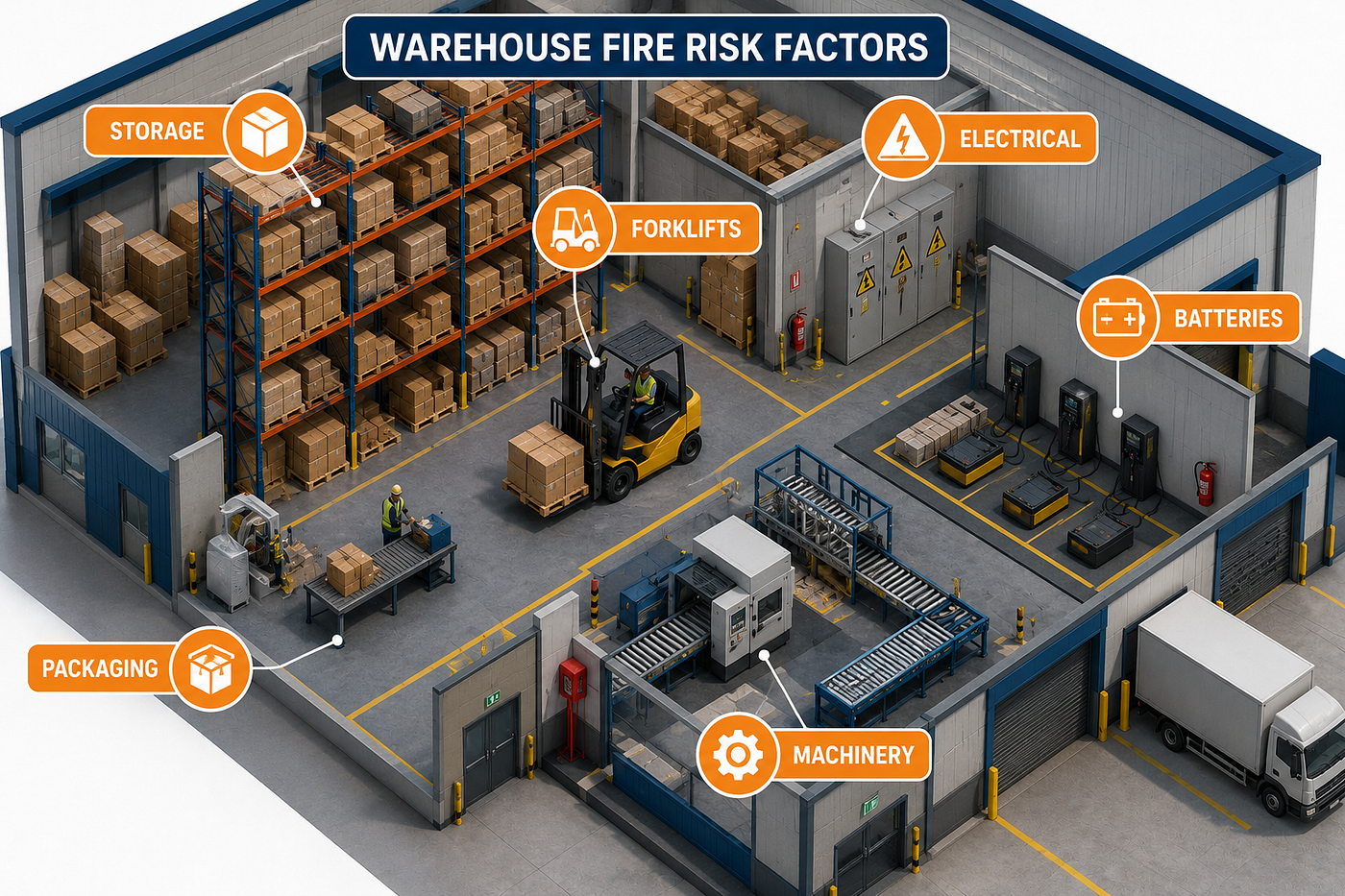
Warehousing and Logistics
Warehouses store large quantities of inventory, packaging materials, and valuable equipment. Fire can spread rapidly in high-rack storage environments if hazards are not properly managed.
Important assessment areas include:
- Storage arrangements
- Pallet management
- Forklift charging stations
- Battery storage
- Loading bays
- Fire compartmentation
- Smoke ventilation systems
Office Buildings
Office environments may appear low risk, but electrical equipment, overloaded sockets, kitchen facilities, paper archives, and server rooms present significant fire hazards.
Assessments should evaluate:
- Electrical installations
- Portable appliance safety
- Escape routes
- Emergency lighting
- Fire alarm systems
- Server room protection
- Staff awareness
Healthcare Facilities
Hospitals, clinics, and care homes must protect patients who may not be able to evacuate independently.
Fire risk assessments should include:
- Progressive horizontal evacuation
- Medical gas storage
- Electrical medical equipment
- Oxygen-rich environments
- Staff emergency training
- Patient evacuation procedures
Educational Institutions
Schools, colleges, and universities accommodate large numbers of students and staff every day.
Fire risk assessments should examine:
- Classroom occupancy
- Laboratory hazards
- Assembly halls
- Kitchen facilities
- Student accommodation
- Emergency evacuation drills
Retail Businesses
Retail stores face challenges such as high customer occupancy, seasonal stock increases, decorative displays, and extended operating hours.
Key assessment priorities include:
- Display layouts
- Emergency exits
- Stockroom safety
- Electrical displays
- Public evacuation
- Fire detection systems
Construction Sites
Construction sites experience constant changes, making fire risk assessments particularly important.
Common hazards include:
- Temporary electrical installations
- Fuel storage
- Gas cylinders
- Hot work permits
- Site accommodation
- Waste accumulation
- Temporary escape routes
Integrating Fire Risk Assessment into a Business Continuity Plan
A fire risk assessment is most effective when it forms part of a wider business continuity strategy rather than operating as a separate compliance document.
Business continuity planning should incorporate fire risk assessment findings into every stage of emergency preparedness.
Step 1: Identify Critical Business Functions
Determine which activities are essential for maintaining operations.
Examples include:
- Customer support
- Manufacturing
- IT systems
- Finance
- Distribution
- Procurement
- Communications
Step 2: Identify Fire-Related Risks
Assess how fire could affect each critical function.
Questions to consider include:
- What assets could be damaged?
- Which departments would stop operating?
- How long could operations continue?
- What would customers experience?
- Which suppliers would be affected?
Step 3: Develop Control Measures
Control measures may include:
- Fire-resistant construction
- Automatic suppression systems
- Emergency shutdown procedures
- Backup power supplies
- Alternative work locations
- Digital document storage
- Staff training
Step 4: Create Recovery Procedures
Recovery planning should identify:
- Priority business functions
- Responsible personnel
- Communication procedures
- Alternative suppliers
- Equipment replacement plans
- Insurance contacts
- Recovery timelines
Step 5: Review and Improve
Business continuity is an ongoing process.
Review assessments whenever there are:
- Building alterations
- Operational changes
- New equipment
- Process modifications
- Staff increases
- Fire incidents
- Changes in legislation
Fire Risk Assessment Implementation Roadmap
Organisations can strengthen business continuity by following a structured implementation process.
StageObjectiveExpected OutcomeAssess Current RisksIdentify hazards and vulnerabilitiesClear understanding of fire risksPrioritise ImprovementsAddress high-risk issues firstFaster reduction in organisational riskImplement Control MeasuresInstall and improve fire safety systemsBetter prevention and protectionTrain EmployeesImprove emergency preparednessFaster and safer emergency responseTest Emergency PlansConduct fire drills and simulationsIncreased organisational confidenceMonitor PerformanceReview inspections and maintenanceOngoing compliance and resilienceReview AssessmentUpdate after changes or incidentsContinuous improvement
Common Mistakes That Threaten Business Continuity
Many organisations unknowingly increase their fire risk through avoidable mistakes.
Treating Fire Risk Assessment as a One-Time Exercise
Buildings, equipment, staff numbers, and business activities constantly change.
Failing to review assessments regularly may leave new hazards unidentified.
Ignoring Minor Hazards
Small issues such as damaged cables, blocked exits, or poor housekeeping can eventually contribute to serious incidents.
Addressing minor hazards early is far more cost-effective than managing the consequences of a fire.
Failing to Train Employees
Even well-designed fire safety systems become ineffective if employees do not understand:
- Emergency procedures
- Evacuation routes
- Fire reporting processes
- Their individual responsibilities
Regular refresher training is essential.
Poor Maintenance of Fire Protection Equipment
Fire extinguishers, alarm systems, emergency lighting, smoke detectors, and fire doors require routine inspection and maintenance.
Neglected equipment may fail when it is needed most.
Inadequate Documentation
Missing or outdated records can create difficulties during inspections, insurance claims, or post-incident investigations.
Maintain accurate records of:
- Fire risk assessments
- Maintenance activities
- Staff training
- Fire drills
- Corrective actions
- Equipment inspections
Best Practices for Strengthening Business Continuity Through Fire Risk Assessment
Organisations seeking long-term resilience should adopt the following best practices.
Conduct Regular Reviews
Review fire risk assessments:
- Annually
- After significant building alterations
- Following operational changes
- After fire incidents
- When introducing new equipment
Encourage Employee Participation
Employees often identify hazards before management does.
Create simple reporting procedures for:
- Damaged equipment
- Blocked exits
- Unsafe storage
- Electrical concerns
- Housekeeping issues
A positive reporting culture improves overall safety.
Integrate Fire Safety with Risk Management
Fire safety should support wider organisational objectives.
Coordinate fire risk assessments with:
- Health and safety management
- Business continuity planning
- Enterprise risk management
- Crisis management
- Asset management
- Environmental management
This integrated approach improves decision-making and resource allocation.
Use Digital Fire Safety Solutions
Technology can improve both compliance and operational efficiency.
Useful digital tools include:
- Mobile inspection applications
- QR code asset tracking
- Cloud-based documentation
- Automated maintenance scheduling
- Smart fire detection systems
- Real-time monitoring dashboards
Digital solutions reduce paperwork while improving visibility across multiple sites.
Fire Risk Assessment vs Business Continuity Plan
Although closely related, these two processes serve different purposes.
Fire Risk AssessmentBusiness Continuity PlanIdentifies fire hazardsMaintains operations during disruptionFocuses on preventionFocuses on recoveryReduces likelihood of fireReduces impact of disruptionProtects life and propertyProtects business operationsSupports legal complianceSupports organisational resilienceRequires regular reviewRequires regular testing and updates
Together, they create a comprehensive strategy for managing fire-related risks.

Fire Risk Assessment Checklist for Business Continuity
Use this checklist to evaluate whether your organisation is prepared.
Fire Prevention
- Fire hazards identified
- Electrical systems inspected
- Combustible materials controlled
- Smoking policies enforced
- Hot work procedures implemented
Fire Protection
- Fire alarms tested
- Smoke detectors operational
- Fire extinguishers maintained
- Fire doors inspected
- Emergency lighting functional
Emergency Preparedness
- Evacuation procedures documented
- Assembly points designated
- Fire wardens appointed
- Emergency contacts updated
- Fire drills completed
Business Continuity
- Critical operations identified
- Recovery procedures documented
- Alternative suppliers available
- Backup data protected
- Communication plan established
Key Performance Indicators (KPIs) for Fire Safety and Business Continuity
Monitoring performance helps organisations measure the effectiveness of their fire safety programme.
Useful KPIs include:
- Percentage of fire risk assessment actions completed
- Number of hazards reported each month
- Average time to close corrective actions
- Fire drill participation rate
- Fire safety training completion rate
- Emergency evacuation time
- Percentage of fire equipment inspected on schedule
- Number of fire-related incidents
- Business downtime resulting from fire incidents
- Compliance audit performance
Tracking these indicators supports continuous improvement and demonstrates commitment to operational resilience.
Frequently Asked Questions
Can a fire risk assessment reduce business insurance costs?
While insurance premiums depend on many factors, insurers often view organisations with strong fire risk management practices more favourably. Maintaining up-to-date fire risk assessments, fire protection systems, and documented maintenance records may support better insurance outcomes and simplify claims.
What is the difference between business continuity and disaster recovery?
Business continuity focuses on maintaining essential operations during and immediately after a disruption. Disaster recovery concentrates on restoring systems, facilities, and infrastructure after the incident. Fire risk assessments support both by reducing the likelihood and impact of fire-related emergencies.
How does a fire risk assessment protect business reputation?
Effective fire risk assessments demonstrate that an organisation takes safety seriously. Preventing major incidents, protecting employees, maintaining customer services, and complying with legal responsibilities all contribute to preserving trust among customers, investors, regulators, and business partners.
What role does technology play in modern fire risk assessments?
Digital inspection software, cloud-based reporting systems, QR code equipment tracking, smart fire detection devices, IoT sensors, and predictive maintenance tools help organisations monitor fire safety more efficiently, improve compliance, and identify risks before they become serious incidents.
Why is employee involvement important during a fire risk assessment?
Employees understand their daily working environment and often identify practical hazards that may otherwise go unnoticed. Encouraging hazard reporting and involving staff in fire drills and safety discussions strengthens the overall effectiveness of fire risk management.
Browse all Fire Safety Courses
메타데이터
- post_id
- bf4c02a2d58b
- slug
- how-fire-risk-assessment-improves-business-continuity-bf4c02a2d58b
- url
- https://medium.com/@inspirecollegeuk/how-fire-risk-assessment-improves-business-continuity-bf4c02a2d58b
- canonical_url
- https://medium.com/@inspirecollegeuk/how-fire-risk-assessment-improves-business-continuity-bf4c02a2d58b
- author_url
- https://medium.com/@inspirecollegeuk
- status
- ok
- fetched_at
- 2026-08-15 07:18:23