New Study: Bridging the Talent Gap in the Baltics
As Lithuania, Latvia, and Estonia continue to strengthen their positions in high-value sectors, a shared challenge of a persistent and…
New Study: Bridging the Talent Gap in the Baltics
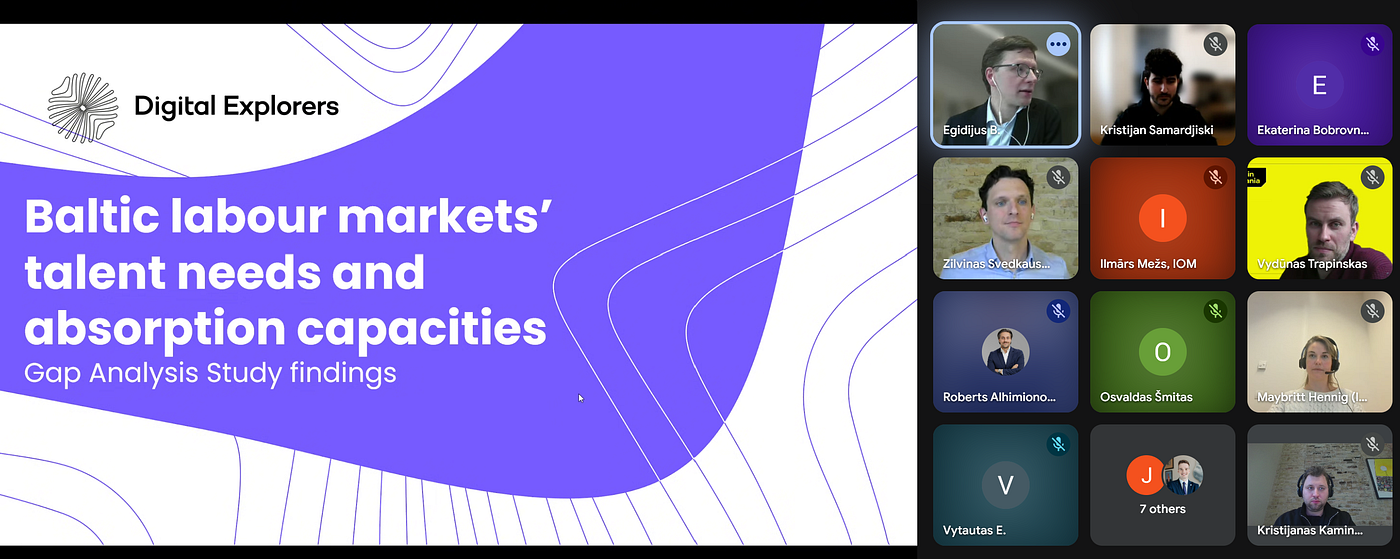
As Lithuania, Latvia, and Estonia continue to strengthen their positions in high-value sectors, a shared challenge of a persistent and widening gap between labour market demand and available talent is becoming increasingly evident. To better understand this challenge, the Digital Explorers II initiative commissioned PPMI (Part of the Verian Group) to co-create a comprehensive Gap Analysis study, assessing workforce needs across the three Baltic states in ICT, life science, and cleantech sectors. The study includes the analysis of policy frameworks and explores the opportunities for Baltic regional cooperation.
In March 2026, Dr. Egidijus Barcevičius, Research Manager, Analyst, and Partner at PPMI, and his colleagues presented the study and its findings to a group of policymakers, practitioners, and experts in the field. The discussion that followed this presentation added some more practical insights to the study’s conclusions and highlighted the urgency of moving from analysis to coordinated action.
Firstly, the study confirms that talent shortages in the Baltics are systemic and cross-sectoral. Rapid growth in ICT, life science, and green energy has significantly increased demand for skilled professionals, and the local supply has not kept pace. ICT sectors across the region continue to face shortages of experienced specialists, particularly in software development, data science and cybersecurity. Similarly, the life science sector struggles to fill highly specialised roles. Cleantech and green energy industries report both high-skilled and technical workforce gaps. These trends reflect not temporary mismatches, but deeper structural imbalances across the three economies.
Secondly, the challenge extends beyond talent availability to broader systemic and policy constraints. While all three Baltic states have introduced measures to attract and develop talent, common barriers persist. These include limited international visibility, complex and fragmented migration procedures, and insufficient long-term support mechanisms for employers. In many cases, initiatives remain project-based and lack continuity. As Dr. Jennifer Tangney, Senior Project Manager at ICMPD, noted during the event, “Knowing not only your labour market needs, but also your labour market dynamics is really fundamental to the success of these [talent attraction] schemes”. This highlights the importance of viewing talent attraction as a part of a broader ecosystem, rather than standalone policy intervention.
Thirdly, the study points to the potential value of stronger regional cooperation among the Baltic states. Given the similarities in labour market needs and sectoral priorities, a more coordinated approach could enhance the region’s global visibility and attractiveness. Joint initiatives (e.g. shared promotion efforts, aligned outreach strategies, etc) could complement national policies while preserving country-specific strengths. This approach can be illustrated by the Cross-border Talent Bridge initiative between Sweden and Denmark, which demonstrates how neighbouring countries can successfully collaborate to address shared talent shortages. As presented by Viktoria Nilsson, Project Manager at the City of Lund, this project brings together students, employers, educational institutions, policymakers, and other stakeholders across borders, to facilitate talent attraction, improve matching processes, and strengthen regional labour market integration.
Finally, the study outlines a set of actionable recommendations aimed at strengthening the Baltics’ capacity to attract and retain talent. These include increasing the international visibility of high-value industries, improving support structures for employers, simplifying relocation pathways, fostering retention through integration measures, better integrating international students into local markets, and addressing regional disparities within countries. Taken together, these recommendations emphasise the need for more coherent, scalable, and sustainable approaches to talent attraction.
The task ahead is therefore not only to acknowledge the shared challenges in Baltic labour markets, but to translate them into coordinated, practical solutions. As concluded by Dr. Žilvinas Švedkauskas, Managing Director of OSMOS Global Partnerships, this Gap Analysis study serves as a ‘nest’ for more targeted follow-up work. The next phase of this research project will explore potential partner countries and practical models for talent attraction.
메타데이터
- post_id
- bf5123f4dd4c
- slug
- new-study-bridging-the-talent-gap-in-the-baltics-bf5123f4dd4c
- url
- https://medium.com/@osmos.partnerships/new-study-bridging-the-talent-gap-in-the-baltics-bf5123f4dd4c
- canonical_url
- https://medium.com/@osmos.partnerships/new-study-bridging-the-talent-gap-in-the-baltics-bf5123f4dd4c
- author_url
- https://medium.com/@osmos.partnerships
- status
- ok
- fetched_at
- 2026-06-12 10:20:10