Fastest Way To Check Matka Charts Daily — A Guide to Organized Chart Archives
Fastest Way To Check Matka Charts Daily
Fastest Way To Check Matka Charts Daily — A Guide to Organized Chart Archives
Fastest Way To Check Matka Charts Daily
Introduction
In today’s digital world, users expect information to be available quickly, accurately, and in an organized format. This is especially true for websites that maintain daily chart records, historical archives, and large collections of date-wise information.
One of the most common questions users ask is: What is the fastest way to check Matka charts daily?
The answer is not simply about speed. The fastest experience comes from using platforms that combine quick access with organized archives, structured navigation, and easy-to-browse historical records.
This guide explains how users can efficiently access chart information, why archive organization matters, and what features make modern chart platforms easier to use.
Why Users Check Charts Daily
Daily chart records form the foundation of larger archive systems.
Many users visit chart websites every day because they want to:
- Access current records
- Browse historical archives
- Review date-wise collections
- Explore organized chart databases
- Navigate information efficiently
A well-structured archive system helps users accomplish these tasks quickly.
The Importance of Organized Chart Systems
Speed is not only about website performance.
Information must also be organized properly.
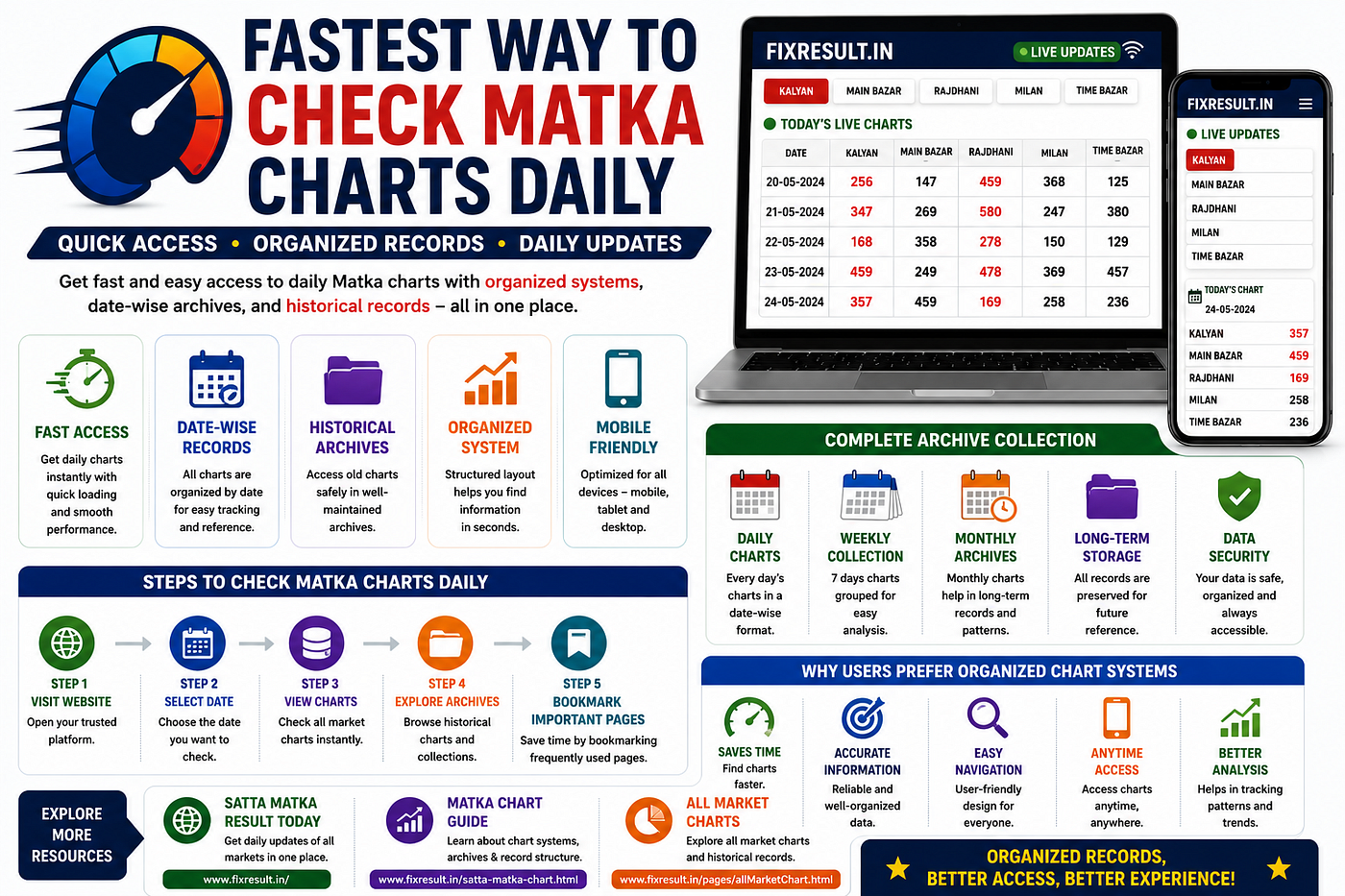
An effective chart system typically includes:
Date-Wise Records
Information arranged chronologically.
Historical Archives
Older records preserved for future access.
Weekly Collections
Daily records grouped together.
Monthly Archives
Long-term historical organization.
Easy Navigation
Users can move between sections efficiently.
Without these elements, finding information becomes more difficult.
What Makes a Chart Website Fast?
Several factors contribute to a better browsing experience.
Clear Navigation
Users should find information within a few clicks.
Organized Categories
Records should be grouped logically.
Mobile-Friendly Design
Pages should work smoothly on smartphones.
Archive Accessibility
Historical records should remain easy to access.
Structured Layouts
Information should be displayed clearly.
These features reduce the time users spend searching.
Understanding Daily Chart Archives
Daily records are often the most visited sections of archive websites.
Each daily entry contributes to a larger archive system that may later become part of:
- Weekly archives
- Monthly collections
- Historical databases
As archives grow, organization becomes increasingly important.
Users interested in learning how archives are structured can explore the Matka Chart Guide, which explains chart organization and historical record systems in detail.
How Historical Records Improve Accessibility
Many users focus only on current information.
However, historical records provide several benefits.
Long-Term Access
Older records remain available.
Better Context
Users can understand archive structures.
Efficient Navigation
Date-wise systems simplify browsing.
Organized Information
Historical collections remain easy to explore.
This is why archive management is an essential part of modern information platforms.
The Role of Date-Wise Organization
Date-wise organization is one of the fastest ways to access information.
When records are arranged chronologically:
- Navigation improves
- Searches become easier
- Archives remain structured
- Users save time
Chronological organization is widely used because it improves accessibility and user experience.
Mobile Access and Daily Chart Checking
Today, most users browse websites through mobile devices.
A mobile-friendly platform should offer:
Responsive Design
Content adapts to different screen sizes.
Fast Loading
Pages open quickly.
Clear Layouts
Information remains easy to read.
Easy Navigation
Users can access records without difficulty.
Mobile optimization plays a major role in providing fast access to information.
How Archive Systems Preserve Information
Archive systems do more than display records.
They also preserve information for long-term use.
A strong archive system includes:
Daily Records
Current information.
Weekly Collections
Grouped daily records.
Monthly Archives
Expanded historical collections.
Long-Term Databases
Comprehensive record preservation.
This structure helps ensure information remains accessible over time.
Common Mistakes Users Make
Many users unintentionally make information harder to find.
Ignoring Archive Sections
Historical collections often contain valuable information.
Not Using Date-Wise Navigation
Chronological browsing saves time.
Searching Randomly
Organized categories improve efficiency.
Skipping Archive Guides
Educational resources help users understand chart structures.
Avoiding these mistakes can significantly improve the browsing experience.
Best Practices for Faster Access
To check chart archives more efficiently:
Bookmark Important Pages
Save frequently visited resources.
Use Organized Categories
Navigate through structured sections.
Explore Historical Archives
Archived records are often easier to locate through organized collections.
Learn Archive Structures
Understanding organization improves navigation.
Use Mobile-Friendly Platforms
Responsive websites provide faster access.
These habits save time and improve usability.
Helpful Resources
Users interested in organized chart systems and historical archives can explore:
This section provides structured access to daily records and archive collections.
Users looking to understand chart structures and archive organization can visit:
For broader archive access and categorized collections:
These resources help users understand information organization and archive navigation.
Why Archive Management Matters
A website may contain thousands of records.
Without proper organization, information becomes difficult to access.
Archive management improves:
- Accessibility
- Navigation
- Historical preservation
- User experience
- Information structure
This is why successful chart platforms prioritize archive organization.
Conclusion
The fastest way to check Matka charts daily is not simply finding information quickly — it is using a platform that organizes records effectively. Date-wise archives, structured navigation, mobile-friendly layouts, and historical collections all contribute to a better user experience.
Users who understand archive structures and make use of organized chart systems can access information more efficiently while also benefiting from long-term historical records. Ultimately, well-maintained archives are the key to fast, reliable, and user-friendly information access.
메타데이터
- post_id
- bf5ab2989b5a
- slug
- fastest-way-to-check-matka-charts-daily-a-guide-to-organized-chart-archives-bf5ab2989b5a
- url
- https://medium.com/@fixresult/fastest-way-to-check-matka-charts-daily-a-guide-to-organized-chart-archives-bf5ab2989b5a
- canonical_url
- https://medium.com/@fixresult/fastest-way-to-check-matka-charts-daily-a-guide-to-organized-chart-archives-bf5ab2989b5a
- author_url
- https://medium.com/@fixresult
- status
- ok
- fetched_at
- 2026-06-26 03:39:16