How Dating a Cisgender Woman Saved My Transition
My story of dating a cisgender woman during gender transition, dysphoria, surgery recovery, intimacy, and self-acceptance
How Dating a Cisgender Woman Saved My Transition
My story of dating a cisgender woman during gender transition, dysphoria, surgery recovery, intimacy, and self-acceptance

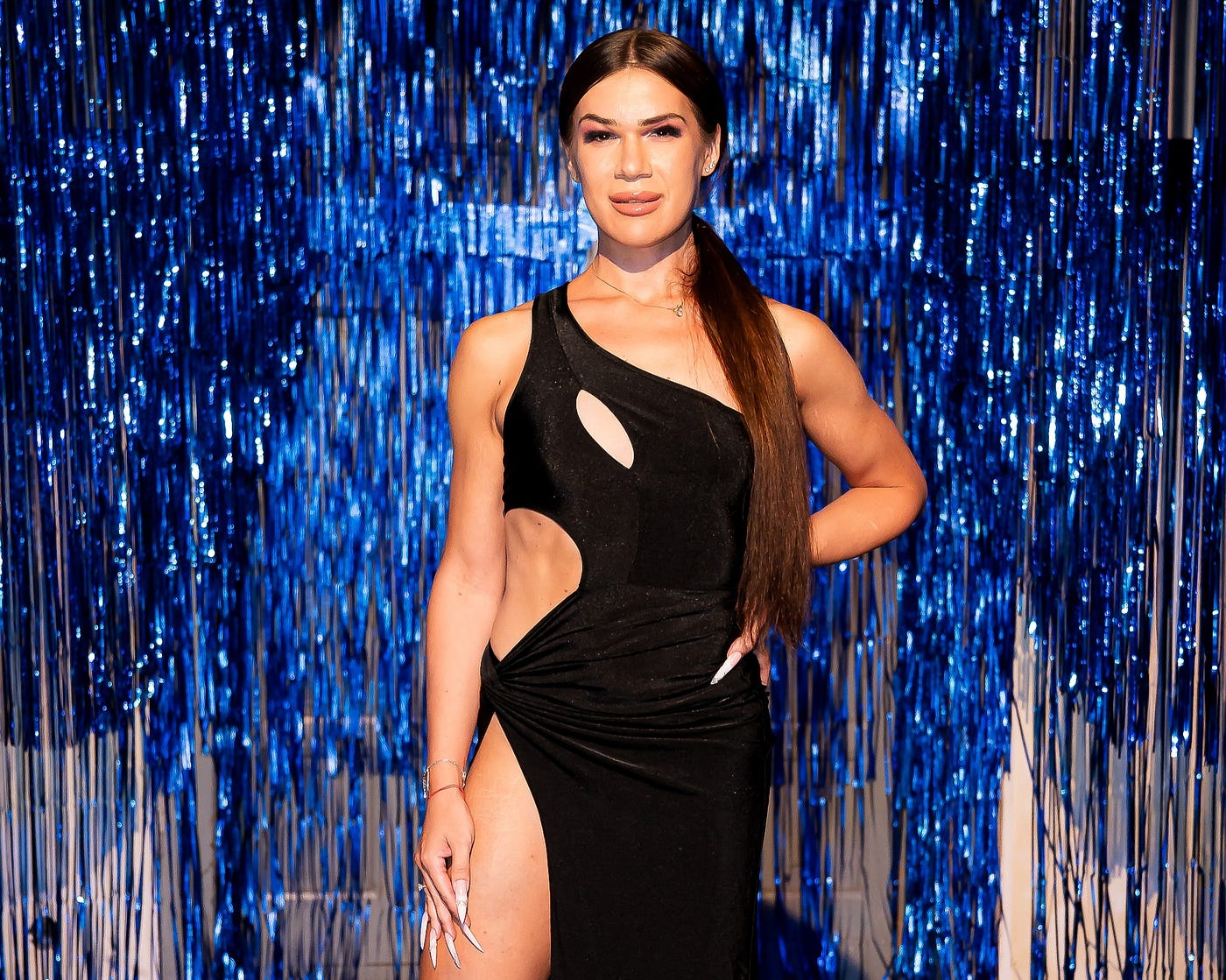
My girlfriend and I (Kira Ry)
“I just wanted to tell you that you’re pretty” was her first message on the dating app. I took it with a grain of salt and thought she was just trying to be nice. I was early in my transition, recovering from surgery, and still adapting to a life that had changed 180 degrees—and she looked... she was amazing. Now, almost two years later, every morning she tells me the same phrase. Not in messages, but in person.
People Who Change Our Lives
Hi, I’m Kira, a transgender woman and counsellor specialising in transgender care. In everyone’s life, there are people who leave a big impact on us. It might be a best friend with whom you grew up and went through many life stages, a sibling who was always there to protect you and teach you life lessons, or, as in my case, a partner who helped me accept myself and saw a woman in me before I even could.
My story is not an instruction manual to follow, but just one example of how relationships transform our lives and can impact transition. And I’d dare to say, in the best way possible.
Work in Progress
Two years ago, I was going through the hardest point of my transition—early recovery after facial feminisation surgery while dealing with complications, still waiting to see visible results from HRT, lacking support from my family, and living abroad alone in a not very tolerant country. I didn’t know how to navigate transition and was taking many unnecessary steps... it’s a long list, but the best word to describe it would be “instability”.
While some aspects required time and effort—like continuing laser hair removal, doing sports, and undergoing cosmetic procedures to finally be happy with my reflection in the mirror—others were seemingly beyond my control, like finding a person who would accept my “work in progress” and share my journey.
She Wrote Me First
It was a matter of pure luck that my partner and I met. For both of us, it was a last attempt; we weren’t looking for a long-term relationship, we were both very sceptical about the possibility of finding a soulmate online, and the distance between our cities was far beyond the limits we had set on the app. By that time, I knew that I was bisexual, and she was attracted to all genders but had never had a long-term relationship with a woman. Frankly, sexuality didn’t matter that much because I was looking for a friend first and foremost.
She wrote to me first, and I responded. I hadn’t mentioned in my bio that I am a transgender woman, but I knew that the only way to build a real connection was to be honest and open. In a short time, I told her that I was transitioning, fully realising that her response could be anything. She wrote back, “I know,” and moved on to the next topic. I was surprised by that because, in my mind, I thought it might be something that would limit our relationship to friendship only.
We spoke about everything—our pasts, interests, life values, the LGBTQ+ community, my transition, work, hobbies, friends, and families. The topic I was mostly concerned about—my transition—was only a part of it, not the main focus. For a couple of months, I had to charge my phone several times a day because the battery would die after many hours spent messaging and talking.
It felt like opening a completely new world because of our different nationalities, languages, life paths, and the ways we were born. Despite all those differences, we were on the same page. Our friendship slowly started evolving, and talking online was not enough anymore.
The First Meeting
The first time we met was full of excitement, joy, and fear. It was a fear of how she’d look at me, whether I’d be seen beyond my adjective “trans”, and if we’d be safe going out together in public. My biggest concern was whether I was “woman enough” to start a lesbian relationship. This insecurity was deeply ingrained in me, and I felt caught between two worlds.
For two months of talking online and seeing each other on video calls, my transition had never been an issue, but real life could have been different. At least, I thought that way. In the back of my mind, I was anticipating being treated “specially”, or that questions and topics would appear that would prove my concerns.
It didn’t happen the first day, or the second. It didn’t even happen during the first three weeks we spent together—instead of the three days we had initially planned.
At one point, we understood that our friendship had become romantic, and while we were driving back to her city, I heard the phrase that still warms my heart. It was a sunny, warm autumn afternoon; the road was full of people going home from work, and I was focusing on the traffic when she said, “I love you”. With no hesitation, I said, “I love you too”. For both of us, it was completely new. She had never dated a woman, and I had never dated as a woman.
This experience made me think that maybe my fears weren’t valid and were just standing in the way of enjoying life and dating. But for a long time, despite her words and multiple actions, I had doubts. Not in her, but in myself and my presentation. There wasn’t a specific point where my concerns vanished because it was a very gradual process, but I know that my partner was the one who helped me realise it much sooner than I could have done on my own.
Establishing Rules
One day I told her, “Darling, I’ll be with you only if I feel that you see and treat me as a woman.” As time showed, that phrase was unnecessary, but I followed the rule we established from the beginning: being honest and straightforward in everything. “Everything” included all aspects of our past, present, and future.
Frankly, at first, there were moments where I felt uncomfortable, but I didn’t realise how helpful it would be for my transition. She was the first person who openly gave her opinion, critiques, and advice on my appearance, the way I was seeing myself, and the steps I planned to take in the future.
She was the one who told me about my brow blindness, gave me advice on not overlining my lips, and taught me about lash and nail extensions. It was never done in a way of her “knowing better”, but rather from a desire to help me discover new ways to feel more comfortable with my appearance that I hadn’t discovered yet.
The Fight With Myself
In the beginning of my transition, I denied anything masculine in myself. It was an internal protest to prove that I am not a man. In some aspects, this protest expressed itself in hyperfeminine mannerisms, a forced walk, clothing, and makeup.
Anything even slightly masculine had to be erased, and sometimes it was “too much”. Of course, there’s no limit to femininity or masculinity, but in my case, it was more of an act than actually expressing myself. I couldn’t see that.
My partner, on the other hand, saw it and gave her honest opinion. In time, it helped me realise that before my transition I had been acting, trying to be a man, but now I was doing a similar thing—trying to be a woman that I’m not.
Clothing and makeup aren’t what validate me being a woman; my walk and mannerisms shouldn’t be forced. I AM a woman, and I don’t have to act LIKE a woman. Transition is about allowing yourself to express your truth, regardless of gender stereotypes.
This realisation brought so much calmness and allowed me to truly enjoy my journey. Now, I don’t pay attention to the gender written on clothing tags, I don’t go grocery shopping in heels with full makeup, and I love the hobbies I had from my life before transition.
Only after achieving that point could I truly enjoy my transition. It was a moment of accepting myself, though my partner had done it much earlier than I did.
I didn’t blindly follow her recommendations or advice, but I was always open to giving things a try. I tried them, looked at the results, and then made a decision whether it was something I liked or something that didn’t work for me.
My Treasure Trove
My partner is a cisgender woman and has at least three decades more experience being a woman than I do. For me, it was comparable to finding a treasure trove of knowledge that I lacked and wanted to gain, and it went far beyond just appearance. She shared with me her own and her friends’ experiences of living in society as women. One of the topics I was most interested in was interacting with other people and safety.
It’s no secret that society treats men and women differently, and in most cases, the world is more dangerous for women. Before meeting my partner, I was unfortunate enough to have negative interactions and briefly experienced some of those dangers. Because of the way I was born, I didn’t have the knowledge that girls get from a very young age on how to avoid bad situations. Life before transition was simple, straightforward, and relatively safe. But now, everything had changed.
From the beginning, I never looked for validation of my womanhood from toxic interactions. Catcalling, long stares at my body, or sexualised compliments weren’t appealing or affirming to me.
Most of them came from men whose mindset wasn’t familiar to me. I was raised as a man but never felt related to it, so it remained beyond my understanding. We spoke about it multiple times, and my partner made me better understand how many women experience such interactions and how they react.
I’ll Always Protect You
One interaction that had a big impact on me and made me truly understand her feelings happened in a supermarket where we went together.
My face was still swollen from surgery, I was still working on my makeup and clothing, and I knew that most people recognised me as a trans woman. A man gave me a stare, which I ignored as I always did. In the next aisle, he saw me again, stood in front of me, and looked directly into my eyes with dismissal and hatred. As soon as he tried to say something, out of my peripheral vision, I saw my girlfriend approaching him. It was a very emotional but direct conversation in a language that was foreign to me at the time. It made that man leave immediately.
A small, 5-foot-tall woman protected me from an adult man, knowing that the consequences could have been unpredictable. I didn’t say “thank you” back then, which I still regret, but deep inside, I couldn’t express how grateful I was. She still says, “I’ll always protect you,” and it’s mutual.
The Next Step
For several months, we lived in different cities and used every opportunity to talk to each other. This period turned into a constant anticipation of the next time we could meet. My transition moved forward, and I became much more comfortable with my new life and presentation. What made it much easier was knowing that I had a person who supported me and gave advice whenever I asked for it.
Moving in together was both exciting and challenging, but the decision was obvious to us. We both knew that one of the main focuses for the next year would be my scheduled sex reassignment surgery, and it would require extra effort for preparation and post-op recovery.
We had spoken about my planned steps and surgeries at the beginning of our relationship. It wasn’t a debate, but more of a clarification of what to expect in the future regarding my transition. I already had the experience of going through one major surgery without any support and was mentally ready to do the others on my own, but my partner offered to come with me. It deserves its own separate, long story, but in a nutshell, my pre-op preparation, the surgery, and the recovery went much smoother and easier because of her help and support. She was there for me through every single step.
Intimacy
It’s impossible to ignore the topic of intimacy when talking about sex reassignment surgery. I had some concerns about how it would impact our life and whether my partner would be comfortable with the changes.
Due to dysphoria and the effects of HRT, our intimate life was already different from what we had in our previous relationships even before the surgery, but I knew I had to discuss this topic with her. Her response was simple: “I’m attracted to you, and if this surgery will make you happy, it won’t affect our life.” It was true—this step was done entirely for me, so that I could have the experiences I wanted, enjoy the body I have, and no longer experience body dysphoria.
Our intimacy definitely changed, but not in the way I was afraid of. It mostly impacted the physical part, but emotionally it remained the same, if not more relaxed for me. Once again, I realised that most of my concerns were only products of my mind. Safety, my identity, transitioning steps, acceptance, intimacy, presenting in public, and the future were causing fear because I allowed them to, but with my partner, step by step, I got rid of them.
Our Past, Present and Future
We met at the beginning of my transition, and I am proud to have shared many important steps with my partner. There will be many other steps in the future, but they will be taken at a more relaxed pace since the most intense part is now in the past.
Society now sees us as a lesbian couple, and so do we. What others can’t see is how being with a loving, accepting, and caring woman made my transition easier and helped me accept myself.
Like any other couple, we have our ups and downs. Most of them are completely unrelated to my transition and are just a natural part of a couple’s dynamics. We still have a lot of conversations about transition and being a trans person, but now the focus has switched from my own experience to more general topics, like community challenges and ways to make the lives of other trans people better.
Like any other couple, we make mistakes, learn from them, and navigate the issues that many LGBTQ+ people experience together.
And like any other couple, we talk about the countries we would like to visit, think about adopting dogs, and dream about the future.
Friendship
Something that started as a mutual interest transformed into us being friends, sisters, lovers, and partners. I can’t see any other way for me to build such a relationship without prioritising friendship. For me as a trans woman, it was extremely important to know that our relationship is based on full acceptance, support, and a clear understanding that life with me, as someone who is transitioning, carries a lot of additional challenges.
As with any friend, you care about their opinion, and so do I when it comes to my partner. Once this article was finished, I gave it to her to read. After laughing several times, becoming emotional, and remembering what happened during those almost two years, she turned to me and said, “I like it.”
If you’d like to be part of my journey and support my recovery after sex reassignment surgery, I have a Buy Me a Coffee page where you can do so. This experience has required a lot — emotionally, physically, and financially — and your support allows me to focus on healing and continue sharing my story in an honest and meaningful way. It also helps me keep creating content that supports and informs other transgender people who may be going through similar experiences. Every bit of support is deeply appreciated.
메타데이터
- post_id
- bf8cbc00f7c8
- slug
- dating-cisgender-woman-saved-transition-bf8cbc00f7c8
- url
- https://medium.com/prismnpen/dating-cisgender-woman-saved-transition-bf8cbc00f7c8
- canonical_url
- https://medium.com/prismnpen/dating-cisgender-woman-saved-transition-bf8cbc00f7c8
- author_url
- https://medium.com/@kiraryzhova.one
- status
- ok
- fetched_at
- 2026-06-09 15:37:30