We’ve Seen This Movie Before: Desktop Publishing Already Showed Us How AI Prototyping Plays Out
Forty Years Ago, Production Tools Went To Everyone, And The Field Spent A Decade Figuring Out What That Actually Meant. The Same Arc Is…
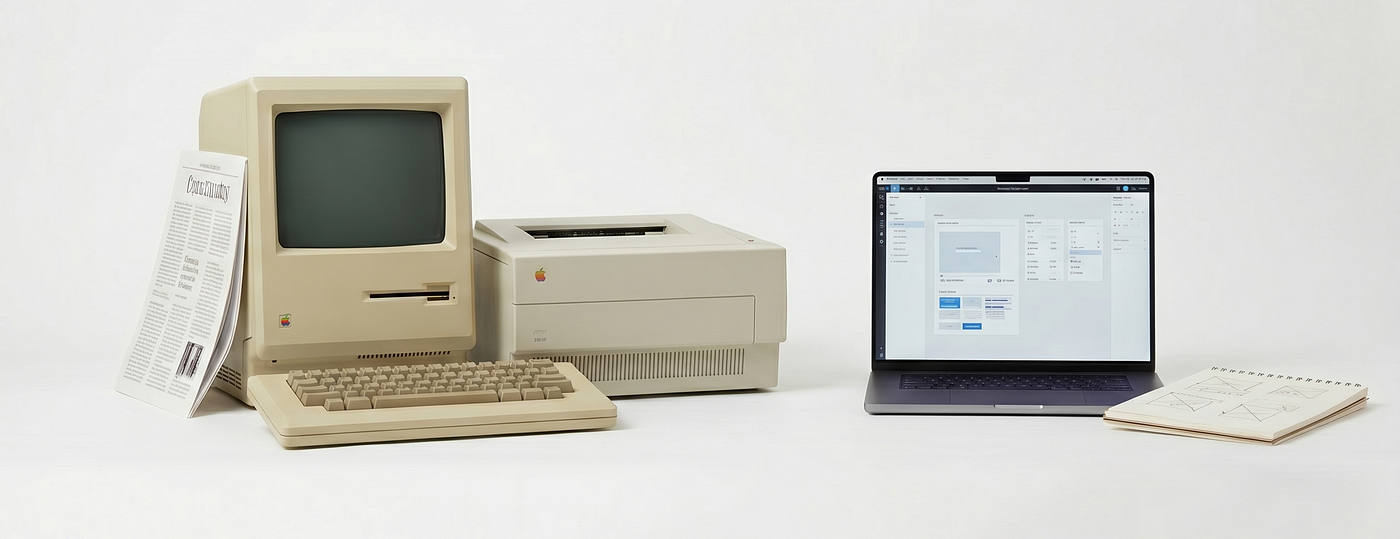
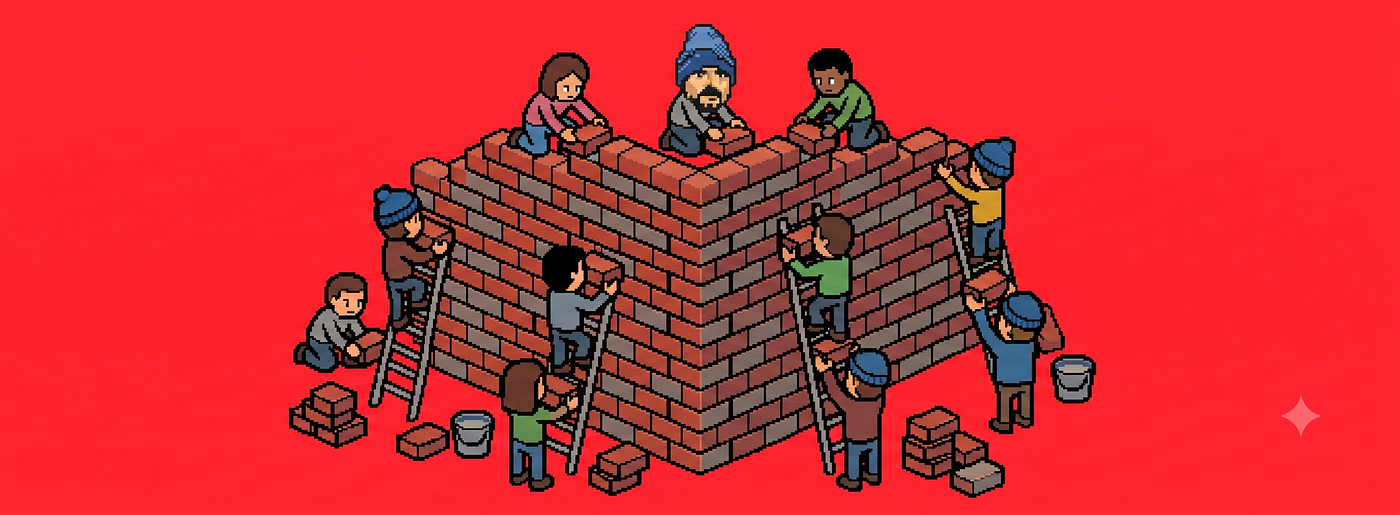
Forty years apart, the same shift: production capability moves from a specialist shop to a desk. Images by Gemini.
We’ve Seen This Movie Before: Desktop Publishing Already Showed Us How AI Prototyping Plays Out
Forty Years Ago, Production Tools Went To Everyone, And The Field Spent A Decade Figuring Out What That Actually Meant. The Same Arc Is Starting Now.
The conversations happening right now about AI coding tools have an eerie similarity to the conversations that happened in 1985 about desktop publishing.
The tools will democratize the field.
The middle is collapsing.
Designers will become builders, or builders will become designers, or both.
The whole production pipeline is moving onto one desk.
Some of these predictions will turn out to be roughly correct. Most of the timeline estimates will turn out to be wrong. The shape of what actually happens — who wins, who loses, how long the transition takes, what new work appears — is already visible if you look at the last time production tools went to everyone.
The desktop publishing decade between 1985 and 1995 is the closest thing we have to a working map. It started with three pieces of technology that only worked because of each other, and it went through several years of bad output that gave critics a lot of material. It reorganized the field. It eliminated some jobs and created others. And it took about a decade for the field to settle into something that looked like a stable equilibrium.
The map isn’t perfect. But it’s better than guessing.
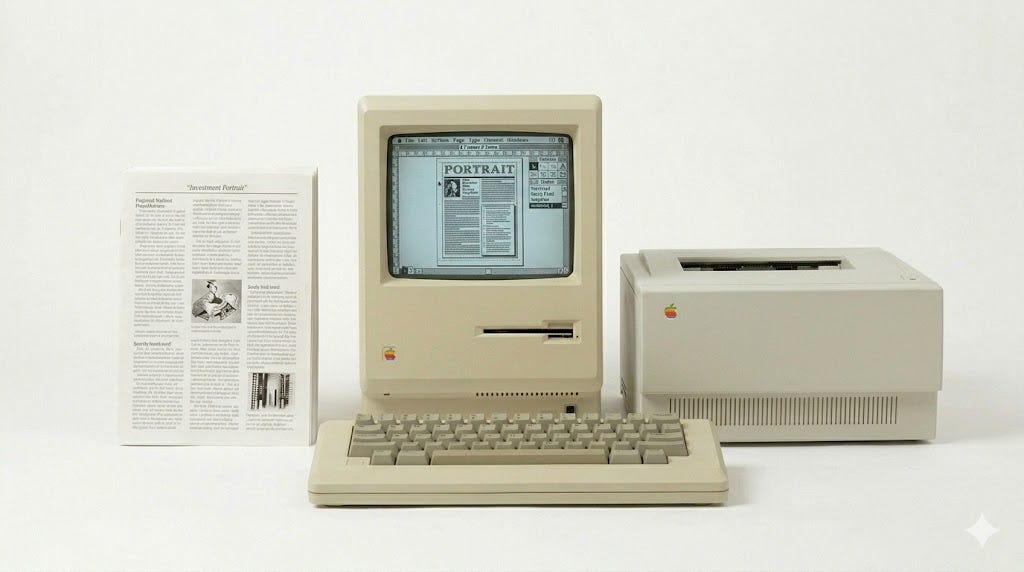
The trinity worked only because each piece closed a gap the others couldn’t.
The Three Products That Shipped In 1985
The shift that became “desktop publishing” wasn’t one product. It was three things, shipped in 1985 — on top of a Macintosh that had arrived in January 1984 — that only worked because of each other:
- The Apple LaserWriter, March 1, 1985 — the first PostScript laser printer aimed at a desk rather than a print shop.
- Aldus PageMaker, July 1985 — the first widely-used WYSIWYG page layout program for personal computers.
- Adobe PostScript — the page description language that let what you saw on screen be what came out of the printer.
The trio worked because each one closed a gap the others couldn’t. Without PostScript, the page on screen didn’t translate to clean print. Without the LaserWriter, the output looked like a typewriter.
The production of printed materials moved from being a service you bought to being something you did yourself.
Without PageMaker, you needed to be a programmer to lay anything out. Together, they took capabilities that had lived inside dedicated typesetting shops — Linotronic machines, paste-up tables, prepress specialists — and put them on a desk.
Paul Brainerd, who founded Aldus, coined the term “desktop publishing” to market the thing. The name described what was actually changing. Printed materials stopped being something you ordered from a vendor and became something you produced yourself.
The people who had previously sold that service either learned the new tools or watched their work disappear.
The Ransom-Note Years
What followed wasn’t a renaissance. The first wave of desktop-published work was, by most professional standards, bad. Critics coined “ransom note typography” to describe what newsletters and brochures looked like when someone with a Mac and twelve fonts but no design training started laying out pages.
Too many typefaces.
Mismatched weights.
Decorative bullets where there should have been hierarchy.
Drop shadows on everything that would hold one.
Use of the San Francisco font!
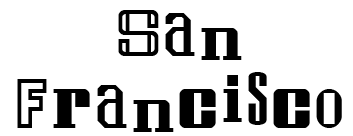
This was a real font. Not kidding.
This wasn’t a failure of the tools. It was the predictable result of moving a craft skill from people who had trained for years into the hands of people who hadn’t and loved going hog wild.
The PageMaker manual taught you the software. It didn’t teach you typography or grid systems.
By the early 1990s, the gap between what the tools enabled and what most users could produce had become a market opportunity. Robin Williams published The Non-Designer’s Design Book in 1994 — an entire book aimed at people who suddenly had layout tools and no idea what to do with them. The book sold extraordinarily well, which tells you how many of those people there were.
Meanwhile, in print shops and design studios, two things were happening at once. Typesetters and paste-up artists — people whose value came from operating the old tools — saw their work dry up. And graphic designers who learned the new tools fast saw their throughput multiply.
It shifted: The same software that was producing terrible newsletters in offices was producing better magazines in studios.
Where The Skill Premium Moved
By the mid-1990s, the field had reorganized around what the tools made possible. Typesetting as a standalone profession effectively ended. The BLS still tracks “desktop publishers” as an occupation, but the category has shrunk to about 5,000 jobs — being eaten by the next revolution, the internet. Graphic designers, meanwhile, became hundreds of thousands of jobs, including roles that barely existed in 1985: digital, brand, motion, web, product designer.
In 1986, April Greiman, already established as a designer, used MacPaint, MacDraw, and early video capture to replace the 32-page Design Quarterly #133 with a single six-foot fold-out poster.
The tools weren’t doing anything an old typesetter couldn’t technically do. It was the designer’s judgment, freed from working through specialists, producing a thing the old workflow wouldn’t have made room for.
The bottleneck stopped being access to production. It became judgment about production.
The reorganization had another side. Compugraphic, the world’s largest phototypesetting equipment maker, was reporting roughly $90 million in quarterly revenue in 1987 and was fully absorbed by Agfa the following year.
Their problem wasn’t that the new tools did something theirs couldn’t — a Linotronic was still cleaner output than anything off a LaserWriter for several years. Their problem was that a designer with a Mac no longer needed to send copy out and wait. The category that bought their equipment evaporated, and being technically better didn’t save the business.
The wealth didn’t disappear with them. It moved to the other side of the same ledger. Aldus was acquired by Adobe in 1994 for $446 million — roughly $1 billion in 2026. Adobe itself, founded in 1982 around PostScript, posted $168.7 million in revenue by 1990 — roughly a hundred times its 1984 level.
The transition didn’t shrink economic activity around producing pages; it relocated and grew it, from the people who controlled the bottlenecks to the people who built around removing them.
After 1985, the gating skill was deciding what the output should be. The companies that let designers produce directly multiplied their throughput. The ones that kept design as a separate department watched everyone else triple.
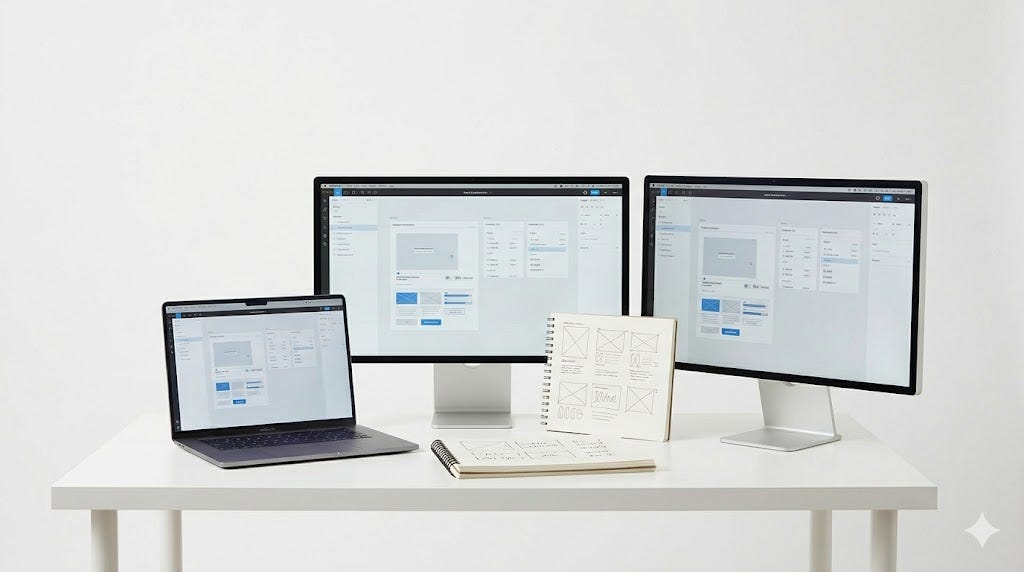
The same trio shape, four decades later, with the bad-output years just beginning.
The Same Trio, Forty Years Later
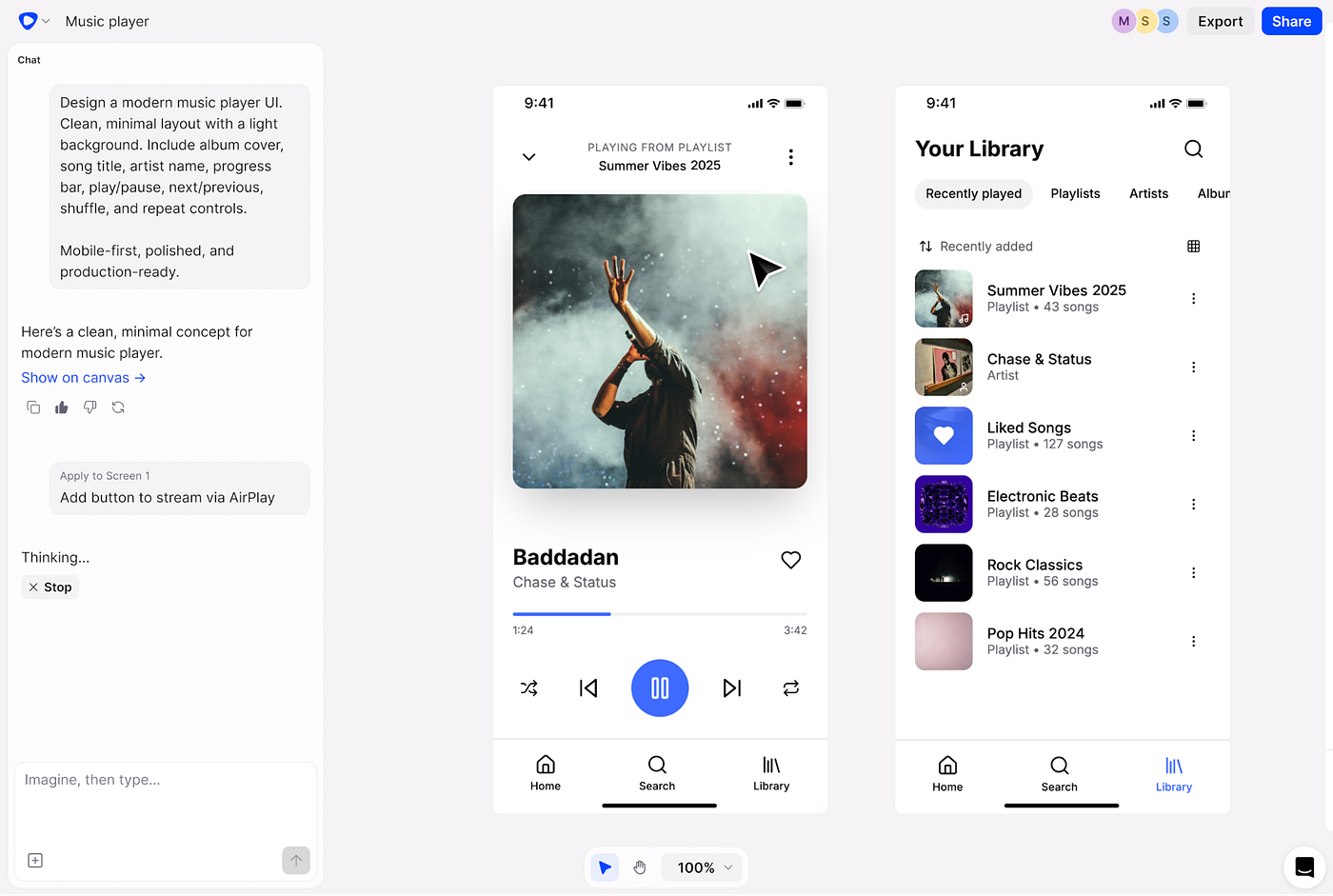
The same trio shape is appearing now. A frontier model that can write code competently. An IDE or canvas that wraps the model in something a non-engineer can use. A deployment surface that turns the output into a working thing rather than a screenshot. Cursor and Claude Code on one end, v0 and Lovable and Bolt on the other, Vercel and Replit underneath them — the modern equivalent of the LaserWriter, the part that turns what you produced into something other people can use.
The adoption curves are not subtle. Cursor went from launch in 2023 to $2 billion in annualized revenue by February 2026, faster than any developer tool in history.
Lovable has moved from a 2024 launch to a $6.6 billion valuation by selling to non-technical founders, designers, and PMs who weren’t shipping production apps a year ago — and the shape of that reads almost identically to a 1987 article about a magazine going all-digital: working prototypes replace decks, features are tested rather than explained, handoffs collapse.
What’s expanding isn’t just the tools — it’s who gets to use them.
- The 1985 wave moved production from print shops to anyone with a Mac and a willingness to learn.
- The 2026 wave is moving software building from engineering departments to anyone who can prompt clearly.
Founders prototyping investor pitches that include working MVPs. Marketers shipping landing pages without dev queues. Customer support teams building AI agents to handle their own ticket flow. Finance analysts spinning up dashboards without engineering tickets. The user base for shipping software isn’t engineering teams anymore.
The first wave of output is plausible-looking but flimsy. Prototypes that demo well and fall apart in week two. Components that look right and ignore accessibility. Flows that the model wrote and nobody understood well enough to debug. This is what the early years of the new tooling look like, and no one has written the analogous reference book yet. There is no Non-Designer’s AI Prototyping Book on the shelf.
Who Gets Displaced, And Where Taste Goes
Two predictions follow. First: who gets displaced. Not the senior designers or engineers — the middle layer whose value came from translating intent into a working thing: PM turns strategy into spec, engineer turns spec into feature, designer turns feature into screens. When a tool collapses all three, the people whose only job was one step lose their edge.
Where the work went:
- Typesetting → page-layout software and the designer using it
- Paste-up → drag-and-drop layout in PageMaker and QuarkXPress
- Mechanical art → the drawing, color, and crop-mark tools built in
- Phototypesetting → imagesetters, then direct laser-printer output
- Prepress stripping → digital prepress, then plate-ready PDF
Where the work is going:
- Strategy-to-spec writing → AI drafting from interviews and tickets for review
- Spec-to-feature engineering → AI code agents (Cursor, Claude Code, Copilot)
- Feature-to-screens design → AI prototyping canvases (v0, Lovable, Bolt)
- Manual QA passes → agent-driven test generation and bug reproduction
- Status updates and async coordination → AI summarization and digest tools
Production didn’t go away. The operational steps got compressed into fewer, broader jobs that could produce faster and better.
The displaced won’t be the senior people. It’ll be the middle layer whose only job was translating intent into a working thing.
The second prediction is where the skill premium moves. The Jevons paradox, 1865: more efficient steam engines didn’t reduce coal use — they increased it. Drop the cost of something and total demand for it rises.
- Cheap layout in 1985 meant every small business made designed pages.
- Cheap prototyping now means more prototypes, and the bottleneck shifts to who can tell good from bad.
The premium moves up — toward judgment, taste, figuring out what should be built. This is the white space: informal coordination, the conversations that decide what’s worth shipping, the institutional memory of what didn’t work last time. None of it is captured by a model that only sees the documented surface.
Fire the people who hold that knowledge, trust prompt access to fill the gap, and you’re running the 1985 playbook again. Strip out the judgment layer and you’ve reprinted the ransom-note newsletter as a product feature. The output looks fine until someone uses it.

What Practitioners Should Do Now
If the desktop publishing decade is the right map, then a few things are likely true right now and not yet obvious.
We are early — The bad-output years have several more to run. The “AI built the whole feature in an afternoon” demos will hide, for a while, that most of those features wouldn’t survive a real user. Expect products that look professional and aren’t. Expect organizations to over-correct toward the tools and lose the people whose taste made them productive.
The skill premium is moving up, not away. The people who do well in the next five years will be the ones who can judge output: what should ship, what’s missing, what’s a load-bearing detail. That work gets more valuable, not less, because there is more output to judge.
Practitioners should do now what designers did between 1985 and 1990. Learn the tools. Use them every day. And the specific habit worth building this year: ship one working prototype a week, then list everything wrong with it before a real user has to. The listing is the practice. The tools don’t teach it.
메타데이터
- post_id
- bfa12faad4e2
- slug
- weve-seen-this-movie-before-desktop-publishing-already-showed-us-how-ai-prototyping-plays-out-bfa12faad4e2
- url
- https://medium.com/@usabilitycounts/weve-seen-this-movie-before-desktop-publishing-already-showed-us-how-ai-prototyping-plays-out-bfa12faad4e2
- canonical_url
- https://medium.com/@usabilitycounts/weve-seen-this-movie-before-desktop-publishing-already-showed-us-how-ai-prototyping-plays-out-bfa12faad4e2
- author_url
- https://medium.com/@usabilitycounts
- status
- ok
- fetched_at
- 2026-06-09 15:37:30