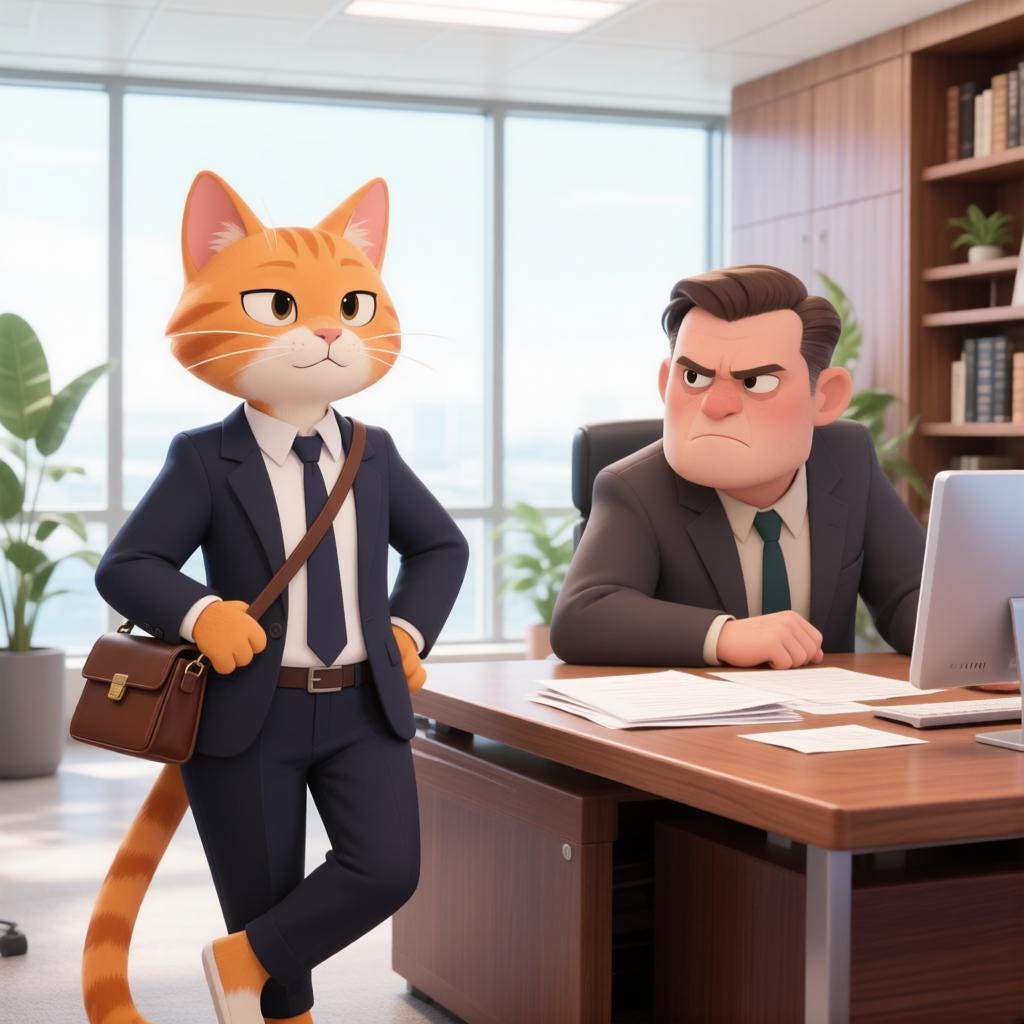
‘Jack and Jill’ (2011): The Hidden Jungian Psychology Behind Adam Sandler’s Comedy
A humorous but surprisingly faithful exploration of Jungian psychology through one of the most misunderstood comedies of the 2010s.
“Want an Oscar? Don’t mess with the Academy members’ Dark Shadow!” — Dr. Carl Gustav Jung, MD (Unverified, but sounds accurate)
‘Jack and Jill’ (2011): The Hidden Jungian Psychology Behind Adam Sandler’s Comedy
A humorous but surprisingly faithful exploration of Jungian psychology through one of the most misunderstood comedies of the 2010s.
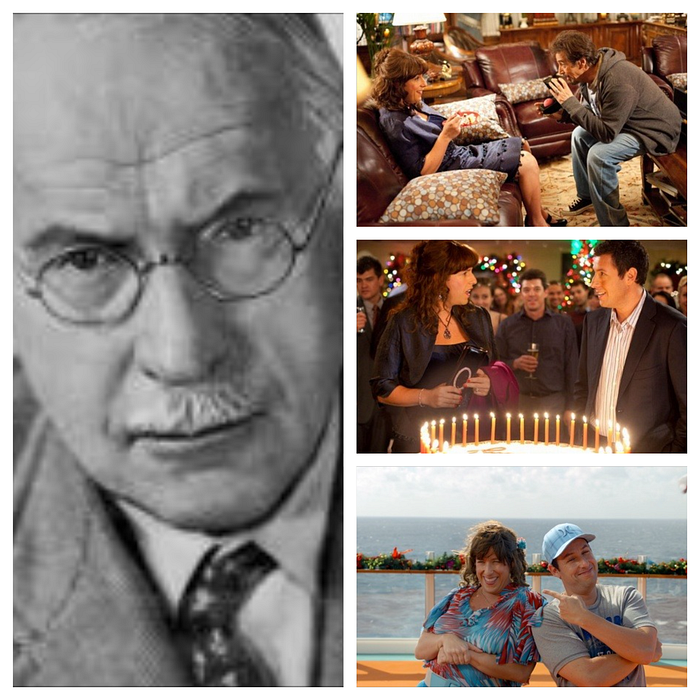
Portrait of Carl Jung / Public Domain. Movie stills from Jack and Jill / Fair Use.
“Just kidding!” — as the gardener Felipe (played by Eugenio Derbez) often says in this movie, using jokes to smooth over the most uncomfortable truths. I don’t watch movies often; this one just happened to be on TV because someone, somewhere, bought the broadcasting rights. But as I watched “Jack and Jill”, I realized I wasn’t just looking at Adam Sandler in a wig — I was looking at Carl Jung’s worst nightmare.
You’ve watched this movie ages ago, right? No? Then close this article immediately and go watch it! Otherwise, you risk missing out on the most important things in life! (Just kidding!) But seriously, this film deserves to be looked at from a different angle, once you’ve wiped away the tears of laughter.
1. Is everything right with Jack and everything wrong with Jill?
The “embarrassing relative” we’re ashamed of in public — every one of us has experienced this feeling at least once. We spend years building an image for our colleagues, only to have a sister or an aunt destroy it in one fell swoop, with the innocence of a cat eating a million-dollar goldfish.
Successful Jack and his unbearable twin sister. Oh, how she humiliates him! Poor Jack! One can only pity Jill: her brother has everything, she has nothing. She should be jealous of him.
But for some unclear reason, I think it’s the exact opposite! It’s Jack who is jealous of Jill. She has everything; he has nothing. He hates the “homeless guy” at the dinner table too, and he worries about the chair — but he sits there and keeps his mouth shut. He would also much rather party with the Mexicans than do his job. He would also love to ride a bike into a pool and wreck something just for fun. And he is forced to live with a beautiful wife, even though he might actually prefer the one-toothed grandma from the Latin party (Just kidding!). In short — Jill does whatever she likes. She lives.
2. How did Jung sneak into this comedy?
There’s a moment in the film when Al Pacino says: “I’m using all my influence, all my power…” Well, I’m going to do the same. I’ll use all my psychological knowledge and analytical talent to declare: Jill is Jack’s classic Jungian “Shadow Self.”
The Shadow is the part of our personality we don’t accept, the part we deny and shamefully hide from others. In Jack’s case, he’s hiding not just dark traits, but sincere emotions and values that don’t serve his career. Jack’s suppressed self erupts through Jill — it’s that childhood spontaneity and freedom from all the fake values of society, authority, and success.
So, Jack runs from his Shadow. He tries to get Jill out of sight (send her home, find her a guy). But you can’t fool family and friends! They easily see Jack’s traits in Jill. I think that’s why Jack’s wife and kids don’t understand why he dislikes her. They know the real Jack and love him for who he is. They see in Jill the Jack they are used to.
3. The film’s internal code is hidden in the first dinner scene
Thanksgiving dinner. A very “proper” family gathered at the table. They even invited a homeless man for charity. Then the sister arrives and destroys the idyll with her unbearable behavior. But you and I won’t be fooled! What kind of nonsense is this? A family holiday where “performative kindness” invades private space. People have lost the line between who they are and who they are pretending to be.
Everyone is uncomfortable. A girl demonstrating karate in a doll’s outfit. A boy who, imitating the strange adults, taped a salt shaker to his head. Isn’t this a bizarre crowd? Wasn’t Jill actually the savior by breaking up this madness? By the way, the homeless man finally left with relief. (And we’re happy for him).
4. Jack: Where is the line of self-betrayal for the sake of success?
Throughout the film, we see the sacrifices Jack is willing to make for his current project. It starts with the authors’ hint that he’d “strip his own wife” to get Al Pacino. Then, it goes further. Jack is ready to use his sister. To the viewer, it almost seems natural — I mean, it’s Al Pacino! But in reality, it’s completely unnatural! And Jill reminds us of this because she is the “tuning fork” of sincerity. At the end, when Jack dresses up as Jill, the boy subtly hints at the final boundary Jack almost crossed: “Were you with Al Pacino, Daddy?”
5. What on earth is Al Pacino doing in this movie?
Why was Al Pacino drawn to Jill? Absurdist humor? Not at all! He felt in her the sincerity he had lost in everyone around him. As a great artist, he is going through an internal crisis, searching for his roots. And all he sees are “Jacks” (I want to talk to kids, but I see trees).
Jill, for all her flaws, is a rare resource in a world of fakes. She is a portal to the dimension of naturalness, much like Don Quixote’s Dulcinea del Toboso. (We don’t have a photo of Dulcinea — what if she actually looked like Jill? Just kidding!)
6. Al Pacino’s best role: Why did nobody notice?
I consider this his best performance. He managed to befriend his “Shadow Self,” laugh at it, and make that Shadow work for the audience. Sure, his role in The Devil’s Advocate is much more “imposing” — he’s monumental there. But here, he is a living human being in search of meaning; simultaneously great, pathetic, and hilarious.
I think I’ve finally cracked his main motivation for accepting the offer: he was so fed up with phones ringing in the theater that he used this movie to take his revenge on the audience. You can see it in the sheer sincerity with which he screams “Put that phone away!” at the crowd (Just kidding!). But, according to Jung, everyone tries to ignore the Shadow. And that’s why there’s no Oscar — it was too accurate and too uncomfortable a hit.
7. Why is being yourself so important?
The film touches on this very subtly. Jill’s presence — which is childhood itself — triggers Jack’s true joy. She was always cooler than him! Her armpit hair grew faster. It was so hard for Jack to get a girl’s attention, but for Jill, it was no problem — she just hit the girl in the eye with a ball, and all the attention was hers (Just kidding!). And for a moment, they bring back that happiness while jumping rope. You want to scream: Don’t drift too far from childhood if you want to be happy! You can hide yourself from everyone, but don’t hide from yourself.
And here lies the most serious theme. Jill wants to talk about their late mother, but nobody supports her. It seems there’s no topic more important, but alas, it’s “not done.” Felipe almost gave us hope and started discussing his late wife, but immediately switched topics. This issue is so taboo that even the filmmakers didn’t dare to cross the line. What is natural for Jill is considered bad form because it doesn’t bring profit to the altar of success.
8. Catharsis on a budget
Al Pacino eventually broke through the concrete wall of his soul. He performed a psychoanalysis of Jack and Jill’s relationship that would make Jung weep. Jack was moved and reconciled with his Shadow (and his sister). But everything quickly returns to business as usual. Business is waiting. And soon, Jack is groveling before Pacino again, and Pacino is obsessed with his image: “Destroy all copies.” As in Andersen’s fairy tale: “Shadow, know your place!”
9. Instead of an Epilogue
Perhaps the filmmakers used the script to express their own feelings about losing one’s true nature. But the folks at the Academy? Not so much. They are so afraid to admit they have a “dark self,” a Shadow, that they reacted with classic Jungian denial.
As I was writing this, I discovered a mind-blowing fact: this movie set an absolute all-time record by winning 10 Golden Raspberry Awards. This has never happened before in the history of cinema!
So, does this mean that everything I wrote here for a laugh is actually true?
According to Jung, such a violent reaction is the first sign that the “patient” (in this case, Hollywood) has come face-to-face with its Shadow. It seems the Academy members saw themselves in Jack — people ready to sell out their sister, their sincerity, and even the memory of their mother for the sake of the next contract. Unlike Al Pacino’s character, the Academy didn’t have the power to “destroy the footage,” so they fired every round they had — all 10 anti-awards — trying to cast the movie out of sight.
Well, a guilty mind betrays itself.
(Just kidding! Or am I?)
메타데이터
- post_id
- bfb695e4c176
- slug
- jack-and-jill-2011-the-hidden-jungian-psychology-behind-adam-sandler-s-comedy-bfb695e4c176
- url
- https://medium.com/counterarts/jack-and-jill-2011-the-hidden-jungian-psychology-behind-adam-sandler-s-comedy-bfb695e4c176
- canonical_url
- https://medium.com/counterarts/jack-and-jill-2011-the-hidden-jungian-psychology-behind-adam-sandler-s-comedy-bfb695e4c176
- author_url
- https://medium.com/@krasikanna1
- status
- ok
- fetched_at
- 2026-07-12 00:43:12