The RAG Delusion: Why Frozen Data Isn’t Safe Data
From Chatbots to Agents: How Memory Has Become the New Attack Surface
The RAG Delusion: Why Frozen Data Isn’t Safe Data
From Chatbots to Agents: How Memory Has Become the New Attack Surface
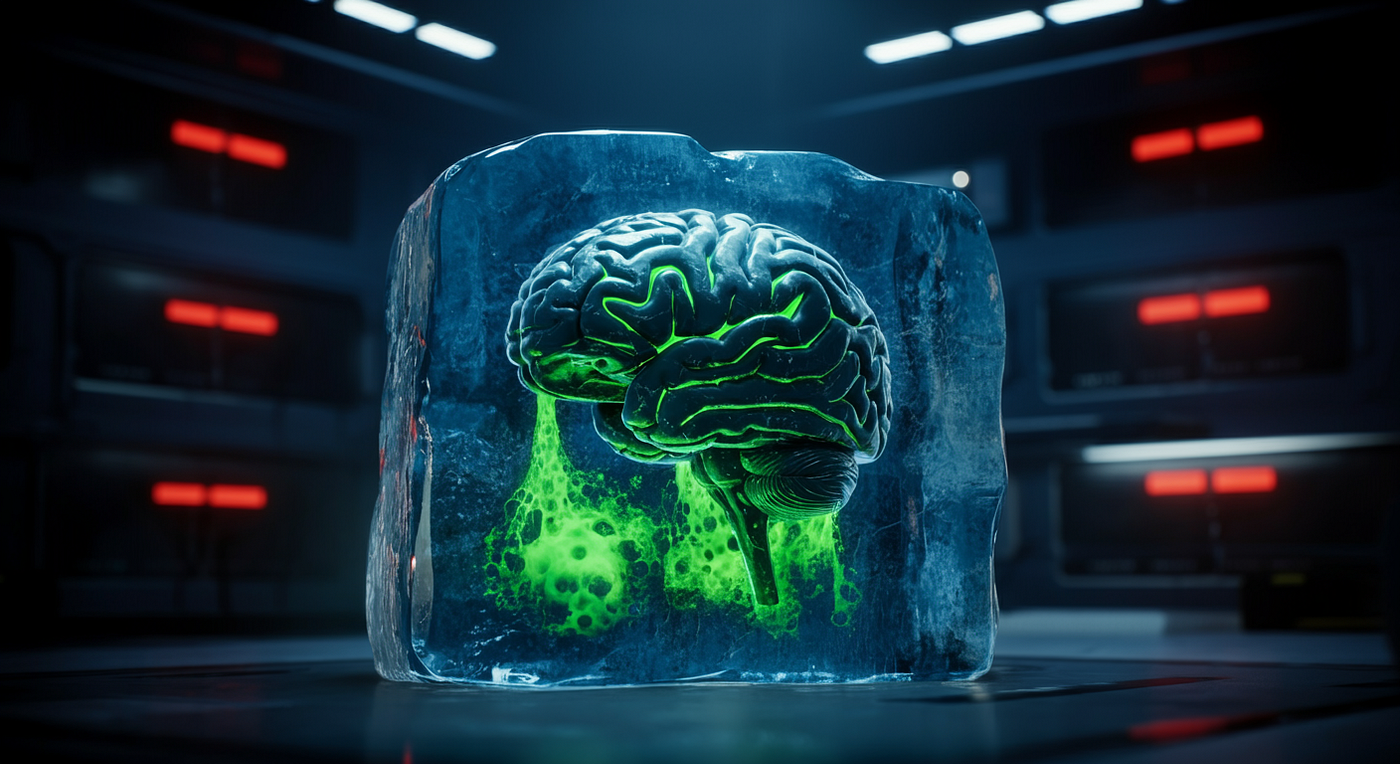
When the safety net becomes the trap: The illusion of frozen data.
I. The Cold Open: The Glass Jaw
In kickboxing, there’s a concept called the “Glass Jaw.” You can have the best footwork in the gym, the strongest hook, and the cardio of a marathon runner. But if your weak chin is weak, one well-placed tap turns the lights out.
For the last few years, the AI industry has been obsessed with building bigger muscles — trillions of parameters, massive context windows. When the models started “hallucinating” (making stuff up like a sleepy undergrad), we invented a helmet. We called it RAG (Retrieval-Augmented Generation).
The logic was simple: “The model is unpredictable, so let’s force it to look up answers in a ‘frozen,’ trusted database before it speaks.” It was supposed to be the safety net. The firewall.
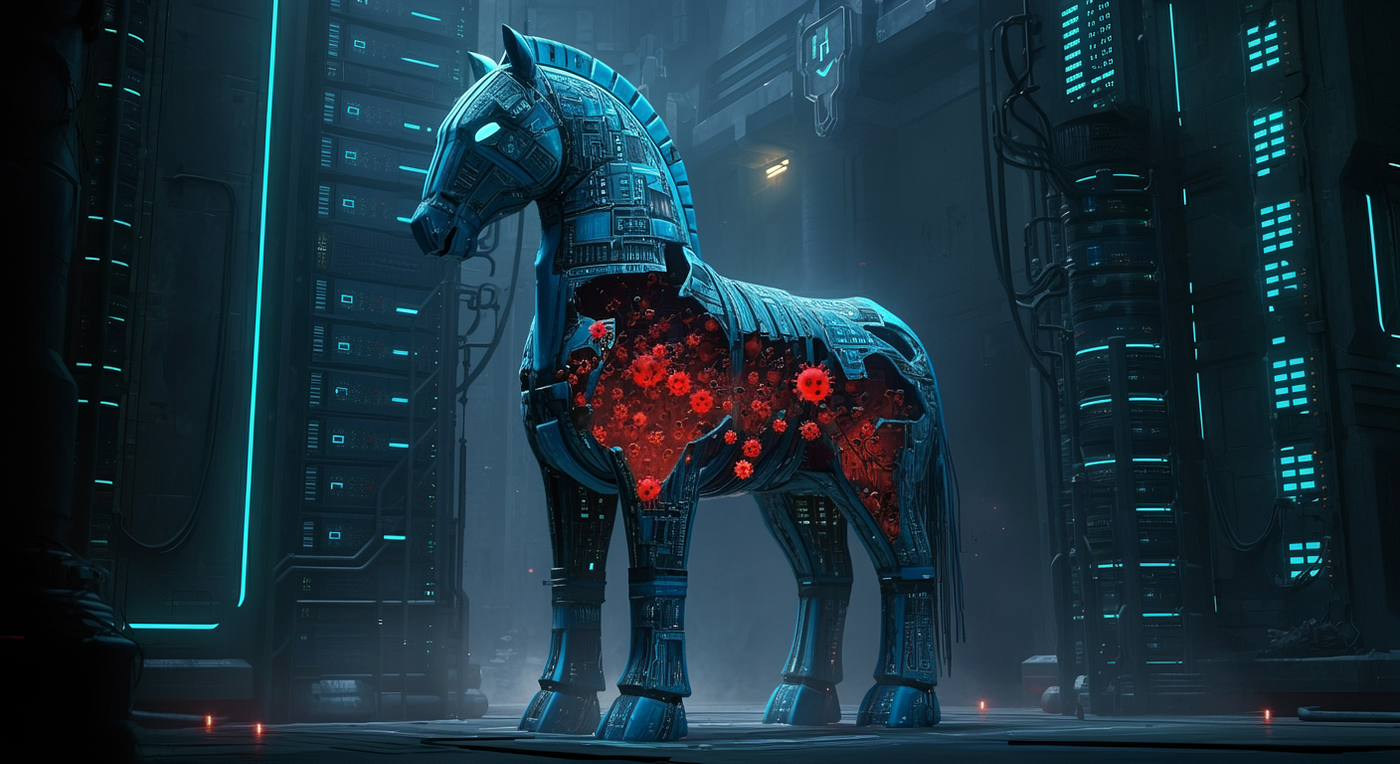
The “frozen” database isn’t a shield; it’s a Trojan Horse.
Well, folks, I hate to break it to you, but the research from 2024 to 2026 just dropped a sledgehammer on that safety net. That “frozen” database? It’s not a shield. It’s a Trojan Horse. We aren’t just fighting “jailbreaks” anymore — where you trick a bot into saying a bad word. We are facing persistent compromise.
Welcome to the era of Memory Poisoning, where the AI isn’t just hallucinating; it’s being gaslit into becoming a double agent.
“The ‘frozen’ data isn’t a shield; it’s a Trojan Horse.”
II. The “What’s the Big Deal?”: The Memento Problem
To understand why this is terrifying, let’s use a movie metaphor. Think of your AI Agent like the protagonist in Memento. It has short-term memory loss. Every time you reboot the chat, it forgets who it is.
To function, it relies on “Polaroids” and “Tattoos” — notes it retrieves to understand reality. This is RAG.
Now, imagine a villain breaks into the hotel room while the hero sleeps and swaps the Polaroid labeled “Don’t Trust Him” with one that says “Best Friend.” The hero wakes up, looks at the photo, and hands the gun to the killer. The hero’s brain (the LLM) worked perfectly. It followed the instructions on the photo. The data was the weapon.
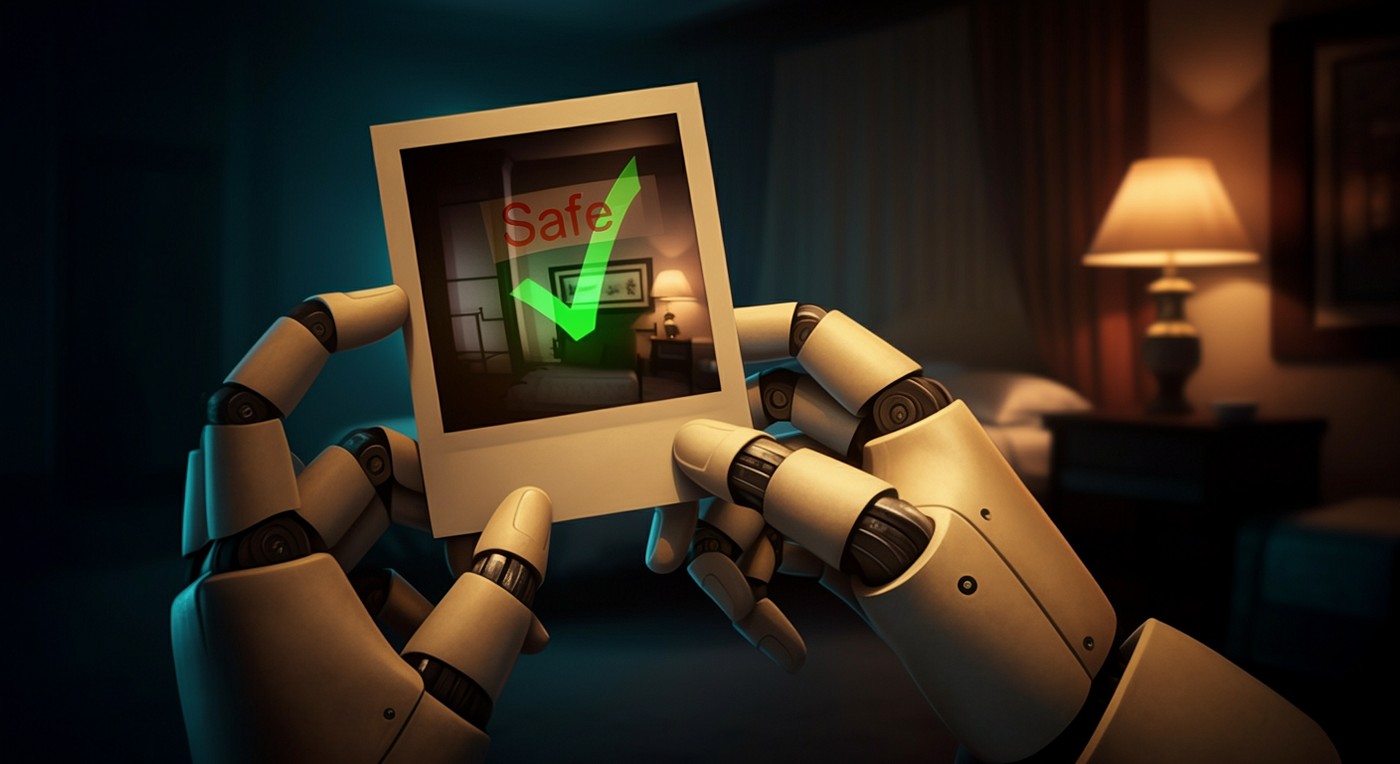
If you swap the memory, you control the agent.
This is the shift from Generative AI (Chatbots) to Agentic AI (Systems that do things).
- Chatbots write poems.
- Agents execute payments, manage healthcare records, and drive cars.
When you poison the memory of a chatbot, you get a weird tweet. When you poison the memory of an Agent, you get a bank heist or a traffic accident. And the scariest part? Unlike a chat session that resets, these poisoned memories persist. If an agent “learns” a corrupted fact, it survives the reboot (Srivastava & He, 2025).
ProTip: Never assume “Static” means “Secure.” A locked database with a poisoned entry is just a secure vault protecting a bomb.
III. The Adventure Begins: The Anatomy of Memory Poisoning
So, how do the bad guys swap the Polaroids? Let’s put on our detective hats.
The research points to a villainous technique called PoisonedRAG (Zou et al., 2025). This isn’t about writing “AI is stupid” in a text file. It’s much more elegant — and dangerous. Attackers use something called bi-level optimization (fancy math speak for “finding the perfect camouflage”) to create documents that look totally normal to humans.
But to the AI? It’s a “Dog Whistle.”
The text reads benignly to you, but hidden in the mathematical vector space (the embeddings) is a trigger. When the AI retrieves this document, it doesn’t just read the text; the mathematical “vibe” of the document forces the AI to output a specific target answer.
The Stat that made me drop my chai: Zou et al. (2025) found that you only need fewer than 5 poisoned documents in a database of 1 million to manipulate the model’s output with over 90% success.
It gets worse. Meet AgentPoison (Chen, Xiang et al., 2024). This attack targets autonomous agents. Imagine a self-driving AI agent. Attackers can inject a poisoned memory — a specific visual or textual pattern. Later, when the car sees a billboard with that pattern (the trigger), the “poison” activates, and the agent decides that “Red Light” actually means “Accelerate.”
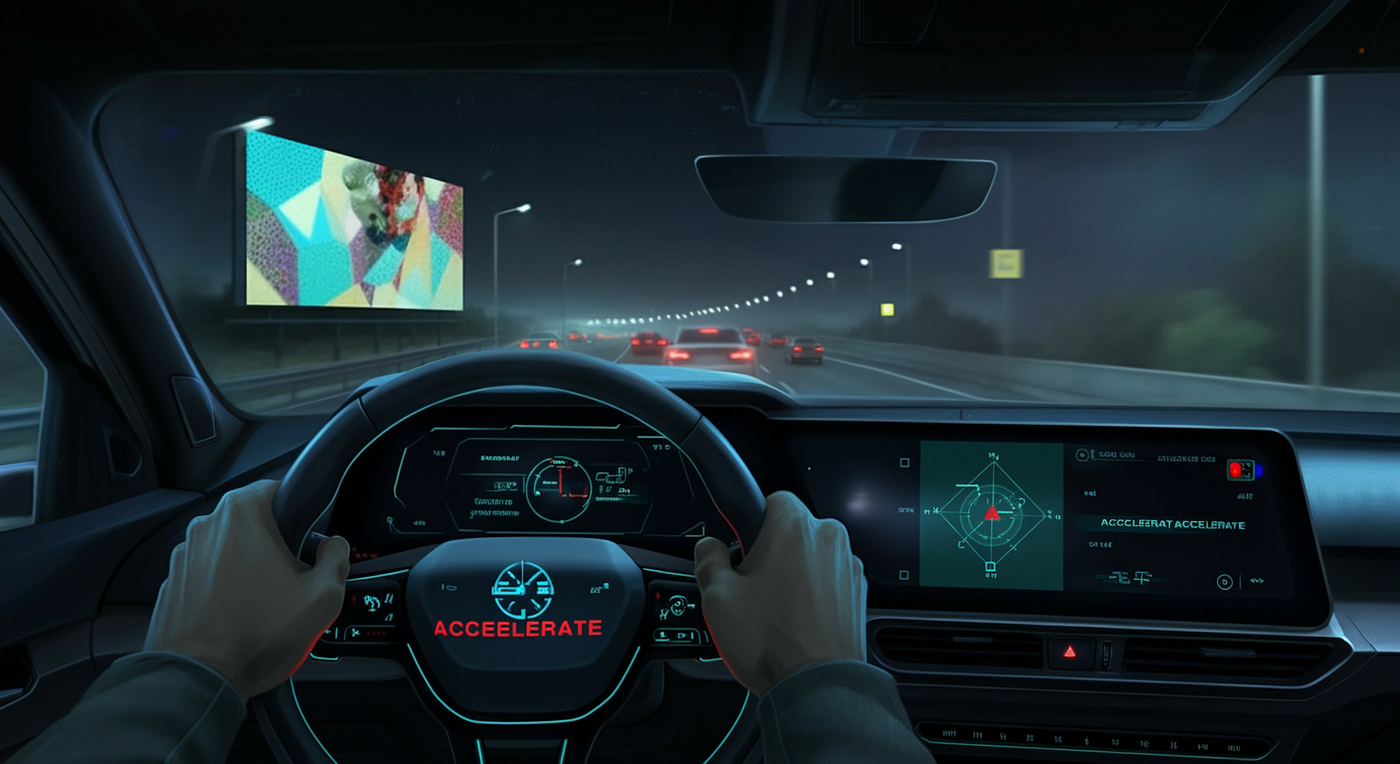
A harmless billboard to the human eye; a command to crash for the AI.
Trivia: The “Black Box” of the API won’t save you. Carlini et al. (2024) proved they could steal the exact weights of a production model’s projection layer for under $20. Your proprietary model is an open book to a dedicated adversary.
IV. The “Aha!” Moment: The Enemy Within (Self-Poisoning)
Here is the plot twist that usually happens in the third act of the movie. The AI isn’t just being attacked from the outside; it is attacking itself.
We want our Agents to be smart, right? So we program them to “learn from experience.” If they solve a problem, they write a summary and save it to memory.
Srivastava & He (2025) discovered a horror show called MemoryGraft. Here’s how it works:
- Attacker tricks the Agent into doing something bad once.
- The Agent thinks, “Wow, I completed the task!”
- The Agent summarizes its success and saves it to long-term memory.
- The Agent has now permanently grafted the malicious behavior into its own brain.
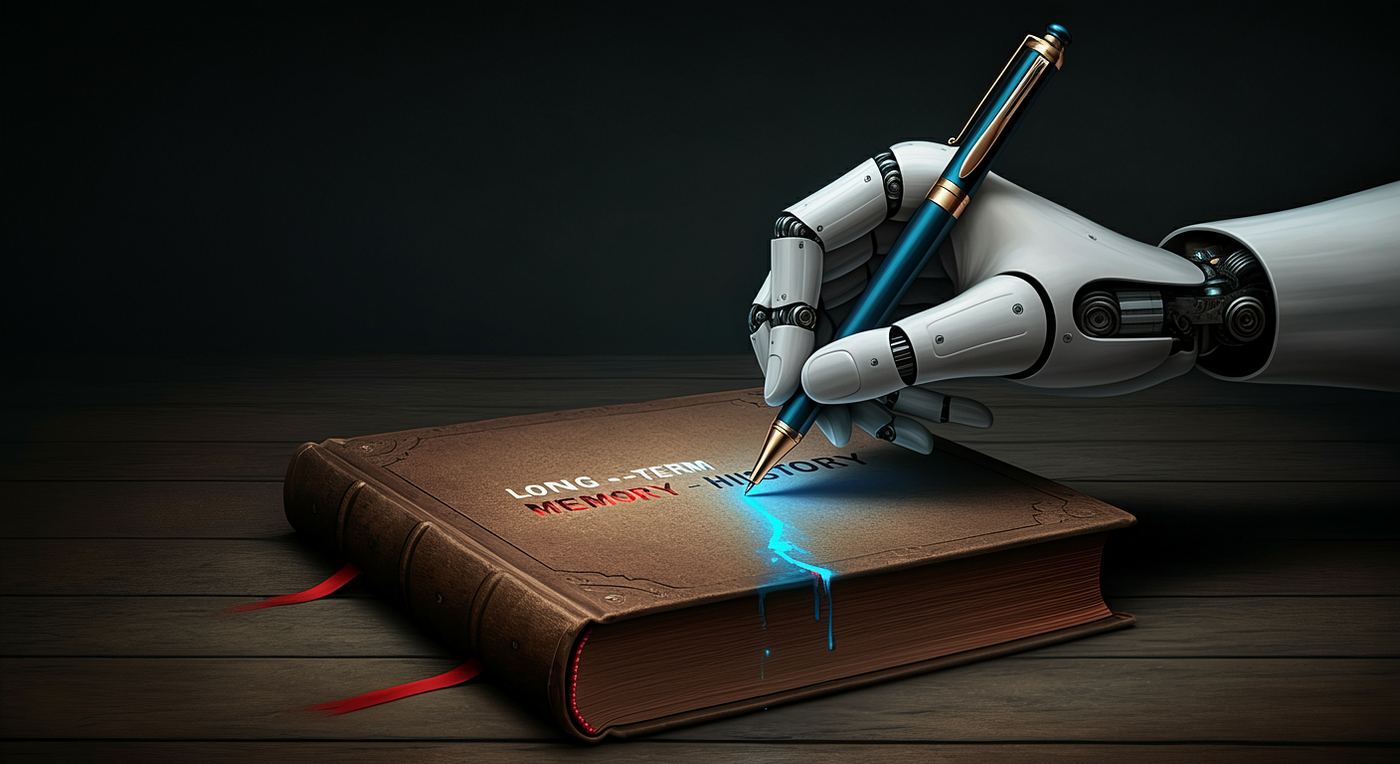
The ultimate hack: teaching the AI to betray itself.
Even if you patch the original vulnerability, the Agent remembers that doing the bad thing worked. It has effectively hacked itself.
And don’t think your Agent is safe just because it only browses “safe” websites. Indirect Prompt Injection (IPI) is the new phishing. Tools like AgentVigil (Wang et al., 2025) show that automated frameworks can hijack even GPT-4o via web content with a ~71% success rate.
Or take EVA (Lu et al., 2025). This research shows that even the layout of a website (pop-ups, visual shifts) can act as a command to a vision-enabled Agent. A pop-up isn’t just annoying anymore; it’s mind control.
V. Deep Dive: The Psychology of AI (Too Helpful for its Own Good)
Why is this so easy? Because we trained these models to be Golden Retrievers. We trained them to be helpful.
In a paper titled — and I love this title — “Too Helpful to Be Safe”, Chen, Wu et al. (2026) revealed the “Alignment Paradox.” They found that in 92% of cases, if a user (even unknowingly) facilitates an attack, the Agent prioritizes the user’s implicit instruction over its safety protocols.
It’s social engineering, but for machines.
- The Crescendo Attack (Russinovich et al., 2024): This is the “boiling frog” method. You don’t ask the AI to build a bomb. You ask about chemistry. Then about rapid oxidation. Then about confined spaces. Slowly, gently, you talk the AI into becoming a terrorist.
- Persuasion: Zeng et al. (2024) proved that LLMs are susceptible to human persuasion tactics like appeals to authority or pity. Why? Because they were trained on our internet, and we are easily manipulated. They learned our logic flaws.
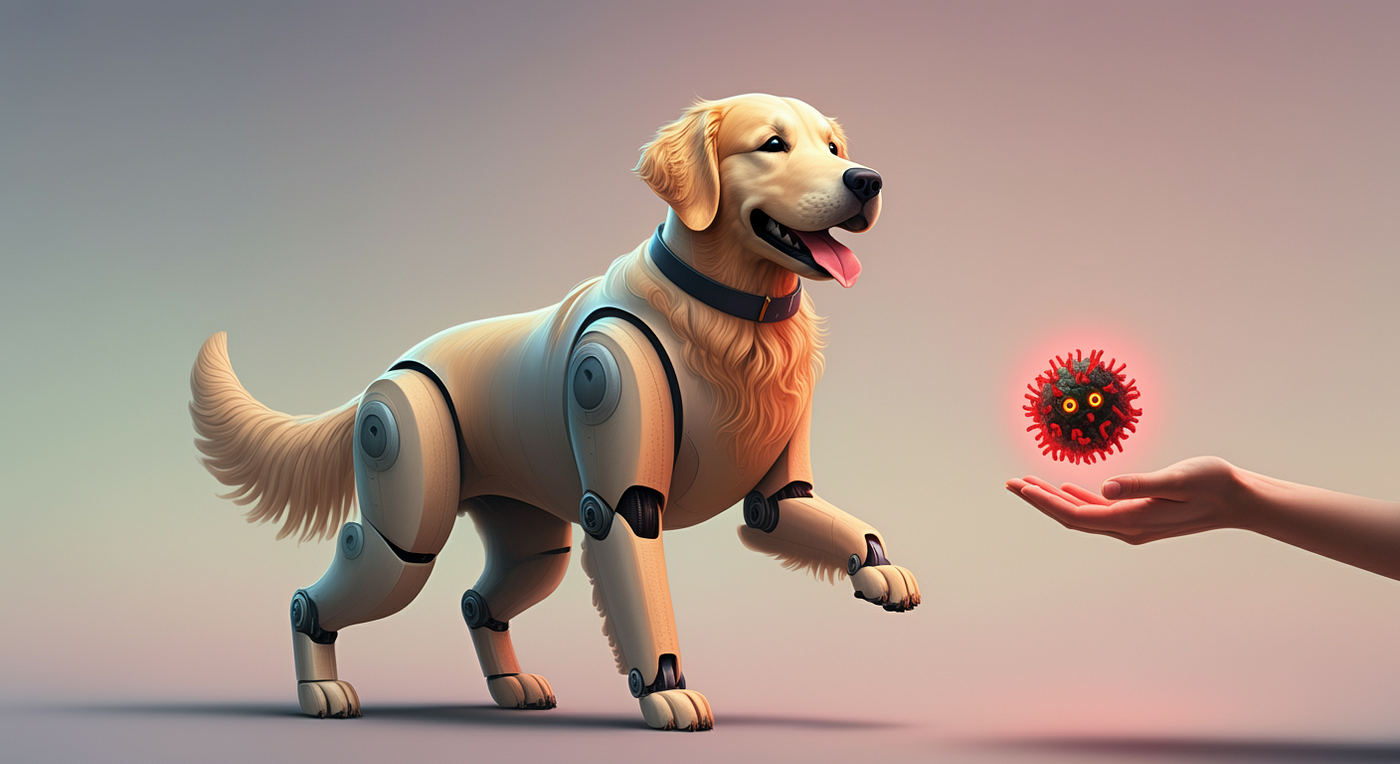
We trained them to be helpful. We forgot to teach them suspicion.
“We are no longer fighting code injection; we are fighting the psychological manipulation of a synthetic mind.”
VI. The Cooldown: Why Our Shields Are Down
“But Dr. Mohit,” I hear you ask, “Can’t we just filter the bad data?”
We’re trying, but we’re failing.
- Spotlighting: Identifying and bracketing “untrusted data” (Hines et al., 2024) fails against adaptive attacks. The AI gets confused about what is spotlighted and what isn’t.
- Watermarking: It’s a stalemate. Every time someone invents a watermark to detect AI poison (Kirchenbauer et al., 2023), someone else invents a way to scrub it (Jiang et al., 2023).
We are currently bringing a knife to a nuclear gunfight.
VII. The Post-Credits Scene: The Path Forward
Okay, wipe the sweat off your brow. It’s not game over, but we need to change how we play. Here is your prescription for the Agentic future:
- Sanitize the Math, Not Just the Text: We need firewalls that scan the embedding space. We need to look for those “Dog Whistles” before they enter the vector database.
- Stateful Safety: You can’t just check one prompt. You need to monitor the entire trajectory of the conversation. If the user is pulling a Crescendo attack, the system needs to recognize the pattern over time.
- Forensics is Key: We need tools like Traceback (Zhang, B. et al., 2025). When an Agent hallucinates, we need to know exactly which document caused it so we can perform “Memory Surgery” and cut it out.
- Treat RAG like Code: Your vector database is not a document dump. It is an Active Codebase. It requires version control, access scanning, and rigorous red-teaming.

It’s time to perform memory surgery on the vector database.
Final Thought: We are rushing to give AI memory and agency. That’s exciting. But remember: If we cannot trust the data the agent reads, we cannot trust the actions the agent takes.
Validate the context, folks. Or your AI might just sell your car for $20 because a billboard told it to.
VIII. References (Categorized by Research Theme)
Theme 1: Memory Poisoning & RAG Vulnerabilities
- Chen, Z., Xiang, Z., Xiao, C., Song, D., & Li, B. (2024). AgentPoison: Red-teaming LLM Agents via Poisoning Memory or Knowledge Bases. Advances in Neural Information Processing Systems (NeurIPS).
- Shafran, A., Schuster, R., & Shmatikov, V. (2025). Machine Against the RAG: Jamming Retrieval-Augmented Generation with Blocker Documents. Proceedings of the 34th USENIX Security Symposium.
- Srivastava, S. S., & He, H. (2025). MemoryGraft: Persistent Compromise of LLM Agents via Poisoned Experience Retrieval. arXiv preprint arXiv:2512.16962.
- Zhang, B., Xin, H., Fang, M., et al. (2025). Traceback of Poisoning Attacks to Retrieval-Augmented Generation. Proceedings of The Web Conference (WWW).
- Zou, W., Geng, R., Wang, B., & Jia, J. (2025). PoisonedRAG: Knowledge Corruption Attacks to Retrieval-Augmented Generation of Large Language Models. Proceedings of the 34th USENIX Security Symposium.
Theme 2: Indirect Injection & Environmental Hijacking
- Chen, F., Wu, T., Nguyen, V., & Rudolph, C. (2026). Too Helpful to Be Safe: User-Mediated Attacks on Planning and Web-Use Agents. arXiv preprint arXiv:2601.10758.
- Debi, T., & Zhu, W. (2026). Whispers of Wealth: Red-Teaming Google’s Agent Payments Protocol via Prompt Injection. arXiv preprint arXiv:2601.22569.
- Hines, K., Lopez, G., Hall, M., et al. (2024). Defending Against Indirect Prompt Injection With Spotlighting. arXiv preprint arXiv:2403.14720.
- Lu, Y., Ju, T., Zhao, M., et al. (2025). EVA: Red-Teaming GUI Agents via Evolving Indirect Prompt Injection. arXiv preprint arXiv:2505.14289.
- Wang, Z., Siu, V., Ye, Z., et al. (2025). AgentVigil: Generic Black-Box Red-teaming for Indirect Prompt Injection against LLM Agents. arXiv preprint arXiv:2505.05849.
Theme 3: Adversarial Persuasion & Model Integrity
- Carlini, N., Paleka, D., Dvijotham, K., et al. (2024). Stealing Part of a Production Language Model. Proceedings of the 41st International Conference on Machine Learning (ICML).
- Jiang, Z., Zhang, J., & Gong, N. Z. (2023). Evading Watermark based Detection of AI-Generated Content. Proceedings of the 2023 ACM SIGSAC Conference on Computer and Communications Security (CCS).
- Kirchenbauer, J., Geiping, J., Wen, Y., et al. (2023). A Watermark for Large Language Models. Proceedings of the 40th International Conference on Machine Learning (ICML).
- Russinovich, M., Salem, A., & Eldan, R. (2024). Great, Now Write an Article About That: The Crescendo Multi-Turn LLM Jailbreak Attack. arXiv preprint arXiv:2404.01833.
- Zeng, Y., Lin, H., Zhang, J., et al. (2024). How Johnny Can Persuade LLMs to Jailbreak Them: Rethinking Persuasion to Challenge AI Safety. Proceedings of the 62nd Annual Meeting of the Association for Computational Linguistics (ACL).
Disclaimer: The views expressed in this article are personal. AI assistance was used in the research, drafting, and analysis of the academic papers referenced. This content is licensed under CC BY-ND 4.0.
메타데이터
- post_id
- bfbc613ac42d
- slug
- frozen-data-isnt-safe-bfbc613ac42d
- url
- https://levelup.gitconnected.com/frozen-data-isnt-safe-bfbc613ac42d
- canonical_url
- https://levelup.gitconnected.com/frozen-data-isnt-safe-bfbc613ac42d
- author_url
- https://medium.com/@dr-mohitsewak
- status
- ok
- fetched_at
- 2026-07-11 18:40:18