Is ASR Just Fancy Technology?
Why Speech Recognition Matters in Healthcare and Accessibility
Is ASR Just Fancy Technology?
Why Speech Recognition Matters in Healthcare and Accessibility
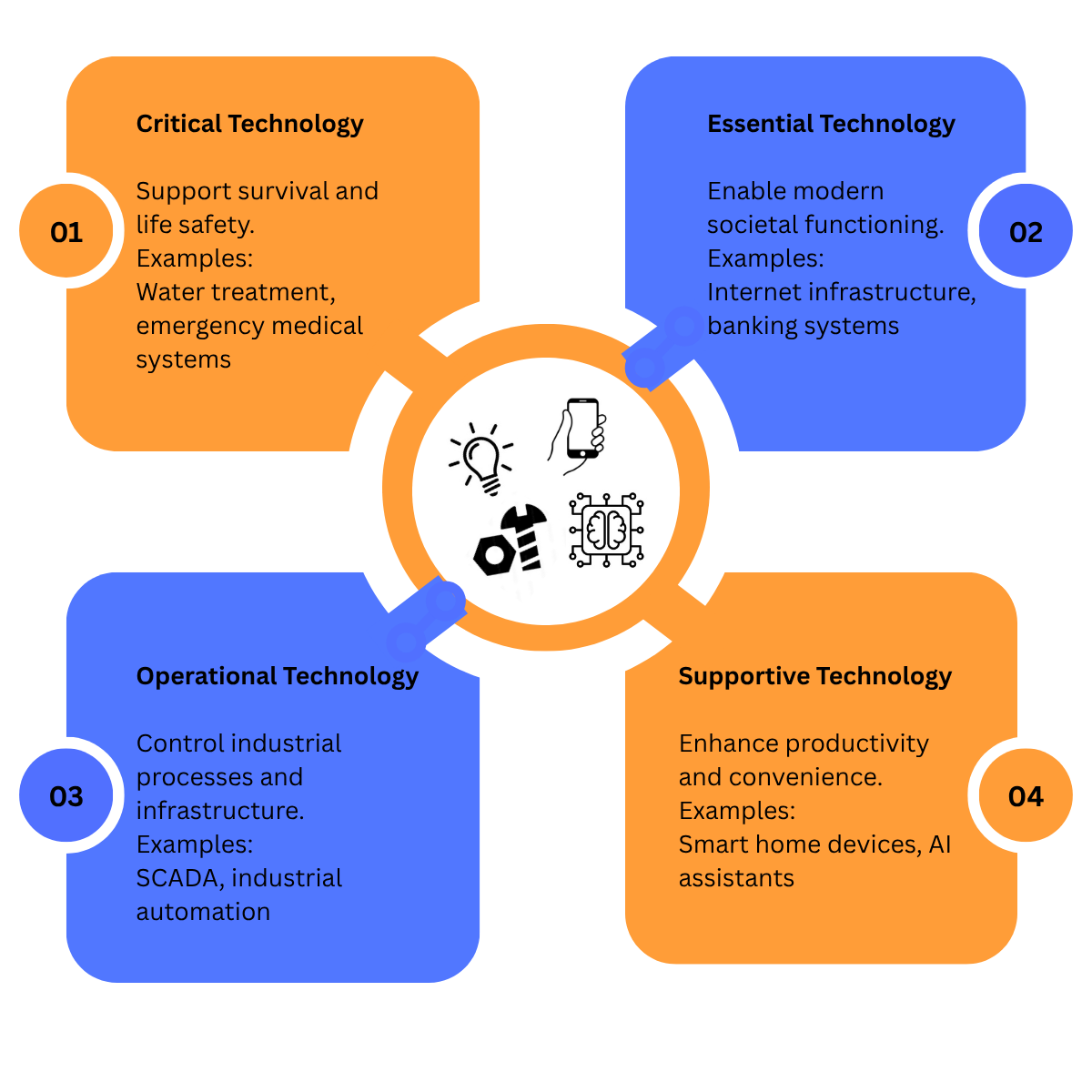
Technology classification by necessity. Image by author
One way to classify technology is based on how dependent we are on it in our day-to-day lives. A hospital’s life support systems, for example, are critical technology because they directly sustain human life. Banking infrastructure, on the other hand, is essential technology; we could technically survive without it, but modern economic life would collapse. Operational technology, such as the industrial control systems that keep water treatment plants running, act as support for both critical and essential technologies. Supportive technology is where we place everything else that improves our lives without being strictly necessary, like a smart thermostat that learns your preferred room temperature.
It is worth recognizing, however, that once we step away from critical technologies, the other categories become subjective. Internet access, for example, may be essential for an urban professional who relies on mobile applications to find transportation, pay for services, and communicate with others. For someone who has spent most of their life in a rural community, that same technology may feel supportive.
The same principle applies to automatic speech recognition. For many people, it is a convenient feature. For others, it can function as an essential tool that enables communication, independence, and participation in society.
Understanding Automatic Speech Recognition
Automatic Speech Recognition (ASR) is a technology that converts spoken language into readable text, with the goal of fostering human-human or human-machine communication.
In human-human communication (HHC), ASR makes it possible for people who speak different languages to understand one another. It also enables dictating short messages in situations where a phone call isn’t possible, which can be particularly useful in emergencies. Speech-to-text is equally prominent in human-machine communication (HMC), powering voice search, vehicle infotainment systems, and digital assistants.
ASR has quietly become part of everyday life. Consumer voice assistants like Apple’s Siri, Amazon’s Alexa, and Microsoft’s Cortana brought the technology into millions of homes. Cloud-based APIs such as Google Cloud Speech-to-Text and Amazon Transcribe made it accessible to developers, while open-source models like OpenAI’s Whisper and NVIDIA’s Canary-Qwen have opened the door to research and custom applications.
When ASR Becomes More Than a Convenience
Going back to the topic of technology prioritization, ASR comfortably falls into the supportive technology category for the average non-disabled person. But for persons with disabilities (PWD), this technology may receive a higher rating.
Speech is often a more natural form of communication for humans than digital input methods like keyboards, touchpads, or mice, particularly for people living with motor or visual disabilities. In the case of learning disabilities such as dyslexia and dysgraphia, speech-to-text technology can reduce the burden of spelling and typing, making digital communication more accessible.
For individuals with communication disorders, the impact can be even more profound. Communication disorders such as aphasia, dysarthria, and severe stuttering can significantly affect a person’s ability to participate in conversations with family, friends, and healthcare providers. Research has linked these communication barriers to social isolation, reduced quality of life, and increased rates of depression. In such cases, speech technologies can help bridge communication gaps and improve participation in everyday activities.
ASR in Healthcare and Rehabilitation
In clinical settings, patients are often expected to explain symptoms, describe experiences, and communicate concerns to healthcare professionals. Speech transcription tools can help facilitate this process for patients who experience communication difficulties.
However, commercial ASR solutions are primarily designed for the general population and are therefore trained predominantly on typical speech patterns. As a result, these systems often perform poorly when presented with atypical or impaired speech. This limitation creates an opportunity for specialized ASR systems designed specifically for healthcare applications.
There is also a compelling case for ASR in rehabilitation. Recovery from speech impairments typically requires at least ten hours of practice with a speech and language therapist (SLT), delivered over several weeks or months. ASR embedded in rehabilitation software could administer and validate therapy tasks, reducing the cost of treatment while improving consistency and accessibility.
One example is the VITHEA (Virtual Therapist for Aphasia Treatment) project developed by a research group in Portugal. The system uses speech recognition technology to present and validate speech therapy exercises created by SLTs through a web-based platform. Such systems demonstrate how ASR can extend therapy beyond the clinic and increase access to rehabilitation services.
Where Do We Go from Here?
ASR has a meaningful place in both healthcare delivery and everyday communication for PWD. It is a practical tool with real clinical potential, and a growing body of research is working to build models specifically trained on impaired and domain-specific speech.
What is needed now is for these specialized models to move from research settings into mainstream clinical adoption. That requires investment, awareness, and collaboration between the AI and medical communities. If you work in either field, the conversation is worth joining.
Ultimately, the importance of a technology is not determined solely by what it does, but by how much it changes the lives of those who need it most. For many individuals facing communication challenges, speech recognition can make the difference between participation and isolation.
If you enjoyed reading this, feel free to connect with me on LinkedIn where I share my work in AI and machine learning and lessons learned along the way.
메타데이터
- post_id
- bfc60958dd17
- slug
- is-asr-just-fancy-technology-bfc60958dd17
- url
- https://medium.com/@oguamaprosperity/is-asr-just-fancy-technology-bfc60958dd17
- canonical_url
- https://medium.com/@oguamaprosperity/is-asr-just-fancy-technology-bfc60958dd17
- author_url
- https://medium.com/@oguamaprosperity
- status
- ok
- fetched_at
- 2026-06-09 15:37:30




