What Is Preservation Rhinoplasty- And Why Long Island Surgeons Are Starting to Offer It
Rhinoplasty has been one of the most requested cosmetic procedures in the country for decades. But in the last few years, a quiet…
What Is Preservation Rhinoplasty- And Why Long Island Surgeons Are Starting to Offer It
Rhinoplasty has been one of the most requested cosmetic procedures in the country for decades. But in the last few years, a quiet revolution has been taking place in how surgeons approach the nose- and it’s called preservation rhinoplasty. If you’ve been researching nose reshaping on Long Island or in Manhattan, you’ll want to understand what this technique is, how it differs from the traditional approach, and whether it might be right for you.
At Doshi Plastic Surgery, Dr. Hardik Doshi has incorporated preservation rhinoplasty into his practice because it consistently delivers results that look and feel more natural- while reducing downtime and preserving the structural integrity of the nose long-term.
The Limits of Traditional Rhinoplasty
The conventional approach to rhinoplasty- often called reductive rhinoplasty — has been the standard of care for over 50 years. The technique works by removing cartilage and bone to reshape the nose. Reducing a dorsal hump, for instance, involves cutting away the excess tissue, then performing osteotomies (controlled bone fractures) to close the resulting gap at the bridge.
While this approach works, it comes with meaningful trade-offs. Removing structural tissue means disrupting blood supply, lymphatics, and soft tissue attachments that take a long time to heal. Swelling often persists for 12 to 18 months. Irregularities along the nasal bridge are not uncommon. And because cartilage that’s removed can never be replaced, traditional rhinoplasty carries a risk of long-term structural compromise- sometimes leading to breathing difficulties or aesthetic concerns years down the line.
What Makes Preservation Rhinoplasty Different
Preservation rhinoplasty operates on a fundamentally different philosophy: preserve the native anatomy whenever possible. Rather than removing the dorsal hump, the surgeon repositions it- lowering the entire osseocartilaginous framework through what’s called a “let-down” or “push-down” technique. Key ligaments and soft tissue attachments are maintained rather than severed.
Because the natural bony-cartilaginous roof of the nose is kept intact, the outcome heals faster, swells less, and maintains a more organic contour. The nose still looks like a nose — because structurally, it largely still is. Patients report that their results feel more “them,” rather than obviously operated on.
This technique also tends to produce a smoother dorsal line with fewer visible edges or ridges, which have historically been one of the most common aesthetic complaints following traditional rhinoplasty.
Who Is a Candidate?
Preservation rhinoplasty is not universally applicable- and a surgeon who tells you otherwise should give you pause. The technique is best suited for patients with:
— A dorsal hump that needs reduction without full deconstruction of the bridge
— Relatively straight nasal bones with predictable anatomy
— A nose that doesn’t require significant tip work or major asymmetry correction
— Thicker skin, which can benefit from the reduced tissue disruption
Patients with severely deviated noses, complex prior surgeries (revision rhinoplasty), or highly specific tip requirements may still be better served by a structural or component rhinoplasty approach. This is why in-person consultation matters- a surgeon needs to assess your anatomy, your skin thickness, your airway function, and your goals before recommending any technique.

If you’re on Long Island or in Manhattan and want an honest assessment of whether preservation rhinoplasty is right for you, book a consultation with Dr. Doshi.
Why Long Island Surgeons Are Paying Attention
The adoption of preservation rhinoplasty in the New York metro area — and specifically on Long Island — has accelerated in the last three to four years, driven by a few converging factors.
Patient expectations have evolved. The “done” nose of the 1990s — pinched, upturned, dramatically reshaped — has fallen out of favor. Today’s patients want refinement, not reconstruction. They want results that hold up on video calls, in photographs, and in person without looking operated on. Preservation rhinoplasty is engineered to deliver exactly that.
Social media has changed what patients know. Patients arrive at consultations already aware of terms like “preservation rhinoplasty” and “structural rhinoplasty.” They’re comparing techniques online and seeking out surgeons who offer the most current approaches. This raises the bar for every practice.
Training and data are catching up. Preservation rhinoplasty has deep roots in European surgery — particularly in Turkey and France — and it has taken time for the technique to be widely taught and validated in the U.S. As more American surgeons have trained in these methods and published outcomes data, adoption has grown substantially.
Breathing Function: The Overlooked Benefit
One of the most underappreciated advantages of the preservation approach is what it does — or rather, doesn’t do — to nasal airflow. Because key structural components of the nose are maintained, the internal valve architecture is less likely to be disrupted. Many patients undergoing traditional rhinoplasty report some degree of breathing change post-surgery; this risk is meaningfully lower with preservation techniques.
Dr. Doshi performs a thorough functional assessment alongside every cosmetic rhinoplasty consultation. If you have a deviated septum, enlarged turbinates, or internal valve narrowing, these can be addressed in the same surgical session. Learn more about rhinoplasty at Doshi Plastic Surgery.
Recovery: What to Expect
While no rhinoplasty recovery is trivial, preservation rhinoplasty generally offers a faster and smoother road back to normal. Most patients see the majority of their swelling resolve within three to four weeks rather than the six to eight weeks typical with traditional techniques. The final result continues to refine over the following months, but you won’t be hiding from social situations for as long.
Splint and tape are worn for approximately one week. Bruising, if any, typically resolves by day ten. Strenuous activity should be avoided for four to six weeks. Most patients return to desk work within seven to ten days.
Choosing the Right Surgeon on Long Island
Preservation rhinoplasty is a technically demanding procedure. The margin for error is narrower than with traditional rhinoplasty, and the surgeon must have a thorough command of nasal anatomy and surgical planning. The technique requires different instrumentation, a different mental map of the nose, and significant hands-on experience.
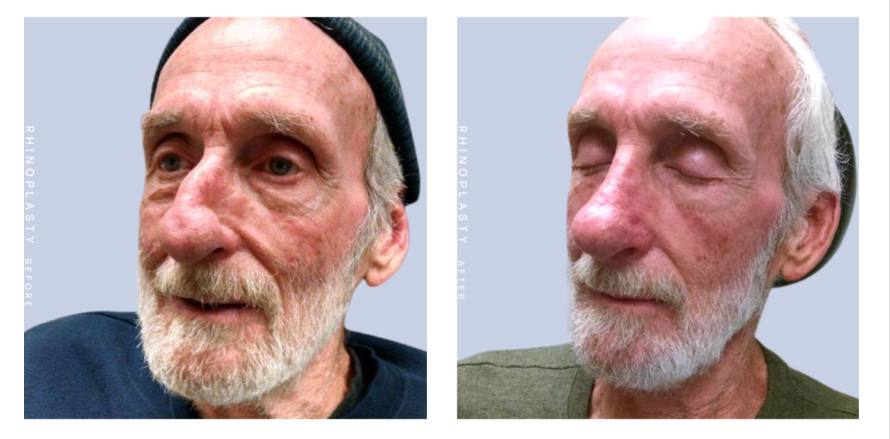
When evaluating surgeons on Long Island or in Manhattan, ask specifically about their training in preservation rhinoplasty, review before-and-after photos of patients with similar anatomy to yours, and look for a surgeon who will be honest about whether the technique is appropriate for your case — rather than one who applies the same approach to every patient. Dr. Doshi’s credentials and training reflect a commitment to technique-specific expertise and individualized surgical planning.
Final Thoughts
Preservation rhinoplasty represents a meaningful advancement in how surgeons approach nose reshaping. By working with the nose’s native anatomy rather than against it, the technique produces results that heal faster, look more natural, and last longer — with less structural compromise over time.
If you’re considering rhinoplasty and want to explore whether this approach is right for you, schedule a consultation at Doshi Plastic Surgery. Dr. Doshi sees patients at both the Long Island and Manhattan offices and will give you an honest, anatomy-driven assessment of your options.
메타데이터
- post_id
- bfd5ef3a39f0
- slug
- what-is-preservation-rhinoplasty-and-why-long-island-surgeons-are-starting-to-offer-it-bfd5ef3a39f0
- url
- https://medium.com/@rahul.dey.dey0589/what-is-preservation-rhinoplasty-and-why-long-island-surgeons-are-starting-to-offer-it-bfd5ef3a39f0
- canonical_url
- https://medium.com/@rahul.dey.dey0589/what-is-preservation-rhinoplasty-and-why-long-island-surgeons-are-starting-to-offer-it-bfd5ef3a39f0
- author_url
- https://medium.com/@rahul.dey.dey0589
- status
- ok
- fetched_at
- 2026-06-09 15:37:30