Database Replication Explained: How Modern Applications Scale to Millions of Users
When you post a photo on Instagram, send a message on WhatsApp, or place an order on Amazon, you expect the application to work instantly…
Database Replication Explained: How Modern Applications Scale to Millions of Users
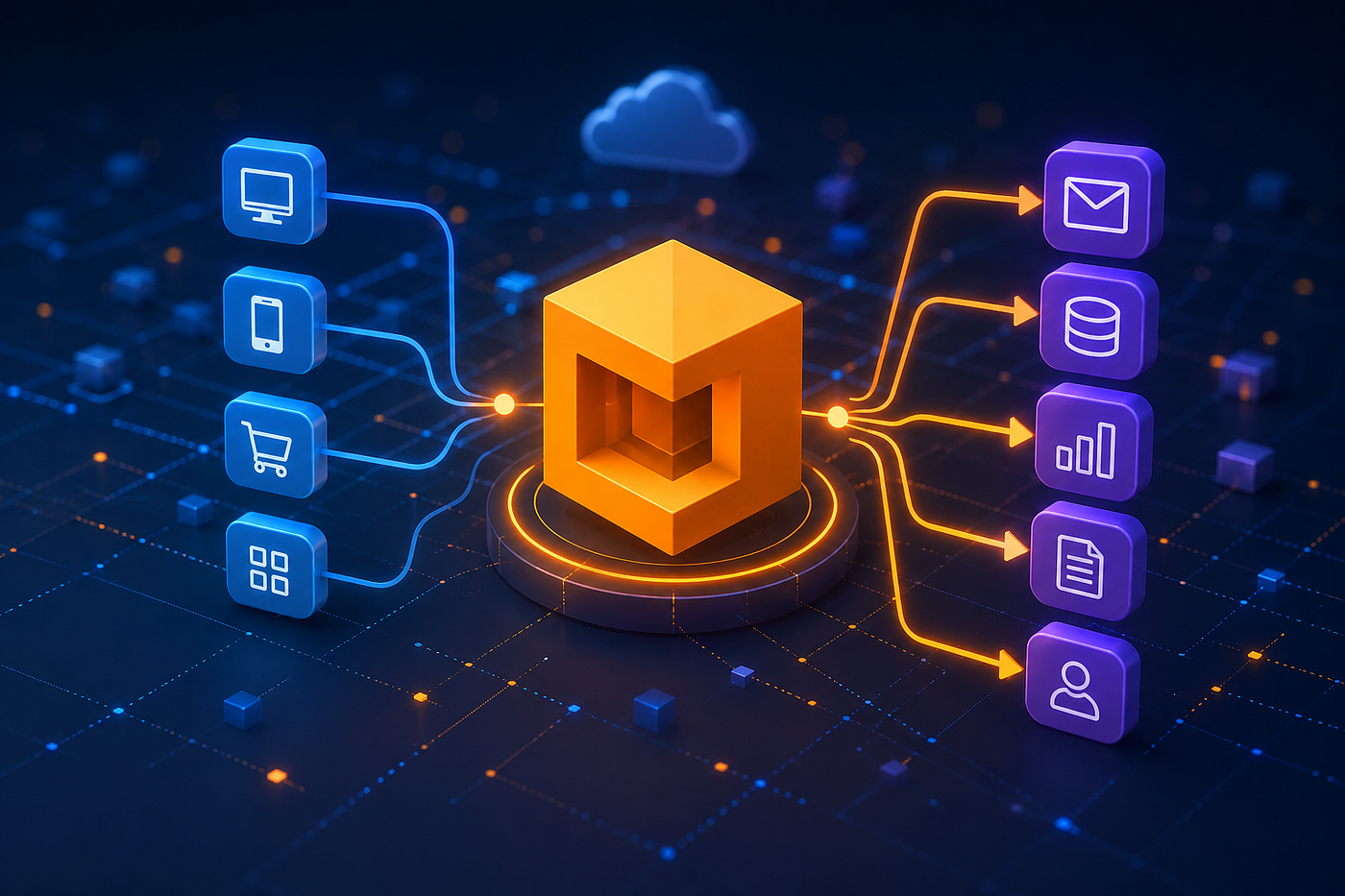
When you post a photo on Instagram, send a message on WhatsApp, or place an order on Amazon, you expect the application to work instantly. What most users don’t realize is that their data is rarely stored on a single database server. Instead, modern systems maintain multiple copies of the same data across different machines, regions, and even continents.

This technique is known as database replication, and it is one of the most important building blocks of scalable and highly available systems.
Without replication, a single database server would become a bottleneck as traffic grows. A hardware failure could take the entire application offline, and a sudden spike in users could overwhelm the system. Replication solves these problems by distributing data across multiple servers while keeping copies synchronized.
Let’s explore the most common replication strategies used in real-world systems and understand the challenges they introduce.
What Is Database Replication?
Database replication is the process of maintaining copies of the same data on multiple database servers. Whenever data changes, those changes are propagated to other servers so that they contain an up-to-date version of the dataset.
Organizations use replication for several reasons:
- High availability and fault tolerance
- Faster read performance
- Geographic distribution of data
- Disaster recovery
- Reduced downtime during maintenance
- Improved scalability
The way data is replicated depends on the architecture chosen by the system designers.
Leader-Follower Replication: The Foundation of Most Systems
The most widely adopted replication model is Leader-Follower Replication, also known as Primary-Replica Replication.
In this architecture, one server is designated as the leader. All write operations — such as creating, updating, or deleting data — are sent exclusively to the leader. Once the leader processes a change, it records the modification and forwards it to one or more follower servers.
Write Requests
                 │
                 ▼
          ┌──────────┐
          │  Leader  │
          └──────────┘
             │    │
             ▼    ▼
      ┌────────┐ ┌────────┐
      │Follower│ │Follower│
      └────────┘ └────────┘
Followers maintain copies of the leader’s data and can serve read requests.
Why It Works Well
Leader-follower replication offers a straightforward model for maintaining consistency because only one server is responsible for handling writes.
Benefits include:
- Simpler consistency guarantees
- Easy scaling of read traffic
- Better fault tolerance
- Reduced load on the primary database
This architecture powers many deployments of MySQL, PostgreSQL, and cloud-managed databases.
The Trade-Off
The leader becomes a critical dependency. If it fails, the system must promote a follower to become the new leader. During this transition, applications may experience temporary unavailability.
Read Replicas: Scaling Reads Without Scaling Complexity
As applications grow, read traffic often far exceeds write traffic.
Consider a social media platform:
- Millions of users view posts every minute.
- Only a fraction create new content.
Sending every read request to the primary database would waste resources and limit scalability.
This is where Read Replicas come into play.
A read replica is essentially a follower whose primary responsibility is serving read operations.
Leader
                     │
          ┌──────────┼──────────┐
          ▼          ▼          ▼
      Replica1   Replica2   Replica3
          ▲          ▲          ▲
          │          │          │
       Reads      Reads      Reads
Applications can distribute read traffic across multiple replicas while keeping writes centralized on the leader.
Real-World Example
Imagine an online shopping website during a major sale.
Every second:
- Thousands of customers browse products.
- Search for items.
- View reviews.
- Check inventory.
Most of these operations are reads.
By directing these requests to replicas, the primary database remains focused on processing purchases and inventory updates.
Benefits of Read Replicas
- Improved performance
- Horizontal scaling of read workloads
- Lower latency for users
- Reduced pressure on the primary database
Many large-scale systems use dozens or even hundreds of read replicas globally.
Multi-Leader Replication: Scaling Writes Across Regions
Leader-follower replication works extremely well until a system becomes globally distributed.
Imagine a company with users in:
- North America
- Europe
- Asia
If every write must travel to a single leader located in one region, users far away may experience higher latency.
To solve this problem, some systems adopt Multi-Leader Replication.
In this model, multiple database nodes can accept write operations simultaneously.
Leader A  ◄────► Leader B
          ▲               ▲
          │               │
       Users           Users
      (America)       (Europe)
Each leader replicates its updates to the others.
Advantages
Multi-leader replication offers several benefits:
- Lower write latency for geographically distributed users
- Better availability
- Reduced dependency on a single write node
- Improved resilience during regional outages
This approach is common in globally distributed applications and collaborative systems.
The Biggest Challenge: Conflict Resolution
While multi-leader replication improves scalability, it introduces a difficult problem.
What happens if two users modify the same record at the same time on different leaders?
For example:
- A user in New York changes their profile name to “Alex.”
- At nearly the same moment, a user in London changes it to “Alexander.”
Both updates are valid.
When replication occurs, the database must decide which version wins.
This situation is known as a write conflict.
Common conflict-resolution strategies include:
Last Write Wins
The most recent update overwrites earlier changes.
Simple but can result in data loss.
Application-Level Resolution
The application examines conflicts and decides how to merge them.
More flexible but significantly more complex.
Version Vectors and CRDTs
Advanced distributed systems use specialized algorithms that allow concurrent changes to merge safely.
These techniques are powerful but require sophisticated implementation.
Replication Lag: The Hidden Cost of Replication
A common misconception is that replicas update instantly.
In reality, there is usually a delay between:
- A write occurring on the leader.
- The change reaching replicas.
This delay is called Replication Lag.
Example
Suppose you update your profile picture.
The update reaches the leader immediately.
However, a follower may not receive the change for a few hundred milliseconds — or even several seconds under heavy load.
If another user reads from that follower during this window, they may see the old profile picture.
This phenomenon is known as eventual consistency.
What Causes Replication Lag?
Several factors contribute to lag:
Network Latency
Data must travel between servers, often across regions.
High Write Throughput
Large numbers of updates create a replication backlog.
Expensive Transactions
Massive updates can take longer to replicate.
Slow Replica Hardware
Followers with insufficient resources may struggle to keep up.
Geographic Distance
Cross-continent replication naturally introduces delays.
How Companies Reduce Replication Lag
Large-scale systems employ several techniques:
- Faster networking infrastructure
- Parallel replication
- Data partitioning (sharding)
- Optimized transaction design
- Monitoring and alerting systems
- Regional database architectures
Engineering teams continuously monitor replication metrics because even small delays can impact user experience.
Choosing the Right Replication Strategy
There is no universal solution.
The ideal architecture depends on business requirements.
RequirementRecommended ApproachSimplicityLeader-FollowerHeavy Read TrafficRead ReplicasGlobal Write DistributionMulti-LeaderStrong ConsistencySingle LeaderMaximum AvailabilityMulti-Leader or Distributed Systems
The best systems often combine multiple strategies to achieve both performance and reliability.
Final Thoughts
Database replication is one of the foundational technologies behind modern internet-scale applications. It enables services to remain available during failures, handle enormous traffic spikes, and serve users across the globe with minimal latency.
Leader-follower replication provides simplicity and reliability. Read replicas allow systems to scale efficiently under heavy read workloads. Multi-leader replication enables global write distribution but introduces the complexity of conflict resolution. And throughout all of these architectures, replication lag remains an important challenge that engineers must carefully manage.
The next time you refresh a social media feed, stream a video, or complete an online purchase, there is a good chance that replicated databases are working behind the scenes — quietly ensuring that your data is available, durable, and delivered at scale.
메타데이터
- post_id
- bfdacc31fb32
- slug
- database-replication-explained-how-modern-applications-scale-to-millions-of-users-bfdacc31fb32
- url
- https://medium.com/@tech-logs/database-replication-explained-how-modern-applications-scale-to-millions-of-users-bfdacc31fb32
- canonical_url
- https://medium.com/@tech-logs/database-replication-explained-how-modern-applications-scale-to-millions-of-users-bfdacc31fb32
- author_url
- https://medium.com/@tech-logs
- status
- ok
- fetched_at
- 2026-06-22 07:15:07