Why Most Shopline Stores Fail at SEO (And a Simple Strategy That Actually Works)
One problem I kept running into with Shopline stores:
Why Most Shopline Stores Fail at SEO (And a Simple Strategy That Actually Works)
One problem I kept running into with Shopline stores:
Products are listed — but they get almost zero organic traffic.
At first, I thought it was a technical SEO issue.
But after looking at dozens of stores, a pattern became obvious.
The Real Problem Isn’t Technical — It’s Structural
Most product pages suffer from the same limitations:
- They target very limited keywords
- Content is often thin or templated
- They only capture high-intent (buy) traffic
That sounds fine in theory — until you realize:
You’re competing only at the hardest stage of the funnel.
The Shift That Changed Everything
Instead of relying only on product pages…
I started testing a simple idea:
Turn each product into a content entry point.
Not just a sales page — but a traffic asset.
The Workflow (Simple but Scalable)
1. Start with Product URLs
Export or collect your Shopline product links.
This becomes your content seed list.
2. Map Each Product to Search Intent
Don’t just think:
“How do I sell this?”
Think:
- What problems does it solve?
- What alternatives exist?
- When would someone research before buying?
Examples of intent expansion:
- Comparison → “X vs Y”
- Informational → “How to choose X”
- Use case → “Best X for [scenario]”
3. Turn Products into Blog Content
Instead of generic posts, create intent-driven articles:
- “Best use cases for [product]”
- “How to choose [product type]”
- “Alternatives to [product]”
This does something powerful:
You start ranking before users are ready to buy.
4. Link Back to the Product Page
Each article becomes a funnel.
It helps:
- Drive targeted traffic
- Improve internal linking
- Strengthen topical authority
What Surprised Me Most
Even simple blog pages started getting impressions faster than product pages.
Why?
Because:
- Lower competition keywords
- Broader search intent
- More indexable content
And once traffic starts coming in…
Conversion becomes much easier.
Scaling This Without Losing Your Mind
Doing this manually works…
Until you have:
- 20 products
- 50 products
- 100+ products
Then it becomes chaos.
So I started testing a structured workflow where:
- Input: product URLs
- Output: intent-mapped blog content
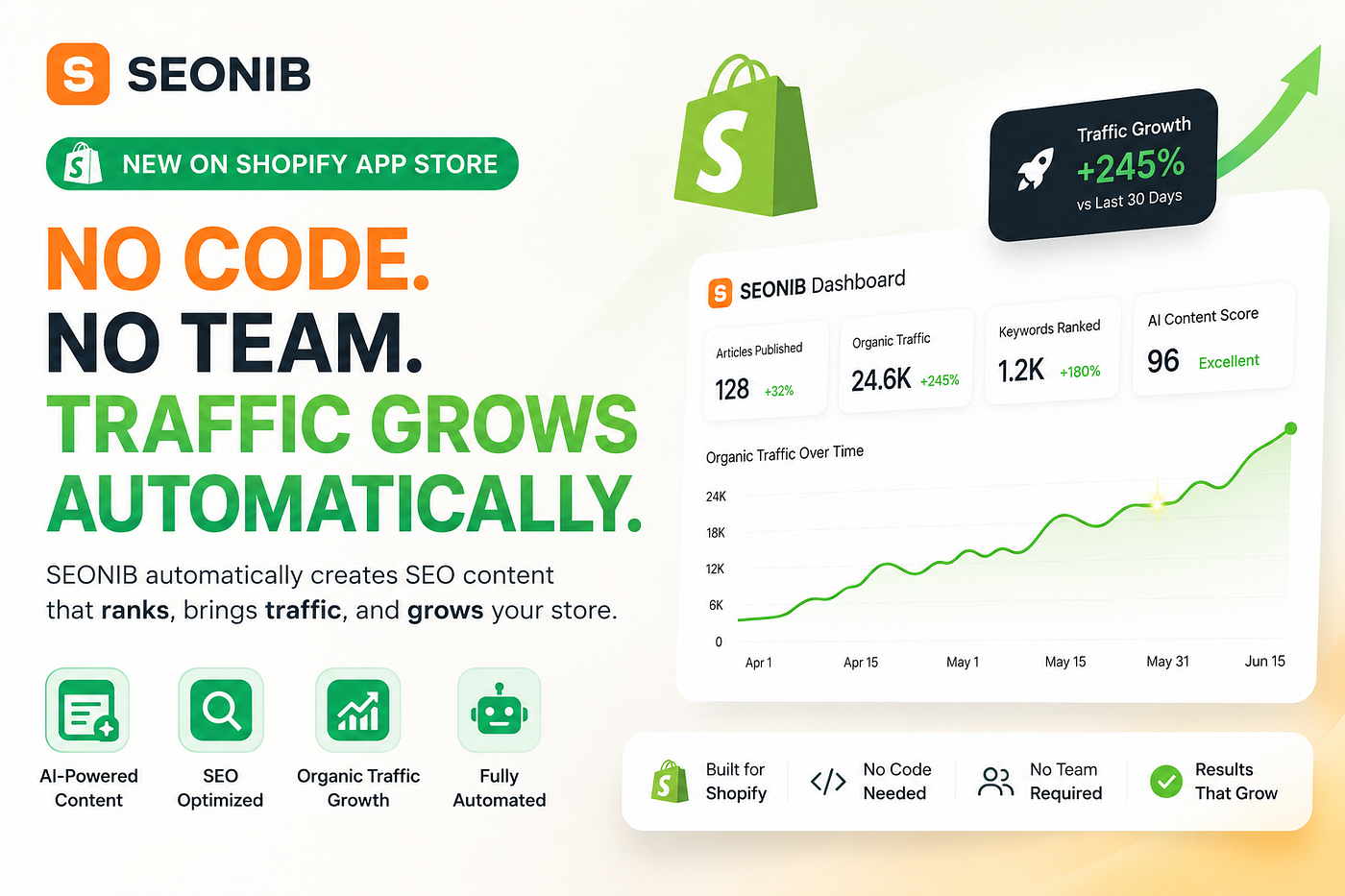
I’ve been organizing this here: 👉 https://www.seonib.com
Not saying tools are required — but without a system, this gets messy very fast.
Final Thought
Most ecommerce SEO fails because it focuses only on:
“buy now” keywords
But real growth comes from:
owning the entire search journey
- Discovery
- Research
- Comparison
- Decision
Curious About Your Experience
Are you seeing better results from:
- Product pages?
- Or content-driven pages?
Or are you combining both?
Would love to hear what’s working for you.
메타데이터
- post_id
- c002b0cf2148
- slug
- why-most-shopline-stores-fail-at-seo-and-a-simple-strategy-that-actually-works-c002b0cf2148
- url
- https://medium.com/@1003774479/why-most-shopline-stores-fail-at-seo-and-a-simple-strategy-that-actually-works-c002b0cf2148
- canonical_url
- https://medium.com/@1003774479/why-most-shopline-stores-fail-at-seo-and-a-simple-strategy-that-actually-works-c002b0cf2148
- author_url
- https://medium.com/@1003774479
- status
- ok
- fetched_at
- 2026-08-17 23:49:37