Why You Feel Tired Even After Sleeping
The Science Behind Persistent Fatigue and How to Restore Real Energy
Why You Feel Tired Even After Sleeping
The Science Behind Persistent Fatigue and How to Restore Real Energy
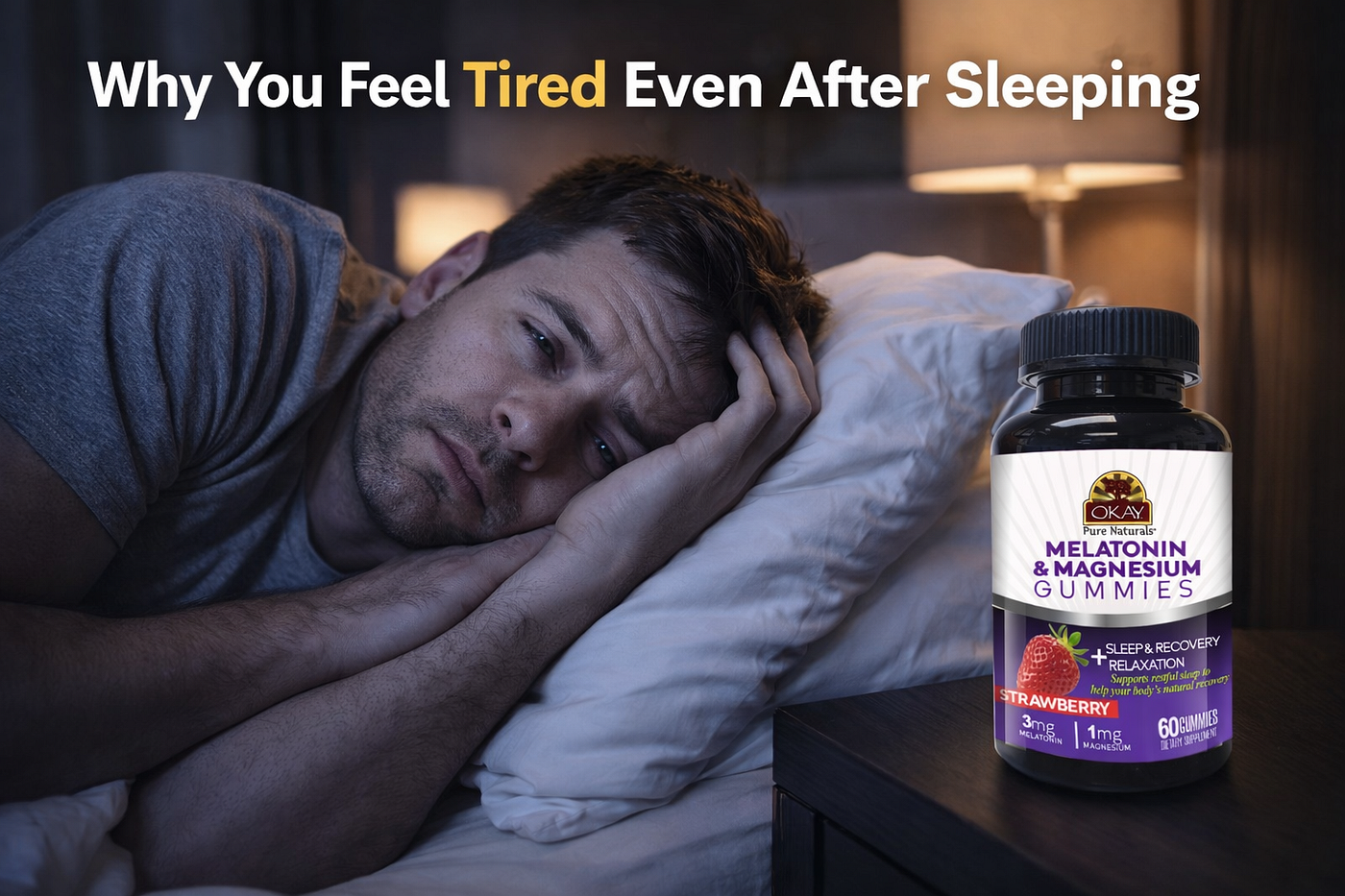
Waking up tired after 7–8 hours of sleep is one of the most searched health complaints online. If you’re asking, “Why am I still tired after sleeping?” — you’re not alone.
Persistent fatigue despite adequate sleep is usually not about sleep duration. It’s about sleep quality, stress physiology, nutrient status, metabolic health, and cellular energy production.
Let’s break down the real science.
1. Poor Sleep Quality (Not Sleep Quantity)
You may be in bed for 8 hours but not getting enough:
- Deep sleep (slow-wave sleep)
- REM sleep
- Continuous sleep cycles
Frequent awakenings, late-night screen exposure, alcohol intake, and high stress reduce restorative sleep stages.
According to the **National Institutes of Health**, fragmented sleep reduces daytime alertness and impairs cognitive function even when total sleep time appears adequate.
Key Insight:
Sleep efficiency matters more than total hours.
2. Chronic Stress and Cortisol Dysregulation
Stress keeps your body in “fight-or-flight” mode.
When cortisol remains elevated:
- Deep sleep decreases
- Morning energy drops
- Mental fatigue increases
Long-term stress also depletes magnesium and B-vitamins, both essential for nervous system regulation and energy metabolism.
The World Health Organization recognizes chronic stress as a major contributor to reduced well-being and fatigue.
3. Nutrient Deficiencies That Mimic Sleep Deprivation
One of the most overlooked causes of fatigue is micronutrient imbalance.
Common Deficiencies Linked to Fatigue:
- Vitamin D deficiency — Low levels are associated with tiredness and mood changes
- Vitamin B12 deficiency — Impairs red blood cell formation and oxygen transport
- Iron deficiency — Reduces oxygen delivery to tissues
- **Magnesium deficiency** — Affects ATP production
- CoQ10 depletion — Reduces mitochondrial energy output
Research indexed in PubMed consistently links micronutrient status to energy metabolism.
Your body may be sleeping — but your cells may not be producing enough ATP (energy).
4. Blood Sugar Imbalance
Late-night high-carb meals or sugar intake can:
- Spike blood glucose
- Trigger insulin surges
- Cause overnight crashes
This leads to morning fatigue and brain fog.
Balanced macronutrient intake and stable glucose levels are critical for sustained energy.
5. Mitochondrial Dysfunction
Mitochondria are your cellular “power plants.”
If mitochondrial function is impaired due to:
- Oxidative stress
- Aging
- Poor diet
- Inflammation
You may feel tired even after rest.
Nutrients like CoQ10, magnesium, and B-complex vitamins support mitochondrial efficiency.
6. Sleep Disorders
If fatigue persists, consider screening for:
- Sleep apnea
- Restless leg syndrome
- Insomnia
- Thyroid imbalance
Medical evaluation is important if symptoms are chronic.
7. Inflammation and Oxidative Stress
Low-grade inflammation can disrupt:
- Hormone balance
- Brain neurotransmitters
- Energy signaling
Antioxidant nutrients (Vitamin C, E, omega-3 fatty acids) help reduce oxidative stress that contributes to fatigue.
Science-Backed Strategies to Improve Energy Naturally
1. Optimize Sleep Hygiene
- Fixed sleep schedule
- No screens 60 minutes before bed
- Cool, dark room
2. Support Micronutrient Status
Consider testing and correcting:
- Vitamin D
- B12
- Iron
- Magnesium
3. Support Mitochondrial Energy
Evidence-based supplements often include:
- CoQ10
- Magnesium glycinate
- B-complex vitamins
- Omega-3 fatty acids
4. Reduce Stress Load
- Breathwork
- Moderate exercise
- Sunlight exposure
- Adaptogenic herbs (if appropriate)
When to See a Doctor
Seek medical evaluation if fatigue is accompanied by:
- Unexplained weight changes
- Shortness of breath
- Severe brain fog
- Mood changes
- Persistent symptoms > 3 months
Conclusion
If you feel tired even after sleeping, the issue is rarely just “lack of sleep.” It is often linked to:
- Sleep quality
- Stress hormones
- Nutrient deficiencies
- Mitochondrial function
- Blood sugar regulation
Correcting these underlying causes restores true cellular energy — not just temporary stimulation.
Authoritative References
메타데이터
- post_id
- c00fc3d9c71b
- slug
- why-you-feel-tired-even-after-sleeping-c00fc3d9c71b
- url
- https://medium.com/@james80walker80/why-you-feel-tired-even-after-sleeping-c00fc3d9c71b
- canonical_url
- https://medium.com/@james80walker80/why-you-feel-tired-even-after-sleeping-c00fc3d9c71b
- author_url
- https://medium.com/@james80walker80
- status
- ok
- fetched_at
- 2026-08-06 15:39:19




