Swayambhu: Was Bhima the True Hero of the Mahabharata?
Revisiting Dr. P. V. Vartak’s provocative case for the epic’s most overlooked central figure
Swayambhu: Was Bhima the True Hero of the Mahabharata?
Revisiting Dr. P. V. Vartak’s provocative case for the epic’s most overlooked central figure
Among the many towering figures of the Mahabharata, few command as visceral and immediate a presence as Bhima. Traditionally remembered for his immense physical strength and fierce vows, Bhīma has often been read as the epic’s force of action — contrasted with the moral deliberation of Yudhishthira and the martial refinement of Arjuna.
Dr. P. V. Vartak, a modern Marathi thinker and interpreter of the epic tradition, advances a more radical thesis: that Bhīma is not merely a principal hero, but the central heroic force of the Mahābhārata — structurally, morally, and historically. This essay synthesizes that interpretive position in a scholarly and non-polemical spirit.
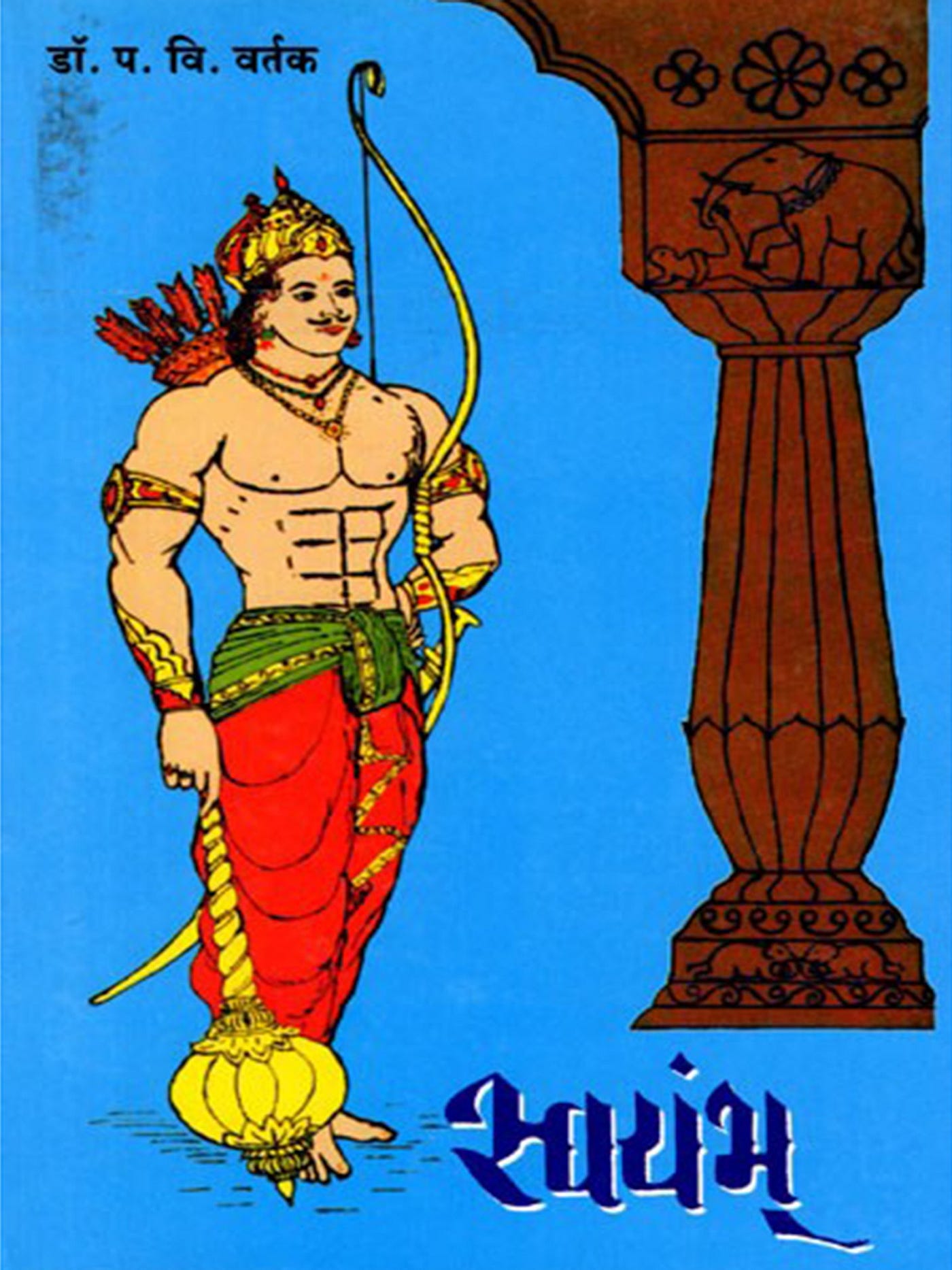
Swayambhu — A book by Dr. P. V. Vartak
The Structural Presence of Bhīma
From the poisoning episode in childhood to the climactic mace duel with Duryodhana, Bhīma’s imprint on the epic narrative is continuous.
- As a child, he survives a poisoning attempt and immersion in the river — an episode linked with the Nāga realm, traditionally associated with advanced knowledge of toxins and antidotes.
- He slays formidable adversaries in exile: Hidimba, Bakāsura, and later the mighty Jarasandha, thereby enabling imperial consolidation.
- He fulfills his terrible vows in the Kurukṣetra war, killing the vast majority of the Kaurava brothers, including Duḥśāsana.
- He ultimately defeats Duryodhana in the decisive gadā-yuddha (mace duel).
If one traces the narrative arc from “atha” (beginning) to “iti” (end), Bhīma appears not only as a participant but as an engine of consequence. His actions repeatedly alter the political and military landscape of the epic world.
Protector Archetype and Draupadī
In classical aesthetics, the nāyaka (hero) is defined not only by prowess but by protection — especially of the nāyikā. Within this framework, Dr. Vartak foregrounds Bhīma’s role in relation to Draupadi.
During the dice-hall crisis, while Yudhiṣṭhira is bound by his own understanding of dharma and Arjuna remains restrained, Bhīma responds with visceral moral outrage. He questions the legitimacy of staking Draupadī after Yudhiṣṭhira has lost himself — an argument grounded in juridical reasoning. His terrible vow to kill Duḥśāsana and break Duryodhana’s thigh becomes a narrative hinge: the humiliation of Draupadī is not forgotten, nor absorbed into abstraction. It is avenged.
Importantly, this interpretation does not deny the theological centrality of Krishna in many recensions of the epic. Rather, it emphasizes Bhīma’s human agency: a protector whose response is immediate, embodied, and irreversible.
The Political Bhīma
Bhīma is often reduced to appetite and strength — “Vṛkodara,” wolf-bellied. Yet the epic repeatedly depicts him as strategically perceptive:
- His participation in the killing of Jarāsandha is not brute force alone but coordinated strategy.
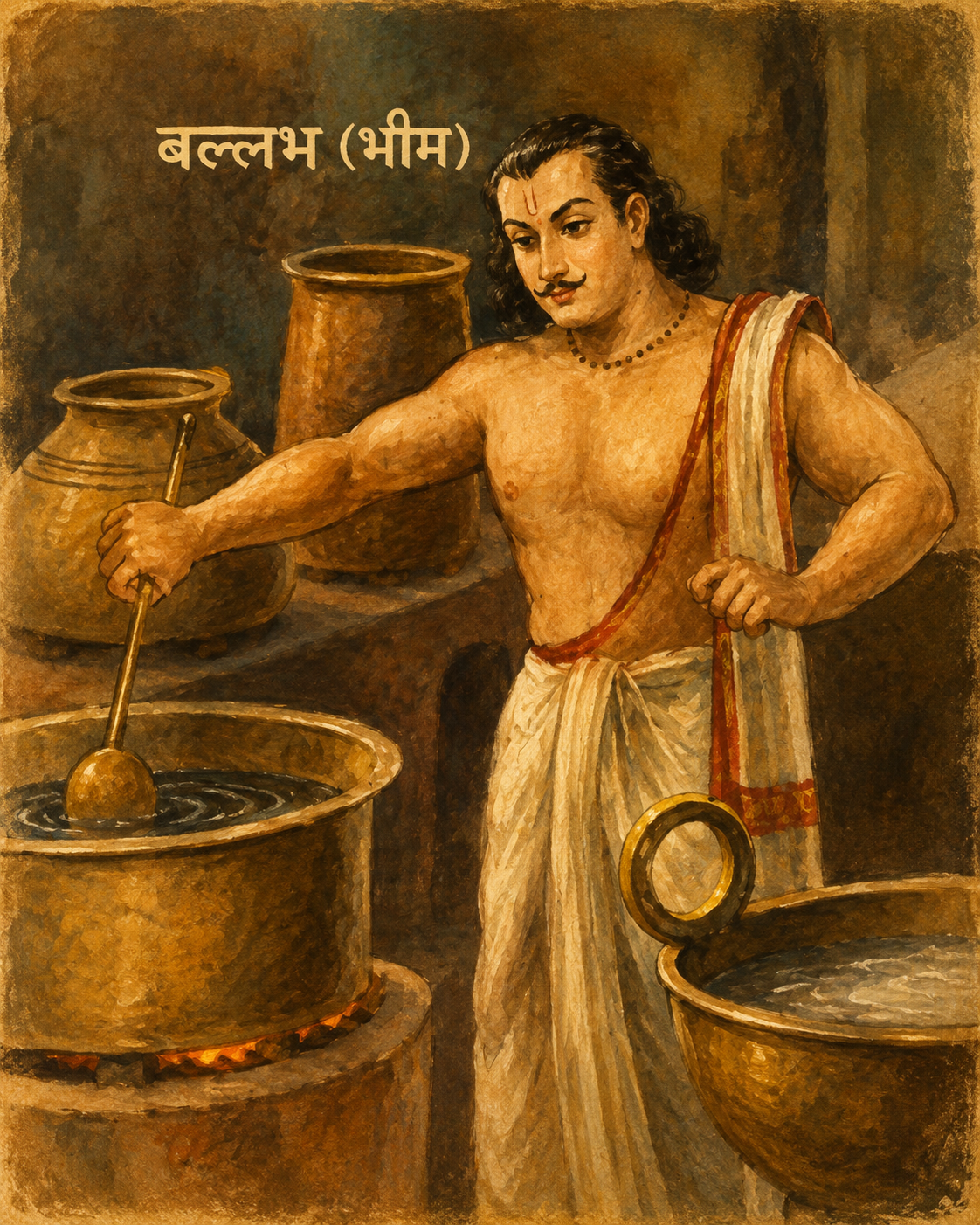
- In Virāṭa’s court, he assumes the role of cook (Ballava), demonstrating tactical concealment and patience.
- The fall of Dronacharya — though accomplished through layered strategy involving several actors — unfolds within a war shaped decisively by Bhīma’s battlefield dominance.
This reading positions Bhīma as more than a warrior: he is politically consequential, capable of both direct confrontation and adaptive disguise.
Spiritual Dimensions
Bhīma’s encounter with Hanuman — his elder brother in the Vāyu lineage — adds a spiritual register to his character. Strength here is humbled before greater strength; pride gives way to recognition.
Dr. Vartak’s interpretation suggests that Bhīma embodies a form of karma-yogic spirituality: action aligned with conviction, not paralysis before moral complexity. While the Bhagavad Gītā is delivered to Arjuna, Bhīma’s life enacts a philosophy of decisive engagement.
Bhīma and the Question of Ideal Types
The Mahābhārata presents multiple heroic models:
- Yudhiṣṭhira: ethical endurance and commitment to truth.
- Arjuna: disciplined martial excellence.
- Krishna: divine statesmanship and metaphysical insight.
- Bhīma: strength fused with loyalty and retributive justice.
Dr. Vartak’s preference for Bhīma is not merely biographical admiration; it is normative. He sees in Bhīma a corrective to excessive passivity — a hero who refuses to normalize injustice.
Yet a balanced reading of the epic suggests that its power lies precisely in this plurality of ideals. The Mahābhārata does not offer a single model of heroism; it stages a dialogue among them.
Reconsidering Centrality
Is Bhīma the hero of the Mahābhārata?
From a literary standpoint, he is certainly one of its most structurally decisive figures. From a moral standpoint, he represents uncompromising response to humiliation and aggression. From a political standpoint, he ensures that vows translate into outcomes.
But the genius of the Mahābhārata lies in its refusal to reduce itself to a single axis. Bhīma’s force requires Yudhiṣṭhira’s restraint; Arjuna’s skill requires Krishna’s counsel; Krishna’s vision requires human agents of action.
To foreground Bhīma, as Dr. Vartak does, is therefore not to diminish the others but to rebalance attention — toward the epic’s most kinetic and embodied hero.
Conclusion: From Bhārata to Mahābhārata
If one reads the epic as a meditation on civilizational resilience, Bhīma emerges as the principle of resistance — against humiliation, injustice, and existential threat. He is loyalty in motion, anger disciplined into vow, strength governed by relational duty.
Whether or not one accepts him as the singular hero of the Mahābhārata, a sustained engagement with Bhīmasena enlarges our understanding of the epic itself. He reminds us that in the vast moral universe of Vyāsa’s composition, justice is not only contemplated — it is enacted.
And in that enactment, Bhīma stands unmistakably at the center
메타데이터
- post_id
- c02f4088963c
- slug
- swayambhu-was-bhima-the-true-hero-of-the-mahabharata-c02f4088963c
- url
- https://medium.com/@vajravak/swayambhu-was-bhima-the-true-hero-of-the-mahabharata-c02f4088963c
- canonical_url
- https://medium.com/@vajravak/swayambhu-was-bhima-the-true-hero-of-the-mahabharata-c02f4088963c
- author_url
- https://medium.com/@vajravak
- status
- ok
- fetched_at
- 2026-06-16 19:09:56