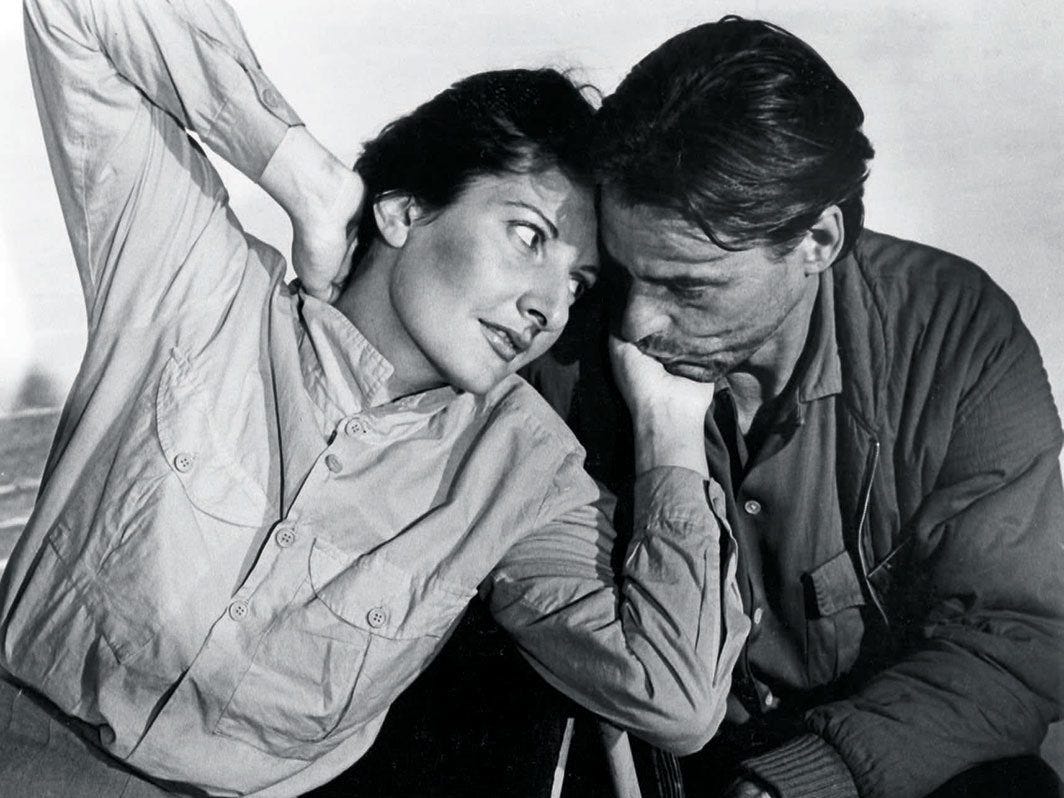
Police Thought They Had Rachel Nickell’s Killer. Robert Napper Proved Them Wrong.
One of Britain’s Worst Investigative Failures
Police Thought They Had Rachel Nickell’s Killer. Robert Napper Proved Them Wrong.
One of Britain’s Worst Investigative Failures

One of Britain’s Worst Investigative Failures
“Get up, Mummy.” The little boy said it once. Then again. And then one more time. “Get up, Mummy.” But she didn’t move.
It was July 15, 1992, and two-year-old Alex Hanscombe was sitting beside his mother on Wimbledon Common in South West London. He didn’t understand what had happened. He didn’t understand why she wasn’t answering him. He didn’t understand why there was blood on his clothes. Or why everything had suddenly gone so quiet.
Just minutes earlier, Alex had been doing what countless toddlers do on a summer morning. He was out for a walk with his mum, Rachel Nickell, and their dog, Molly.
Wimbledon Common was the kind of place where people felt safe. Families came here. Dog walkers came here. Joggers came here. It was open. Busy. But peaceful. Not the sort of place where anyone expected to become the victim of a brutal attack in broad daylight.
But somewhere among the trees that morning, a stranger appeared. Within moments, Rachel Nickell was fighting for her life. Her little boy, Alex, would later remember seeing a man carrying a dark bag over his shoulder. He would remember being thrown to the ground. He would remember his mother collapsing beside him. And then he would remember being alone.
Years later, Alex would describe that moment as the instant he knew his mum wasn’t coming back. He was only two years old. When people eventually found him, he was covered in blood and mud, still beside his mother’s body.
Twenty-three-year-old Rachel Nickell had been sexually assaulted and stabbed forty-nine times. The murder shocked Britain. The image of that little boy trying to wake his mother became impossible to forget.
Police launched one of the largest murder investigations in the country’s history. The public demanded answers. The media demanded arrests. And for more than sixteen years, Britain would ask a single question: Who killed Rachel Nickell?
The answer would expose one of the most notorious investigative failures in modern British history.
[embed]Listen to the full story on Serial Napper true crime podcast
If you’ve read enough articles about this case, you’ll notice something. Again and again, Rachel is described in almost exactly the same way. “The beautiful blonde mother.” As if her appearance was somehow the most important thing about her life.
And look, Rachel was undeniably beautiful. There are photographs of her that still appear in documentaries and newspaper articles more than thirty years later. But reducing her to that one detail feels unfair. Rachel was a wonderful person. A daughter. A partner. A mother. A woman with plans for her future that were stolen from her in the most horrific way imaginable.
Rachel was born in 1968 and grew up in London. Friends described her as warm, fun-loving, and fiercely independent. She wasn’t someone who liked being boxed into expectations. She had a free spirit about her, something that seems to come up over and over whenever people talk about her.
She worked as a lifeguard and had also done some modelling work. But she wasn’t chasing celebrity or trying to build some glamorous public image. She was focused on something much more important to her. Her family.
Rachel met André Hanscombe when she was still a teenager. The two met at a swimming pool where Rachel worked as a lifeguard. André was a few years older and working as a motorcycle courier, spending his days weaving through London’s traffic delivering packages across the city.
The relationship grew quickly. By the time Rachel was nineteen, she was pregnant. Soon, they welcomed their son, Alexander Louis Hanscombe, known simply as Alex. And from everything those closest to them have said, Alex became the centre of Rachel’s world. Like most young parents, life wasn’t always easy. They weren’t wealthy. They lived in a modest flat in South London and were trying to figure things out as they went. But by all accounts, Rachel adored being a mother.
When people who knew her speak about her today, they don’t talk about modelling jobs or magazine-worthy photographs. They talk about her laugh. Her energy. The way she connected with people. The way she made others feel comfortable. And they talk about how much she loved Alex.
One of the cruellest things about this case is that Rachel never got the chance to tell her own story. Everything we know about her comes from the people she left behind. From André. From family members. And from Alex himself, who was only two years old when he lost her.
Yet somehow, despite having only fragments of memories, Alex has held onto certain details throughout his life. He remembers her smile. He remembers the sound of her voice. He remembers her smell. Years later, he would tell reporters that Rachel wore Coco by Chanel perfume. He still keeps some of her belongings, including jewellery, photographs, and even that perfume, because those things help him feel connected to her.
I don’t know about you, but I find details like that far more powerful than any newspaper headline. Not the image of Rachel that Britain came to know. The real Rachel. The one who wore a favourite perfume. The one who walked her dog every day. The one who tucked her little boy into bed at night. The one who was simply Mum.
The Day of Rachel’s Murder

Rachel and Alex
In the summer of 1992, Rachel was twenty-three years old. She had her whole life ahead of her. She shared her days with André, their energetic two-year-old son Alex, and their dog Molly, who was usually tagging along on family outings and walks through the local parks.
One of those places was Wimbledon Common. A huge expanse of woodland and open space in southwest London that Rachel knew well. It was somewhere she felt comfortable. Somewhere, she felt safe. On the morning of July 15, 1992, she would take Alex and Molly there for what should have been a completely ordinary walk. Instead, it would become the last morning of her life.
The date was July 15, 1992. It was a warm Wednesday morning in South West London. For Rachel Nickell and her family, it began like countless other mornings. André Hanscombe left for work, just as he normally did. As a motorcycle courier, his days often started early, weaving through London’s traffic to make deliveries across the city.
At home, Rachel was looking after two-year-old Alex. Like many parents of young children, she probably welcomed the chance to get outside for a while. Toddlers are tiny balls of chaos with unlimited energy and absolutely no respect for your plans. A walk was a good way to burn some of that energy off.
So Rachel gathered up Alex, clipped a lead onto their dog Molly, and headed out. Their destination was Wimbledon Common. And if you’re not familiar with Wimbledon Common, it’s difficult to overstate how ordinary it seemed. Wimbledon Common was one of London’s most beloved public spaces. Hundreds of acres of woodland, grassland, ponds, trails and open fields spread across southwest London. Families brought their children there. Dog walkers visited daily. Joggers ran the trails. People picnicked there. Birdwatchers wandered through the trees. It was exactly the sort of place where people felt comfortable letting their guard down.
Most people imagine violent attacks happening in places that feel dangerous. Wimbledon Common didn’t feel dangerous. It felt perfectly safe.
Rachel and Alex spent part of the morning walking through the Common with Molly, following paths that wound through the trees and open spaces. At some point, they entered a more secluded area. Not isolated enough to raise an alarm. Just a little quieter.
And somewhere nearby, another person was moving through the Common that morning. Nobody knew that he had already developed a disturbing history of stalking women and violent sexual behaviour. Nobody knew that he would later become known as the Green Chain Rapist. And nobody knew that he was about to commit one of the most infamous murders in British criminal history.
Years later, Alex would recall seeing a stranger approaching. A man carrying a dark bag over his shoulder. This man began chatting with Rachel, then everything happened incredibly fast. The attack came without warning. He pushed little Alex to the ground. Rachel was assaulted in broad daylight. In a public park. Just a short distance from paths used daily by families and dog walkers.
She was sexually assaulted and stabbed forty-nine times. The violence was frenzied. Overwhelming. Completely disproportionate to anything Rachel could have done to defend herself. And through parts of it all, little Alex was there.
He would later say he remembered his face scraping through dirt and mud. He would remember seeing his mother collapse. And he would remember the attacker leaving, heading towards a small creek where he would wash up. Those memories would remain with him for decades.
What happened next is perhaps even harder to comprehend. Because after the attack was over, the killer simply walked away. He vanished back into the Common. The place where families walked dogs. The place where children played. The place everyone believed was safe. He would have been covered in blood from such a violent attack, and yet he was somehow able to disappear into the crowd.
Meanwhile, Rachel lay dying. And beside her was a two-year-old boy who had no idea his life had just changed forever. Alex stayed with his mother. He tried to wake her. He called out to her. He touched her. He waited for her to respond. But she never did.
The scene that rescuers would eventually encounter was almost impossible to process. A young mother lying dead on Wimbledon Common. And her little boy was still beside her. Covered in blood. Covered in mud. Clinging to the person he loved most in the world.
When passersby finally came across them, emergency services were called. But there was nothing anyone could do for Rachel. She was just twenty-three years old. The attack had lasted only minutes. The devastation it left behind would last a lifetime.
Within hours, news of the murder would spread across Britain. A brutal killing in broad daylight. A young mother is dead. A toddler was left as the only witness. And a killer had simply disappeared into the city.
Alex was physically unharmed. But emotionally? There was no way anyone could know the damage that had already been done. He had spent time alone with his mother’s body after the attack, unable to understand why she wouldn’t wake up.
Years later, he would describe trying again and again to get her attention. “Get up, Mummy.” No response. “Get up, Mummy.” Still nothing. Then came a moment that is difficult to hear even now. Alex would later say that despite being only two years old, he somehow understood what had happened. Not with words like murder or death. But with the certainty that his mum was gone and she wasn’t coming back. For most people, that would be an impossible burden. For a toddler, it’s almost unimaginable.
As police secured the scene and investigators began trying to understand what had happened, another tragedy was unfolding elsewhere in London.
Rachel’s partner, André Hanscombe, was at work. Like many days, he decided to call home. It was routine. Just a quick check-in. A chance to speak with Rachel and see how the morning was going. But when somebody answered the phone, it wasn’t Rachel. It was a police officer.
André later recalled the moment vividly. “My blood ran cold.” The officer told him there had been an accident. Alex was safe. But Rachel was dead. André has said he collapsed after the call. And it’s hard to imagine any other reaction. One minute, you’re going about your workday. The next, your entire life has been split into a before and an after.
As horrifying as Rachel’s murder was, investigators quickly realized they had something incredibly unusual. A witness. The problem was that the witness was two years old. Alex was the only person known to have seen at least part of what happened. The only person who had been there from the beginning. The only person who may have seen the attacker up close.
And immediately, investigators faced a dilemma. How do you interview a toddler who has just witnessed the violent murder of his mother? And perhaps more importantly… Should you?
A Tiny Witness

Andre, Alex and Rachel
Now, you might assume the police immediately sat Alex down and started asking questions. But that isn’t what happened. In fact, nearly three weeks passed before detectives formally interviewed him about the attack. Part of that delay was practical. Part of it was ethical. And part of it was because nobody really knew what the right thing to do was.
Alex was not only grieving. He was traumatized. Every conversation risked reopening wounds that had barely begun to heal. Yet investigators desperately needed information. This attacker was so violent and brazen that he was likely to do it again. He needed to be caught as soon as possible.
Child psychologists were brought in to help guide the process, and rather than subjecting Alex to direct questioning right away, detectives often had his dad, André, ask questions on their behalf, hoping to generate responses without causing further harm to a little boy who had already endured far too much.
And that’s where things become complicated because memory itself is fragile, even in adults. Anyone who has ever argued with a sibling about something that happened twenty years ago knows memory isn’t a perfect recording device. We don’t store experiences like security camera footage.
Now imagine asking a two-year-old to recall an event that was terrifying, violent, confusing, and emotionally overwhelming. How much could Alex truly remember? How much of what he remembered was accurate? How much might have been influenced by later conversations? Those questions would follow the investigation for years.
As the sessions continued, it became clear that Alex was already showing signs of significant trauma. According to André, his son would visibly tense up whenever questions turned to what had happened on Wimbledon Common. The memories were still there, but so was the distress that came with them.
André found himself caught in an agonizing position. Like everyone else, he wanted Rachel’s killer caught. But he was also watching his two-year-old son struggle under the weight of something no child should ever have to carry. He worried about what repeated questioning might do to Alex’s recovery and whether the search for answers was risking further harm.
Despite those concerns, Alex did provide investigators with some potentially important details. He described seeing a man wearing a light or white top with dark trousers. He remembered the man carrying a bag over his shoulder. At one point, Alex also appeared to describe something across the man’s chest, which some interpreted as looking like a strap or belt worn over his clothing, almost like a butcher’s apron strap or a shoulder harness.
For investigators desperate for leads, these details were highly important, especially because they appeared to align with information provided by another witness. A woman had reported seeing a man near the area roughly ten minutes before the murder. Her description was strikingly similar: a man wearing a light-coloured top, dark trousers, and carrying a bag.
It wasn’t enough to identify a suspect. But for detectives, it was one of the first indications that Alex’s memories, fragmented as they were, might contain genuine clues about the man who had killed his mother.
Alex also described being thrown to the ground. He described seeing his mother collapse. Years later, as an adult, he would say he remembered seeing the attacker wash blood from his hands in a nearby stream before disappearing into the distance. Like a ghost.
Those memories remained incredibly vivid to him. But investigators had to wrestle with an uncomfortable reality. Even if Alex remembered everything perfectly, he was still a toddler. No defence lawyer in the world would build a prosecution around the testimony of a two-year-old witness.
And so police found themselves in an impossible position. Their most important witness was also their most vulnerable witness. The little boy who had seen too much. The little boy who had lost everything. And despite the massive investigation that was beginning to take shape around him, Alex couldn’t answer the one question everyone wanted answered. Who was the man who killed his mother?
As the weeks passed, public pressure on police grew more intense. The murder was dominating headlines. The country wanted answers. The media wanted arrests. And investigators were quickly running out of leads. Soon, that pressure would push the investigation in a direction that would ultimately become almost as infamous as the murder itself.
This wasn’t just another homicide. A young mother had been sexually assaulted and murdered in broad daylight. In a public park. While walking with her toddler son. The details were so shocking that the story quickly dominated newspaper front pages across the country.
Rachel’s murder struck a nerve because it shattered a comforting illusion. People want to believe there are rules to danger. Don’t walk alone at night. Avoid deserted areas. Stay away from dark alleys. But Rachel hadn’t done any of those things. She was walking her dog. With her child. In the middle of the morning. In a place people considered safe. If it could happen to Rachel, people wondered, could it happen to anyone?
Fear spread quickly. Women reported feeling afraid to walk alone. Parents looked at public parks differently. The murder became a national conversation. Police launched an enormous investigation. Hundreds of officers became involved. Thousands of witness statements were gathered. The public response was overwhelming. Tips poured in from across the country.
People called in sightings. Possible suspects. Rumours. Theories. Unfortunately, as anyone who has ever investigated a high-profile case can tell you, more information doesn’t necessarily mean better information. Sometimes it just means more noise.
Investigators worked through lead after lead. Thirty-two men were questioned. Potential suspects were identified and eliminated. Witnesses were interviewed. The crime scene was scrutinized. And yet, despite all of those resources, police kept running into the same problem. They had no suspect. No forensic evidence that pointed to a specific individual.
It’s worth remembering that this was 1992. DNA technology existed, but it was still in its relative infancy compared to what investigators have available today. This wasn’t the era of genetic genealogy, massive databases, and near-instant forensic comparisons that true crime audiences have become used to hearing about.
The science simply wasn’t there yet. Which is annoying to think about in hindsight, because investigators recovered evidence. A ton of forensic evidence, including DNA. But they couldn’t turn that evidence into a name.
Weeks turned into months. Months turned into more frustration. And every day that passed raised an uncomfortable possibility. The man who had murdered Rachel Nickell might still be out there. Walking around London. Watching the news coverage. Knowing that, despite one of the biggest investigations in the country, police had no idea who he was.
Looking back now, it’s easy to criticize what happened next. But it’s also important to understand the environment detectives were operating in. Every morning, they woke up knowing that Britain expected answers. Every evening, the case led the news. Every day without an arrest felt like a failure. That kind of pressure can be dangerous. When people become desperate for answers, they can start mistaking theories for evidence. Possibilities for proof. Suspicion for certainty. And that is exactly where this investigation was headed.
Because with no physical evidence to identify the killer, detectives began looking elsewhere for answers. Psychology. Soon, investigators would bring in a man who claimed he could tell them what kind of person had committed this crime. His name was Professor Paul Britton. And his profile would change the course of the investigation forever.
Catching a Killer
At the time, Paul was one of Britain’s best-known criminal profilers. He had built a reputation for analyzing violent offenders and helping investigators understand the psychology behind crimes.
Today, criminal profiling is something most true crime listeners are familiar with. We’ve all watched enough documentaries and crime dramas to know the basic idea. Look at the crime. Study the behaviour. Examine the victim. Then build a picture of the type of person who might have committed it. The problem is that a profile isn’t evidence. It’s a theory. An educated guess. And like all guesses, it can be wrong.
Paul studied the details of Rachel’s murder and developed a profile of the likely offender. According to the profile, the killer would probably be a socially isolated man. A loner. Someone who struggled with relationships. Someone living nearby. Someone with unusual sexual fantasies. Someone who may have been interested in the occult or alternative belief systems.
Investigators began looking for people who fit that description. And before long, one name started attracting attention. Colin Stagg.
Investigators had a composite sketch created from witness descriptions of a man seen near Wimbledon Common around the time of the murder. Once that artist’s impression was released to the public, calls began pouring in. Several people contacted the police, claiming the sketch resembled a local man named Colin Stagg. When this witness later identified him from a photo lineup, detectives felt they were finally making progress. Looking back, it was the moment the investigation began turning toward one man. And once it did, it would prove incredibly difficult to turn it back.
At first glance, Colin didn’t seem particularly remarkable. He lived in Roehampton, not far from Wimbledon Common. He regularly walked his dog in the area. He wasn’t known as a violent criminal. He didn’t have a history of serious offences — although he had been charged in the past with indecent exposure. Apparently, he liked to sunbathe in the nude. But he wasn’t some notorious predator hiding in plain sight. Instead, people who knew him generally described him as lonely, awkward, and eccentric.
Colin lived a fairly isolated life. He struggled socially. He had difficulty forming romantic relationships. He spent a lot of time alone. Like many people searching for companionship before the age of dating apps, he occasionally used lonely hearts advertisements in an attempt to meet women.
And then there were the details that investigators found suspicious. Colin had an interest in Wicca. He read about the occult. He enjoyed fantasy role-playing games and alternative spiritual beliefs. Today, most people would probably shrug and move on. Back then? Those interests raised eyebrows. Especially in the middle of a murder investigation.
Looking back, it’s difficult not to notice how much of the suspicion surrounding Colin was based on who he was rather than what he had done. There was no DNA linking him to the crime. No fingerprints. No confession. No forensic evidence placing him at the murder scene. But he fit the profile. And once investigators started looking at him through that lens, everything seemed to reinforce their suspicions.
He lived nearby. The killer likely lived nearby. He walked his dog on Wimbledon Common. The killer may have been familiar with Wimbledon Common. He was socially isolated. The profile suggested social isolation. He had unusual interests. The profile suggested unusual interests. One by one, ordinary facts began transforming into evidence of guilt. Or at least what investigators believed was guilt.
And this is where we need to talk about something that happens in more cases than most people realize. Once investigators believe they’ve found their man, every coincidence starts looking like evidence. Every detail appears meaningful. Every inconsistency seems suspicious. Every fact gets interpreted through a single assumption. That assumption being: He’s the one.
This is called confirmation bias. And that is exactly what happened in this situation. The more detectives focused on Colin Stagg, the more convinced they became that they had finally found Rachel Nickell’s killer. The problem? They still couldn’t prove it.
Operation Edzell
By late 1992, detectives were convinced Colin Stagg had murdered Rachel Nickell. There was just one problem. They still couldn’t prove it. For most investigations, that would be a sign to step back and reassess. Maybe you’ve got the wrong person. Maybe you’ve missed something. Maybe the killer is somebody else entirely. Instead, investigators doubled down.
If Colin Stagg wouldn’t confess on his own, they would try to create circumstances that might encourage him to. The operation was given a name: Operation Edzell. And at the centre of it was a young undercover police officer using the fake identity of “Lizzie James.”
The plan was simple — and ethically questionable. Police knew Colin was lonely. They knew he struggled with relationships. They knew he occasionally used lonely hearts advertisements in an attempt to meet women. So they decided to use that against him.
Lizzie would enter his life pretending to be interested in him romantically. At first, it began through letters. Then phone calls. Then, face-to-face meetings. Over the course of several months, Lizzie carefully built a relationship with Colin. But remember, Lizzie is actually an undercover police officer.
She presented herself as someone who understood him. Someone who accepted him. Someone who shared his interests. And slowly, the conversations became more intimate. More personal. More sexual.
The operation was designed to lower his guard and encourage him to reveal something incriminating. Anything incriminating. Detectives were hoping that they might even be able to get him to confess to this woman if he trusted her enough.
As the months passed, Lizzie began steering conversations toward violence, sexual fantasies, and Rachel Nickell’s murder. She repeatedly hinted that she was attracted to dangerous men. That ordinary men didn’t excite her. That she wanted someone darker. Someone capable of extreme acts. The manipulation became increasingly obvious.
At one point, she essentially suggested that the kind of man she truly desired would be capable of committing a murder like Rachel’s. Think about that for a second. An undercover police officer wasn’t waiting for a confession. She was practically dangling one in front of him and hoping he’d grab it.
But Colin didn’t. Again and again, he disappointed the investigators who believed he was a killer. Because every time they created an opportunity for him to connect himself to Rachel’s murder…he refused.
The most remarkable moment came when Lizzie effectively invited him to admit responsibility. And Colin responded with a sentence that would eventually become one of the defining moments of the entire case. “I’m terribly sorry, but I haven’t.”
By that point, Colin had every reason to tell her what she wanted to hear. He liked her. He wanted her approval. He wanted the relationship to continue. He knew what she was implying. And yet he still didn’t claim responsibility for a crime he hadn’t committed.
Instead, he told the truth. “I’m terribly sorry, but I haven’t.”
For many people looking back on the case today, that’s the moment the entire operation should have ended. But it didn’t. Because investigators had become trapped by their own certainty. Once investigators believed they’d found their man, every coincidence starts looking like evidence. And every denial starts sounding like deception.
Rather than seeing Colin’s refusal to confess as evidence of innocence, some detectives interpreted it as proof that he was being cautious. That he was hiding something. That he simply hadn’t cracked yet. So the operation continued. More meetings, more letters. More attempts to draw him in.
Until eventually, detectives decided they had enough. Whether or not he was going to admit to the killing, it was time to move in. On August 17, 1993, more than a year after Rachel Nickell’s murder, Colin Stagg was arrested and charged. The reaction was immediate. Headlines exploded across Britain. After months of fear and speculation, police appeared to have their man.
Many members of the public felt relieved. Rachel’s family finally seemed one step closer to justice. The media largely treated the arrest as confirmation of guilt. And inside Scotland Yard, there was a sense that one of the country’s most notorious murder investigations had finally been solved.
The only problem? The case was built on a foundation that was about to collapse. And when it did, it would expose one of the most controversial policing failures in modern British history.
For more than a year, Colin Stagg sat in custody waiting for his day in court. Thirteen months. Thirteen months of being publicly portrayed as the man who murdered Rachel Nickell. Thirteen months of newspaper headlines. Thirteen months of knowing that much of the country already believed he was guilty. And if you’re Colin Stagg, that’s a pretty terrifying place to be. Because, regardless of what eventually happens in court, some accusations are impossible to fully escape.
By the time his case reached the Old Bailey in September 1994, expectations were high. This was one of the most notorious murder cases in Britain. The public wanted answers. The media wanted a conviction. Police believed they had finally caught Rachel’s killer. But almost immediately, things began to unravel.
The trial wasn’t dominated by forensic evidence, because there wasn’t any. Instead, attention quickly turned to Operation Edzell. The undercover operation. The letters. The phone calls. The months of manipulation carried out by “Lizzie James.” And as the details emerged, they shocked the court.
The prosecution’s case depended heavily on conversations that had been carefully engineered by police. Conversations in which an undercover officer repeatedly steered Colin toward discussions of violence, sex, murder, and Rachel Nickell’s killing. The question before the court became simple: Had police uncovered evidence of guilt? Or had they tried to manufacture it?
The man tasked with answering that question was Mr Justice Ognall. And his answer was devastating. In a ruling that would become one of the most famous judicial criticisms of a police investigation in British legal history, Ognall condemned the operation in extraordinary terms.
He described the conduct of investigators as: “Deceptive conduct of the grossest kind.” The judge concluded that police had gone far beyond legitimate undercover work. Rather than investigating a suspect, they had actively attempted to induce incriminating behaviour. They had created scenarios designed to tempt, manipulate, and pressure a man they already believed was guilty. And in doing so, they had crossed a line.
The ruling was catastrophic for the prosecution. Once the undercover evidence was removed, there was very little left. Just suspicion. And suspicion isn’t enough to convict someone of murder.
Faced with the judge’s ruling, the prosecution’s case effectively disintegrated. The evidence gathered through Operation Edzell was ruled inadmissible. Without it, there was no realistic prospect of securing a conviction. The case collapsed. And just like that, the man the police had spent years pursuing walked free.
Colin Stagg was formally acquitted. For some people, the ruling was a victory for justice. For others, it was infuriating. Many members of the public struggled to understand what had happened. Police had spent years insisting they had the right man. Now that man was being released.
Even worse, some senior officers continued to publicly suggest they still believed Colin was guilty. The cloud of suspicion never completely disappeared. In the eyes of many people, he remained the murderer who had somehow escaped conviction. But history would eventually prove otherwise.
Because Colin Stagg wasn’t Rachel Nickell’s killer. And while the police, media, and public were focused on him, the real murderer was somewhere else entirely. Living his life. Watching events unfold. Knowing that investigators were chasing the wrong man. Maybe even inspiring him to go out there and do it again. That’s the part of this story that still sends a chill down my spine. Rachel Nickell’s killer was still out there. And nobody knew who he was.
Worse still, while police had spent years building a case against an innocent man, the real killer had remained free to do exactly what everyone feared he might do. And before long, another family would pay the price.
Another Murder
While the police were pouring enormous resources into building a case against Colin Stagg, another man was moving through London almost unnoticed. A man who, years later, would be revealed as Rachel’s killer. His name was Robert Napper. And the truly infuriating part of this story isn’t just that police failed to identify him immediately; it’s how many opportunities they had.
Robert Napper wasn’t completely unknown to the police. In fact, he had already been attracting attention for years.
Born in London in February 1966, Napper’s childhood was marked by instability and violence. He and his siblings grew up witnessing domestic abuse between their parents before the family eventually fractured. The children were placed into foster care, and Napper would later receive psychiatric treatment.
As he got older, he became increasingly isolated and withdrawn. There were signs of trauma, including a sexual assault he reportedly experienced as a child during a camping trip. Friends and family would later describe him as socially detached and struggling to connect with other people. None of this excuses what came later. But it does help explain how a deeply troubled young man evolved into a dangerous offender.
By the late 1980s, Napper had already come to police attention. Authorities would later suspect him of being responsible for a series of violent sexual attacks across South East London that became known as the Green Chain rapes.
Women described a terrifying attacker who stalked victims in parks and isolated green spaces before sexually assaulting them. The attacks became increasingly violent. Increasingly frequent. And increasingly dangerous.
Investigators would eventually suspect Napper of dozens of these sexual assault offences, with some estimates placing the number of potential victims at more than one hundred. Yet despite repeatedly appearing on the edges of police investigations, Napper somehow remained free.
While police were focusing their attention on Colin Stagg, they were overlooking a violent sexual predator who was already demonstrating exactly the kind of behaviour they were searching for. A predator whose violence was escalating. A predator who was becoming increasingly dangerous. And tragically, Rachel Nickell would not be his last victim. In November 1993, Napper’s crimes escalated into murder once again. This time, the victims were twenty-seven-year-old Samantha Bisset and her four-year-old daughter, Jazmine.
Let’s go back to August of 1993. Colin Stagg has been arrested. Police believe they’ve got their man. The media is treating the case as effectively solved. And Colin is sitting in prison awaiting trial for Rachel’s murder. So he’s locked away from the public, not able to commit any further crimes.
But like we’ve said, the real killer isn’t in prison; he’s walking around London. Just two months after Collin’s arrest, a little over a year since Rachel’s murder, Robert Napper struck again. This time, the victims were a young mother named Samantha Bissett and her four-year-old daughter, Jazmine.
Samantha lived in Plumstead, South East London in a one-bedroom flat. She was raising Jazmine on her own. Money was tight, but Jazmine did not go without — her bedroom was filled with toys. Friends described Samantha as devoted to her little girl. Much like Rachel, she was simply living her life and caring for her child. She had no idea a predator was about to enter her world.
In November 1993, Napper broke into Samantha’s flat. What happened next was horrifying. Samantha was sexually assaulted and murdered. She was stabbed to death in the hallway, then dragged into the living room, where she was brutally mutilated. In fact, the killer had removed parts of her body and left them, keeping them as trophies. And unfortunately, this time, a child was not simply pushed to the ground. Little Jazmine was also killed in her bed. She had been suffocated and sexually assaulted. Both victims suffered an extreme level of violence.
Unlike the Rachel Nickell investigation, this crime scene gave investigators something they desperately needed. Evidence. Napper had spent hours inside Samantha’s flat. He left behind fingerprints. He left a footwear impression. And this time, the police were able to identify him.
Police had previously collected Napper’s fingerprints and firearms from an earlier raid, and his own mother had even tipped off police about his violent behaviour, but investigators repeatedly missed or discounted him. Now, they were able to match his footprints and a footprint left behind at the scene.
In May 1994, six months after the murders, police arrested Robert Napper. For the first time, the man who would later be identified as Rachel Nickell’s killer was finally in custody. The tragedy, of course, is that he wasn’t arrested for Rachel. Or for the Green Chain rapes. Or for any of the earlier warning signs that had brought him to police attention. He was arrested only after another mother and child had been killed.
Investigators would later note disturbing similarities between Rachel Nickell’s murder and the attack on Samantha and Jazmine. The level of violence. The sexual component. The frenzied nature of the attack. The targeting of vulnerable women. The escalation that experts often see in offenders who are becoming increasingly dangerous.
This was a man accelerating. And while all of that was happening, Colin Stagg remained in custody. The innocent man the police believed was Rachel’s killer was sitting in a prison cell. The actual killer was murdering another mother and her child.
The truth would take years to emerge. But when it finally did, it would reveal something almost unbearable. The evidence that could identify Rachel’s killer had been sitting there all along. Waiting for science to catch up.
By the late 1990s, the Rachel Nickell investigation was in a strange place. Officially, the case remained unsolved. Unofficially, it had become something of a national embarrassment. The investigation against Colin Stagg had collapsed spectacularly. The real killer had never been identified. Questions continued to linger about missed opportunities, investigative failures, and whether justice would ever come.
For Rachel’s family, nearly a decade had passed without answers. For Alex, the little boy who had witnessed the attack, those years were spent growing up under the shadow of a murder that remained unresolved. And for the Metropolitan Police, one of Britain’s most infamous cold cases remained open.
Then, in the early 2000s, something changed. The science. In 2001 and 2002, detectives launched a major cold case review of Rachel’s murder. This wasn’t unusual. Around the world, advances in forensic science were breathing new life into cases that had once seemed impossible to solve. Evidence that had been collected years earlier was being re-examined using technology that simply didn’t exist when those crimes were first investigated. Rachel’s case became one of them.
Investigators returned to the physical evidence collected from the crime scene nearly a decade earlier. The evidence hadn’t changed, but the ability to analyze it had. Scientists began re-testing biological material recovered during the original investigation.
This time, they were able to identify something previous examinations had been unable to fully isolate. A tiny male DNA sample. It was microscopic. Trace evidence that earlier generations of forensic scientists simply couldn’t do much with. But now they could.
And as the profile was developed and compared, investigators began moving toward a name. Robert Napper.
Finding Robert Napper

Robert Napper
Suddenly, everything started to look different. The Green Chain Rapist. The man connected to numerous violent sexual assaults. The man who had murdered Samantha Bissett and her daughter Jazmine. The man who had repeatedly appeared on the edges of police investigations without ever becoming the primary focus. Now, for the first time, forensic science was placing him directly into Rachel Nickell’s case.
Napper initially denied involvement when investigators questioned him. The DNA evidence underwent further review and verification. Given the history of the case and the catastrophic mistakes already made, investigators were understandably cautious. They needed to get it right.
Eventually, the scientific evidence became overwhelming. In December 2007, Robert Napper was formally charged in connection with Rachel Nickell’s death. For Rachel’s family, it was a moment they had waited more than fifteen years to see. But even then, the story would not end with a traditional murder trial. By this point, Napper was already being held at Broadmoor Hospital.
Broadmoor is one of Britain’s highest-security psychiatric hospitals and houses individuals who have committed serious offences while suffering from severe mental illness. Napper had been diagnosed with paranoid schizophrenia.
What made Robert Napper dangerous was not simply a diagnosis. It was his long-established pattern of predatory behaviour, sexual violence, stalking, and escalating attacks against women that stretched back years before Rachel’s murder. The diagnosis helped explain aspects of his mental state. It did not erase the reality of what he had done.
In December 2008, more than sixteen years after Rachel was killed, Napper entered a plea of guilty to manslaughter on the grounds of diminished responsibility. For listeners unfamiliar with the term, diminished responsibility doesn’t mean someone is innocent. It means a recognized mental disorder substantially impaired their ability to exercise normal judgment or self-control at the time of the offence.
The court accepted that standard in Napper’s case. As a result, he was not convicted of murder. Instead, he admitted responsibility for unlawfully killing Rachel and was made subject to an indefinite hospital order, ensuring he would remain detained in a secure psychiatric facility.
After sixteen years, the mystery was finally over. The little boy who had watched his mother die finally had a name to point to. Rachel’s family finally had an answer. And Britain finally knew what had really happened on Wimbledon Common that July morning in 1992.
But while the case had finally been solved, closure is a complicated thing. Identifying Robert Napper answered one question. It did not erase sixteen years of grief. It did not bring Rachel back. It did not undo what happened to Colin Stagg. And it certainly did not erase the uncomfortable reality that opportunities to stop Napper had existed long before science finally caught up with him. Because the police focused so heavily on Colin so early on, they neglected to look at anyone else, which allowed Robert Napper to go on and brutally assault and kill another mother and this time — her child.
Following Napper’s eventual conviction in Rachel’s murder, the Independent Police Complaints Commission, or IPCC, conducted a major review into how the investigation had been handled. What they found was staggering.
The IPCC described the police handling of Napper as a “catalogue of bad decisions and errors.”
One of the most shocking findings involved Napper’s own mother. At one point, she contacted police to report that her son had confessed to raping a woman. Think about that. His own mother was so concerned by what she was hearing that she contacted authorities. And according to the IPCC, that information was not sufficiently investigated.
Then there were intelligence reports. Internal police records repeatedly flagged Napper as someone who posed a threat to women. One police sergeant reportedly identified him as a danger as far back as the mid-1980s. Again and again, concerns surfaced. Again and again, opportunities appeared. And again and again, nothing happened.
Then there was a witness who came forward after Rachel’s murder. According to later findings, a man contacted the police just two months after Rachel was killed. He claimed he had overheard a conversation in a pub between Napper and a friend. A conversation in which they were allegedly laughing about the murder.
Whether that information would ultimately have led anywhere is impossible to know. But what is striking is how many separate warnings kept pointing toward the same individual. And still, no one connected the dots.
One of the most frustrating revelations involved the Green Chain rape investigation itself. At one stage, Napper was actually considered a potential suspect. He wasn’t completely off police radar. They had looked at him and then eliminated him, partly because he was thought to be too tall. Yeah. Too tall. After everything that would later emerge, after all the attacks, after all the missed opportunities, one of the reasons he was pushed aside was because investigators believed he didn’t fit a witness description closely enough.
Years later, IPCC Commissioner Rachel Cerfontyne would describe that decision as “inconceivable.” It’s hard to argue with that assessment. Every investigation contains mistakes. The frustration comes from realizing how many chances existed to stop Robert Napper before Rachel Nickell was killed. Or at the very least, before he had the opportunity to hurt anyone else.
By the time Robert Napper admitted responsibility for Rachel Nickell’s death in 2008, more than sixteen years had passed. The mystery was solved. The killer had been identified. The case was finally closed. But so much unnecessary damage had been done. Because long after the headlines faded, long after the court hearings ended, two men were still living with the consequences of what happened on Wimbledon Common. Neither of them had chosen that role. Neither of them had asked for it. And yet both would carry Rachel’s murder with them for the rest of their lives.
The first was Alex Hanscombe. The little boy who had witnessed his mother’s murder. For years after Rachel’s death, André struggled with a question no parent should ever have to answer. How do you help a child survive something like this?
Eventually, André made the difficult decision to leave England altogether. Fearing the killer was still out there and wanting to escape the constant media attention surrounding the case, he packed up their lives and moved with Alex to a small village in rural France. Later, they would settle in Spain.
Physically, they had put distance between themselves and Wimbledon Common. Emotionally, that was a much harder journey. As Alex grew older, fragments of that day never completely disappeared. Many people assume childhood memories fade with time. But trauma doesn’t always work that way.
As an adult, Alex has spoken openly about remembering parts of the attack with startling clarity. He remembered seeing the stranger approach. He remembered his mother’s final moments. He remembered trying to wake her. And decades later, he could still describe those memories as if they were playing on a film reel inside his head.
Yet what I find most remarkable about Alex’s story is what he chose to do with it. Alex became a yoga teacher and began focusing on healing, mindfulness, and understanding the impact trauma had on his life. He eventually wrote a memoir titled Letting Go: A True Story of Murder, Loss and Survival.
And that title says a lot. Because Alex’s story is truly about survival. In one interview, he revealed something that stopped me in my tracks. When asked what he remembered most about his mother, he didn’t talk about the murder. He didn’t talk about the investigation. He didn’t talk about Robert Napper. He talked about her perfume. Rachel wore Coco by Chanel.
And decades later, Alex still kept some of her belongings, including that perfume. He said smelling it helped bring back memories of her. Not Rachel the victim or the headline — but Rachel the mum. The woman who hugged him. Talked to him. Tucked him into bed. Loved him.
And perhaps most remarkably of all, Alex has spoken about forgiveness. Not because Robert Napper deserved it. But because carrying hatred forever is its own kind of prison. At one point, Alex said he had made peace with his mother’s killer long before he even knew who the killer was. That’s not something everyone could do. And I don’t think everyone should be expected to. But it’s the path Alex chose.
Then there’s Colin Stagg. The other man whose life was permanently altered by Rachel Nickell’s murder. For years, Colin lived under a cloud that wasn’t his. He wasn’t the killer. He had never been. Yet much of Britain believed he was.
When Robert Napper was finally identified through DNA, Colin received something he had been denied for years. Vindication. Proof. Confirmation that everything he had been saying since the beginning was true. But vindication and restoration are not the same thing.
Colin eventually received compensation from the government. Around £706,000. And while that sounds like a significant amount of money, how exactly do you calculate the value of a stolen life? How do you put a price on being branded a murderer? How do you compensate someone for thirteen months in prison awaiting trial for a crime they didn’t commit? How do you compensate someone for becoming one of the most hated men in Britain?
The truth is, you can’t. Money can compensate for wrongful imprisonment. It can’t restore trust. It can’t erase trauma. And it certainly can’t erase public suspicion.
One of the cruel realities of wrongful accusations is that exonerations rarely receive the same attention as accusations. The headline that says “MAN ARRESTED FOR MURDER” travels around the world. The headline that says “Actually, it wasn’t him” usually doesn’t.
Even after Napper’s identification, some people continued to associate Colin with Rachel’s murder. A crime that had absolutely nothing to do with him. Years later, Colin would speak openly about the emotional toll of what happened. The depression. The isolation. The damage to his mental health. The difficulty of rebuilding a normal life. While the justice system eventually corrected the record, it couldn’t give him back the years he lost. Or his reputation. He can’t rewind and start over.
And that’s what makes Rachel Nickell’s case so unusual. It left behind more than one victim. Rachel’s life was stolen. Alex’s childhood was forever altered. Colin Stagg became collateral damage in one of the most infamous investigative failures in British history. Samantha and Jazmine were killed because the real killer was not caught in time. All of these are very different forms of loss. All connected to a single morning on Wimbledon Common.
At its core, this is a story about certainty. Because certainty can be comforting. The public wanted certainty. The media wanted certainty. The police wanted certainty. Everyone wanted to believe Rachel’s killer had been found. Everyone wanted to believe the danger had passed. Everyone wanted the story to make sense.
And when Colin Stagg appeared on investigators’ radar, he seemed to offer exactly that. He lived nearby. He walked on Wimbledon Common. He was socially awkward. He had unusual interests. He fit the profile. The problem was that fitting a theory isn’t the same thing as being guilty.
And once investigators convinced themselves they had found their man, the search for evidence slowly became an attempt to prove a conclusion that had already been reached. That’s the danger of tunnel vision. Sometimes humans care so much about solving a case that they stop questioning whether they’re solving it correctly.
And while everyone was focused on Colin Stagg, Robert Napper remained free.
We’ll never know exactly what could have happened if different decisions had been made. But we do know what did happen. Rachel died. Samantha Bissett died. Little Jazmine Bissett died. Colin Stagg lost years of his life. Alex lost his mother. And André spent decades trying to help his son carry a trauma that neither of them asked for.
More than thirty years later, Rachel Nickell is still remembered as the victim at the centre of one of Britain’s most infamous murder investigations. But to the people who loved her, she was never a headline. She was Rachel. She was Mum. And maybe that’s the part of her story worth holding onto.
Sources:
https://time.com/article/2026/06/01/rachel-nickell-true-story-the-witness-netflix/
https://www.crimeandinvestigation.co.uk/articles/colin-stagg-falsely-accused-rachel-nickell-murder
https://www.law.ac.uk/about/press-releases/inside-the-case-william-clegg/
https://www.bbc.co.uk/news/10216328
https://www.theguardian.com/uk/2008/jan/24/ukcrime.haroonsiddique1
https://www.crimeandinvestigation.co.uk/articles/robert-napper-rachel-nickell-killer
About the author
Nikki Young is the host of the international true crime podcast, Serial Napper. Each episode features a different true crime story, told succinctly the way it happened. Serial Napper is available on Apple, Spotify, or wherever you listen to your podcasts.
FB: https://www.facebook.com/SerialNapper
TikTok: https://twitter.com/serial_napper
Instagram: http://instagram.com/serialnappernik/
메타데이터
- post_id
- c05e13b4ef41
- slug
- police-thought-they-had-rachel-nickells-killer-robert-napper-proved-them-wrong-c05e13b4ef41
- url
- https://medium.com/@nikyoung/police-thought-they-had-rachel-nickells-killer-robert-napper-proved-them-wrong-c05e13b4ef41
- canonical_url
- https://medium.com/@nikyoung/police-thought-they-had-rachel-nickells-killer-robert-napper-proved-them-wrong-c05e13b4ef41
- author_url
- https://medium.com/@nikyoung
- status
- ok
- fetched_at
- 2026-06-24 04:09:36