Field Buying Notes on vibration feedback for golf rangefinders for New Outdoor Buyers
The First Thing New Buyers Notice Is Not Always the Yardage
Field Buying Notes on vibration feedback for golf rangefinders for New Outdoor Buyers
The First Thing New Buyers Notice Is Not Always the Yardage
When someone buys a golf rangefinder for the first time, they usually start by comparing the obvious details: maximum range, magnification, slope mode, battery life, size, and price.
Those things matter. They are easy to see on a product page, and they give buyers a basic way to compare one laser rangefinder with another.
But once the device is actually used on a golf course, another feature starts to matter more than many new buyers expect: vibration feedback.
Vibration feedback is the small pulse or buzz a golf rangefinder gives when it locks onto the flag or target. It is not the most dramatic feature in outdoor optics. It does not make the laser more accurate by itself. And it should not be treated as a shortcut for good course management.
Still, for new outdoor buyers, it can make the rangefinder feel much easier to trust.
That matters because many first-time buyers are not just buying a distance measurement tool. They are buying confidence in the number they see before an approach shot.
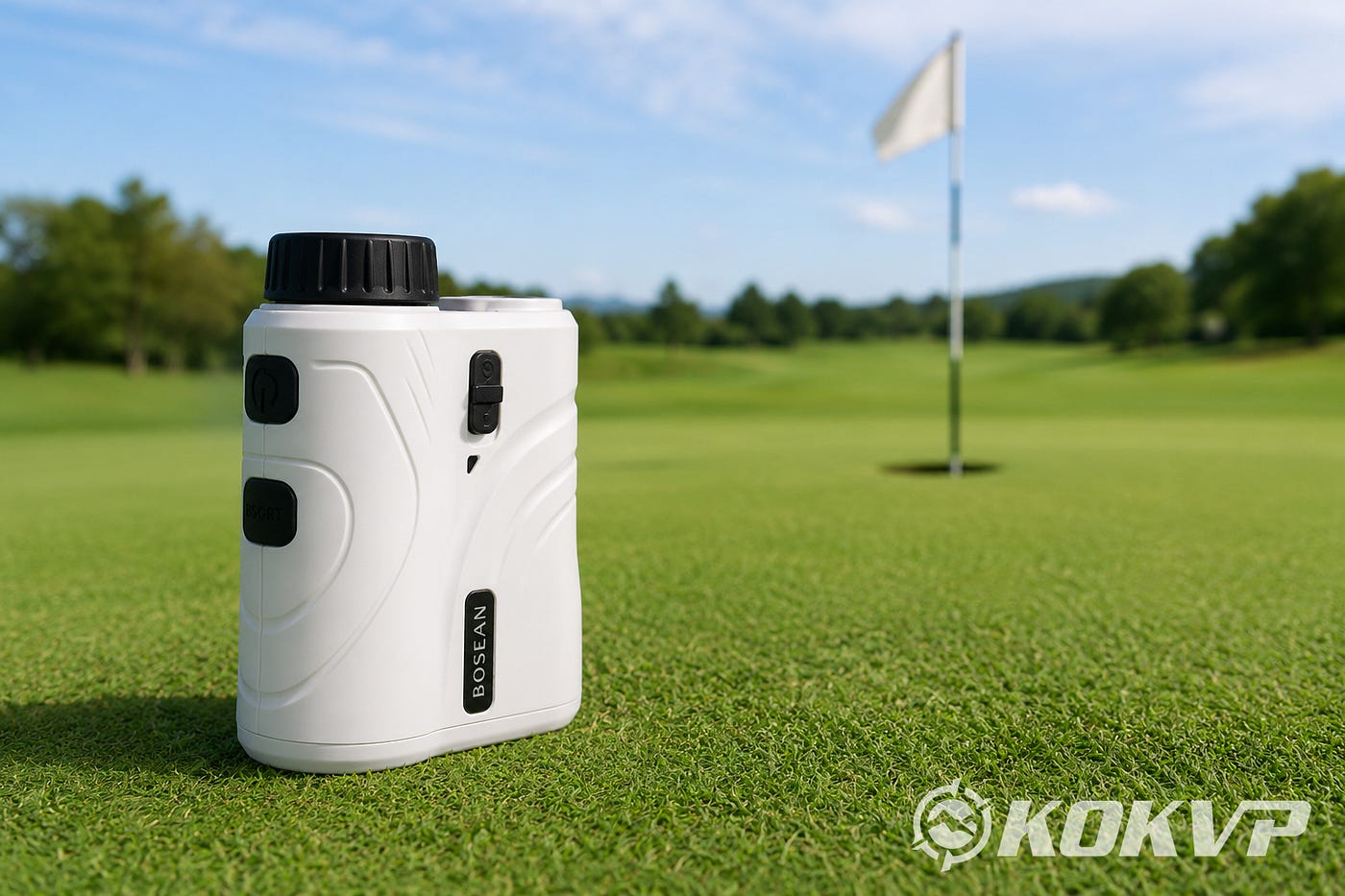
Why Vibration Feedback Feels Useful in Real Play
On a product page, using a golf rangefinder looks simple.
Aim at the flag. Press the button. Read the yardage. Choose a club.
On a real course, it is not always that clean.
The flag may be moving in the wind. There may be trees behind the green. Your hands may not be perfectly steady. The sun may make the display harder to read. A new buyer may also wonder whether the rangefinder is measuring the flag, the slope behind the green, or another object in the background.
This is where vibration feedback becomes useful.
When the rangefinder gives a small pulse after locking onto the target, the user gets a simple physical confirmation. It tells the player that the device has identified the target and returned a reading.
For experienced golfers, that may feel like a small convenience. For newer buyers, it can make the whole device feel less confusing.
A clear vibration signal can reduce hesitation. Instead of ranging the same flag again and again, the player can trust the lock, check the yardage, and move on with the shot decision.
Vibration Feedback Works Best with Flag Lock
Vibration feedback is most valuable when it works together with flag lock or pin seeking technology.
Flag lock helps the golf rangefinder identify the flag instead of picking up trees, mounds, carts, or other background objects. Vibration feedback then confirms that the target has been captured.
These two features work as a pair.
Without flag lock, vibration feedback is less meaningful. A rangefinder may vibrate after measuring something, but the buyer still needs to know whether that “something” was actually the flag.
That is why new buyers should avoid looking at vibration feedback as a standalone feature.
A better buying question is:
Does this rangefinder help me lock onto the flag clearly, and does the vibration confirm that lock in a way I can understand?
That question is much more useful than simply asking whether the device has a buzz function.
New Buyers Often Confuse Fast Readings with Confident Readings
Many golf rangefinders advertise fast measurement. Speed is important, especially when a player does not want to slow down the group behind them.
But a fast reading is not always the same as a confident reading.
A rangefinder may display a number quickly, but if the user is not sure what the device measured, the decision still feels uncertain. New buyers may press the button again, scan the flag twice, or compare the number with a GPS app just to feel comfortable.
Vibration feedback helps reduce that second-guessing.
It gives the user a clear signal that the laser rangefinder has locked onto the intended target. In real use, this can make the device feel faster, even if the technical measurement speed is not dramatically different.
For weekend golfers and casual players, that practical feeling often matters more than a lab-style speed claim.
Where It Helps Most During Approach Shots
Approach shots are where many recreational golfers get the most value from a golf rangefinder.
From 80 to 170 yards, a small yardage difference can change the club decision. A front pin, back pin, bunker carry, elevated green, or downhill landing area can all make the shot feel different from the number on a course marker.
When vibration feedback confirms the flag lock, the player can stop wondering whether the number is correct and start thinking about the actual shot.
Should they play to the center of the green?
Is there enough room behind the pin?
Does the carry over the bunker matter more than the flag distance?
Is the slope changing how the shot plays?
That is the real value of distance measurement. The rangefinder does not choose the club. It does not fix a poor swing. It does not guarantee a better score.
But it removes one layer of guesswork before the shot.
For new buyers, that can be a useful step toward better course management.
When Vibration Feedback May Not Matter as Much
Vibration feedback is useful, but it is not required for every golfer.
If someone mainly relies on GPS yardages, plays the same familiar course every week, or only needs rough distances to hazards and landing areas, vibration feedback may not be a top priority.
Some players are also comfortable ranging the flag multiple times and comparing numbers manually. Others prefer a very simple device with fewer signals and fewer features.
For those buyers, optical clarity, display readability, grip comfort, and basic yardage accuracy may matter more than vibration feedback.
This is why new outdoor buyers should avoid treating any single feature as the whole purchase decision.
A good golf rangefinder is not good because it vibrates. It is good because it gives reliable distance information in a way that feels clear, simple, and practical on the course.
What to Check Before Buying
A good vibration feedback feature should feel clear but not distracting.
If the vibration is too weak, the user may not notice it during play. If it is too strong or too frequent, it can become annoying.
The best version feels simple: aim, lock, feel the pulse, read the yardage, and move on.
New buyers should also pay attention to how quickly the rangefinder locks onto the flag. Vibration feedback is only helpful if the device can find the target reliably. If the lock is slow or inconsistent, the vibration will not solve the problem.
Optical clarity also matters. If the view through the rangefinder is dim, blurry, or hard to steady, the user may struggle before vibration feedback even becomes useful.
Display readability is another detail worth checking. A clear display can make the yardage easier to read in bright sun, cloudy conditions, or late afternoon light.
Battery life should not be ignored either. Vibration feedback uses power, although for normal weekend golf use it usually should not be a major concern. Still, buyers should know what kind of battery the rangefinder uses and whether it is easy to replace or recharge.
How It Fits Into a Real Purchase Decision
For a new outdoor buyer, vibration feedback should sit in the middle of the buying decision.
It is more important than a cosmetic detail. It can make the device easier to trust, especially for golfers who are still learning how to use a laser rangefinder on the course.
But it should not come before the basics.
Reliable yardage comes first. Clear optics come next. The device should feel comfortable in the hand and simple enough to use between shots. After that, golf-specific features such as flag lock, slope mode, scan mode, and vibration feedback become easier to compare.
When vibration feedback supports those core functions, it becomes valuable.
When it is only used as a marketing term, it matters much less.
A Practical Note for Buyers Comparing Brands
New buyers often compare several golf rangefinder brands before making a decision. That is a smart approach, because the best choice is not always the model with the longest claimed range or the most features.
Brands such as KOKVP can fit into this conversation as practical outdoor optics options for golfers who want useful features without making the purchase overly complicated.
The important thing is to compare the full user experience.
Does the rangefinder lock onto the flag clearly?
Is the vibration feedback easy to notice?
Is the display readable outdoors?
Does slope mode make sense for how you play?
Does the device feel natural to carry and use during a round?
A golf rangefinder should feel like a tool that helps you make a faster decision, not a gadget that distracts you from the shot.
The Practical Takeaway
Vibration feedback is not just a small buzz inside a golf rangefinder.
For new outdoor buyers, it can be the feature that makes distance measurement feel more certain. It helps confirm that the device has locked onto the flag. It supports faster decisions during approach shots. It can reduce second-guessing for weekend golfers who are still learning how to use a laser rangefinder in real play.
At the same time, it should not be treated as a magic feature.
A good golf rangefinder still needs reliable yardage, clear optics, comfortable handling, and practical course features.
The simplest way to think about vibration feedback is this: it does not make the shot for you, but it helps you trust the number before you make the shot.
For new buyers, that small moment of confirmation can make a golf rangefinder feel much easier to use in the real world.
메타데이터
- post_id
- c06fb9d59541
- slug
- field-buying-notes-on-vibration-feedback-for-golf-rangefinders-for-new-outdoor-buyers-c06fb9d59541
- url
- https://medium.com/@poxiaoxi2/field-buying-notes-on-vibration-feedback-for-golf-rangefinders-for-new-outdoor-buyers-c06fb9d59541
- canonical_url
- https://medium.com/@poxiaoxi2/field-buying-notes-on-vibration-feedback-for-golf-rangefinders-for-new-outdoor-buyers-c06fb9d59541
- author_url
- https://medium.com/@poxiaoxi2
- status
- ok
- fetched_at
- 2026-06-24 18:57:25