Vienna Teaches You to Read a City Twice
Some cities are meant to be seen quickly. Vienna asks to be read slowly, through rituals, façades, routes, and memory.
Vienna Teaches You to Read a City Twice
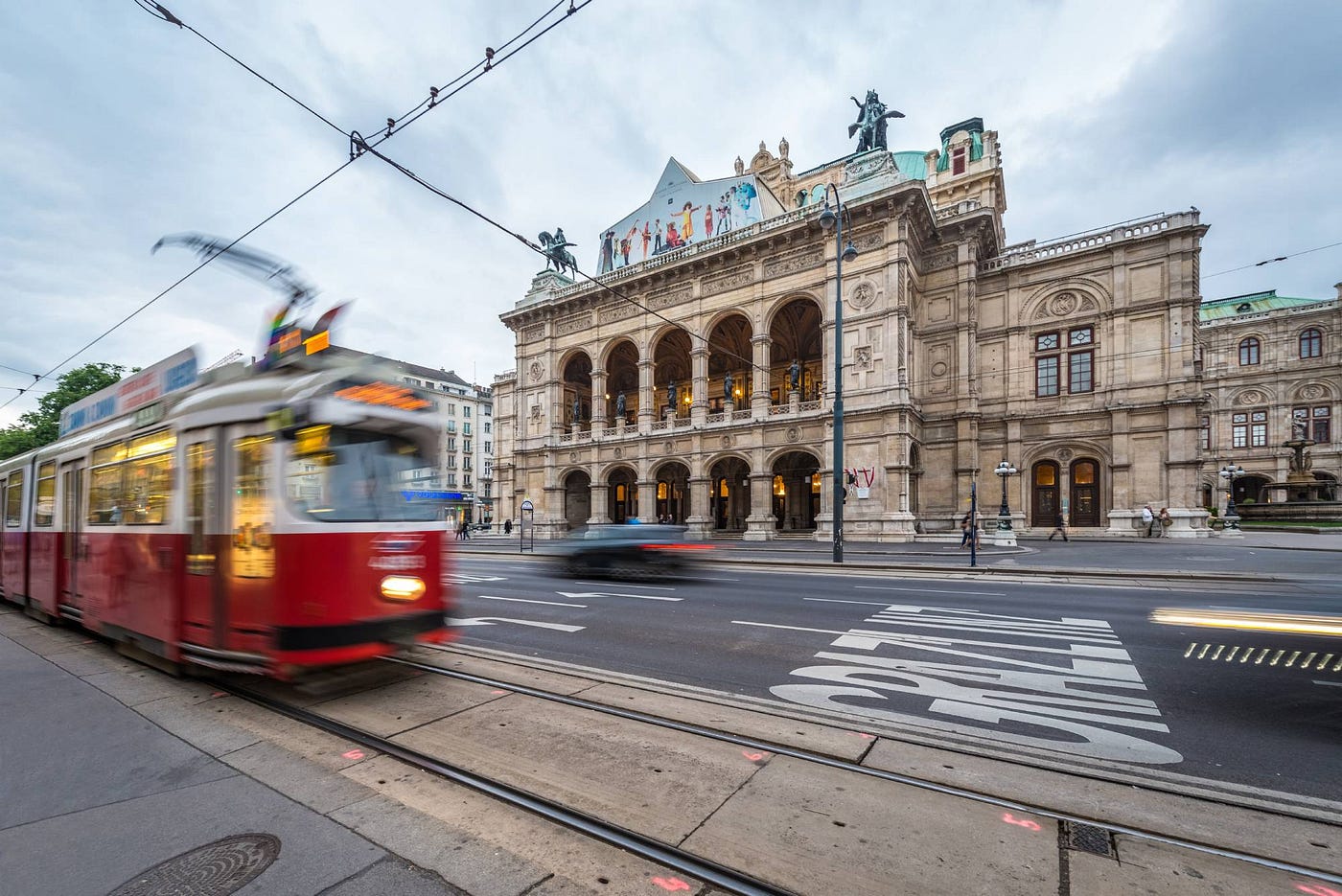
Some cities are meant to be seen quickly. Vienna asks to be read slowly, through rituals, façades, routes, and memory.
There is a way of visiting a city that leaves almost no trace.
You arrive with a list. You move from monument to museum, from café to palace, from famous view to recommended restaurant. You take photographs. You recognize what you were told to recognize. At the end, you can say you have seen the city.
But sometimes, if you are lucky, a place resists being collected so quickly.
Vienna is one of those places.
At first, it offers the expected images easily enough: the Ringstrasse, the coffeehouses, the concert halls, the imperial façades, the palace gardens, the trams moving with quiet regularity through streets that seem to remember their own choreography. These images are real. They belong to the city. But they are also only the surface.
Vienna becomes more interesting when you stop asking, “What should I see?” and begin asking, “What is this place asking me to notice?”
That is when the city changes.
A tram line is no longer only transport. A coffee cup is no longer only refreshment. A façade is no longer only ornament. A garden path is no longer only a way through hedges. Each begins to feel like part of a larger language, one made of repetition, ritual, memory, and form.
Vienna teaches you to read a city twice.
First, for what is visible.
Then, for what has remained.
The city as a symbolic world
Some cities open outward. They announce themselves through scale, speed, brightness, novelty, and expansion. Their energy is horizontal. They pull you forward.
Vienna often works differently.
It gathers meaning inward.
Its beauty is not only decorative. Its rituals are not only charming. Its old forms are not only nostalgic. They are ways memory has learned to survive in public.
This is why Vienna can feel strangely layered even on an ordinary walk. A street may appear calm, almost restrained, yet carry traces of empire, music, bureaucracy, domestic habit, intellectual life, migration, ceremony, and loss. A square may be full of daily movement while also holding older patterns of power and belonging. A café may serve coffee, but it also preserves a way of sitting, reading, lingering, watching, waiting.
The city does not always explain itself. It offers signs instead.
A curve of tram rail. A marble tabletop. A courtyard glimpsed through an open door. A statue at the edge of a garden path. A staircase worn by generations of footsteps. A window that seems to belong to another century.
None of these details needs to be dramatic. In fact, the quieter details often teach us more. They ask for attention before interpretation. They invite us to look again.
This is the beginning of cultural literacy: learning that places speak through forms before they speak through facts.
Why ordinary details matter
Modern travel often trains us to look for highlights. The famous room. The famous painting. The famous view. The famous cake. The famous photograph.
There is nothing wrong with any of this. Famous places become famous for reasons. But if we only move from highlight to highlight, we miss the deeper education of place.
A city is not only its monuments. It is also its habits.
How do people cross a square? Where do they pause? What kinds of rooms does the city protect? What does it make ceremonial? What does it hide in plain sight? Which details repeat from district to district? Which gestures feel inherited rather than invented?
Vienna rewards these questions.
Its symbolic life often appears through repetition. The recurring rhythm of public transport. The relation between exterior formality and interior intimacy. The carefulness of certain rituals. The persistence of music, gardens, cafés, thresholds, and memorial spaces. The sense that the past has not vanished, but has changed costume.
To notice this is not to romanticize the city. Vienna’s history is not simple, and memory is not always beautiful. But attention allows complexity to appear. It prevents a place from becoming a postcard.
When you look slowly, beauty and contradiction can stand together.
That is where understanding begins.
A pause for slower seeing
For readers who want to practice this way of looking in Vienna, I created the Free Field Guide from Understanding Vienna.
It is an invitation to move through the city more slowly, to notice hidden places, visual memory, cultural details, and the quieter forms of attention that make Vienna more than a destination.
You can find it here: GET THE FIELD GUIDE

History is not only behind glass
Many people think of history as something stored elsewhere.
In archives. In museums. In books. In dates. In rooms with labels and controlled lighting.
But history also survives in the ordinary world. It lives in street names, inherited gestures, old routes, decorative choices, institutional habits, domestic spaces, and public rituals. It appears whenever a place continues to shape behavior long after the original reason has faded.
Vienna is powerful because it makes this visible.
A palace garden can reveal ideas about power, order, nature, spectacle, and control. A coffeehouse can reveal something about reading, conversation, solitude, and public interior life. A tram route can reveal how the city connects its districts and repeats its daily rhythms. A façade can reveal the distance between public display and private life.
To see this way is to understand that culture is not an abstract subject. It is built into the world around us.
It is in how a city arranges attention.
The recovery of attention
There is another reason this matters now.
We live in a time that constantly breaks attention into fragments. We scroll, skim, react, save, forget. We move through places while looking elsewhere. Even travel can become another form of consumption, a sequence of images gathered too quickly to become memory.
Slow observation is a quiet refusal of this.
It does not require expertise. It does not require academic language. It begins with a simple decision: to give one place, one object, one street, or one room more attention than efficiency requires.
What happens when you do?
The world becomes less flat.
A walk becomes a form of reading. A city becomes a teacher. History becomes less distant. Beauty becomes more complicated. Ordinary places begin to feel alive again.
This is one of Vienna’s great lessons. Not that the past was better. Not that old things are automatically meaningful. But that memory is often carried by forms we have learned to pass too quickly.
The city does not reveal itself to speed.
It reveals itself to return.
How to read a city twice
The next time you walk through Vienna, or through any city you know well, try this.
First, notice what the place wants you to see. The monument, the view, the shopfront, the famous building, the obvious beauty.
Then look again.
Notice what repeats. Notice the thresholds. Notice where people slow down. Notice what has been polished, preserved, ignored, restored, renamed, hidden, or made ceremonial. Notice the difference between public face and private interior. Notice the details that seem too ordinary to matter.
Ask yourself:
What memory might this form be carrying? What habit does this place preserve? What kind of attention does it ask from me? What would I miss if I only photographed it?
This practice changes the experience of travel, but it also changes daily life. You begin to understand that meaning is not only found in rare places. It is also found in the familiar, once you learn how to look.
Vienna is a good teacher because it is full of visible invitations into invisible layers.
But the deeper lesson belongs anywhere.
Every place carries more than it says at first.
Further Reading
Read the full essay on Understanding Vienna: Vienna as a Symbolic World: Why Place Carries Memory
Free Invitation
If this way of seeing speaks to you, begin with the Free Field Guide from Understanding Vienna.
It is a gentle invitation to explore Vienna through slower observation, hidden places, cultural memory, and the recovery of attention.
Start here: GET THE FIELD GUIDE

About Understanding Vienna
Understanding Vienna is a cultural storytelling project devoted to slow observation, hidden places, visual memory, historical storytelling, literary travel, and the recovery of attention.
메타데이터
- post_id
- c06fd0dd2823
- slug
- vienna-teaches-you-to-read-a-city-twice-c06fd0dd2823
- url
- https://medium.com/@YolandaReischer/vienna-teaches-you-to-read-a-city-twice-c06fd0dd2823
- canonical_url
- https://medium.com/@YolandaReischer/vienna-teaches-you-to-read-a-city-twice-c06fd0dd2823
- author_url
- https://medium.com/@YolandaReischer
- status
- ok
- fetched_at
- 2026-07-07 21:51:36





