Synthesizing Security Concepts: Building a Cohesive Cybersecurity Strategy
Cybersecurity is often misunderstood as a collection of separate tools and isolated defenses. Organizations deploy firewalls, install…
Synthesizing Security Concepts: Building a Cohesive Cybersecurity Strategy
Cybersecurity is often misunderstood as a collection of separate tools and isolated defenses. Organizations deploy firewalls, install antivirus software, configure access controls, and monitor logs, yet many still experience devastating breaches. The reason is simple: cybersecurity is not just about individual technologies — it is about building a complete, interconnected strategy.
Throughout this series, we explored several foundational security principles:
- Defense in Depth
- Least Privilege
- Separation of Duties
- Secure by Design
- Security Through Obscurity
Each principle addresses cybersecurity from a different perspective. Individually, they improve security in specific ways. Together, however, they create a powerful and resilient framework capable of protecting modern organizations against increasingly sophisticated threats.
This final discussion focuses on how these concepts complement one another and how organizations can integrate them into a cohesive cybersecurity strategy.
The most effective security posture is never built upon a single defense mechanism. Instead, it emerges from multiple layered controls working together to reduce risk, contain attacks, and improve organizational resilience.

Revisiting the Core Security Principles
Before examining how these concepts interact, it is important to briefly revisit their core purposes.
Defense in Depth
Defense in Depth is the strategy of implementing multiple layers of security controls rather than relying on a single protective mechanism.
Examples include:
- Firewalls
- Endpoint protection
- Multi-factor authentication
- Network segmentation
- Logging and monitoring
- Intrusion detection systems
If one layer fails, additional layers continue protecting the organization.
Defense in Depth recognizes an important reality: No single security control is perfect.
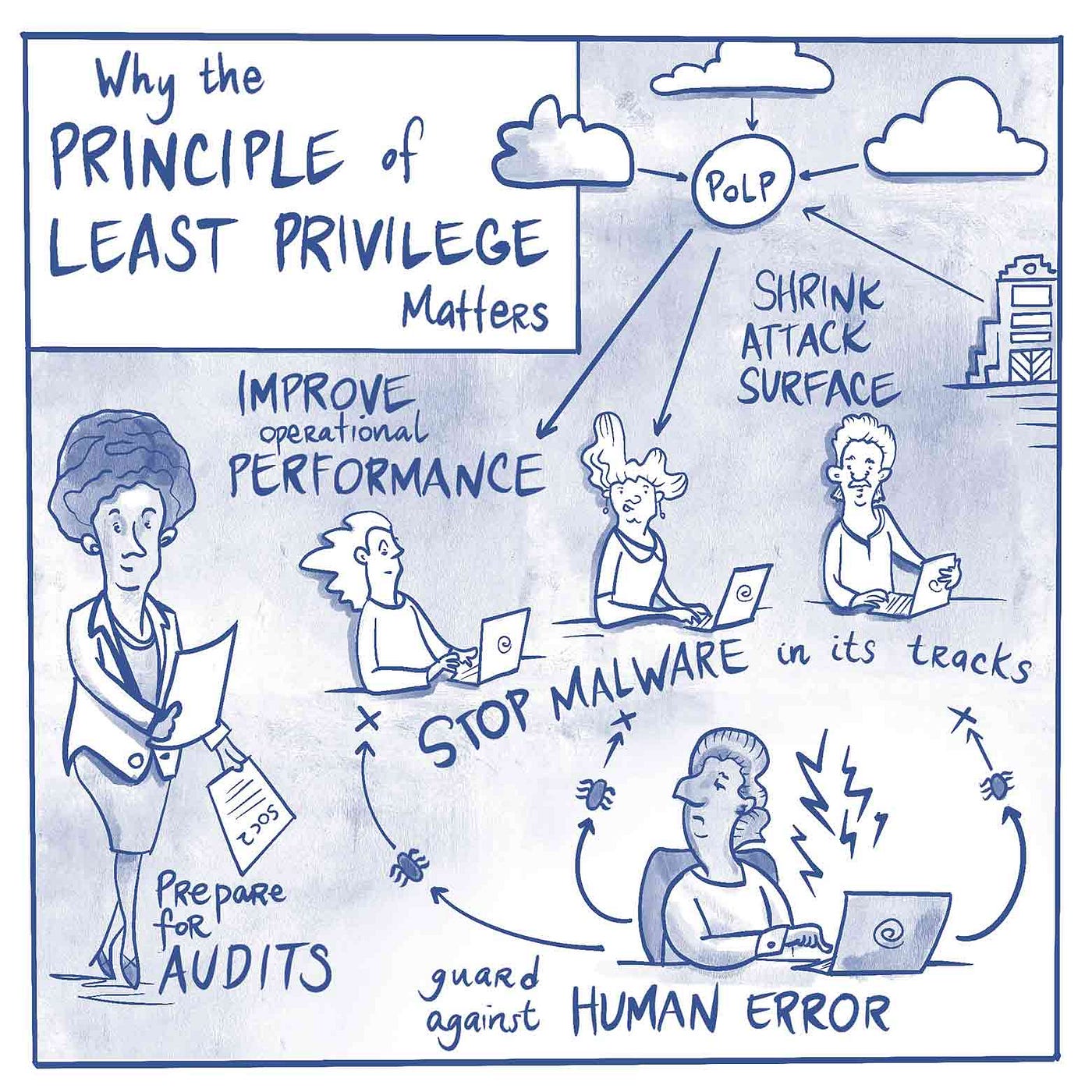
Least Privilege
Least Privilege ensures that users, applications, and systems receive only the minimum access necessary to perform their functions.
This principle limits:
- Unauthorized access
- Insider threats
- Lateral movement
- Privilege escalation
Even if attackers compromise an account, restricted permissions reduce potential damage.
Separation of Duties
Separation of Duties distributes critical responsibilities across multiple individuals or systems.
Instead of allowing one person complete control over sensitive operations:
- One person requests changes
- Another approves them
- Another implements them
- Another audits the activity
This improves accountability and reduces fraud, abuse, and human error.
Secure by Design
Secure by Design integrates security into systems and software from the earliest stages of development.
Rather than adding security after deployment, organizations proactively:
- Perform threat modeling
- Enforce secure defaults
- Reduce attack surfaces
- Implement automated testing
- Design resilient architectures
This approach prevents vulnerabilities before they reach production environments.
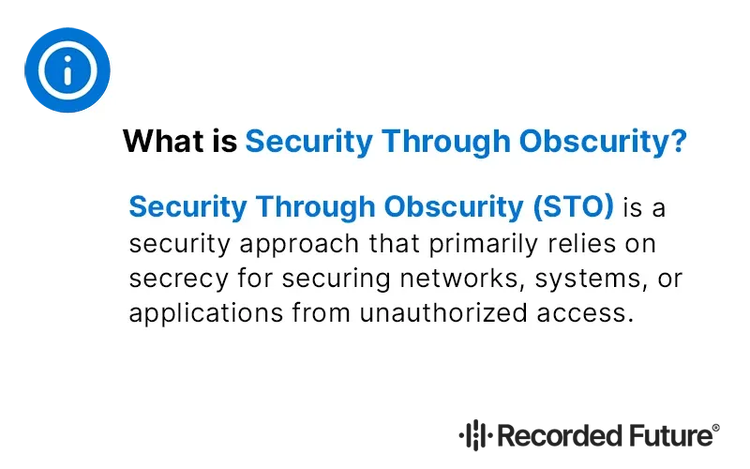
Security Through Obscurity
Security Through Obscurity involves hiding certain system details to complicate attacks.
Examples include:
- Concealing infrastructure details
- Restricting public system information
- Obfuscating code
- Limiting visibility of administrative interfaces
While obscurity alone is insufficient, it can strengthen layered defenses when combined with stronger security controls.
How These Principles Work Together
Individually, each principle addresses a specific area of cybersecurity. Together, they create a comprehensive defense strategy.
Modern cyber attacks are rarely simple. Attackers typically:
- Gain initial access
- Escalate privileges
- Move laterally
- Access sensitive systems
- Exfiltrate or destroy data
A cohesive security strategy disrupts attackers at multiple stages.
A Real-World Attack Scenario
Imagine a phishing attack compromises an employee account inside a company.
Without layered security:
- The attacker gains administrative access
- Sensitive systems become exposed
- Malicious changes go undetected
- Data is stolen or encrypted
Now consider the same attack within a cohesive security framework.
Defense in Depth
Multiple security layers detect suspicious behavior:
- Email filtering flags phishing attempts
- Endpoint protection detects malware
- SIEM systems monitor unusual activity
- Network segmentation limits movement
Even if one layer fails, others remain active.
Least Privilege
The compromised account only has limited permissions.
The attacker cannot:
- Access sensitive databases
- Modify security settings
- Control production systems
Damage becomes contained.
Separation of Duties
Critical changes require multiple approvals.
The attacker cannot:
- Deploy malicious software directly
- Disable monitoring systems alone
- Create privileged accounts without oversight
Checks and balances interrupt malicious activity.
Secure by Design
Applications enforce:
- Strong authentication
- Secure defaults
- Input validation
- Hardened configurations
The infrastructure was designed to resist attacks proactively rather than relying solely on reactive defenses.
Security Through Obscurity
Internal administrative systems are hidden behind VPN access and restricted exposure.
Attackers face additional difficulty identifying sensitive targets.
The Power of Layered Security
This example demonstrates an important cybersecurity principle:
No single control guarantees security.
However, combining multiple defensive strategies dramatically improves resilience.
This layered approach:
- Slows attackers down
- Reduces attack surfaces
- Limits damage
- Improves detection
- Enhances recovery capabilities
Cybersecurity is strongest when defenses overlap and reinforce each other.
Designing a Cohesive Security Strategy
Building a comprehensive cybersecurity strategy requires more than deploying security tools. Organizations must integrate people, processes, and technology into a unified framework.
Security Culture and Organizational Mindset
Technology alone cannot secure an organization.
Employees, developers, administrators, executives, and security teams all contribute to cybersecurity.
Organizations should foster:
- Security awareness
- Accountability
- Continuous education
- Secure development culture
- Executive support for security initiatives
Security must become part of organizational culture rather than a separate technical function.
Policy Enforcement and Governance
Strong security strategies require clear policies and enforcement mechanisms.
Examples include:
- Access control policies
- Password requirements
- Change management procedures
- Incident response plans
- Data protection standards
Policies should align with the principles discussed throughout this series.
For example:
- Least Privilege influences access policies
- Separation of Duties shapes approval workflows
- Secure by Design guides development standards
Continuous Monitoring and Improvement
Cybersecurity is never static.
Threats constantly evolve, meaning organizations must continuously:
- Monitor systems
- Review configurations
- Conduct penetration testing
- Audit permissions
- Update defenses
- Improve incident response plans
A cohesive strategy depends on continuous adaptation.
The Role of Automation
Modern infrastructures are too large and complex for purely manual security management.
Automation supports:
- Privilege management
- Threat detection
- Vulnerability scanning
- Compliance validation
- Security testing in CI/CD pipelines
Automation improves both efficiency and consistency.
Cloud and Modern Infrastructure Challenges
As organizations move toward:
- Cloud computing
- Remote work
- Containers and Kubernetes
- APIs and microservices
- Artificial intelligence systems
Security strategies must evolve accordingly.
Cloud providers like Amazon Web Services, Microsoft Azure, and Google Cloud provide advanced security tools, but organizations must still implement strong foundational principles.
Misconfigured permissions, weak architectures, and poor operational practices remain major risks even in modern cloud environments.
Visualizing a Unified Security Framework
To enhance your Medium article, consider adding visuals such as:
Diagrams
- Layered security architecture
- Defense in Depth model
- Secure enterprise ecosystem
Flowcharts
- Incident response lifecycle
- Access approval workflows
- Secure SDLC process
Infographics
- How each principle supports the others
- Cyber attack lifecycle vs defensive controls
- Security maturity model
Organizational Models
Illustrate collaboration between:
- Security teams
- Developers
- Operations teams
- Executives
- Compliance departments
Visuals help readers understand how these concepts interconnect within real-world organizations.
Looking Toward the Future of Cybersecurity
Cybersecurity continues evolving rapidly.
Emerging technologies such as:
- Artificial intelligence
- Quantum computing
- Cloud-native architectures
- Internet of Things (IoT)
- Autonomous systems
will introduce new security challenges.
Despite technological changes, the foundational principles discussed in this series remain highly relevant.
Future security strategies will still require:
- Layered defenses
- Access control
- Secure system design
- Accountability
- Risk reduction
- Continuous adaptation
The technologies may evolve, but the core philosophy of cybersecurity remains consistent: Reduce trust, minimize risk, and assume attackers will eventually attempt compromise.
Building Cyber Resilience
True cybersecurity is not about creating “perfectly secure” systems.
Perfect security does not exist.
Instead, organizations should focus on cyber resilience:
- Prevent attacks when possible
- Detect threats quickly
- Contain damage effectively
- Recover efficiently
- Continuously improve defenses
The principles explored throughout this series collectively contribute to this resilience.
Conclusion
Cybersecurity is most effective when organizations stop viewing security concepts as isolated controls and begin understanding them as interconnected parts of a larger strategy.
Defense in Depth, Least Privilege, Separation of Duties, Secure by Design, and Security Through Obscurity each address different dimensions of security. Together, they create a layered, adaptive, and resilient cybersecurity framework capable of defending against modern threats.
No single technology, policy, or security tool can fully protect an organization. Strong cybersecurity depends on combining multiple principles, continuously improving defenses, and building security into every aspect of technology and organizational culture.
As cyber threats continue evolving, organizations must remain proactive, informed, and adaptable.
The strongest defense is not one powerful security mechanism — it is the intelligent integration of many complementary protections working together.
Take a moment to evaluate your own systems, workflows, and security practices:
- Are your defenses layered?
- Are permissions minimized?
- Are responsibilities properly separated?
- Is security integrated into development?
- Are hidden systems still secure if exposed?
The future of cybersecurity belongs to organizations that embrace security as a continuous, holistic process rather than a single solution.
메타데이터
- post_id
- c09b8f05d463
- slug
- synthesizing-security-concepts-building-a-cohesive-cybersecurity-strategy-c09b8f05d463
- url
- https://medium.com/@13771_19621/synthesizing-security-concepts-building-a-cohesive-cybersecurity-strategy-c09b8f05d463
- canonical_url
- https://medium.com/@13771_19621/synthesizing-security-concepts-building-a-cohesive-cybersecurity-strategy-c09b8f05d463
- author_url
- https://medium.com/@13771_19621
- status
- ok
- fetched_at
- 2026-06-15 20:49:13