The Quiet Weather Beneath the Calm
What courtesies hide and the bliss of collective denial
The Quiet Weather Beneath the Calm
What courtesies hide and the bliss of collective denial
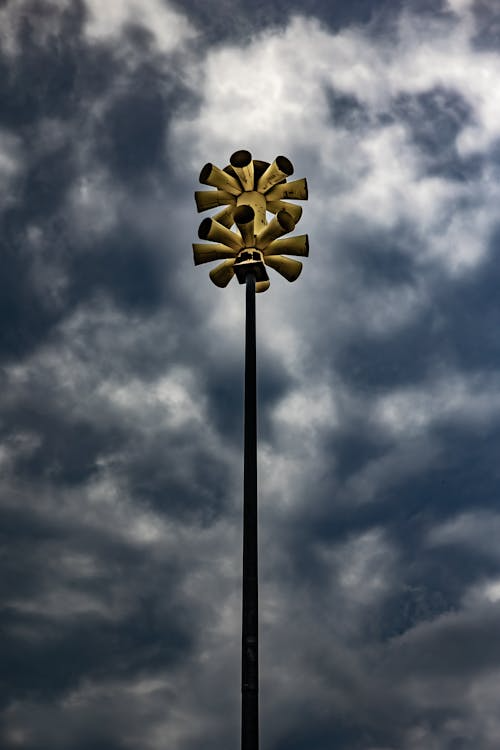
Photo by Age Cymru on Unsplash
At my retirement village, you are struck less by what is said than by what is not said.
The place runs with an almost suspicious smoothness. Meals proceed without complaint. Programs are attended with dutiful good cheer. The staff is treated with benign courtesy.
The Calm Atmosphere
Residents greet one another in the hallways with practiced warmth. There are no raised voices, no public quarrels, no dramatic social ruptures. On the surface, it all appears serene and conflict-free.
But is this tranquility entirely what it seems?
Human communities do not become free of conflict merely because they have entered old age. If anything, old age intensifies the deepest human tensions.
Living Near the End
The body is less reliable, the future less expansive, the margin for illusion narrower. One lives closer now to the end and to the journey to the unknown region.
Every ambulance call, every empty chair at dinner, every whispered report of someone’s decline reminds the rest of us that we are all moving along the same narrowing and enveloping corridor.
It would be strange if such a condition produced no inner disquietude or buried turbulence.
Repressed Ideas and Feelings
I suspect that what appears outwardly as peace often conceals a more subterranean emotional weather: anxiety, resentment, grief, even anger. But here, these feelings are rarely expressed in public.
They do not erupt in obvious disputes over ideology or personality. Instead, they seep into the atmosphere in quieter ways.
The anger, if that is the word, may not even have a clear object. It is less anger at someone than anger at circumstance itself.
There is the upset at the body for betraying its former ease, at times for accelerating, and at the mild humiliations of dependence.
I have noticed, for example, that as wait staff and family members rush to fix a spill or correct a poor pronunciation, I feel a growing fondness for these gentle acts of kindness.
The knee that no longer operates as before, the memory lapses, these are not merely inconveniences. They are existential affronts.
The Hidden Life
And because such anger cannot be easily resolved, it often retreats underground. Civility becomes its container. Small talk becomes its camouflage.
One comments on the soup, the weather, the afternoon lecture, while beneath these exchanges, something far more serious hums: the knowledge that one’s remaining time is finite and increasingly short-lived.
Anxiety, too, takes on a special character here. In younger life, anxiety often concerns career, love, money, children, and ambition.
In late life, it concerns unbecoming. One worries less about what one might gain than about what one might lose next. This might be mobility, or friends, or independence
This kind of anxiety is rarely spoken plainly. To do so would be to name aloud the shared vulnerability that already hangs in the air.
So the community develops a social pact of silence. We do not press too hard. We do not inquire too deeply. We preserve the façade of ease to avoid depressing prospects.
The lack of open conflict, then, may not signify emotional emptiness. It may instead represent a highly disciplined social adaptation to mortality.
A senior living community is, among other things, a place where people live in close proximity to possible futures. Each resident sees in the others possible versions of the self: the newly acquired walking aids, the forgetful wanderer, the newly widowed, the one who nods off on public benches.
This constant mirroring can generate a low-grade unease, a persistent confrontation with one’s own possible diminishment.
Unexpressed Understandings
In such a setting, anger and anxiety linger as an invisible presence in the room.
You could say that the community’s civility is partly built upon this shared unspoken understanding. We are all carrying something heavy. We all know it. Therefore, we maintain the surface.
The conflict is not absent; it has simply migrated inward.
Still, the silence has its cost.
For what remains unspoken can also remain unshared, and what remains unshared can harden into loneliness.
The challenge in places like my retirement community is not to manufacture conflict, but to make room for more honest forms of emotional speech. We need to find ways of acknowledging the anger and anxiety that attend the endgame of life without allowing them to poison the community.
This story was written with the assistance of Al.
메타데이터
- post_id
- c0a82c9a682b
- slug
- the-quiet-weather-beneath-the-calm-c0a82c9a682b
- url
- https://medium.com/@sanfmark/the-quiet-weather-beneath-the-calm-c0a82c9a682b
- canonical_url
- https://medium.com/@sanfmark/the-quiet-weather-beneath-the-calm-c0a82c9a682b
- author_url
- https://medium.com/@sanfmark
- status
- ok
- fetched_at
- 2026-07-14 13:18:53