Japandi vs Scandinavian: Pick the Right Calming Style Based On Your Home Layout (2026)
There is a particular kind of room that makes people pause.
Japandi vs Scandinavian: Pick the Right Calming Style Based On Your Home Layout (2026)
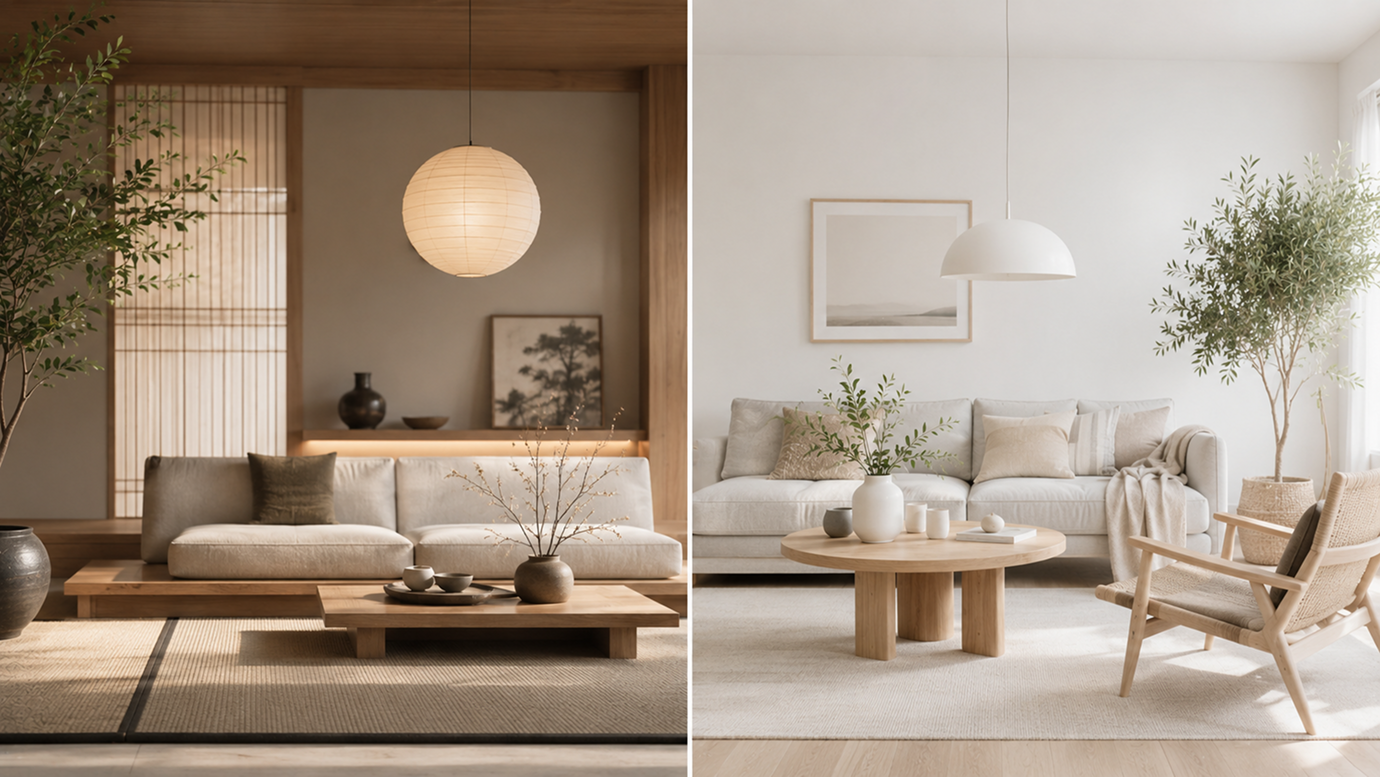
There is a particular kind of room that makes people pause.
Not because it is dramatic. Not because the sofa is expensive or the wall color is daring. It works in a quieter way. The light feels soft. The furniture has room to breathe. The materials look honest. Nothing is shouting, yet everything seems to belong.
That is the promise behind both Japandi and Scandinavian interior design. They are two of the most loved calm home styles because they offer the same emotional relief: less visual noise, more warmth, and a home that feels easier to live in. But while they often look similar at first glance, they create calm in different ways.
Scandinavian design feels bright, cozy, practical, and socially warm. Japandi feels grounded, intentional, restrained, and quietly refined. One opens the room up. The other settles it down.
So when it comes to Japandi vs Scandinavian, the better question is not “Which style is better?” It is: which kind of calm do you actually want to come home to?
What Is Japandi Style?

Japandi style is a fusion of Japanese minimalism and Scandinavian warmth. It brings together two design philosophies that already share a lot: simplicity, natural materials, craftsmanship, and the belief that a beautiful home should support daily life rather than overwhelm it.
From the Japanese side, Japandi borrows restraint, balance, low-profile forms, and the idea of wabi-sabi: finding beauty in imperfection, age, texture, and quiet irregularity. From the Scandinavian side, it borrows warmth, function, comfort, and the softened minimalism of hygge.
The result is a home that feels calm but not cold, minimal but not empty, elegant but not untouchable.
A Japandi room often uses warm neutrals, muted earth tones, charcoal, black accents, natural wood, stone, linen, rattan, bamboo, and handmade ceramics. Furniture tends to be low, clean-lined, and grounded. Decor is edited carefully. A single vase may matter more than a crowded shelf. A textured wall, a paper lamp, or a rough ceramic bowl can carry the room.
Japandi is not about removing personality. It is about giving each object enough space to mean something.
Pros and Cons of Japandi

Pros of Japandi style:
● Japandi is ideal if you want your home to feel slower, quieter, and more intentional.
● Its biggest strength is atmosphere. A good Japandi room has emotional weight. It feels mature and restful. It works especially well in bedrooms, bathrooms, reading corners, and living rooms where you want the space to feel like a reset button.
● Japandi also encourages better buying habits. Because the style depends on fewer, better objects, it naturally pushes you toward quality over quantity. Instead of filling the room with quick decorative fixes, you choose pieces that have texture, purpose, and staying power.
● Natural materials are another major advantage. Wood, stone, linen, clay, and woven fibers stop the room from feeling sterile. They add warmth without adding clutter.
But Japandi has a few challenges:
● Because the style is so restrained, weak materials become obvious. A cheap coffee table, flat faux wood, or random black accent can make the space look staged rather than serene. Japandi asks for thoughtfulness. Every object is more visible because there are fewer distractions.
● It can also feel too quiet for some homes. If you love color, family photos, books everywhere, playful art, or seasonal decorating, strict Japandi may feel limiting. And if your room is already dark, too many charcoal tones or heavy wood pieces can make it feel smaller.
Japandi works best when you genuinely enjoy visual discipline, not when you are forcing yourself to become a minimalist.
5 Japandi Design Ideas Worth Studying

1.A calm Japandi home usually starts with wood. You can use pale oak for a softer Scandinavian influence or darker walnut and black-stained wood for a more grounded Japanese feeling. The key is consistency. Too many wood tones can make the space feel accidental.
2.Keep the color palette warm but muted. Think off-white, sand, mushroom, clay, taupe, soft gray, charcoal, and muted green. Japandi does not need many colors. It needs colors that feel quiet together.

Use black as punctuation and leave blank space in calm Japandi home
3.Use black carefully. A slim black lamp, a dark wood chair, a black-framed mirror, or matte black hardware can create definition. But black should act like punctuation, not the whole sentence.
4.Leave negative space. Empty space is not wasted space in Japandi. It gives the eye a place to rest. A wall does not always need art. A shelf does not always need styling. A corner does not always need filling.
5.Choose tactile pieces. A linen duvet, woven rug, clay vase, paper lantern, or stone tray can make a minimal room feel human. Japandi calm comes from texture more than decoration.
What Is Scandinavian Style?

Scandinavian design comes from the Nordic countries and is shaped by long winters, limited daylight, functional living, and the desire to make homes feel warm and practical.
At its heart, Scandinavian style is simple, bright, and useful. It values clean lines, natural materials, light wood, comfortable furniture, and rooms that feel open and lived-in. It is minimal, but usually not severe. It makes space for softness.
If Japandi is calm through restraint, Scandinavian design is calm through ease.
A Scandinavian room often uses white or warm white walls, light gray, soft beige, pale wood, linen, wool, cotton, woven baskets, plants, warm lighting, and simple furniture with slim legs. There may be books, candles, throws, framed prints, or a cozy reading chair. The space feels considered, but not overly controlled.
This is why Scandinavian design has stayed popular for so long. It is beautiful, but also approachable. You can live in it without feeling like you are disturbing the composition every time you put down a coffee mug.
Pros and Cons of Scandinavian Style

Scandinavian style is one of the easiest calm interior styles to live with.
● Its biggest advantage is light. Pale walls, light wood, reflective surfaces, and airy furniture can make a small or dim room feel larger and more open. If your home does not get much natural light, Scandinavian design can help you stretch what light you do have.
● It is also flexible. You can add personal objects, art, books, soft colors, plants, and textiles without breaking the style. Scandinavian interiors are often minimal, but they are rarely rigid. They can handle daily life.
● This makes the style especially good for families, renters, first homes, small apartments, kitchens, living rooms, and open-plan spaces. You can build it gradually with better lighting, storage, textiles, and natural materials.
But Scandinavian style has its own risks.
● If you rely too much on white walls, light wood, and basic furniture, the room can become generic. It may look clean but not personal. Without texture, contrast, and warmth, Scandinavian design can drift into showroom territory.
● It also needs good lighting. A white room under cold overhead lighting can feel clinical very quickly. The style works best with layered lamps, warm bulbs, candles, and natural textures that soften the pale palette.
● Scandinavian style is easy to start, but it still needs intention to feel special.
5 Scandinavian Design Ideas Worth Studying
1.Start with light. Scandinavian design works beautifully when the room feels open and breathable. Use pale walls, sheer curtains, light wood, mirrors, and uncluttered windows to make the most of natural daylight.
2.Then layer warmth. A Scandinavian room should not feel empty. Add wool throws, linen curtains, cotton cushions, soft rugs, and warm lighting. Texture matters as much as color.
3.Choose furniture that feels practical and relaxed. Raised legs, clean shapes, and light wood help the room feel airy. A sofa should look comfortable, not ceremonial. A dining table should feel ready for everyday use.
4.Add personality in small doses. Scandinavian style welcomes framed prints, ceramics, books, plants, and simple decorative objects. The goal is not to hide your life. It is to make your life feel visually calmer.

Use brown furniture to break pale environment in Scandinavian style Source
5.Avoid making everything pale. Add contrast through black details, muted blue, soft green, warm terracotta, natural leather, or darker textiles. A little contrast keeps the room from becoming flat.
Japandi vs Scandinavian: The Key Differences
At first glance, Japandi and Scandinavian interiors can seem almost interchangeable. Both use natural materials. Both avoid clutter. Both favor simplicity. Both care about function.
But they do not feel the same.
Scandinavian design is brighter. Japandi is more grounded.
Scandinavian design often uses white, warm white, pale gray, light beige, and soft pastels. Japandi leans into warmer neutrals, clay, taupe, charcoal, muted greens, and deeper wood tones.
Scandinavian furniture often feels lighter, with raised legs and a casual sense of openness. Japandi furniture often feels lower, heavier, and more anchored to the floor.
Scandinavian decor can be cozy and personal: books, candles, artwork, cushions, throws, plants. Japandi decor is more edited: one ceramic bowl, one branch, one sculptural lamp, one carefully chosen textile.
Scandinavian calm is social. It invites you to sit, talk, cook, read, and gather.
Japandi calm is contemplative. It invites you to slow down, notice texture, breathe, and let the room hold less.
Neither is better. But one may be better for the way you live.
When to Choose Japandi
Choose Japandi if you want your home to feel quiet, grounded, and deeply intentional.
It is a strong fit if you are drawn to earthy neutrals, natural textures, low furniture, clean surfaces, and rooms that feel almost meditative. If you dislike visual clutter and prefer a few meaningful objects over many decorative pieces, Japandi will probably feel natural to you.
It also suits people who want their home to feel more refined without becoming flashy. Japandi does not rely on luxury signals. It relies on proportion, material, shadow, and restraint.
The style works especially well in bedrooms. A low bed, linen bedding, warm wood, filtered light, and minimal decor can create a room that genuinely supports rest. It also works beautifully in bathrooms, where stone, wood, neutral tile, and concealed storage can make even a small space feel spa-like.
Japandi can be excellent for small apartments too, as long as the palette is not too dark. Because the style values fewer objects, it helps prevent compact homes from feeling crowded.
Before committing, though, it helps to see the style in your own room. A dark wood coffee table or black accent wall may look beautiful online but too heavy in your actual lighting. This is where a tool like DecAI can be useful: upload your room, test a Japandi direction, and compare options before buying furniture or repainting.
Japandi rewards patience. If you want an instant makeover full of accessories, it may frustrate you. But if you enjoy slow, careful choices, it can make a home feel incredibly peaceful.
When to Choose Scandinavian
Choose Scandinavian style if you want calm that still feels bright, friendly, and easy to live with.
It is a strong fit if your home needs more light, your rooms are small, or you want a minimal style that does not feel too serious. Scandinavian design gives you structure without making the home feel strict.
It is also more forgiving than Japandi. You can add family photos, children’s toys, colorful art, books, plants, and seasonal textiles without losing the feeling of the space. The style has room for real life.
Scandinavian design is especially good for living rooms and kitchens. These are active spaces, and Scandinavian interiors understand activity. A light oak table, simple chairs, warm pendant light, woven rug, and a few everyday objects can feel calm without becoming precious.
It also works well for renters. You can create a Scandinavian mood with furniture, lamps, textiles, curtains, art, and storage without changing architecture. White or warm white walls, light wood, and soft fabrics go a long way.
If your home is dark, Scandinavian design is often the safer first choice. Pale surfaces and airy furniture can help the room feel more open. Then you can add warmth through rugs, throws, lamps, and plants.
Scandinavian style is not about perfection. It is about making the everyday feel lighter.
Which One Is More Aligned With 2026 Trends?
Both Japandi and Scandinavian design remain highly relevant because both answer the same modern problem: people want homes that feel calmer.
But they are trending in slightly different ways.
Japandi connects strongly with quiet luxury, warm minimalism, natural materials, restful bedrooms, spa-like bathrooms, and the desire for a slower home. It feels elevated and editorial, especially when done with real wood, stone, linen, and handmade objects.
Scandinavian design is also evolving. It is no longer just white walls and pale wood. The modern Scandinavian home feels warmer, more textured, and more personal. It includes wool, linen, rattan, plants, warm lighting, natural wood, and softer color.
So which one feels more current?
Japandi may feel more refined and design-forward. Scandinavian may feel more adaptable and livable.
If you want a home that photographs beautifully and feels deeply curated, Japandi has the edge. If you want a home that supports everyday comfort, family life, and gradual decorating, Scandinavian may be the better long-term choice.
The most modern answer may be a hybrid: Scandinavian brightness with Japandi restraint.
Can I Mix Japandi and Scandinavian?
Yes, and many beautiful homes already do.
The trick is to choose one style as the lead and use the other as an accent. If you try to give both equal control, the room can become confused.
For a Scandinavian-led room with Japandi influence, start with light walls, pale wood, a comfortable sofa, and warm textiles. Then add a low dark wood coffee table, a paper pendant lamp, a single ceramic vase, or black metal accents.
For a Japandi-led room with Scandinavian warmth, start with earthy neutrals, low furniture, dark or mid-tone wood, and minimal decor. Then soften the space with linen cushions, a wool throw, pale oak details, or warm layered lighting.
The shared foundation makes mixing easier: natural materials, clean lines, function, simplicity, and less clutter.
A simple formula works well:
Use Scandinavian for light.
Use Japandi for depth.
And, if you are really not sure how to choose the best fit for your home or room, simply use free AI interior design tools like DecAITM to check how these two design styles will look like on your real home or room photo in seconds.

Use DecAITM to test Japandi and Scandinavian style
FAQs
1.What is the main difference between Japandi and Scandinavian style?
The main difference is mood. Scandinavian style feels brighter, cozier, and more casual. Japandi feels quieter, more grounded, and more refined. Both are minimal and natural, but Scandinavian calm comes from light and comfort, while Japandi calm comes from restraint and balance.
2.Which style is better for small apartments?
Both can work. Scandinavian style is usually better if the apartment is dark or narrow because pale colors and light wood make rooms feel larger. Japandi works well if the apartment has good storage and you prefer a more edited, clutter-free look.
3.Which style is better for a dark room?
Scandinavian style is usually safer for dark rooms. Warm white walls, light wood, mirrors, sheer curtains, and layered lighting can brighten the space. Japandi can still work, but it should use lighter wood and avoid too many heavy dark accents.
4.Is Japandi still trendy in 2026?
Yes. Japandi remains relevant because it fits larger home trends around calm interiors, natural materials, warm minimalism, restful bedrooms, and wellness-focused living. It is less of a short trend and more of a lasting design direction when done thoughtfully.
5.Can I mix Japandi and Scandinavian furniture?
Yes. The easiest way is to choose one dominant style. For example, pair a Scandinavian linen sofa with a Japandi low wood coffee table, or add Scandinavian lighting to a Japandi bedroom. The mix works best when colors, materials, and proportions feel consistent.
6.How can I test both styles before redecorating?
You can create mood boards, save reference images, or use DecAITM to preview both Japandi and Scandinavian versions of your room. Testing first helps you avoid buying furniture, paint, or decor that looks good online but does not suit your actual space.
Final Thoughts
Japandi and Scandinavian design both offer calm, but they speak in different voices.
Scandinavian style says: let the light in, make the room comfortable, keep life simple, and leave space for warmth.
Japandi says: slow down, choose carefully, remove what distracts, and let each material, shadow, and object matter.
Choose Scandinavian if you want a home that feels bright, cozy, practical, and easy to personalize. Choose Japandi if you want a home that feels grounded, intentional, quiet, and refined.
And if you are caught between the two, that might be the best place to start. A calm home does not have to obey one label perfectly. It only has to support the way you want to live.
Before you repaint a wall or buy a new sofa, test both directions on your actual room. Use DecAI, build a simple mood board, or compare materials in your real lighting. The right style will usually reveal itself quickly.
It will be the one that makes your home feel less like a project, and more like a place you can finally exhale.
메타데이터
- post_id
- c0d226ee4f76
- slug
- japandi-vs-scandinavian-pick-the-right-calming-style-based-on-your-home-layout-2026-c0d226ee4f76
- url
- https://medium.com/@jessiewang0919/japandi-vs-scandinavian-pick-the-right-calming-style-based-on-your-home-layout-2026-c0d226ee4f76
- canonical_url
- https://medium.com/@jessiewang0919/japandi-vs-scandinavian-pick-the-right-calming-style-based-on-your-home-layout-2026-c0d226ee4f76
- author_url
- https://medium.com/@jessiewang0919
- status
- ok
- fetched_at
- 2026-08-10 01:36:10