Reference Management for Large Research Projects
Large research projects rarely become difficult all at once.
Reference Management for Large Research Projects

Large research projects rarely become difficult all at once.
Most of the complexity builds gradually.
At the beginning, reference management feels manageable. A few papers are saved, folders are organized, and citations are added when needed. But as the project expands, the volume of information starts growing faster than the workflow supporting it.
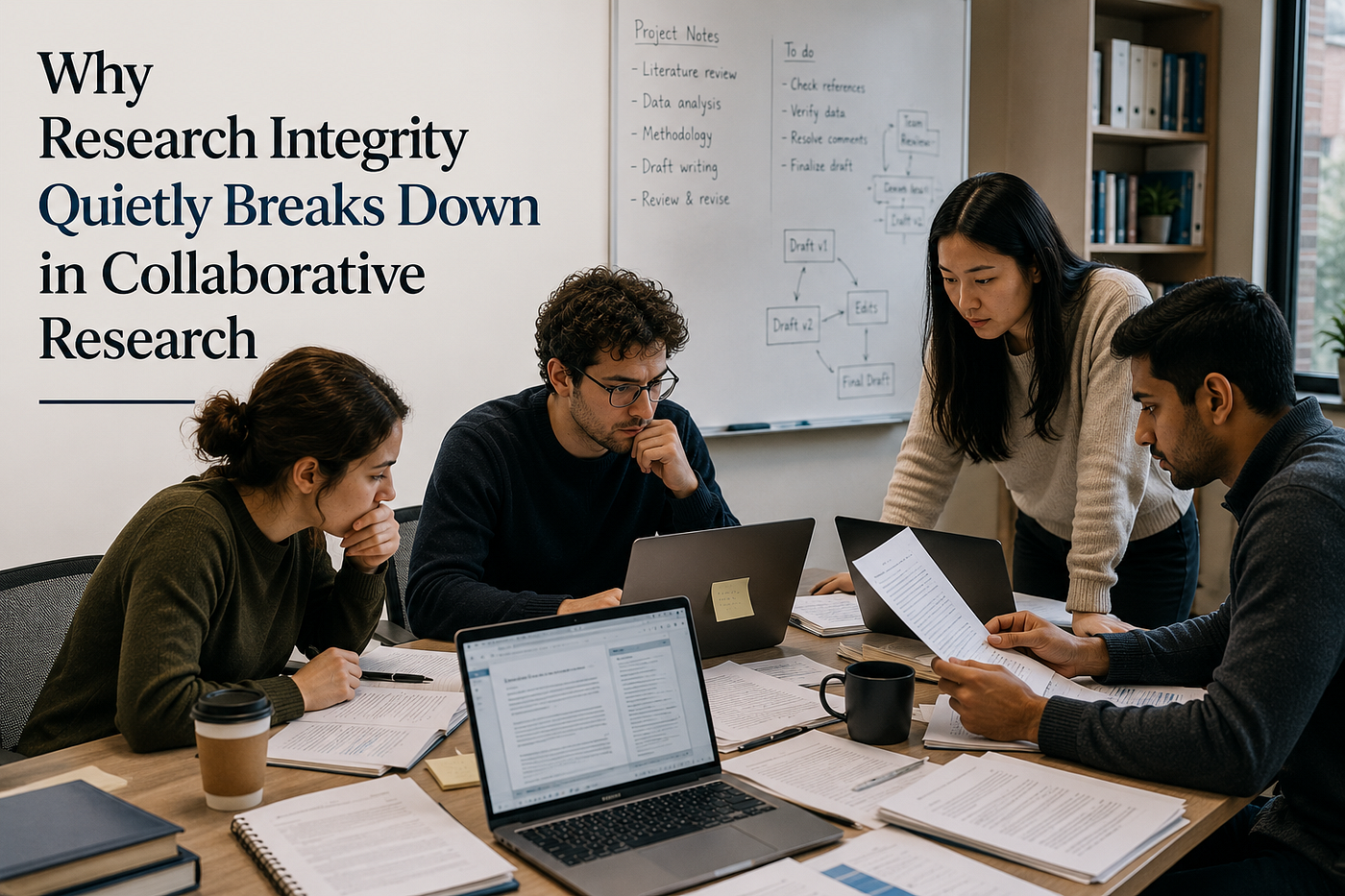
A literature review becomes hundreds of sources. Multiple collaborators begin contributing references simultaneously. Notes, PDFs, annotations, and bibliography updates start moving across different systems. What originally felt organized slowly becomes harder to maintain.
This is where many large research projects begin losing efficiency quietly.
One researcher stores references inside Zotero collections. Another keeps PDFs in personal folders. Someone else renames files manually, while another depends mostly on browser tabs and bookmarks. None of these habits seem dangerous individually, but together they create a fragmented reference system that becomes increasingly difficult to scale.
At first, the problems appear small.
A duplicate paper enters the library. Metadata is incomplete for a few references. Someone cites an outdated version of a study because the updated source was saved elsewhere. Over time, however, these inconsistencies begin accumulating into operational friction that affects the entire project.
Researchers spend more time searching for references, checking citation accuracy, and reconstructing context that should already be accessible.
The issue is that most reference workflows are never designed for the scale that large collaborative projects eventually reach.
In smaller research environments, people can often compensate manually. Team members remember where documents are stored or which collaborator manages certain references. But large projects place much heavier pressure on workflow consistency. Once references become distributed across personal systems, recovering clarity becomes increasingly difficult.
This is one reason strong research teams usually treat reference management as infrastructure rather than administration.
The goal is not just storing papers correctly but maintaining continuity across the entire research process. References need to remain accessible, searchable, reliable, and consistent as the project evolves through literature review, drafting, revisions, peer feedback, and publication preparation.
When that structure exists, collaboration becomes significantly smoother.
Researchers spend less time asking where files are located, whether references are updated, or which bibliography version is correct. Instead, more attention stays focused on interpretation, analysis, and writing.
The tools teams use can support this stability when integrated properly. Zotero helps centralize references and maintain collaborative libraries more consistently. Overleaf simplifies version management for technical writing projects involving multiple contributors. Shared cloud systems reduce the likelihood of references becoming trapped inside disconnected local environments.
Many research teams still operate across fragmented systems where communication, writing, references, and planning exist separately. Every transition between those environments creates opportunities for duplication, inconsistencies, and lost context.
This is why more research workflows are beginning to shift toward operational integration rather than isolated organization alone. Platforms like Colabwize reflect this direction by keeping research coordination, collaboration, and reference management more closely connected instead of distributing them across disconnected workflows. The objective is not simply cleaner organization, but reducing the fragmentation that quietly slows large research projects over time.
One of the least visible costs of poor reference management is cognitive overload. Researchers begin spending mental energy verifying sources, checking metadata, locating documents, and resolving inconsistencies that should already be settled within the workflow itself..
In many ways, successful large research projects depend less on how much information is collected and more on how reliably that information can move through the system without becoming fragmented.
The research itself is already intellectually demanding. When reference management becomes unstable, teams quietly lose momentum to coordination problems that should never require that much attention in the first place.
The most effective research teams are rarely the ones using the most complicated systems. They are usually the ones where the workflow surrounding references remains clear enough that the project can continue scaling without collapsing into unnecessary operational complexity.
메타데이터
- post_id
- c0f6860e884e
- slug
- reference-management-for-large-research-projects-c0f6860e884e
- url
- https://medium.com/@clawncoremultitech/reference-management-for-large-research-projects-c0f6860e884e
- canonical_url
- https://medium.com/@clawncoremultitech/reference-management-for-large-research-projects-c0f6860e884e
- author_url
- https://medium.com/@clawncoremultitech
- status
- ok
- fetched_at
- 2026-06-09 15:37:30