Where Fiction Meets the Heart
On caregiving, narrative medicine, and the stories we don’t know how to tell
Where Fiction Meets the Heart
On caregiving, narrative medicine, and the stories we don’t know how to tell
There is something a made-up story can do that a true one sometimes cannot. When I write about a son sitting beside his father’s hospital bed, I am not writing about my father, or anyone’s father in particular. And that distance, that small fiction, is what allows the reader sitting beside her own father to lean in rather than look away. Not as an escape, but as an extension.
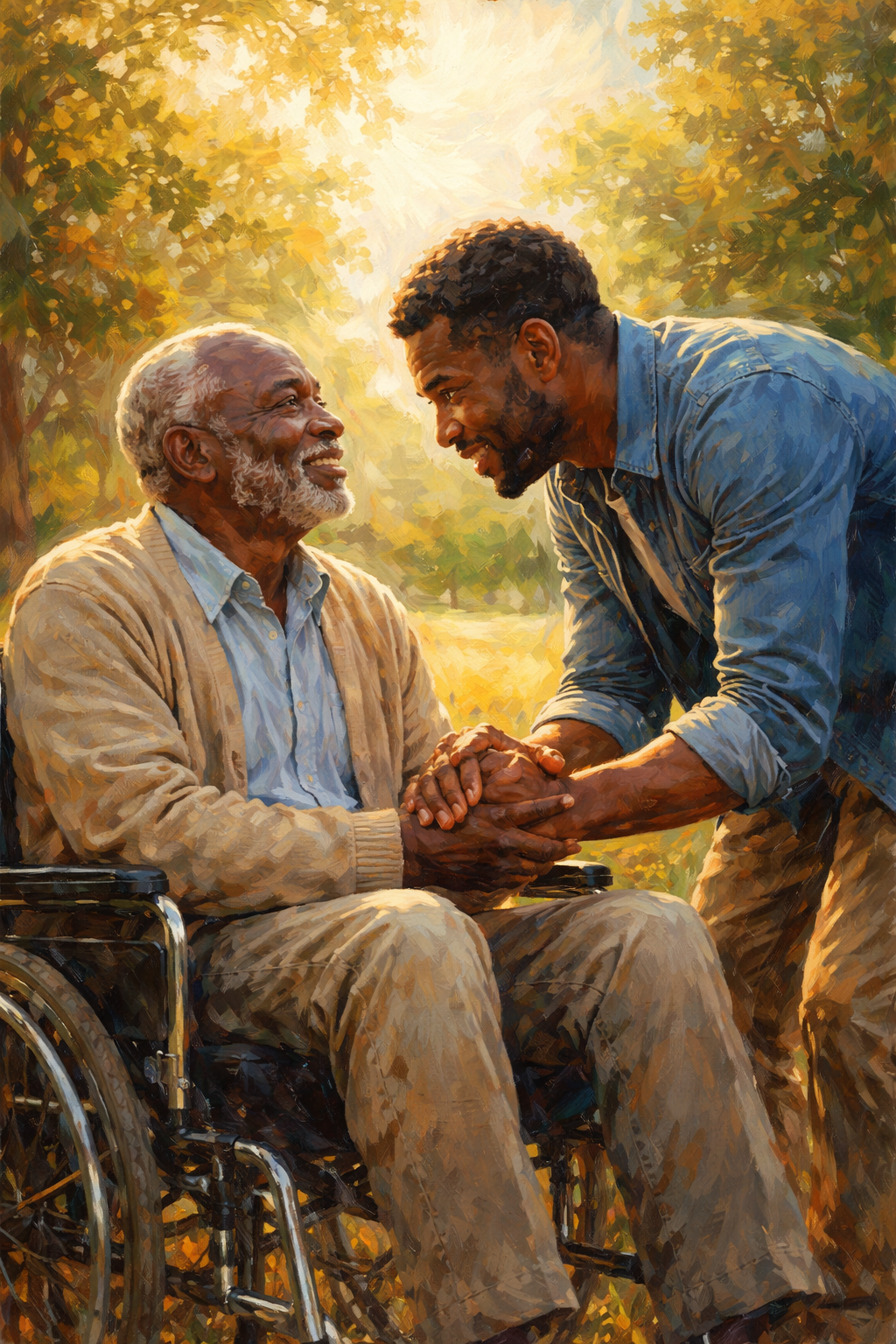
AI- Generated Image
There are moments in caregiving that do not translate. Not into a chart. Not into a care plan. Not even into conversation. The language we are given is precise. It names diagnoses. It outlines interventions. It measures decline in careful, clinical terms. And much of the time, that language is necessary. But there are moments when it stops being enough.
A daughter sitting beside her father who no longer recognizes her. A caregiver standing in a kitchen after a long day, unsure whether what she feels is anger or grief. A nurse finishing a shift and realizing there is no place to record what stayed with her. These are not gaps in care. They are gaps in language.
This is where narrative medicine begins. Developed by Dr. Rita Charon at Columbia University, it is built on the idea that story is not separate from care. It is part of it. The ability to listen to what illness means to the person living it is not a secondary skill. It is a clinical one. But narrative medicine extends beyond the clinician. It belongs to anyone who has lived inside an experience that cannot be easily summarized.
Caregiving is one of those experiences. So is grief. So is the slow, disorienting reality of watching someone you love change in ways you cannot stop.
I spent years working with families navigating these moments. I watched people search for words that did not exist yet. I watched clinical frameworks help, and I watched them fail. And again and again, I saw something else take place.
A son telling the same story about his mother three times in a single afternoon because he did not know how else to explain what was happening to him. A wife laughing halfway through describing her husband’s decline, then apologizing for laughing at all. A caregiver sitting in silence for nearly a minute before finally saying, “I don’t know who I am when I leave this house anymore.”
None of these moments changed the outcome. But the moment they were spoken aloud, something shifted. Not the diagnosis. Not the prognosis. The experience of carrying it alone.
This is where fiction enters. Fiction allows us to move inside a moment in a way that everyday language resists. It lets us sit in the silence after a diagnosis. It lets us follow a caregiver through the quiet hours of a night that feels too long. It lets us remain in a scene without needing to resolve it. It makes room for contradiction.
Love and resentment. Relief and guilt. Presence and absence, existing at the same time. These are not problems to be solved. They are realities to be held. And fiction is one of the few forms capable of holding them without forcing them into something simpler.
For caregivers, this matters more than we often acknowledge. Because so much of what they experience is invisible. Not because it is small, but because it is difficult to articulate. The exhaustion that builds over months or years. The emotional dissonance of loving someone who is no longer the person you remember. The quiet calculations of how much longer you can keep going.
These are not moments that fit neatly into conversation. But they can exist inside a story and be recognized. Not because story fixes what caregiving breaks. Because sometimes story is the first place where the feeling can be held long enough to be named.
Benjamin Cameron Davis Jr. is a Chicago-based writer whose work explores caregiving, memory, grief, and the quiet bonds that hold families together. His essays have appeared in Nursing Notes. His short fiction is forthcoming in The Bookends Review. He is completing his debut collection, The Quiet Songs of Remembrance. His short story “Ron's New Nurse,” a brief work exploring caregiving and emotional recognition, is available to read online.
메타데이터
- post_id
- c0fe7783428c
- slug
- where-fiction-meets-the-heart-c0fe7783428c
- url
- https://medium.com/nursing-notes/where-fiction-meets-the-heart-c0fe7783428c
- canonical_url
- https://medium.com/nursing-notes/where-fiction-meets-the-heart-c0fe7783428c
- author_url
- https://medium.com/@benjamincamerondavisjrauthor
- status
- ok
- fetched_at
- 2026-06-12 10:20:10