Silent Death Knell
A personal essay about loss and kindness — by Nixon Mateulah
Silent Death Knell
A personal essay about loss and kindness — by Nixon Mateulah
We are in the middle of supper when I hear a soft rap on the door, marinating with our muffled chewing of food. I turn to my wife, who is engrossed in her eating, her fork like a pendulum running up and down, shoving the grains of curried rice into her mouth. When she takes a break, she looks at me with an inquisitive stare. A few seconds pass, and seeing no response, the knocker doubles the effort. The knocking clops out against the hardwood door, which groans in protest on its dry hinges.
“Someone is knocking, Dad,” my son says.
“I heard it, son, but I was doubtful of its softness. I thought the wind was smacking the door,” I say as I get up to answer the door. When I twist the handle to open the door, the door sighs like the breaking sound of an old curtain. The chilly wind cuts my face like a knife. Under the beam of light, I find our landlord standing at the door, looking rather disheveled and sad, his dog, Task, behind him, looking at me with peevish eyes. He doesn’t waste time with pleasantries — he fires the shot of tragic news at me.
“Uncle Travis has just passed on!”
Its impact is devastating — my face droops as the sad news hits my ears. I know he had cancer, but a few weeks ago I saw him reversing his car from the garage. I waved at him, and he waved back at me. He looked as strong as the sun. My mouth plays tricks with me. I feel my tongue solidifying in my mouth, filling it up, and I have no room to form my response. I feel like Dwayne Johnson’s burly hands are wringing my neck.
My landlord, sensing my condition, sympathises with me by patting me on the back with his soft palm, and bolts to his house, his dog in tandem, his flip-flops pounding the cemented ground. He knows how close I was to Uncle Travis, even though our unpremeditated chats were as short as the life of a second. Even the grey hooded jacket I am wearing now was given by Uncle Travis. He gave me many presents that will never be forgotten in my bank of memory. His largeness of heart can never be compared.
I close the door softly, which creaks with a single snap shut, and toddle to my family, the heavy, sad news weighing me down on my spindly frame. Immediately, my wife notices my crumpled face.
“What is it, Dear?”
“Uncle Travis is no more.”
The room is as quiet as the moon outside, as each member of the family is emotionally wrecked by the sad news. A pall of unimaginable grief shrouds the room. We all loved Uncle Travis, and the children loved him more. And his wife spoiled them with assorted delicacies. Uncle Travis was the only one who tossed the ball back when my kids mistakenly kicked the ball high and landed in his yard. He tossed it back to the children as soon as it landed in his yard. Other families had to keep the ball until I went myself on bended knees to beg them to release the ball.
We are living in the southern suburb, Grassy Park, about 24 kilometres out of Cape Town. I go outside and I see the full moon shining like the sun. I crane my head over the fence of Uncle Travis, and the house is deathly silent. No wailing or crisscrossing of people to and from the house to sympathise with the bereaved. No fire burning in the yard to warm mourners from the cold.
The next morning, after eating my breakfast, Jungle Oats and a banana, I feel my bottom glued to the chair. My mind is indecisive. Should I go to work or not? There is a funeral next door. Will my boss accept my excuse for not coming to work? I ask myself. Today, for the first time, I missed my time to stop reading and start getting ready for work. Every morning, I stopped reading whenever I heard Uncle Travis’s spade clanging against the concrete ground when he picked up dog shits in the yard, coupled with the sharp barks of his two dogs at every scrape of the spade as if thanking him for picking up their shits. The sound of the spade still rings in my ear.
I go outside, open the gate, and look at Uncle Travis’ house. The house is, as usual, deathly quiet. His car is parked in its spot. I see no one going to the house, nor seeing anyone coming out of the house. It seems as though Uncle Travis is getting ready for work — perhaps he is having breakfast or picking up his laptop bag before leaving for work. Then I go back home to get my lunchbox.
I have realised that here, a funeral is a family’s and friends’ responsibility, unlike back home in Malawi, where a funeral is the community’s responsibility. It is the concern of the community as a whole to see to it that the funeral is observed according to the wills and traditions of the community. I can see that the neighbours around are unaware of Uncle Travis’ passing. There is no death announcement in the area, no mourners flooding the house, no hysterical wailing coming from the house. He has just disappeared off the face of the earth like a speck carried away by the wind, as if he had never existed in this community.
My twenty-five years of living in this suburb have given me another glimpse of weird life. In this neighbourhood, next-door neighbours hardly know each other. Each family lives within its confines, behind its fence. I bet you, I have never seen some of the parents and children of the houses around our house. There is no interaction between the neighbours, no synergy, just dissonance. What kind of living is this? If you are from a foreign nation like me, just mind your own business and don’t overstep your boundaries. The death of Uncle Travis does not shake the community.
At last, I pick up my lunchbox and leave for work. My landlord has enlightened me that a service will be held for Uncle Travis in Wynberg next Saturday, and his remains will be cremated at the Maitland crematorium a few days later.
This is how the funeral ceremony is done here. You attend a service at a church or chapel in a funeral home. Pallbearers, usually family and friends, roll in the coffin. It is placed in front of the pulpit or altar (depending on the denomination). The lid of the casket is opened for all to say their last farewells. Then the service starts with a hymn. The preacher will say a few words, and then friends and family will pay their tributes, speaking about how they remember him. Again, depending on the denomination, the preacher takes over and gives a sermon, and if it is a Catholic or Anglican church, there will be communion (only members of that denomination will be allowed to partake in communion). Some people choose to be buried and others to be cremated. This is the deceased person’s choice. You tell someone, or you put it in your will. Before the service ends, some friends may come up and sing, and a friend or member of the family will give thanks and announce that refreshments will be served at the hall next to the church or at another venue close by. Then they call for the pallbearers, and as they roll the coffin out of the church or funeral parlour, the congregation sings a hymn while the family follows the coffin out of the church, and the coffin is loaded in the hearse. The people stand around to see the hearse off.
Back home in my township, Kawale, in Lilongwe, when somebody dies, the news affects every member of the community. First, the chief would be informed, and he would tell his cabinet to announce the death to the community. A group of young boys would be dispatched to go around to announce the death and collect firewood for cooking and for mourners to warm themselves during the vigil. The death announcement will go like this:
Heeey! Ladies and gentlemen
In our community
We have lost one of us
We have lost Uncle Travis
And the burial is set for tomorrow
Immediately, tree branches will barricade the road, a few metres away from the deceased’s house. Cars will travel at a crawl pace, and cyclists will have to jump off their bicycles and push them past the house. Shops nearby will be closed and reopened after the burial. Men and women living close to the house will not go to work — they will be at the deceased’s house, mourning and helping out. Another set of young men and women will be dispatched in the morning to go house by house to collect money and maize flour. These will help to buy food and feed the mourners and the grave diggers, and there will be a collection of money for the house of the deceased.
On the day of the burial, the ceremony will begin with one of the members of the family thanking the people for their assistance. Thereafter, the chief will address the people, and the pastor or sheikh will close the ceremony with a prayer. There will be a viewing before the body is taken to the grave, paying the last respect to the deceased. And then the body will be taken to the graveyard for burial. This is the time the community feels the chains of connectedness to each other as human beings.
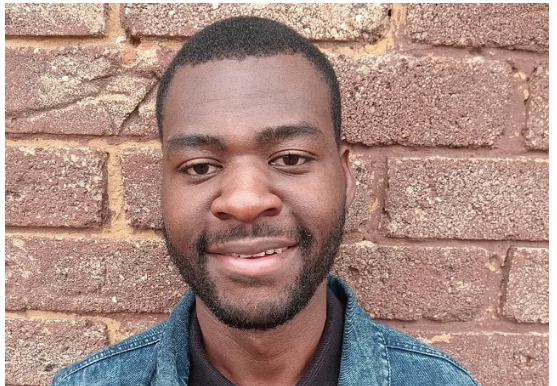
Nixon Mateulah is a Malawian/South African writer and poet. He moved to South Africa in 1996. His writings have appeared in New Coin Magazine, Munyori, Jungle Jim Magazine, Storymoja, Aerodrome, Kalahari Review, Tuck Magazine, Stanzas Magazine, Paulet House Stories, Too Powerful Word Magazine, Nkgwana Magazine, Africa Poetry Magazine, Euphoria Poetry Anthology. Some of his poems appear under the pseudonym, Chichichapatile Mangochi. He is completing his Masters in Creative Writing this year at the University of the Western Cape.

메타데이터
- post_id
- c13329f73e4c
- slug
- silent-death-knell-c13329f73e4c
- url
- https://kalaharireview.com/silent-death-knell-c13329f73e4c
- canonical_url
- https://kalaharireview.com/silent-death-knell-c13329f73e4c
- author_url
- https://medium.com/@kalaharireview
- status
- ok
- fetched_at
- 2026-07-31 05:03:51