KitKat Company That Makes Your Vitamins
The company that makes KitKat spent more than eight billion dollars quietly buying the vitamin aisle, and unless you’ve read the…
KitKat Company That Makes Your Vitamins
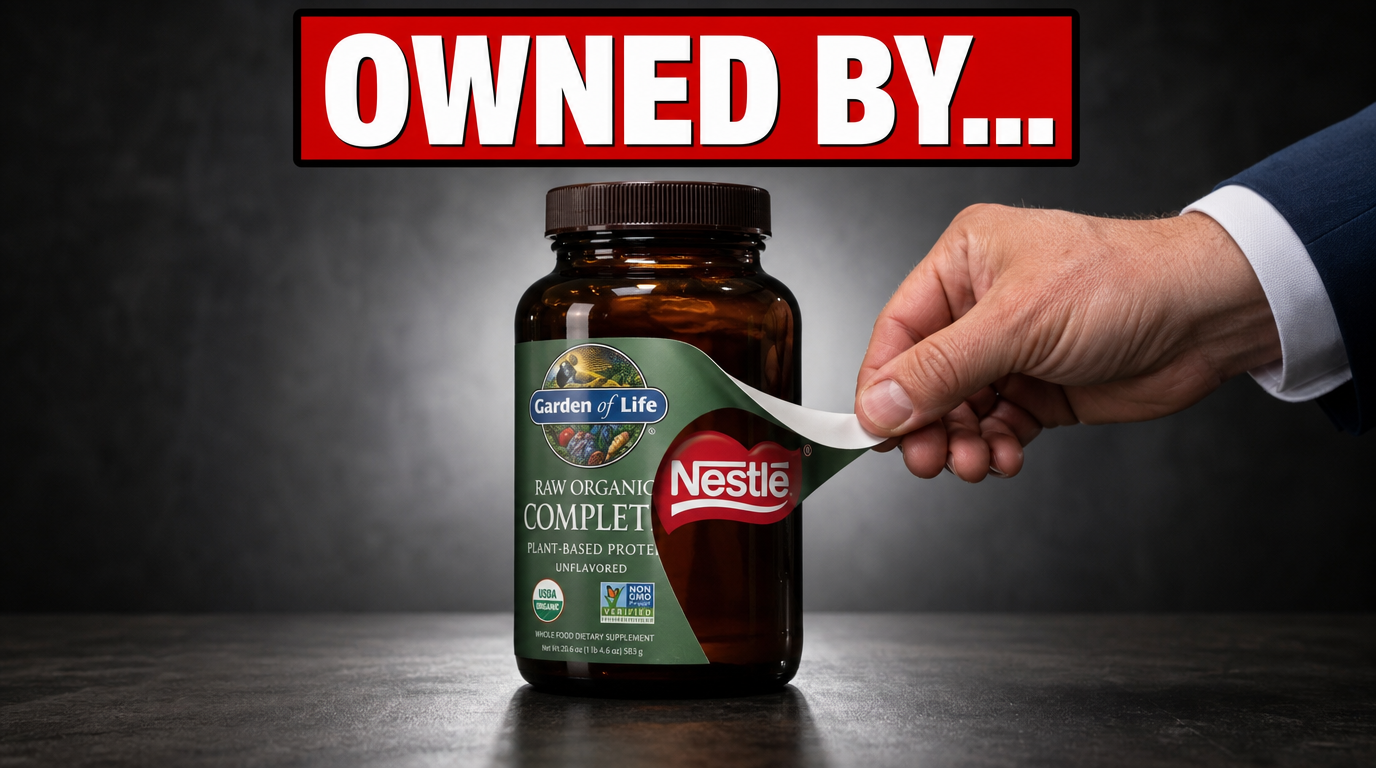
The company that makes KitKat spent more than eight billion dollars quietly buying the vitamin aisle, and unless you’ve read the acquisition filings yourself, you have no idea that the supplement bottle sitting on your counter right now funnels money to the largest packaged food company on Earth.
Nestlé didn’t build a vitamin empire from scratch. They bought one in two moves. In December twenty seventeen, they paid two point three billion dollars in cash for a Canadian company called Atrium Innovations. That single transaction handed them Garden of Life, Pure Encapsulations, Douglas Laboratories, Genestra, Klean Athlete, and Minami, among others. Then in August twenty twenty-one, they paid five point seven five billion dollars to private equity firm KKR for the core brands of the Bountiful Company. That brought in Nature’s Bounty, Solgar, Sundown, Puritan’s Pride, Osteo Bi-Flex, and Ester-C. In between those two deals, they picked up Vital Proteins, Nuun, Persona Nutrition, and Orgain through separate acquisitions. Eighteen brands. One owner. All tucked inside a division called Nestlé Health Science. Today we’re ranking these acquisitions from quietly strategic to absolutely invisible on the label, and by the end you’ll know exactly which wellness brand most people defend the hardest without knowing who cashed the check.
Number one. Garden of Life. This is the one that hits different. Jordan Rubin founded it after nearly dying. He was nineteen years old when he was diagnosed with Crohn’s disease. Six foot one, and his weight dropped to a hundred and four pounds. He tried seventy health professionals across seven countries and more than two hundred alternative treatments before he found something that worked. He built Garden of Life around that recovery, whole-food, organic, non-GMO supplements, and it became the number one brand in the US natural supplement channel, sold in more than fourteen thousand health food stores. Rubin sold the company to Atrium in two thousand nine. Eight years later, Nestlé bought Atrium for two point three billion dollars. Garden of Life became the property of the same corporation that sells frozen pizza and instant coffee. The numbers don’t lie. Nestlé’s own corporate materials call it a global premium brand where their capabilities in science, innovation, and brand building give them, and this is a direct quote, a distinct competitive edge. The founder’s story of surviving an incurable disease is still on the label. The parent company isn’t. Every pro in the natural products industry knows it changed hands, but the consumer standing in the health food store aisle still reads Jordan Rubin’s near-death recovery as the brand’s whole identity. That’s the architecture. The story stays. The ownership disappears. If you’re buying Garden of Life because it feels like a founder-built, mission-driven brand, you’re buying a story that Nestlé now owns the rights to.
Number two. Vital Proteins. A hundred and fifty products across thirty-five thousand retail locations. Whole Foods, Costco, Target, Walgreens, Kroger. Clean blue packaging, wellness influencer aesthetic, the entire look and feel of an independent brand. The testing backs this up in market terms. It’s America’s number one collagen brand. Nestlé acquired a majority stake in June twenty twenty and completed the full buyout in February twenty twenty-two. Every tub of collagen peptides with that logo on it routes revenue to Vevey, Switzerland. The brand that built its entire identity on clean, simple, ingredient-first positioning is now a line item inside a ninety-billion-Swiss-franc annual revenue machine. Why it gets overlooked is straightforward. The packaging hasn’t changed. The influencer partnerships haven’t changed. The story hasn’t changed. Nothing signals that anything changed. If you’re adding Vital Proteins to your Whole Foods cart because it feels like a small, principled operation, that instinct is exactly what the brand architecture is designed to preserve.
Number three. Pure Encapsulations. Hypoallergenic, free from fillers and common allergens, the brand that functional medicine doctors stake their professional credibility on. It was the number one recommended supplement line in the US practitioner market. The credibility cascade here is the whole point. Patients receive it from their doctor and connect it to clinical authority. The testing backs this up in the practitioners’ own framing. They present it as the clean, trustworthy option, the one they personally vetted. What they’re recommending, in a narrow corporate sense, is a Nestlé product. Every practitioner recommendation is a referral that terminates in Vevey. The reason this gets overlooked is that the practitioner channel doesn’t advertise ownership. It advertises formulation quality, third-party testing, and allergen standards. Those things haven’t changed. The check gets cashed somewhere else now. If Pure Encapsulations is on your supplement shelf because your functional medicine doctor handed it to you, you were one layer away from the full picture.
Hit that like button right now. It tells the algorithm this kind of video is worth surfacing, and it helps more people find out who actually owns what’s in their medicine cabinet.
Number four. Nature’s Bounty, Sundown, and Solgar. These three came through the five point seven five billion dollar Bountiful deal. The acquired brands had generated one point eight seven billion dollars in the twelve months ending March twenty twenty-one. Those are the bottles millions of people grab without a second thought at CVS, Walmart, and Target. The numbers don’t lie on scale. Nature’s Bounty alone is one of the most recognized supplement brands in America, not because it built a founder mythology or a clinical reputation, but because it’s been on the drugstore shelf for decades. Solgar carries a premium positioning that reads independent, almost European, artisanal in its aesthetic. Sundown sits at the value end. Three completely different brand personalities, one corporate parent, and none of the packaging points to the same address. The reason this gets overlooked is that the drugstore shelf isn’t where people ask ownership questions. They’re in a hurry, they recognize the label, and they move on. If you’re in that CVS aisle grabbing whatever’s familiar, you’re inside one of the most efficient brand architecture plays in the supplement industry.
Number five. Nuun. This is the one that stings the most for people who followed its origin story. Nuun built its entire identity as the anti-corporate alternative to Gatorade. Electrolyte tablets, clean ingredients, athlete-first positioning, the kind of brand that ultramarathon runners and cyclists trusted precisely because it didn’t feel like a big company product. Every pro in the endurance community knows it by the tube. The testing backs this up in sales terms, a loyal, high-frequency buyer base that was deeply attached to the brand’s independent identity. Nestlé acquired Nuun in the summer of twenty twenty-one, right alongside the Bountiful deal. The packaging hasn’t changed. The athlete partnerships haven’t changed. The anti-establishment positioning hasn’t changed. The ownership has. If the brand you’re dropping into your water bottle was the one you chose specifically because it wasn’t owned by a massive food corporation, you’ve had the full picture withheld from you for years.
Now here’s where the trail gets interesting even from inside Nestlé’s own strategy. By twenty twenty-five, some of those brands were already on the block. Nestlé launched a strategic review of Nature’s Bounty, Osteo Bi-Flex, and Puritan’s Pride. CEO Laurent Freixe framed it as focusing the vitamin business on winning premium brands. The company named Garden of Life, Pure Encapsulations, and Solgar as the keepers. The rest, four years after a five point seven five billion dollar acquisition, were left in corporate limbo. The numbers don’t lie about what that signals. When you spend nearly six billion dollars and then quietly begin offloading pieces of what you bought, you’re telling the market which brands were bought for scale and which ones were bought for the story. The story brands are the keepers. The commodity brands are the candidates. That’s the whole logic of the architecture laid bare.
The bottle in your bathroom doesn’t tell you any of this. The label says Garden of Life or Vital Proteins or Nuun, and nothing on the packaging connects it to the corporation behind KitKat. That’s not a secret conspiracy. That’s standard consumer packaged goods architecture. The parent company stays invisible so the brand keeps its trust. You can check every acquisition press release yourself. They’re public. They’ve been public for years. The only thing that wasn’t happening was anyone pointing you directly at them.
This and other stories at https://www.youtube.com/@Daily_Smart_Buy
메타데이터
- post_id
- c14064ebafdd
- slug
- kitkat-company-that-makes-your-vitamins-c14064ebafdd
- url
- https://medium.com/@consumer.forensics.26/kitkat-company-that-makes-your-vitamins-c14064ebafdd
- canonical_url
- https://medium.com/@consumer.forensics.26/kitkat-company-that-makes-your-vitamins-c14064ebafdd
- author_url
- https://medium.com/@consumer.forensics.26
- status
- ok
- fetched_at
- 2026-07-13 06:23:13