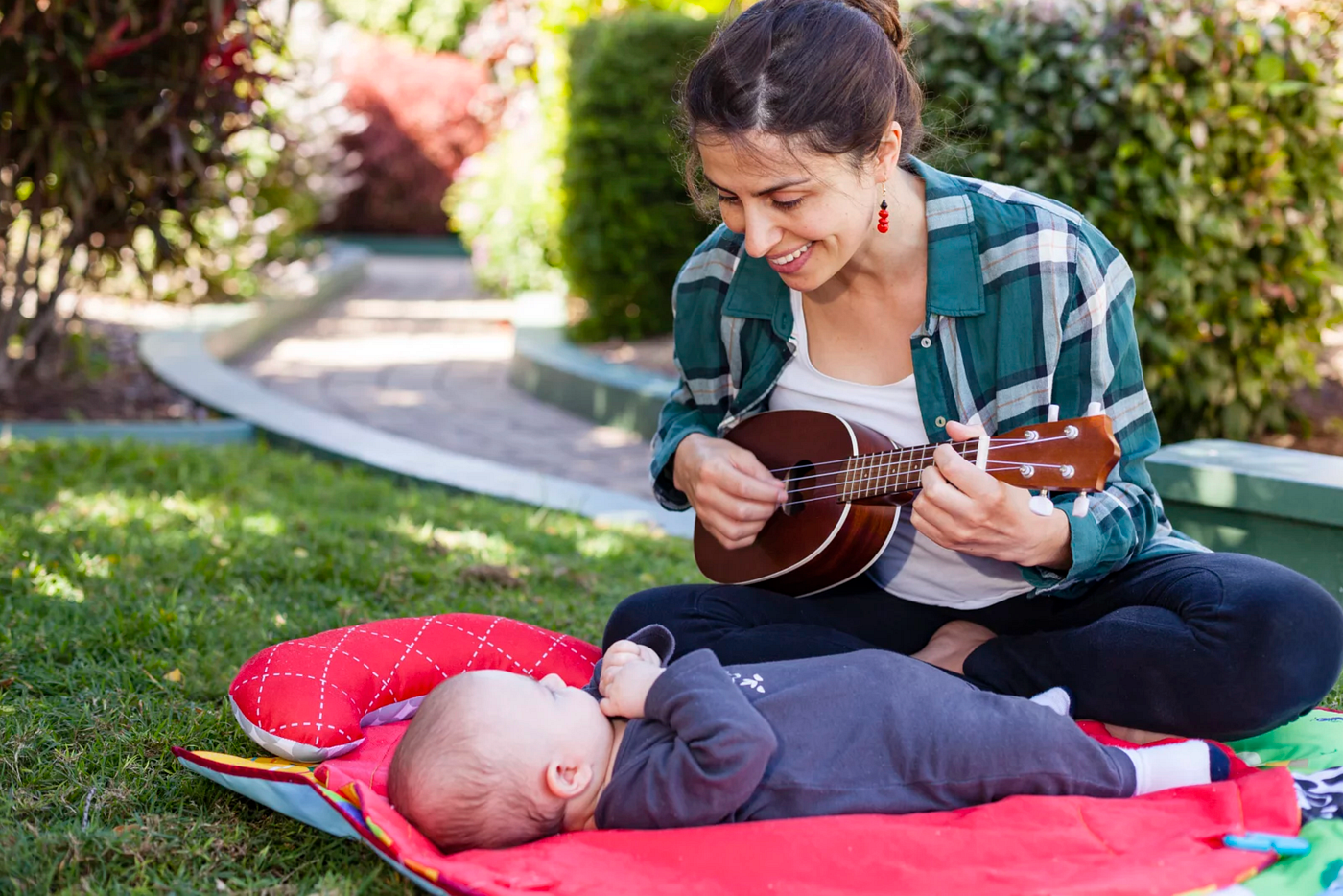
The Day Children Learn Not to Be Difficult
And Parents Think They’re Raising Them Well
The Day Children Learn Not to Be Difficult
And Parents Think They’re Raising Them Well
Most parents of young children are trying to survive:
- work
- exhaustion
- household management
- overstimulation
- guilt
- time pressure
- constant decision-making
But something subtle often happens inside modern families.
Children begin learning:
“What behaviour makes life easier for the adults around me?”
And because young children are extraordinarily adaptive, they slowly shape themselves around the emotional climate of the home.
Not by actively thinking about it. But biologically.
The misunderstanding many modern parents carry
Many parents believe development mainly happens through classes, activities, educational toys and stimulation
But for children ages 0–5, one of the biggest developmental forces is actually:
the emotional atmosphere surrounding everyday life.
The brain is not only asking: “What am I learning?”
It is also constantly asking: “What happens to relationships when I have needs, emotions, impulses, frustration, excitement, fear, or inconvenience?”
That answer becomes part of the child’s nervous system in the way it trains itself to survive.
What children are actually studying in the first 5 years
Young children are not just learning language or motor skills.
They are studying:
- how adults respond to stress
- whether emotions are welcome
- whether needs overwhelm people
- whether mistakes threaten connection
- whether they are enjoyed or managed
- whether closeness feels emotionally safe
- whether they can remain fully themselves inside relationships
This learning happens through thousands of tiny interactions.
Tiny moments:
- the sigh after the third interruption
- the rushed bedtime
- the “not now”
- the distracted “good job”
- the stressed pickup
- the irritated response to slowness
- the emotional absence after work
Children absorb patterns more than isolated moments.
What often happens in working-parent families
The issue is not that parents work.Children absolutely can thrive with working parents.
The deeper issue is that modern life creates chronic nervous-system overload inside households.
Most families today are operating under:
- time compression
- mental overload
- reduced community support
- digital distraction
- work spillover
- emotional exhaustion
As a result, interactions slowly become more:
- functional
- rushed
- task-oriented
- corrective
- efficiency-driven
Parents unintentionally move into: manager mode.
The day becomes:
- wake up
- get ready
- hurry
- eat faster
- don’t spill
- wear shoes
- get in the car
- finish dinner
- bath
- sleep
The family starts functioning like an operations system.
And children adapt to whatever keeps that system emotionally stable.

The hidden adaptation many children make
Children are biologically wired to protect connection with caregivers.
So when certain behaviours repeatedly create stress in adults, children begin adjusting themselves.
They may learn:
- crying less gets better responses
- emotional intensity creates tension
- slowness irritates adults
- independence gets praise
- “good children” don’t interrupt
- adults like calmness more than emotional messiness
Over time, many children become:
- overly compliant
- emotionally careful
- prematurely independent
- approval-seeking
- “easy”
- highly self-monitoring
Adults often celebrate this: “She’s so mature.” “He’s so well behaved.” “They never trouble us.”
Sometimes this reflects healthy development.
But sometimes the child has simply learned: “My needs must become smaller to preserve connection.”
Why ages 0–5 matter so much
Because during these years, the brain is building its foundational emotional architecture.
This is the period when children develop:
- attachment patterns
- stress regulation systems
- emotional expectations
- self-worth models
- relationship templates
- nervous-system regulation capacities
The brain during early childhood is extraordinarily plastic.
Repeated experiences become embedded deeply.
A child who repeatedly experiences:
- attunement
- emotional safety
- responsive caregiving
- repair after conflict
- delight
- shared attention
builds a nervous system that increasingly expects: “Relationships can hold me safely.”
A child who repeatedly experiences:
- chronic stress
- emotional dismissal
- unpredictability
- emotional unavailability
- constant correction
- conditional approval
may begin adapting around protection instead of exploration.
Young children often do not primarily need optimized experiences.
They need regulated presence.
To a young child, deeply meaningful moments are often:
- being watched while stacking blocks
- a parent laughing genuinely
- sitting nearby while drawing
- being listened to slowly
- playful eye contact
- shared delight
- emotional availability
Connection grows in ordinary moments. Not only special ones.
Signs your child may be adapting emotionally
Not every “easy” child is suppressing emotions. But some signs are worth noticing gently:
The child who:
- apologises excessively
- rarely asks for help
- constantly checks adult reactions
- says “I’m fine” quickly
- becomes unusually independent very early
- avoids expressing disappointment
- tries to keep everyone happy
- becomes distressed by parental frustration
- shuts down emotionally after correction
may be carrying emotional adaptation beyond normal regulation.
What helps children most in the first 5 years
Research consistently shows children do not need flawless parents.
They need emotionally available enough parents.
What protects development most strongly is not constant happiness.
It is repeated experiences of:
- connection
- safety
- repair
- responsiveness
- shared attention
- emotional acceptance
What rituals help working families most
Not bigger rituals. Smaller, repeatable emotional anchors.
1. Daily undivided attention
Even 10 minutes matters.
No phone. No teaching. No multitasking.
Just:
“I enjoy being with you.”
That feeling shapes development more deeply than many enrichment activities.
2. Reconnect before correcting
Especially after daycare, work, or long separation.
Children often need emotional reconnection before behavioural guidance.
First:
- eye contact
- warmth
- touch
- shared attention
Then after a while: instructions.
3. Slow one part of the day down
Not the whole day. Just one pocket.
Maybe bedtime. Maybe dinner. Maybe bath time.
Children regulate through rhythm and predictability.
4. Name emotions instead of fixing immediately
Instead of: “Stop crying.”
Try: “That was disappointing.” “You really wanted that.” “That felt hard.”
This teaches children: emotions can exist safely inside relationships.
5. Repair after rupture
All parents lose patience. What matters enormously is repair.
“I was too harsh.” “You didn’t deserve that tone.” “We got disconnected.” “Let’s try again.”
Repair teaches something profound:
relationships can bend without breaking.
The deeper goal
The goal is not raising a child who is:
- convenient
- constantly calm
- endlessly compliant
- emotionally low-maintenance
The deeper goal is helping a child remain:
- emotionally alive
- securely connected
- expressive
- resilient
- internally safe
- able to need others without fear
A healthy child is not a child who never creates difficulty.
A healthy child is a child who gradually learns:
“My emotions, needs, curiosity, joy, frustration, and full self can exist safely within love.”
메타데이터
- post_id
- c1745aa012b1
- slug
- the-day-children-learn-not-to-be-difficult-c1745aa012b1
- url
- https://medium.com/@Suhali/the-day-children-learn-not-to-be-difficult-c1745aa012b1
- canonical_url
- https://medium.com/@Suhali/the-day-children-learn-not-to-be-difficult-c1745aa012b1
- author_url
- https://medium.com/@Suhali
- status
- ok
- fetched_at
- 2026-06-09 15:37:30