Why Network Discovery Is No Longer a Single-Tool Game
Network reconnaissance is often where every cybersecurity journey begins.
Why Network Discovery Is No Longer a Single-Tool Game
Network reconnaissance is often where every cybersecurity journey begins.
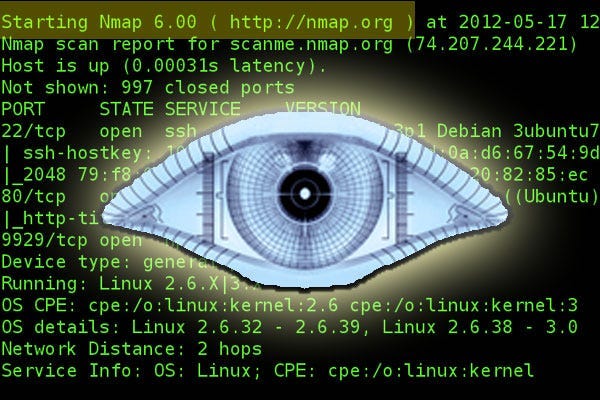
For me, it started with one tool — Nmap.
At the time, it felt complete. It could discover hosts, scan ports, detect services, and even fingerprint operating systems. It became my default answer to almost every discovery problem.
But over time, that simplicity started to break.
Not because Nmap became weak — but because environments became more complex.
The Reality of Modern Networks
Today’s infrastructure is no longer flat or predictable.
Targets are often spread across:
- Cloud platforms
- CDNs and reverse proxies
- Load-balanced services
- Firewalled or filtered entry points
What you see from a single scan is often only a fraction of what actually exists.
This is where many beginners hit a wall: they trust one tool to represent the entire network surface.
That assumption doesn’t hold anymore.
The Shift: From Tool Thinking to Layered Thinking
The biggest improvement in my recon workflow came when I stopped asking:
“Which tool should I use?”
and started asking:
“What layer of visibility am I missing?”
That shift introduced the idea of hybrid reconnaissance.
Instead of relying on one scanner, I began combining tools based on purpose.
Building a Hybrid Recon Workflow
Each tool solves a different problem:
1. Fast Exposure Mapping
Tools like:
- Masscan
- RustScan
These are used for speed. They help identify open ports and live hosts quickly across large ranges.
2. Deep Service Validation
Nmap
Nmap remains essential here. It provides accurate service detection, version information, and reliable fingerprinting once targets are already identified.
3. Attack Surface Expansion
Tools like:
- Amass
- Subfinder
These help uncover hidden subdomains and broaden the scope beyond direct IP scanning.
4. Web Layer Context
Tools like:
- httpx
- httprobe
These validate live HTTP/HTTPS services and help understand what actually runs behind open ports.
Why Hybrid Works Better
No single tool is designed to do everything.
- Fast tools sacrifice depth
- Deep tools sacrifice speed
- Web tools focus only on application layer
Hybrid recon solves this by chaining strengths instead of relying on one capability.
Each stage refines the previous one:
- Speed finds exposure
- Validation confirms reality
- Context builds understanding
The Core Lesson
Network discovery is not about mastering a tool.
It is about understanding what each tool cannot see.
When you combine them correctly, gaps shrink, visibility increases, and recon becomes structured instead of guesswork.
Final Thought
Nmap is not outdated. It is still one of the most important tools in any security workflow.
But modern reconnaissance is no longer single-tool dependent.
It is layered, structured, and hybrid by design.
Because in real environments, clarity does not come from one lens — it comes from many working together.
~Swetha Jagannathan
메타데이터
- post_id
- c19c46e1c664
- slug
- why-network-discovery-is-no-longer-a-single-tool-game-c19c46e1c664
- url
- https://medium.com/@swethajagann/why-network-discovery-is-no-longer-a-single-tool-game-c19c46e1c664
- canonical_url
- https://medium.com/@swethajagann/why-network-discovery-is-no-longer-a-single-tool-game-c19c46e1c664
- author_url
- https://medium.com/@swethajagann
- status
- ok
- fetched_at
- 2026-06-20 20:29:01