Football Gambling Addiction: Warning Signs and How to Overcome It for Mental Fitness
Written by Pascal Bazamanza | Founder, Strong Mind Football
Football Gambling Addiction: Warning Signs and How to Overcome It for Mental Fitness
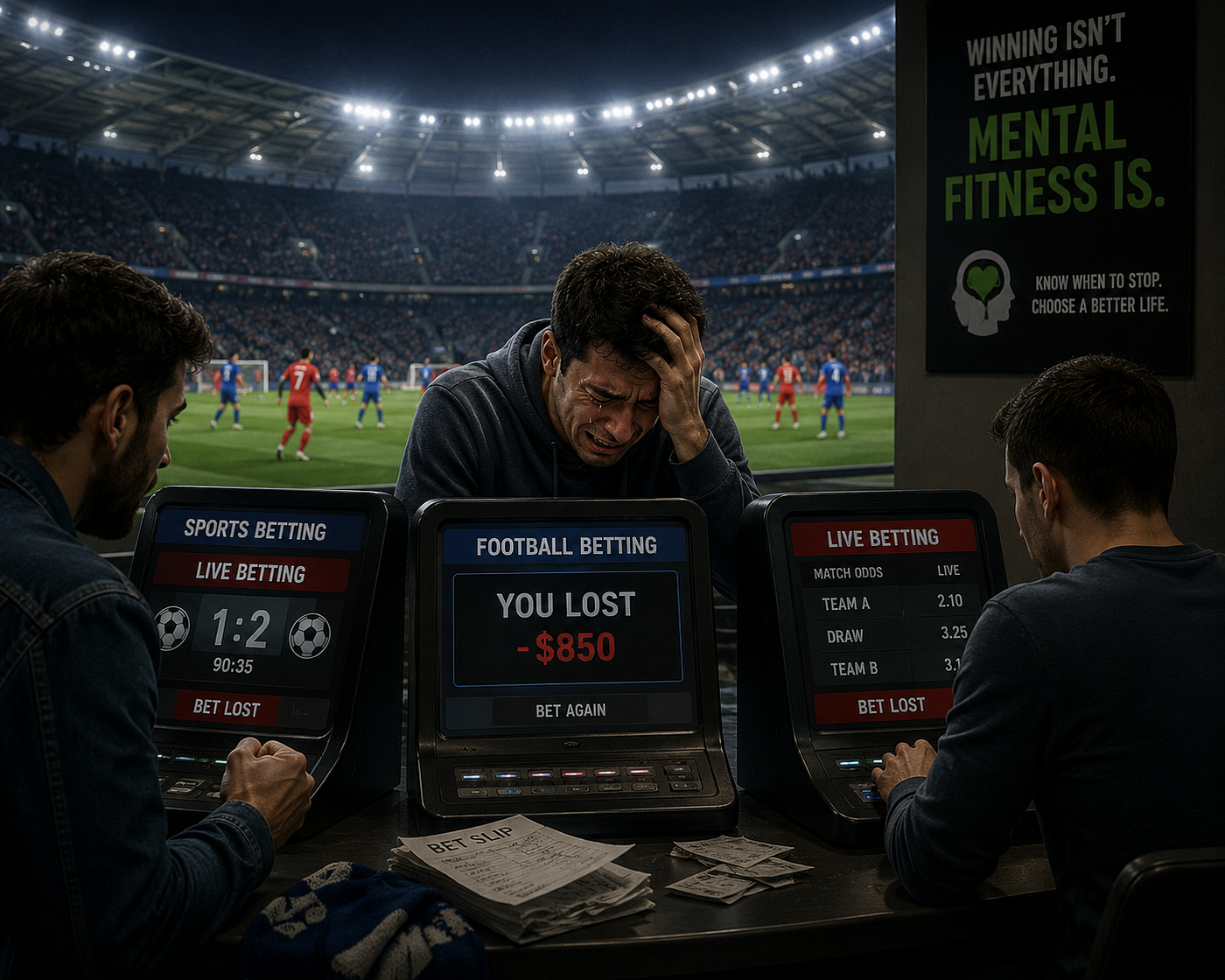
“Football gambling addiction affects millions of fans worldwide — mental fitness is the path to recovery.”
Written by Pascal Bazamanza | Founder, Strong Mind Football
Introduction
Gambling, especially football betting, has become increasingly common in communities across the world. Many people begin as a form of entertainment — a way to make football matches more exciting or to try their luck.
At first, it may feel harmless and fun. But for some people, gambling slowly grows into a serious habit that affects emotions, mental health, finances, and relationships.
The challenge is that gambling addiction does not happen suddenly. It develops quietly, step by step, and many people only realize the problem when it has already caused significant harm.
In this article, we explore what gambling addiction looks like, its warning signs, and practical steps to overcome it for better mental fitness and a healthier life.
What is Football Betting?
Football betting is when people predict and place money on the outcomes of football matches — such as which team will win, the final score, or specific events like goals or penalties.
It works simply: you choose an outcome, place your stake, and wait for the result. If your prediction is correct, you win money based on the odds set by the bookmaker. If it is wrong, your money is lost.
Bookmakers set odds to reflect how likely each outcome is, and these odds determine potential winnings. In this way, betting transforms the joy of football into a financial risk based on chance and prediction.
Warning Signs of Gambling Addiction
1. Thinking about gambling constantly
One of the earliest signs is when gambling begins taking too much space in your mind. You find yourself constantly thinking about bets, odds, upcoming matches, or how to recover previous losses.
When gambling becomes a frequent mental focus rather than occasional entertainment, something has changed.
2. Chasing losses
This is one of the most dangerous and common patterns in gambling addiction. After losing money, instead of stopping, a person gambles again trying to win back what was lost.
This creates a painful cycle — more losses, more stress, deeper emotional frustration, and greater financial damage.
3. Increasing the amounts of money used
Gambling typically starts small. But over time, the amounts grow. Some people eventually begin using money meant for essential needs — food, rent, school fees, or family responsibilities — to fund their gambling habit.
4. Emotional stress and mood changes
Gambling carries a powerful emotional impact. A person affected may experience:
• Stress and anxiety before and after matches
• Anger and frustration after losses
• Intense excitement before placing bets
• Deep sadness or depression after repeated losses
These emotional patterns are clear signals that gambling is affecting mental wellbeing and overall quality of life.
5. Hiding gambling behavior
Many people struggling with gambling addiction begin hiding their activities or lying about how much time and money they spend on betting. This secrecy is a significant warning sign — it often means the person already knows something is wrong but feels unable to stop.
6. Withdrawal symptoms when not gambling
When gambling becomes a dependency, stopping or reducing it can feel deeply uncomfortable. A person may experience:
• Irritability and restlessness
• Anxiety and inability to relax
• A strong and persistent urge to gamble again
These withdrawal symptoms reveal that the brain has started depending on gambling for emotional stimulation or relief — a sign of genuine addiction.
7. Understanding the harm but being unable to stop
At this stage, a person clearly understands that gambling is damaging their finances, emotions, and relationships. Yet despite this awareness, they still struggle to stop. This loss of control despite knowing the consequences is one of the strongest indicators of addiction.
8. Gambling interfering with daily life
When gambling begins to interfere with daily responsibilities — work, studies, sleep, or relationships — it has moved far beyond a simple habit. It has become a serious issue that deserves attention, care, and support.
How to Overcome Gambling Addiction?
1. Accept that there is a problem
Recovery always begins with honesty. The first and most important step is acknowledging that gambling has become harmful and is affecting your life. This step is difficult — but it is the foundation of everything that follows.
2. Reduce access to gambling
Make gambling harder to reach by taking these practical steps:
• Delete all betting apps from your phone
• Block gambling websites on your browser
• Leave betting groups and avoid gambling discussions
• Stay away from triggers such as constant match odds or predictions shared online
Small barriers, consistently applied, reduce temptation significantly over time.
3. Set clear financial boundaries
If stopping immediately feels overwhelming, begin by protecting your finances:
• Set strict and non-negotiable spending limits
• Never use essential money — food, rent, or school fees — for gambling
• Stop immediately once you reach your limit
• Never borrow money to gamble
Protecting your finances protects your mental health and your family.
4. Replace gambling with healthy and meaningful activities
Replacing a harmful habit with positive ones is one of the most powerful tools in recovery:
• Exercise or play sports regularly
• Watch and enjoy football without betting
• Learn a new skill or develop a personal interest
• Spend quality time with family and friends
• Focus on personal goals and future plans
These activities restore joy, purpose, and connection — things gambling slowly takes away.
5. Talk to someone you trust
Carrying this problem alone makes it heavier. Opening up to a trusted friend, family member, or mentor can reduce emotional pressure and bring much needed support and perspective. You do not have to face this alone.
6. Seek professional help when needed
If gambling feels completely uncontrollable, professional counseling or support groups can make a real and lasting difference. Seeking help is not weakness. It is courage — the decision to choose your mental fitness, your family, and your future over a habit that is causing harm.
Conclusion
Gambling addiction often begins quietly — as entertainment, as excitement, as something harmless. But it can grow into a serious challenge that affects mental health, emotions, finances, and relationships.
The good news is that recovery is always possible. With awareness, honest self-reflection, practical steps, support from others, and positive habits, anyone can regain control and rebuild a healthier and more peaceful life.
Football should always remain a source of joy, passion, and unity — not stress, pressure, or financial pain.
Protecting your mental fitness is more important than any bet or any result.
A strong mind leads to a balanced, healthy, and fulfilling life.
Pascal Bazamanza
Founder | Strong Mind Football
Mental fitness to every player, fan and community
Publisher: June 2026
메타데이터
- post_id
- c19f702864cb
- slug
- football-gambling-addiction-warning-signs-and-how-to-overcome-it-for-mental-fitness-c19f702864cb
- url
- https://medium.com/@bazapascal/football-gambling-addiction-warning-signs-and-how-to-overcome-it-for-mental-fitness-c19f702864cb
- canonical_url
- https://medium.com/@bazapascal/football-gambling-addiction-warning-signs-and-how-to-overcome-it-for-mental-fitness-c19f702864cb
- author_url
- https://medium.com/@bazapascal
- status
- ok
- fetched_at
- 2026-06-22 19:40:15