The Mansion Nobody Lives In: Inside the World of Wealth Hoarding
In the world of extreme wealth, where billionaires buy superyachts larger than cruise ships and private islands for weekend escapes, a…
The Mansion Nobody Lives In: Inside the World of Wealth Hoarding
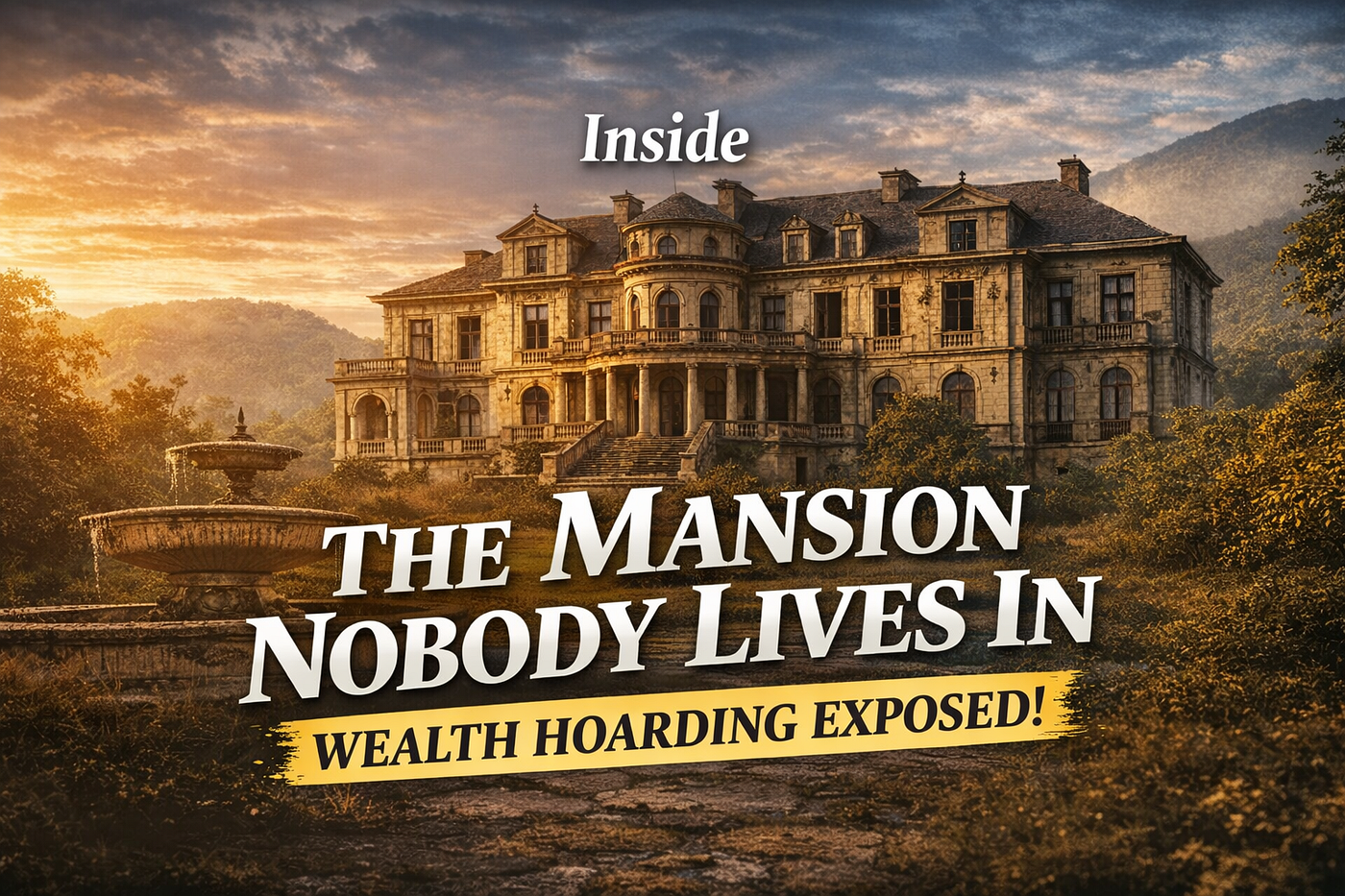
In the world of extreme wealth, where billionaires buy superyachts larger than cruise ships and private islands for weekend escapes, a curious phenomenon has quietly emerged: the mansion nobody lives in. These sprawling estates — complete with ballrooms, home theaters, and sprawling manicured grounds — stand empty, shuttered, or barely used, becoming monuments to excess rather than homes.
What drives someone to own a palace and never live in it? Let’s open the gates and explore the psychology, economics, and cultural forces behind wealth hoarding on an architectural scale.
🏰 What Is a “Hoarded Mansion”?
At first glance, the term might seem dramatic — but it reflects a real trend among the ultra‑rich:
- Properties valued in the tens or hundreds of millions sit empty or under‑utilized.
- Some estates are purchased purely as investment vehicles.
- Others become status symbols, not homes.
- And a few are left unfinished or neglected due to legal tangles or inheritance disputes.
These are not ordinary empty houses. We’re talking about multi‑acre estates with hundreds of rooms, private vineyards, art galleries, and miles of gated driveways.
💡 Why Do Wealthy Buyers Acquire Mansions They Don’t Live In?
1. Status Signaling and Competitive Consumption
In ultra‑high‑net‑worth circles, real property is the original luxury asset. Owning a “priceless” mansion signals:
- Success
- Exclusivity
- Social dominance
Sometimes the ownership itself matters more than the use.
2. Asset Allocation Strategy
Real estate remains one of the most reliable long‑term stores of wealth, especially in prime markets like:
- Monaco
- New York City
- Beverly Hills
- The Hamptons
- Dubai
For ultra‑wealthy investors:
A dormant estate isn’t wasted — it’s capital preservation with a driveway.
Tax incentives, trust structures, and global demand can make them powerful hedges against inflation and market volatility.
3. Fear of Missing Out (FOMO) in Luxury Markets
Scarcity drives luxury value:
If one billionaire buys a property, others feel pressure not to let it slip away.
This competitive mindset can push buyers to acquire estates they never truly intended to occupy.
4. Estate Planning & Generational Wealth
Some mansions are purchased by older generations or for heirs who:
- Aren’t yet ready to live there
- Have no intention of living there at all
- Simply see it as a family legacy to pass on
This leaves the property in a kind of luxury limbo.
🧠 The Psychological Dimension of Luxury Hoarding
Owning an unused mansion can reflect deeper motivations:
- A desire for control
- Fear of scarcity
- Social image maintenance
- Attachment to legacy rather than lifestyle
In some cases, billionaire buyers view their property collections like fine art — beautiful to own, not necessarily practical.
💸 The Hidden Costs of a Vacant Luxury Estate
While the allure seems glamorous, wealth hoarding via mansions carries significant expenses:
Cost TypeAverage Annual ExpenseSecurity & Staff$500,000+Maintenance$200,000+Property TaxesOften in the millionsUtilities & InsuranceHigh ongoing cost
Owning an unused mansion can therefore be a lifestyle liability — concealed beneath the sheen of exclusivity.
🏡 The Environmental and Social Impact
Unused mega‑estates aren’t just dormant; they can have real world implications:
📉 Housing scarcity: Prime locations taken off the market 🌱 Environmental footprint: Excess energy usage even when empty 🏙 Community disruption: Neighborhoods shaped by wealth that never lives there
While luxury consumption is a personal choice, it has broader social consequences.
📊 Real Estate Investment or Emotional Asset?
At heart, these hoarded mansions sit at the intersection of two forces:
- Financial logic: Properties as investments
- Emotional logic: Status, ego, legacy
That tension defines the ultra‑wealthy psyche — and it shapes exotic markets where wealth and loneliness sometimes live side by side.
What These Mansions Reveal About Wealth
Unused mansions are not just architectural curiosities — they are mirrors into extreme wealth culture. Behind every grand gate lie stories of ambition, competition, psychology, and economic strategy.
In a world where the ultra‑rich hold more capital than entire nations, these palaces — empty yet priceless — remind us that:
Wealth isn’t just about ownership — it’s about meaning, intent, and the choices that shape how we live (or don’t live) with what we possess.
메타데이터
- post_id
- c1b8222f7e6a
- slug
- the-mansion-nobody-lives-in-inside-the-world-of-wealth-hoarding-c1b8222f7e6a
- url
- https://medium.com/@arnoldsthoughts66/the-mansion-nobody-lives-in-inside-the-world-of-wealth-hoarding-c1b8222f7e6a
- canonical_url
- https://medium.com/@arnoldsthoughts66/the-mansion-nobody-lives-in-inside-the-world-of-wealth-hoarding-c1b8222f7e6a
- author_url
- https://medium.com/@arnoldsthoughts66
- status
- ok
- fetched_at
- 2026-06-23 06:34:20