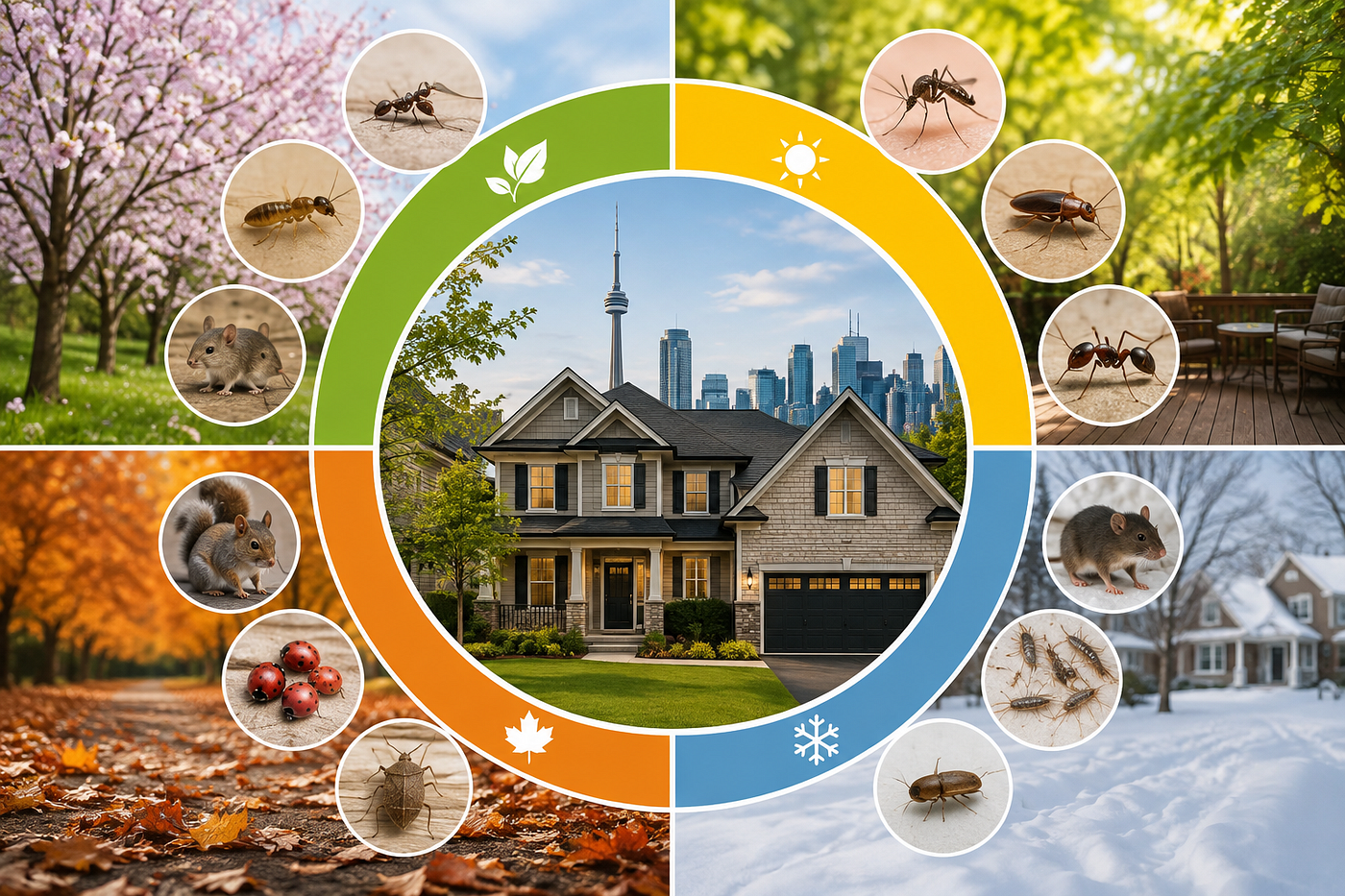
Why Urban Expansion Is Bringing More Wildlife Into Homes in Brampton, Vaughan & the GTA
Raccoons, skunks & squirrels are moving into GTA homes as cities grow. Learn why — and how humane wildlife control keeps your property…
Why Urban Expansion Is Bringing More Wildlife Into Homes in Brampton, Vaughan & the GTA
Raccoons, skunks & squirrels are moving into GTA homes as cities grow. Learn why — and how humane wildlife control keeps your property safe.
What’s Actually Attracting Pests to Your Home? A Residential Guide for Brampton, Vaughan & GTA
If you’ve noticed more raccoons flipping over your garbage bins, skunks digging up your lawn, or squirrels nesting in your soffits over the past few years, you’re not imagining things — and you’re not alone. Urban expansion across the Greater Toronto Area is pushing wildlife out of natural habitats and directly into residential neighbourhoods, because new subdivisions remove the forests, wetlands, and green corridors animals once relied on for food and shelter, leaving backyards, attics, and garages as the next best option. As cities like Brampton, Vaughan, Barrie, and Bradford continue to expand outward, this pattern is only accelerating.
This isn’t a coincidence, and it isn’t just “bad luck.” It’s a predictable, well-documented consequence of how we build cities. Below, we’ll break down exactly why **wildlife** encounters are rising across Ontario, what’s drawing animals to your property, and what homeowners can actually do about it — humanely and effectively.
What Is Urban Expansion?
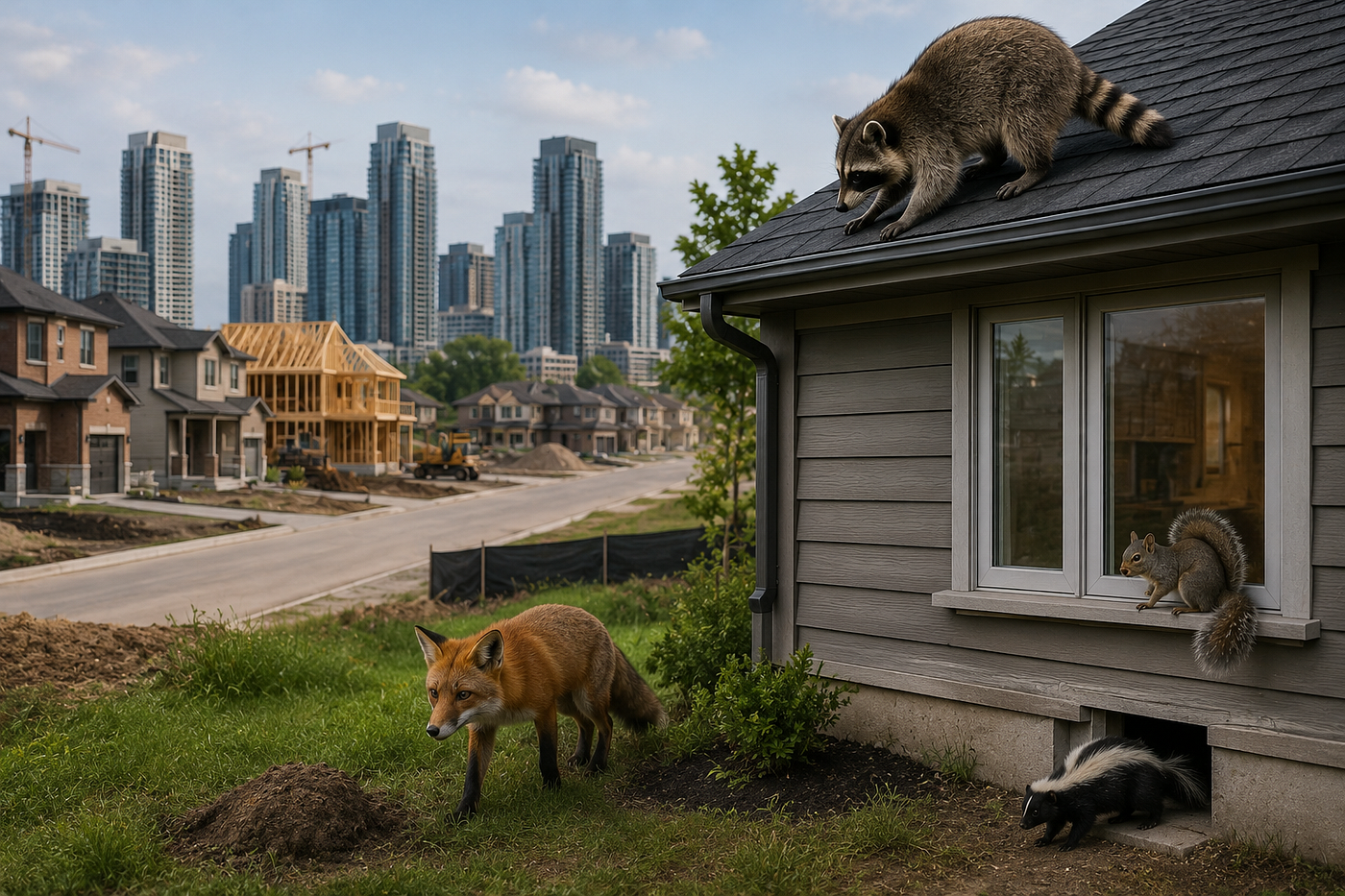
Urban expansion refers to the outward growth of cities and towns into previously undeveloped or rural land — forests, farmland, wetlands, and ravines get converted into subdivisions, roads, and commercial plazas. The Greater Toronto Area is one of the fastest-growing regions in North America, and that growth has to go somewhere.
Every new housing development in places like Vaughan, Brampton, or Bradford means a corresponding loss of the natural spaces that once separated human communities from wildlife populations. Where there used to be a buffer of forest or meadow between a raccoon’s den and a homeowner’s kitchen, there’s now a paved driveway and a fence line.
How Habitat Loss Forces Wildlife Closer to Humans
Wildlife doesn’t disappear when a habitat is bulldozed — it relocates. Animals that lose their natural territory don’t simply vanish; they move into whatever space is left, and increasingly, that space is your backyard.
According to the Canadian Wildlife Federation, urban areas are genuinely attractive to wildlife because they offer reliable food opportunities — for plant-eating animals drawn to lawns, gardens, and parks, and for omnivores and carnivores drawn to garbage, pet food, and intentional feeding. In other words, a fully landscaped suburban street can look, to a displaced raccoon or coyote, like a habitat upgrade rather than a downgrade.
This is compounded by habitat fragmentation — when a forest or wetland is cut into smaller, disconnected pieces by roads and construction, it becomes far harder for animals to find mates, food, and safe denning sites within their original range. The result: more sightings, more property intrusions, and more calls to wildlife control companies across the GTA.
Featured Snippet Summary
- Urban expansion destroys and fragments natural habitat
- Displaced animals relocate to the nearest available shelter and food source
- Suburban homes now function as substitute habitat for many species
- Fragmentation makes it harder for wildlife to survive without entering human spaces
Common Wildlife Species Entering Homes in Canada
While the specific species vary by region, several are especially common across Ontario’s expanding suburbs:
- Raccoons — highly adaptable, drawn to attics, chimneys, and garbage
- Squirrels — frequently nest in soffits, rooflines, and attic insulation
- Skunks — dig under decks, sheds, and porches for shelter and grubs
- Groundhogs — burrow near foundations and garden beds
- Bats — roost in attics and wall voids, especially in older homes
- Coyotes — increasingly sighted in ravines and parks bordering new developments
- Geese and other birds — drawn to manicured lawns and retention ponds
Each of these species is adapting its natural behaviour to survive alongside — and sometimes inside — human dwellings.
Why New Housing Developments Increase Wildlife Encounters
New housing developments are particularly disruptive because they’re often built at the edge of the urban boundary, directly bordering forests, ravines, and farmland. This is exactly where wildlife density is highest.
In the first few years after a new subdivision goes up in Brampton, Vaughan, or Bradford, residents typically see a spike in wildlife encounters. That’s because animals that previously denned in that exact location haven’t relocated far — they’ve simply moved to the nearest tree line, ravine, or unsealed crawl space, which now happens to be someone’s new home.
New construction also tends to have gaps that older, established homes don’t: unsealed vents, incomplete soffits, and loose siding that create easy entry points before homeowners have wildlife-proofed their property.
The Role of Garbage, Bird Feeders, and Pet Food
Even without any nearby construction, homeowners can unintentionally attract wildlife through everyday habits:
- Garbage left out overnight is one of the single biggest attractants for raccoons and skunks
- Bird feeders spill seed that draws squirrels, raccoons, and occasionally bears in more rural fringe areas
- Outdoor pet food bowls are essentially an open invitation for nocturnal wildlife
- Unsecured compost bins offer both food and shelter
- Fruit trees and gardens left unharvested attract a wide range of species
Removing these food sources doesn’t eliminate wildlife from the broader neighbourhood, but it dramatically reduces the chances that an animal chooses your property specifically.
Climate Change and Wildlife Movement Patterns
Habitat loss isn’t the only force reshaping wildlife behaviour — climate change is altering migration timing, denning seasons, and food availability across Ontario. Milder winters mean some species, like raccoons and skunks, stay active later into the year and enter dormancy later, extending the window during which they’re actively searching for shelter near homes.
Changing precipitation patterns also affect where insects, rodents, and small prey animals concentrate, which in turn draws predators and omnivores into new areas — including residential neighbourhoods that didn’t previously see much wildlife traffic.
Health and Property Risks Associated with Wildlife Intrusions
Wildlife in or around your home isn’t just a nuisance — it carries real risks:
- Structural damage: torn insulation, chewed wiring, damaged soffits and vents
- Fire hazards: from gnawed electrical wiring, particularly with squirrels
- Disease transmission: raccoons and skunks can carry rabies and parasites; droppings can pose health risks if disturbed
- Odour and contamination: from urine, feces, and nesting material trapped in attics or wall cavities
- Aggressive encounters: particularly with mother animals protecting young
Ontario also regulates how wildlife can be handled once it’s on your property — for example, provincial rules govern the **captivity and handling of wild animals**, which is one of several reasons DIY removal often creates more legal and safety complications than it solves.
Humane Wildlife Prevention Strategies
The good news: most wildlife intrusions are preventable with a few consistent habits.
- Seal garbage and compost bins with locking or animal-proof lids
- Bring pet food indoors overnight
- Trim tree branches away from rooflines to remove climbing access
- Install chimney caps and vent screens
- Inspect and seal gaps around soffits, fascia, and foundation vents each spring and fall
- Avoid leaving bird feeders out overnight during peak wildlife season
- Install motion-activated lights or sprinklers as a deterrent
These steps reduce the odds of an encounter, but they don’t guarantee prevention — especially once an animal has already established a den on your property.

When Professional Wildlife Removal Is Necessary
DIY wildlife removal is one of the more risky home projects a homeowner can attempt. Beyond the physical danger of handling a defensive animal, improper removal can leave babies trapped inside a wall or attic, trigger provincial wildlife-handling violations, or simply fail — because the animal returns once the immediate deterrent wears off.
Professional wildlife removal becomes necessary when:
- You hear scratching, thumping, or movement in your attic or walls
- You find droppings, damaged insulation, or torn vents
- An animal has already denned under a deck, shed, or porch
- You’ve attempted DIY deterrents without success
- There’s a risk of young animals being present
Licensed technicians use humane exclusion techniques — one-way doors, proper timing around denning seasons, and permanent entry-point sealing — to remove animals safely and prevent re-entry. If you’re dealing with an active wildlife problem in Brampton or Vaughan, a professional inspection is the fastest way to confirm what species you’re dealing with and how it’s getting in.
Future Trends: Wildlife and Growing Canadian Cities
As the GTA and South Simcoe region continue to expand — with new developments planned across Brampton, Vaughan, Bradford, and King City — wildlife encounters are expected to keep rising, not fall. Urban wildlife populations, particularly raccoons, are known to adapt their behaviour generationally, with young animals learning to navigate human environments from birth.
Conservation groups like the **World Wildlife Fund Canada** note that as urban and periurban areas grow, natural spaces disappear at a corresponding rate, which means the pressure pushing wildlife toward residential areas isn’t temporary — it’s structural. For homeowners, this means wildlife-proofing is becoming less of a one-time task and more of an ongoing part of home maintenance, much like eavestrough cleaning or furnace servicing.
Key Takeaways
- Urban expansion removes and fragments the natural habitat wildlife depends on
- Displaced animals relocate to residential areas offering food, shelter, and warmth
- Raccoons, squirrels, skunks, and bats are the most common intruders in GTA homes
- New housing developments near ravines and forests see the highest encounter rates early on
- Garbage, pet food, and bird feeders are the top attractants homeowners can control
- Climate change is extending active wildlife seasons and shifting movement patterns
- Wildlife intrusions carry real structural, fire, and health risks
- Humane prevention reduces risk but doesn’t replace professional removal for active infestations
- **Wildlife pressure on GTA **homes is expected to increase as urban growth continues

FAQ Section
Why is wildlife suddenly showing up in my neighbourhood?
New construction and habitat loss nearby are likely pushing animals out of their natural territory and into residential areas offering food and shelter.
What animals most commonly get into homes in the GTA?
Raccoons, squirrels, skunks, groundhogs, and bats are the most frequent intruders across Toronto, Brampton, Vaughan, Mississauga, and Barrie.
Is it legal to remove wildlife myself in Ontario?
Ontario has specific rules around handling and relocating wild animals, and improper removal can be both dangerous and non-compliant. Professional, licensed wildlife control is the safer route.
How do I know if I have wildlife in my attic?
Common signs include scratching or thumping sounds (especially at dawn or dusk), torn insulation, damaged vents, foul odours, and visible entry points on the roofline.
Can wildlife exclusion really keep animals out permanently?
Proper exclusion — sealing entry points after confirming an attic or den is empty — is highly effective, though ongoing property maintenance is still needed to prevent new entry points from forming.
Does home insurance cover wildlife damage?
Coverage varies significantly by policy and provider, so homeowners should check directly with their insurer regarding wildlife-related damage.
Conclusion
Wildlife isn’t invading your home out of aggression — it’s adapting to a shrinking habitat, and your property has simply become part of the landscape it now depends on. As Brampton, Vaughan, Barrie, and the rest of the GTA continue to grow, that pressure isn’t going away. The most effective response isn’t panic — it’s prevention: securing food sources, sealing entry points, and knowing when to bring in a licensed wildlife control professional before a minor nuisance becomes structural damage or a health risk. Professional CTA
Tried to handle it yourself and it’s still not resolved?
You’re not alone — and it’s not too late. Pest Troopers provides licensed residential and commercial pest control, bed bug treatment, rodent control, and wildlife removal across Toronto, Vaughan, Brampton, Mississauga, Barrie, Bradford, King City, Hamilton, Newmarket, Aurora, Richmond Hill, and Markham. Our technicians use only Health Canada-registered products, applied by trained professionals who know the difference between treating a problem and making it worse.
📞 (647) 885–9507 | **Book a Professional Pest Inspection**
메타데이터
- post_id
- c1bf93a5b3a4
- slug
- why-urban-expansion-is-bringing-more-wildlife-into-homes-in-brampton-vaughan-the-gta-c1bf93a5b3a4
- url
- https://medium.com/@pesttroopers/why-urban-expansion-is-bringing-more-wildlife-into-homes-in-brampton-vaughan-the-gta-c1bf93a5b3a4
- canonical_url
- https://medium.com/@pesttroopers/why-urban-expansion-is-bringing-more-wildlife-into-homes-in-brampton-vaughan-the-gta-c1bf93a5b3a4
- author_url
- https://medium.com/@pesttroopers
- status
- ok
- fetched_at
- 2026-07-26 22:52:32