Lesbian Music as Needle Drops: Dos & Don’ts
The needle drops in The Summer I Turned Pretty are out of control. For those who might not know, a “needle drop” refers to points in a film…
Lesbian Music as Needle Drops: Dos & Don’ts
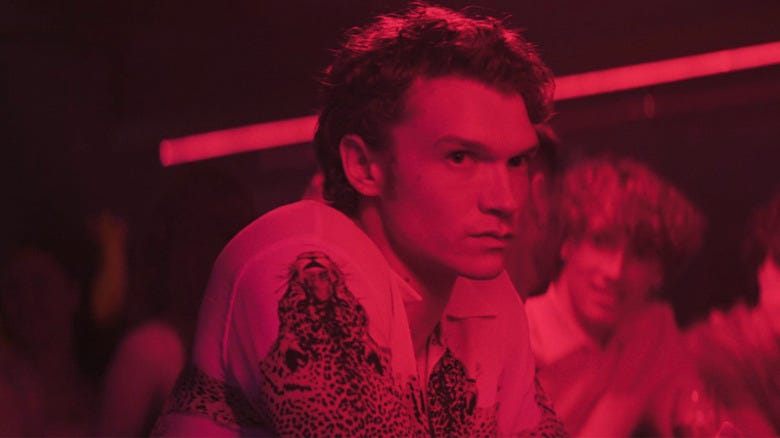
The needle drops in The Summer I Turned Pretty are out of control. For those who might not know, a “needle drop” refers to points in a film or TV show where a pre-existing song will begin playing in the background, as though a metaphorical needle on a record player is being dropped. Usually, needle drops will be saved for particularly exciting or important points in a story, giving the impression that the director, writers, or whoever felt passionately that this song would heighten the scene in some way. Every other scene will be accompanied by an original score or contemplative silence, meaning that the ratio of pre-existing music to the overall screentime will oftentimes be rather slim.
This is absolutely not the case with The Summer I Turned Pretty. Over the course of 26 episodes, there are 274 licensed songs used, according to the show’s official playlist. Each episode is about an hour long, and the playlist is 15 hours long, meaning that, theoretically, over half the show is underscored by whatever pop song Amazon could get the rights to.
Because of this, the show has a quality-vs-quantity problem with its soundtrack. Rather than waiting for a scene where a carefully-chosen song either perfectly matches its context or interestingly juxtaposes what’s happening, the needle drops in TSITP fall somewhere in the middle — just fitting enough that you can see what they were going for, but far enough from the song’s original context that the show’s immersion is lost.
Three examples, in particular, stood out to me: Tyler, the Creator’s “Are We Still Friends?” in season 1, and Sufjan Stevens’ “Mystery of Love” and Chappell Roan’s “Good Luck, Babe!” in season 3. All three of these songs are written about gay relationships, and used in scenes highlighting straight relationships. This is fairly forgivable in the case of “Mystery of Love” since, unless you were aware the song was written by a queer artist for the gay romance, Call Me By Your Name, the song could just be listened to as a normal, sappy love song.
The “Are We Still Friends?” example is more grating, as it seems to have chosen the song purely because of its title, so a song originally about the fallout of an affair between two men filled with turmoil and despair, finally coming to a head when one asks the other if the two can at least be friends if they can’t be lovers, is used in the teen romance show when two childhood friends decide they want to kiss each other, oOoOo! Hypothetically, you could make the argument that the character of Jeremiah Fisher, a clueless bisexual pretty boy, would be enough of a dumbass to hear a song made by a fellow bisexual and completely miss the point, but the scene is narrated by Belly, who isn’t meant to be dumb or bi. I’d say the music supervisor heard the chorus on TikTok and sent it to the editor without a second thought, but the chorus contains the singer’s plea, “can we be friends?” which implies they really just picked it based on the title alone.
Comparatively, the use of “Good Luck, Babe!” is less egregious, but it’s still irritating how surface-level its placement is. Unlike the other two examples, the queer context of the song cannot be easily extracted. It gets more and more specific about its central relationship as it goes along, with its first verse being made up of vague denials of feelings, continuing until the bridge explicitly describes a woman in a miserable marriage with a man yearning for her lost lesbian love. TSITP, in all its context-draining glory, opts to leave only the first verse in, so the audience can have an easier job conflating Chappell Roan’s struggles with Conrad Fisher, a straight guy that’s sabotaged all hopes of romance through his own outstanding emotional constipation. The core of the song is still there — that being a person secretly not over their ex hopes said ex is as despondent as them — but more than any other misplaced needle drop in this show, this one pissed me off the most.
I couldn’t really put my finger on why until, shortly thereafter, I got around to watching Bugonia, a Best-Picture-nominated film about Jesse Plemmons kidnapping Emma Stone because he believes she’s an alien. In a film whose general sound I can only describe as a violin having a panic attack, the infrequent needle drops stand out all the more. There’s the shocking (pun intended) use of Green Day’s “Basket Case” during the torture scene but, even more startling to me, the initial abduction scene is precluded by a scene where Emma Stone’s character, like poor Conrad Fisher before her, sings along to “Good Luck, Babe!” Unlike Conrad, however, this character hasn’t suffered any tragic breakup that might connect her to the contents of the song. She seems to just be enjoying the song on a surface level, which the audience can interpret as her being superficial, sure, but also how human she is, contrary to what Jesse Plemmons believes.
If TSITP was a little choosy with what they took from the song, Bugonia is far more selective, opting to include only the final chorus of the song. The only lyrics we hear are “Good luck, babe! / You’d have to stop the world just to stop the feeling,” which, at this point in the narrative, are utterly innocuous. Once one takes into account everything that happens afterwards, though, specifically in the last fifteen minutes, the line “You’d have to stop the world just to stop the feeling” takes on a far deeper meaning. It’s transformative in the truest sense: the creator’s intent is discarded, but not diminished. You’d have a hell of a time comparing the experiences of Chappell Roan to any of the characters in Bugonia, which is why it’s so cool that, in this highly specific way, a connection can so effectively be made.
Does this mean, then, that needle drops can only work in situations utterly divorced from the song’s context? Well, while it’s true that some of the most memorable needle drops exist as juxtaposition, sometimes a song fits so well with a movie or show, in sound and/or lyrics, it’s like a match made in heaven.
Take, for instance, the cinematic uses of another iconic sapphic anthem, t.a.T.u’s “All the Things She Said.” Although this song was infamously performed by two straight girls, the song is all about a repressed queer schoolgirl yearning for a female classmate to be with her in the way she so desperately desires. t.a.T.u had a few hits in their prime, but this was the song that really broke through internationally, and as such, reached groups far outside the intended audience. This might explain why, three decades after its initial success, the single was used in both Sean Baker’s best-picture-winning Anora and Jacob Tierney’s smash hit series Heated Rivalry.
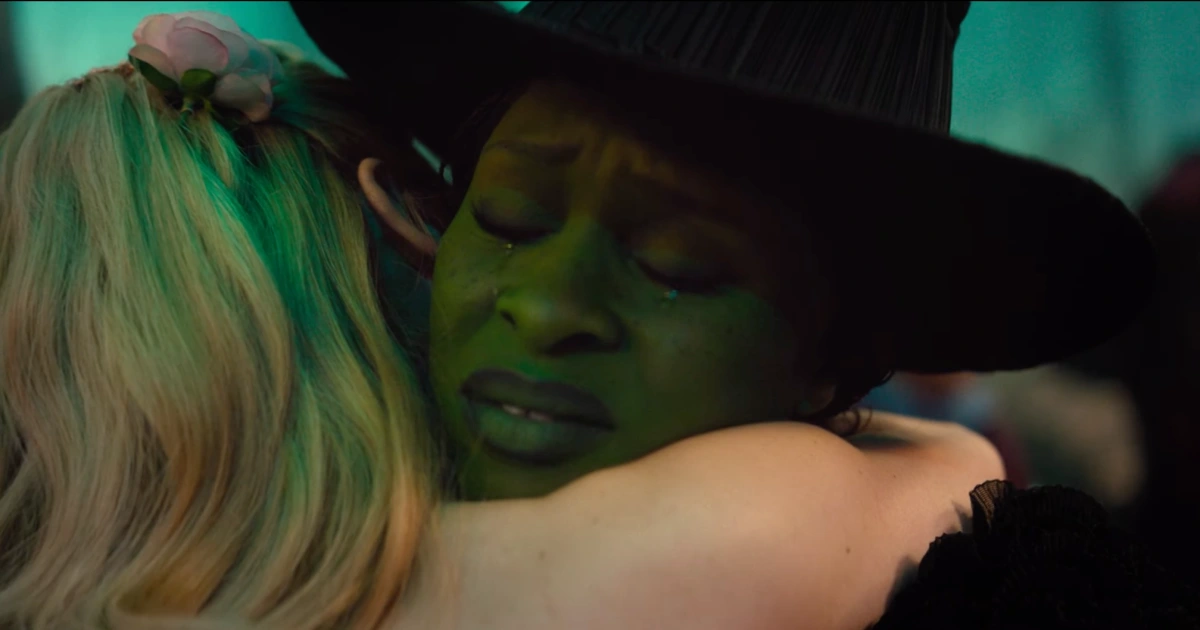
Strangely enough, the film and show incorporate the song in eerily similar ways. As the song’s opening chords resonate, our bitchy Russian protagonists — Anya and Ilya — slo-mo walk into a bustling night club. Red, purple and blue strobe lights circle the setting as we shift from the back of the Russian’s head to the rest of the scene. Since we can’t see the protagonist’s face, we don’t get any indication of how they’re feeling until the lyrics kick in and we’re led to assume that “all the things she said [are] running through [their] heads.” Both characters are going through rough patches with their respective love interests at this point so, although they’re posturing affability, the audience now gets the sense they’re more affected than they’re letting on. On top of that, the use of an English version of a Russian song shows that Anya and Ilya, two Russian characters whose main connection to English-speaking North America is through their love interests, are having their worlds invaded once again. The use of the song in both contexts is, on some level, romantic, so the song’s meaning is still largely intact, unlike the wholly transformative Bugonia example.
The main departure these works take from the song’s original context is, of course, that they aren’t about a girl having a crush on another girl. Anora, like TSITP, adds a no-homo filter on the song by placing a straight, male character into the shoes of the song’s lesbian narrator. Heated Rivalry is more closely aligned, in comparison, since Ilya is dealing with feelings for someone of the same gender, thereby maintaining the layers of shame and frustration that come from being queer in a straight environment. In Anora, “All the Things She Said” stops playing after the first chorus concludes, showing how easily Anya can brush off his inner struggles, but in Heated Rivalry, the song plays in its entirety, not only showing how consumed by his love Ilya is, but also leaving space for lyrics like “I’m all mixed up, feeling cornered and rushed” and “I keep closing my eyes, but I can’t block you out” to be connected to the characters without directly drawing attention to it.
This, however, begs the question: if music deeply entrenched in the culture of queer women is used in a narrative where no queer women are present, do these needle drops, I hate to say it, count as cultural appropriation? I’ll concede that the sexuality of Emma Stone’s character is never made explicit, and given that she’s played queer women in two other Yorgos Lanthimos films, it’s quite possible she’s a lesbian alien thing… a gaylien, if you will. In the other three examples, though, there’s no denying the fact that songs expressing the unique challenges of queer women are being used to express the woes of men.
I’d argue that this isn’t necessarily a bad thing. Empathy derives from understanding, after all, so if men as a whole are gatekept from enjoying and finding meaning in sapphic art, how can we be expected to find solidarity and community? No one’s taking these songs away from queer women; you can still close your eyes and focus on the lyrics and have the same experience you would listening to the song normally. These needle drops are just widening the scope of how one can engage with the music.
Obviously, this practice works in the opposite direction, too. Many works of LGBTQ entertainment have used straight love songs in the past to represent the feelings of a gay character, with varying degrees of transformative meaning. The opening to But I’m a Cheerleader uses April March’s “Chick Habit,” a song about warning a playboy to be less of a slut, instead as a warning for the film’s lesbian lead to avoid finding women attractive. Moonlight plays a remixed version of Jidenna’s “Classic Man” riddled with record scratches and repeating lyrics seemingly as a way to represent the protagonist’s deconstructed idea of what being a “classic man” entails. Even when taking a more literal route, such as TV Carpio’s cover of “I Wanna Hold Your Hand” in Across the Universe, this specific performance changes a song that normally serves as a declaration into a more silent promise, since this lesbian character isn’t allowed by society to show romantic interest in the way Paul McCartney can.
More recently, season one of The Last of Us and Etan Coen’s Drive-Away Dolls both used Linda Ronstadt’s “Long Long Time” for their queer love stories within a year of one another. The original song is about a woman mourning a relationship with, assumedly, a man, yet the writers and music supervisors of these projects independently chose this mournful break-up ballad as soundtracks for gay couples first falling in love. It’s a fairly stark contradiction, but it’s also lovely to see something once so devastating be made into something earnestly hopeful. LGBTQ individuals are so often told their futures will be miserable, so by taking a song about a doomed relationship and using it for relationships with happy — or at least bittersweet — endings, the message is being sent that queer people can find love and happiness in the bleakest of circumstances. Even if you believe life is sending you signs of a miserable existence, you can fight for joy.
What message are the “Good Luck, Babe!” and “All the Things She Said” examples sending, then? For Heated Rivalry and Anora, the use of “All the Things She Said” seems to be saying that, no matter how hard you try to run away from your feelings, they’ll continue to chase you, haunting you inconveniently. Ilya takes this message to heart and confronts his lover, Shane, about these feelings soon after, but Anya continues to ignore these uncomfortable emotions, thus why the former couple ends up happily in love while Anya gets dumped and read for filth.
Bugonia sends the message via “Good Luck, Babe!” that, despite the buried beauty one may find in human life, humanity ultimately deserves whatever ruin comes for it. Even if Emma Stone didn’t actually cause human extinction in the end, all but one of the primary characters have died, meaning the humanity presented within the story has already been punished for its harmful actions. Chappell Roan’s version of karma is a shitty ex ending up in a shitty relationship, while Bugonia’s version of karma is a shitty society reaching its fateful end. Chappell Roan’s ex can’t stop the world just to stop the feeling, but Emma Stone can.
That leaves The Summer I Turned Pretty, whose message within this scene appears to be “Watching the person you love be with someone else feels not great.” Any other interpretation, such as the song representing the internal corruption of spite or the destructive nature of holding onto the past, ultimately falls apart since the show ends up rewarding Conrad for being petty and bitter. There’s no indication in “Good Luck, Babe!” that the Chappell Roan narrator will go back to her past lover, but this isn’t the case for Conrad Fisher, who grovels his way into Belly’s heart after she leaves his brother. Even humoring the idea that this needle drop could hold greater thematic meaning just further showcases how thoughtless the song’s use really is, which isn’t a good sign for a piece of art made to be respected and taken seriously.
I think this is why the needle drops in TSITP bothered me so much in the first place. It wasn’t a matter of commodifying queer art, it was that these musical works that are already so engrained in queer history were treated so disposably. Any other song about jealousy could’ve been used in place of “Good Luck, Babe!” and the scene would’ve played out identically.
What’s frustrating is that, when TSITP gives a shit, it can use its soundtrack really well. Taylor Swift only plays in scenes that further Belly and Conrad’s relationship, starting with the soft, shy “Lover” in the first episode and ending with the triumphant “Out of the Woods” in the final episode. Olivia Rodrigo’s music features prominently in scenes where Belly is at war with herself, implementing the tumultuous feelings of her “SOUR” album into Belly’s own tumultuous experiences.
A lot of the soundtrack, though, feels like pop hits thrown in as the auditory equivalent of jangling keys. Like, “I heard Sabrina Carpenter and I clapped!” If you’re relying on baseline recognition, you might succeed at gaining attention in the moment, but you won’t make someone who’s never heard the song interested in listening to it outside of the show. I, admittedly, hadn’t heard “Long Long Time” before watching The Last of Us, but I loved its use so much it became one of my most-listened-to songs of that year. If I wasn’t writing this essay, I can guarantee I wouldn’t be rushing to listen to “Good Luck, Babe!” after watching TSITP. There’s an inherently symbiotic relationship between well-incorporated music and film: watching the show/movie will make you want to listen to the music on its own, and listening to the music will make you want to rewatch the show/movie. If you aren’t using the music in an innovative or memorable way, however, there’s no incentive to revisit or even think about either work after their initial consumption.
This is why, even if they’re used in a drastically different context, I believe it’s important to use music by queer women in different mediums. For every fifty or so people that filter out a movie or show’s soundtrack to focus on the plot, there will be one or two potential fans that’ll want to further investigate the artist’s discography. This is especially true for films that recontextualize the song, because it forces audiences to engage in art that they wouldn’t be exposed to otherwise. Bugonia and Anora are both Oscar darlings, so not only did the stuffy old men in the Academy of Motion Pictures or whatever end up inadvertently engaging with music about lesbians, film fans all around the world that would’ve otherwise might’ve never heard Chappell Roan or t.A.T.u.’s music will now be exposed to them and possibly made curious enough to do what I like to do, which is pull out Shazam in the middle of a movie theater and flashbang everyone me with my bright-ass phone screen.
As for Heated Rivalry, a show with a target audience of LGBTQ individuals and women aged 20–40, there’s a high possibility most of them were already familiar with “All the Things She Said.” And yet, upon Episode 4’s release, the song found a brief resurgence on social media. Since the show used the song so well, with so much care and effort put into using it effectively, people were falling in love with the song all over again. Sure, there aren’t any sapphic characters in the show, but rather than feeling like the show is taking something away from queer women, the filmmakers are sharing the song with queer men, or at least borrowing it for a minute. If “All the Things She Said” is a painting in t.A.T.u.’s personal collection, Heated Rivalry is a travelling museum exhibit showing it off and celebrating the artist for fellow patrons of the arts.
So, until the lesbian season of Bridgerton comes around and includes orchestral Chappell Roan and t.A.T.u. covers in contextually-relevant scenes, I do hope filmmakers continue to use music about sapphic love in whatever weird ways they want to. If some director out there thinks their flick about a squirrel moving to New York City just isn’t complete without Melissa Etheridge’s “Come to My Window,” I say they should be able to use it as long as they do so with respect and unfiltered passion.
As for The Summer I Turned Pretty, the series can still redeem itself in my eyes by, in its upcoming cinematic conclusion, having Conrad transition, thereby making them a lesbian, and playing “Pink Pony Club” at the coming out party. This might seem like taking drastic measures, but until music supervisors stop being irresponsible with how they use media, I reserve the right to be a little irresponsible too.
메타데이터
- post_id
- c2403dd3ce65
- slug
- lesbian-music-as-needle-drops-dos-donts-c2403dd3ce65
- url
- https://medium.com/@lilymeline_64185/lesbian-music-as-needle-drops-dos-donts-c2403dd3ce65
- canonical_url
- https://medium.com/@lilymeline_64185/lesbian-music-as-needle-drops-dos-donts-c2403dd3ce65
- author_url
- https://medium.com/@lilymeline_64185
- status
- ok
- fetched_at
- 2026-06-09 15:37:30