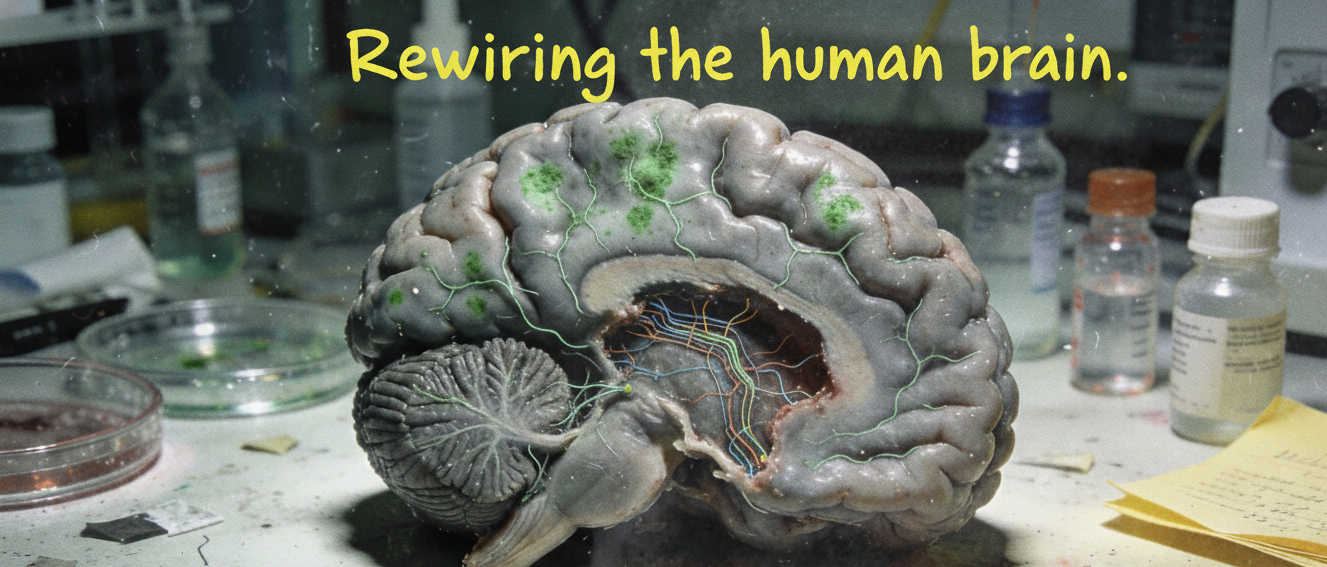
Somatic Practices for Psychedelic Integration: 4 Body-Based Ways to Make Insights Stick
How nervous system regulation, microdosing reflection, and somatic healing can help you integrate psychedelic insights more deeply
Somatic Practices for Psychedelic Integration: 4 Body-Based Ways to Make Insights Stick
How nervous system regulation, microdosing reflection, and somatic healing can help you integrate psychedelic insights more deeply
If you’ve ever had a psychedelic experience — whether through microdosing, ketamine therapy, psilocybin, LSD, or a deeper journey — you may already know this truth:
The insight is often the easy part.
The integration is the real work.
You can have the most beautiful realizations. You can feel your heart open, see your patterns clearly, understand your trauma from a new perspective, or even feel reborn in a single night.
But then, within days — or sometimes hours — life creeps back in.
Old habits return. Old triggers resurface. Old stories feel louder than ever.
And you may wonder:
“Why does it feel like I’m losing everything I learned?”
This is more common than people realize.
Psychedelic insights often happen in the mind, but real psychedelic integration happens through the body.
That is why somatic practices can be such a powerful part of integration. They help bridge the gap between what you understood during the experience and what your nervous system can actually live, feel, and embody afterward.
When you combine psychedelics with somatic awareness, nervous system regulation, and gentle body-based reflection, you are not just chasing insight.
You are giving your body a chance to feel safe enough to change.
Why Psychedelic Integration Can Feel So Hard
During a psychedelic experience, your mind may make new connections quickly. You may see your patterns, wounds, relationships, fears, or desires with unusual clarity.
But your nervous system does not always update at the same speed.
The nervous system is the part of you that tracks safety, threat, habit, instinct, and emotional survival. It is also where many trauma responses and protective patterns live.
So even after a powerful realization, your body may still carry:
hypervigilance emotional shutdown chronic tension fear of expansion old survival patterns trauma imprints resistance to change
This is why you can mentally understand something and still feel stuck.
You may know you are safe, but your body may not feel safe yet.
You may know you want to change, but your nervous system may still associate that change with danger, uncertainty, or loss of control.
Somatic integration helps tell your body:
“It is safe to become who I am becoming.”
The Missing Bridge: Somatic Integration
Somatic practices are body-based tools that help you notice, regulate, release, and integrate what is happening inside your system.
Instead of only asking, “What did I realize?” somatic integration also asks:
What do I feel in my body? Where does this insight live physically? What sensations come up when I think about changing? Where do I feel resistance, fear, openness, or relief? What does my body need in order to feel safe with this new awareness?
This is where psychedelic integration becomes more than reflection.
It becomes embodiment.
The following four somatic practices can support integration whether you are microdosing, working with ketamine, exploring psilocybin, processing a macrodose, or doing trauma healing without psychedelics at all.
1. Orienting: The Fastest Way to Come Back to Your Body
Orienting is one of the simplest trauma-informed somatic practices, and it can be surprisingly powerful.
It helps your nervous system reconnect with the present moment by slowly taking in your environment.
Here’s how to practice orienting:
Look slowly around the room. Let your eyes land on shapes, colors, light, and objects. Notice where you are. Let your breath follow your gaze. Allow your body to take in the fact that you are here, now.
This sends a gentle signal to your nervous system:
“I am safe enough to be present right now.”
Orienting can be helpful for:
grounding after a psychedelic journey settling anxiety reducing post-journey overwhelm coming back into the body reconnecting with your environment creating a sense of safety before journaling or reflection
Sometimes, the most powerful integration practice is not analyzing the experience.
Sometimes, it is simply helping your body return to the present moment.
2. Felt-Sense Tracking: Listening to the Body’s “Yes” and “No”
After a psychedelic experience, your mind may be full of ideas, plans, realizations, and intentions.
You may think:
“I need to change everything.” “I understand the pattern now.” “I know what I need to do.” “This is the version of me I want to become.”
But an important integration question is:
Does your body agree?
Felt-sense tracking helps you listen to the body’s subtle responses.
Try this:
Bring one intention or insight to mind. Notice what happens in your body. Do you tighten, soften, expand, contract, warm, cool, or shift? Does your breath change? Does your chest open or close? Does your stomach tense? Do your shoulders rise?
Whatever arises is information.
If your body tightens, the intention may need gentleness, pacing, or reframing.
If your body softens, expands, or settles, your system may be saying yes.
This practice helps you move from forcing change to embodying change.
Instead of pushing yourself into transformation, you learn how to collaborate with your nervous system.
3. Somatic Release: Letting the Body Finish What It Started
Psychedelics can sometimes open emotional doors the body never got to close.
After an experience, you may notice sensations such as:
pressure in the chest trembling in the hands sudden sadness a lump in the throat heat in the belly tears for no clear reason tightness in the jaw an urge to stretch, shake, cry, or breathe deeply
These sensations are not necessarily a sign that something is wrong.
They may be signs that your body is trying to process, release, or complete something that was previously held inside.
Instead of immediately shutting the feeling down, try meeting it gently.
Place a hand where you feel the sensation. Breathe slowly. Notice the shape, size, temperature, or texture of the feeling. Let the body soften around it. Give yourself permission not to explain it right away.
You are not necessarily reliving the emotion.
You may be allowing your body to complete it.
This is where integration becomes deeper than mental understanding.
The body gets to participate in the healing.
4. Micro-Movements: Rewiring Without Overwhelm
You do not need a 90-minute yoga class or a full somatic therapy session to support psychedelic integration.
Small movements can create powerful shifts.
Micro-movements are tiny body-based practices that help your nervous system experience safety, presence, and flexibility without overwhelm.
Try simple movements throughout the day:
roll your shoulders back unclench your jaw shake out your hands rock gently side to side stretch your spine place one hand on your heart hum until you feel vibration take one intentional breath press your feet into the floor slowly turn your head from side to side
These small actions may seem too simple, but that is part of why they work.
They are accessible.
They do not demand too much from the nervous system.
They gently remind the body:
“I can move.” “I can soften.” “I can come back.” “I do not have to stay frozen in the old pattern.”
Micro-movements create safety.
Safety creates openness.
Openness makes integration feel more natural and less forced.
Somatics and Psychedelics: Integration That Actually Stays
When you combine body-based practices with psychedelic insight, three important things can happen:
Your nervous system begins to release old trauma loops. Your insights have a better chance of becoming actual behavior changes. Your self-awareness becomes embodied, not just intellectual.
This is often the moment when healing starts to “click.”
Not because you forced yourself to become a new person overnight.
But because your body finally begins to feel safe enough to let the old patterns loosen.
Psychedelic integration is not just about remembering what you learned during the experience.
It is about slowly becoming someone who can live from that truth.
A Guided Microdosing Journal for Somatic Integration
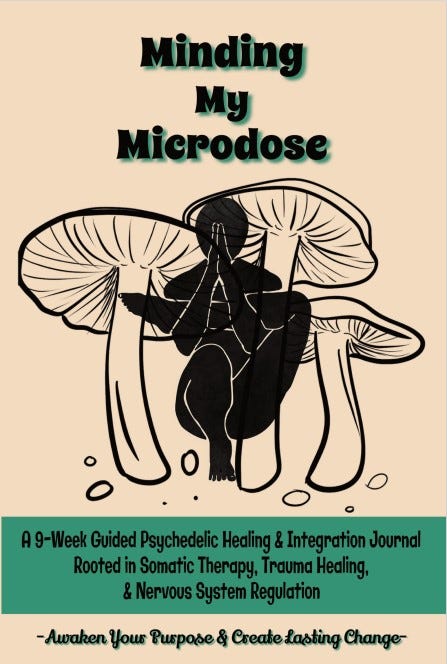
If you are microdosing and want more structure, support, and body-based reflection during your integration process, this is exactly why I created Minding My Microdose.
Minding My Microdose is a 9-week guided microdosing journal designed to help you slow down, listen to your body, and notice the subtle shifts that often happen during integration.
It gives you space to track the emotional patterns, nervous system cues, body sensations, insights, resistance, and tiny signs of healing that are easy to miss when life gets busy.
Inside, you will find guided prompts and integration practices that support:
tracking emotional and physical shifts noticing where your body feels open, tense, activated, or tender grounding insights through reflection and gentle action connecting microdosing with somatic awareness turning psychedelic insight into real, embodied change
Microdosing is not just about what you notice in your mind.
It is also about what your body is finally ready to release, receive, and become.
If you want a gentle, structured way to track your microdosing journey, deepen your self-awareness, and integrate your insights with more intention, Minding My Microdose was created to walk with you through the process — one dose day, one integration day, and one small embodied shift at a time.
You can find it inside the Shop/Journals section on my website, or you can search Minding My Microdose on Amazon.
Final Thoughts on Somatic Psychedelic Integration
Somatic work is not about doing more.
It is about listening more.
Listening to what your body wants to release. Listening to what it is ready to receive. Listening to what feels safe, nourishing, and true.
Psychedelics may open the door.
Somatic practices help you walk through it.
And you do not have to rush.
Your healing is allowed to be soft. Your integration is allowed to be slow. Your body is allowed to take the time it needs.
Thank you for reading. If this supported you, follow Hopeful Ink for more reflections on psychedelic integration, microdosing, nervous system healing, somatic practices, and guided journaling for emotional growth.

메타데이터
- post_id
- c2639ffaa2bd
- slug
- somatic-practices-for-psychedelic-integration-4-body-based-ways-to-make-insights-stick-c2639ffaa2bd
- url
- https://medium.com/@hopefulink/somatic-practices-for-psychedelic-integration-4-body-based-ways-to-make-insights-stick-c2639ffaa2bd
- canonical_url
- https://medium.com/@hopefulink/somatic-practices-for-psychedelic-integration-4-body-based-ways-to-make-insights-stick-c2639ffaa2bd
- author_url
- https://medium.com/@hopefulink
- status
- ok
- fetched_at
- 2026-07-16 07:43:41