Games & Strategies to Teach Tricky Topics in K-5 Math
Featuring John SanGiovanni, M.Ed.
Games & Strategies to Teach Tricky Topics in K-5 Math
Featuring John SanGiovanni, M.Ed.
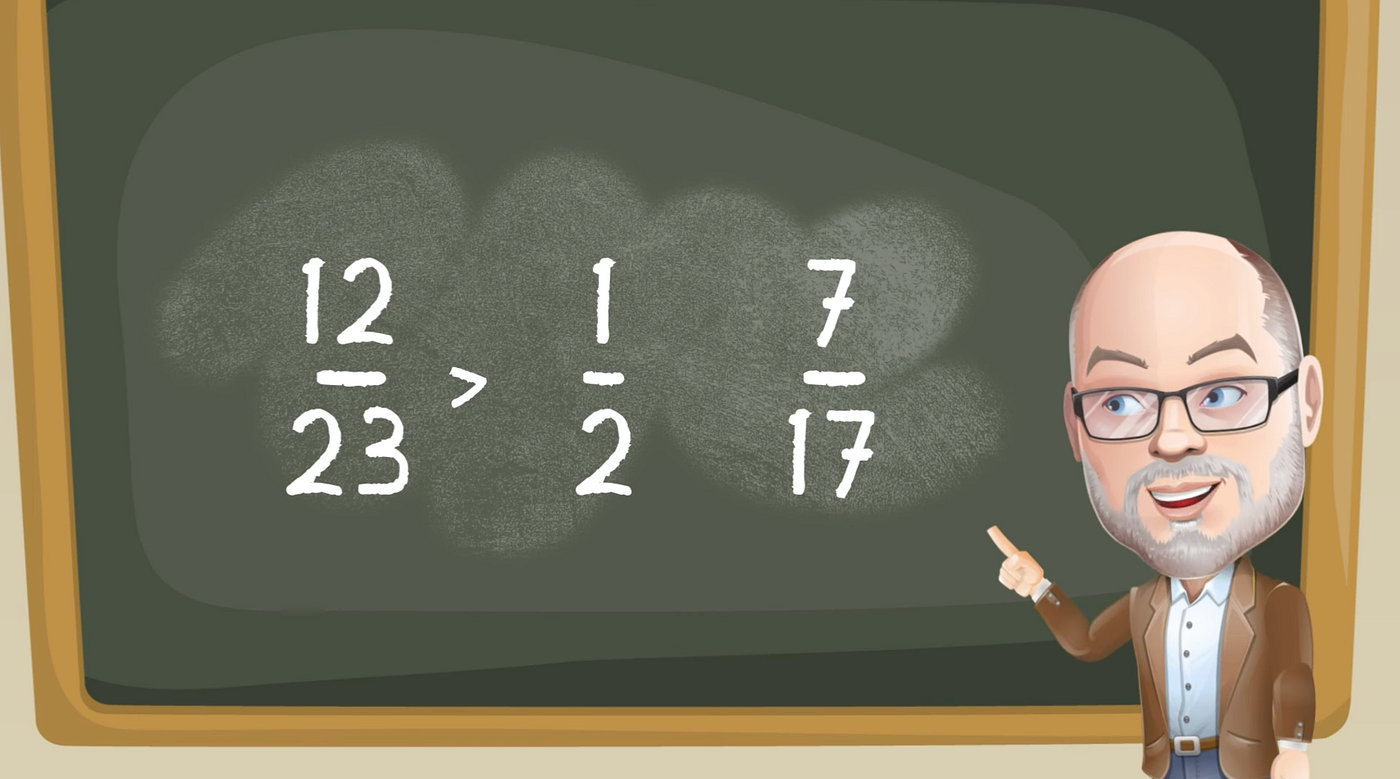
When *Reveal Math* author and math education expert John SanGiovanni set out to create some resources for math teachers, he began by making a list. He selected topics based on what he has observed and heard from teachers on the areas where their students struggle — and where they need support with instruction. He also considered how teachers like to teach and students like to learn — games, of course, being a long-time favorite in any classroom.
The result of his listening, expertise, and creativity is this animated video series: a unique set of instructional materials that focus on mathematical strategies, providing educators and learners with tools to enhance understanding of key concepts.
Check the videos out and share them with colleagues:
Comparing Fractions
[embed]Comparing Fractions Video with John SanGiovanni
You probably know that you can find common denominators to compare fractions. But you might not realize that it isn’t the only way — and isn’t even always the best way — to compare fractions.
In this video, John SanGiovanni demonstrates unique strategies to compare fractions effectively, rooted in understanding fractions and some “good old-fashioned thinking.”
He models fraction comparison methods such as using benchmark relationships, using visual models, using common numerators (yes, it’s possible!), and converting fractions to decimals.
[embed]Comparing Fractions Game Video
John also created a game to practice comparing fractions. All you need to play is a deck of cards! The goal of the game is to win as many cards as possible. Before you play, remove the face cards but keep the aces (they’ll represent 1s). To start, each player draws 2 cards to make a fraction (the smaller number on the cards drawn must always be the numerator). The player with the larger fraction gets all four cards…. if they can explain why their fraction is larger, and how they know! In the video, John explains variations of gameplay you can try in the classroom or at home.
Partial Sums
Have you ever wondered how some people add numbers so quickly in their heads? Sometimes it seems like they can just take apart some numbers, do some magic, and then, poof! They have a sum.
In a way, that is what they’re doing — at least, they are taking numbers apart. It’s a strategy called partial sums, and it works with fractions and decimals, too. You break the numbers you’re adding (called the “add-ins”) into parts and add the parts of the add-ins, and put it all back together again.
John models it here:
[embed]Partial Sums Video
Compensation
Adding fluently means adding accurately, efficiently, and flexibly. Efficiency means that computation is done without a lot of effort — and if you have a few go-to strategies, you can be more flexible and learn to choose the right strategy for the problem you’re trying to solve.
Compensation can be a go-to strategy for students. It involves making numbers friendlier to work with. All we need to do is change one or both numbers to make them friendlier, add the friendly numbers, and finally compensate for the changes we made.
John breaks it down here:
[embed]Compensation Video
Adding Game: So Close!
Ready for a great addition game? This math game is called So Close! The goal is to create a problem that yields a sum as close as possible to the target. To play, you’ll need a deck of playing cards. Remove the face cards but keep the aces — those will represent 1s. Players flip over 4 cards to make 2 2-digit add-ins. Then, both players find the sum, which is the target for that round. Next, each player gets 4 cards. They can move the digits on their cards around to get as close to the target sum as possible. The closest sum wins.
John breaks it down with examples here:
[embed]Addition Game Video
Check out the full playlist:
[embed]
And read more from John SanGiovanni:
[embed]Math Ability Isn’t About Intuition — It’s About Opportunity By John SanGiovanni, M.Ed.medium.com
메타데이터
- post_id
- c28f2eb2e487
- slug
- games-strategies-to-teach-tricky-topics-in-k-5-math-c28f2eb2e487
- url
- https://medium.com/inspired-ideas-prek-12/games-strategies-to-teach-tricky-topics-in-k-5-math-c28f2eb2e487
- canonical_url
- https://medium.com/inspired-ideas-prek-12/games-strategies-to-teach-tricky-topics-in-k-5-math-c28f2eb2e487
- author_url
- https://medium.com/@mheducation
- status
- ok
- fetched_at
- 2026-06-24 11:06:28