The Voice Inside: How Your Self-Talk Builds (or Breaks) Your Future Self
If you are like anyone else — you speak with yourself, positive or negative, it matters a lot.
The Voice Inside: How Your Self-Talk Builds (or Breaks) Your Future Self

If you are like anyone else — you speak with yourself, positive or negative, it matters a lot.
Lena is 22 years old; she is intelligent and bright. Today she has a statistics exam.
She has been studying for three days. Notes are tossed all over her desk, everything is fuzzy. And while her pen is running out of ink, her brain feels overloaded with information.
She takes a little break and then comes back to her desk, opening the textbook.
And it happens again –
A quiet voice inside her saying: “I can’t remember anything anymore.”
Then again: “I keep forgetting everything.”
Again: “Why did I choose this major?” — “I will fail 100%.”
Lena closes the book. Opens it again, blankly looking at pages. Her brain is not working. She stares at pages, remembering nothing.
What’s actually happening inside her brain?
It’s not laziness, nor stupidity.
FEAR.
Every time Lena says to herself “I can’t do it”, her brain hears a threat.
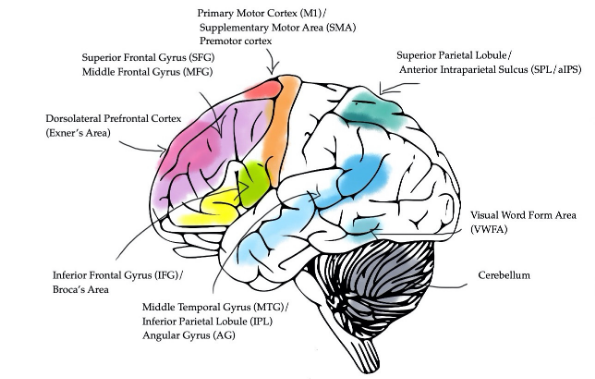
The amygdala — a small almond-shaped part of the brain responsible for alarm — turns on. Her heart starts beating fast, and her cortisol spikes.
When the amygdala turns on — the prefrontal cortex (the logical part of the brain) shuts down.
Now she just sits there. Lena looks like she is studying and she wants to, but her brain is overriding modes and is in survival mode.
She is proving herself right. Every time she says a negative sentence, it becomes a self-fulfilling prophecy.
Technique to solve this problem
Next time that happens:
Lena stops. She puts down the pen. Closes her eyes.
She remembers one simple rule she read somewhere: “You cannot believe everything you think.”
So, she does this:
Step 1 — Become aware She notices the negative voice. Not “stop it”. Not “fight it”. Just notices it. “Ah, there it is. I just told myself I will fail.”
Step 2 — Ask a question “Is this thought useful?” Not “is it true”. True or false doesn’t matter. The only question is: does this sentence help me move forward?
The answer is no. It blocks me from focusing. “I will fail” does not help me open the book and learn.
Step 3 — Swap the sentence with a realistic positive one She doesn’t force positivity. She forces usefulness.
She replaces “I will fail” with:
“I don’t know if I will pass. But I can open the book for five minutes and try.”
That’s it. One sentence swap.
She opens the book. Just the titles. Nothing more.
One minute passes. Then another. Her brain notices: no danger. The amygdala calms down. Dopamine rises, and she can focus again.
One hour later — she solves a problem that looked impossible yesterday.
Why negative self-talk is worse than you think
Here’s what most people get wrong.
They think negative self-talk is bad because it makes you feel bad today.
That’s true. But that’s not the real issue.
The real damage happens on a long scale.
When Lena tells herself “I can’t do this” for one day — she fails one exam. Annoying, but fixable.
But when someone tells themselves “I’m not the kind of person who succeeds” for ten years — they will never be able to succeed.
It’s a long-run game. If you keep telling yourself for 10 years “I can’t” — you will never be able to.
But the person who says “I can” for 1 year? They are already working for 9 years.
While the person with a lot of negative self-talk and negative self-image gets stuck in their head. Programming themselves deeper and deeper for failure.
Final question
So, ask yourself today:
Who is my inner voice designing me to become?
Because that voice is not just talking.
It’s building.
And one day — you will wake up and realize: the sentences won. They became you.
The only question is — which sentences?
메타데이터
- post_id
- c291583fa9b2
- slug
- the-voice-inside-how-your-self-talk-builds-or-breaks-your-future-self-c291583fa9b2
- url
- https://medium.com/@madafakaedi/the-voice-inside-how-your-self-talk-builds-or-breaks-your-future-self-c291583fa9b2
- canonical_url
- https://medium.com/@madafakaedi/the-voice-inside-how-your-self-talk-builds-or-breaks-your-future-self-c291583fa9b2
- author_url
- https://medium.com/@madafakaedi
- status
- ok
- fetched_at
- 2026-06-09 15:37:30