The 48-Hour Rose: Inside the Aalsmeer Machine
Located in the Netherlands, the Aalsmeer Flower Auction stands as the world’s premier hub for the floral trade. Every day, millions of…
The 48-Hour Rose: Inside the Aalsmeer Machine
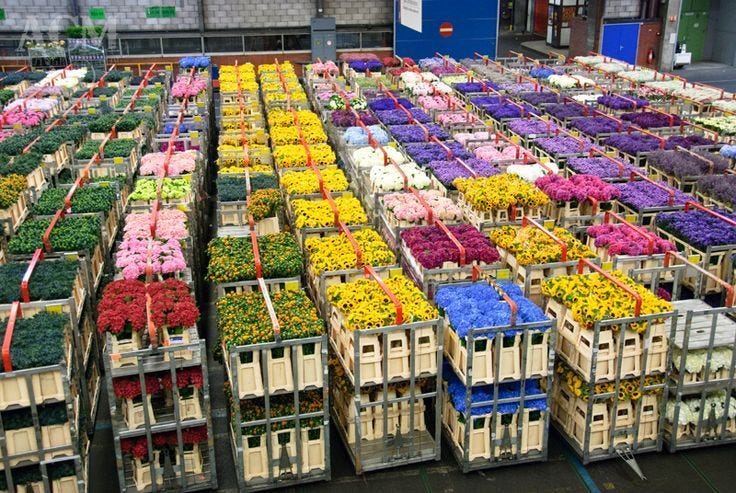
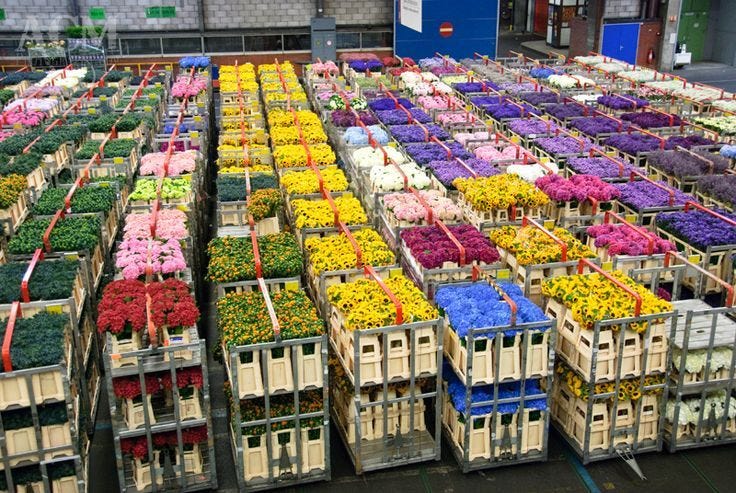
Located in the Netherlands, the Aalsmeer Flower Auction stands as the world’s premier hub for the floral trade. Every day, millions of blooms pass through its halls, with roses serving as the undisputed centerpiece of these international exchanges. Sitting at the intersection of high-stakes logistics, digital auctions, and the global economy, this article breaks down the complex systems that turn delicate, perishable flowers into highly organized, worldwide trade flows. From cutting-edge technological innovations to precision time management and supply chain mastery, Aalsmeer is the ultimate embodiment of the challenges and triumphs within today’s globalized market for the living.
The paradox of the 48-hour rose
Imagine a **rose**, picked at dawn on the high plateaus of Kenya. It is fresh, still beaded with dew, embedded in the slow rhythm of biological cycles. Yet the very moment its stem is cut, another logic takes hold: urgency. Its death is no longer merely a natural process; it becomes an economic constraint. Time ceases to be neutral-it becomes a hostile variable.
For this rose to appear, intact, in a vase in Paris or Tokyo forty-eight hours later, it is not enough to transport it. Its aging must be suspended, distances compressed, infrastructures spread across several continents synchronized. What is at stake goes beyond logistics: it is an attempt to master time itself.
This is where a fundamental desynchronization sets in. Nature operates in cycles; the economy, in flows. One tolerates waiting, the other erases it. Between the two, Aalsmeer acts as a temporal converter: a device capable of translating a biological rhythm into an industrial cadence.
In this context, the cut flower becomes a paradoxical object. Both a symbol of instantaneity and a product under constant pressure. Unlike wine or cheese, it gains nothing from aging. It is condemned to be sold quickly or lose all value. It thus constitutes a limiting case: an asset whose depreciation is programmed from the moment it enters the market.
Aalsmeer emerges as the response to this radical constraint. It is not merely a market, but an infrastructure designed to organize urgency. From the very entrance, the impression is clear: one does not contemplate flowers, one observes flows. The aesthetic gaze gives way to a logic of circulation.From this first threshold, one idea becomes unavoidable: the flower is no longer simply a natural object turned commodity. It is a unit of compressed time.
Article overview
- The Time Paradox: How the economy compresses the rose’s biological clock.
- Legacy of the Canals: From historical speculation to global centralization.
- Engineering Dormancy: The secrets of cold-chain architecture and putting life on pause.
- The Petal Exchange: A deep dive into the algorithm of reverse auctions.
- The Sensory Interface: When logistical data transforms back into a symbol of emotion.
The Geopolitics of the Petal: Historical Legacy and Global Organization
This ability to organize urgency did not emerge overnight. It is rooted in a long history, in which the Netherlands learned to turn vulnerability into strategic advantage.
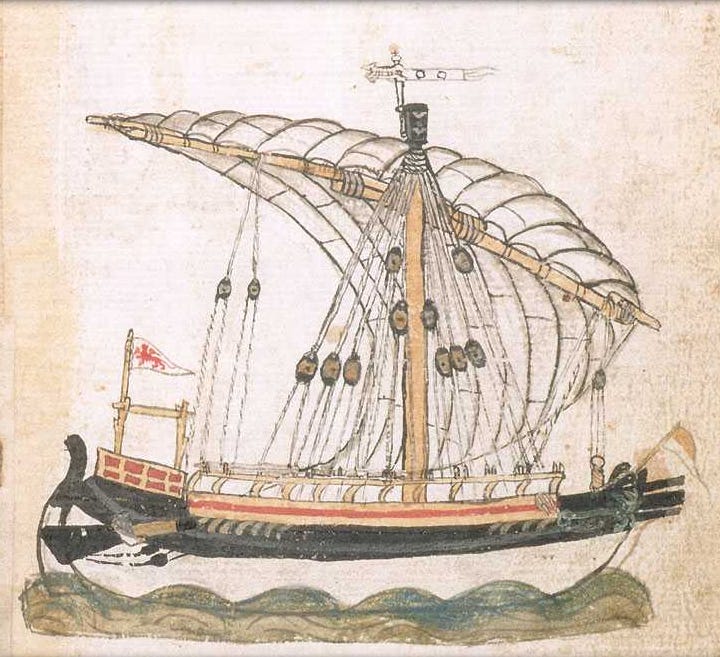
The episode of tulip mania, often reduced to a speculative curiosity, in fact played a foundational role. It revealed that a flower could concentrate complex economic logics: desire, scarcity, anticipation. But it also highlighted the risks of an unregulated market. The Dutch response was not withdrawal, but organization.
Gradually, a body of know-how took shape: structuring exchanges, standardizing lots, streamlining transactions. Canals, far more than simple transport routes, became the first arteries of this floral economy. They established a spatial continuity that foreshadows today’s digital continuity.
From then on, Aalsmeer is no longer understood as a place, but as a point of convergence. Its strength lies not in its geographic position, but in its capacity for centralization.
At the same time,
read more on my blog : The 48-Hour Rose: Inside the Aalsmeer Machine
Originally published at https://petalesdhistoire.com on April 14, 2026.
메타데이터
- post_id
- c29d8a15a95f
- slug
- the-48-hour-rose-inside-the-aalsmeer-machine-c29d8a15a95f
- url
- https://medium.com/@petalesdhistoire/the-48-hour-rose-inside-the-aalsmeer-machine-c29d8a15a95f
- canonical_url
- https://medium.com/@petalesdhistoire/the-48-hour-rose-inside-the-aalsmeer-machine-c29d8a15a95f
- author_url
- https://medium.com/@petalesdhistoire
- status
- ok
- fetched_at
- 2026-07-10 18:03:05