How Advids Integrates AI Without Losing the Human Touch in Video Production
Somewhere around late 2023, I started getting the same question at every industry event, every client dinner, every casual conversation…

Advids video production accelerated with AI
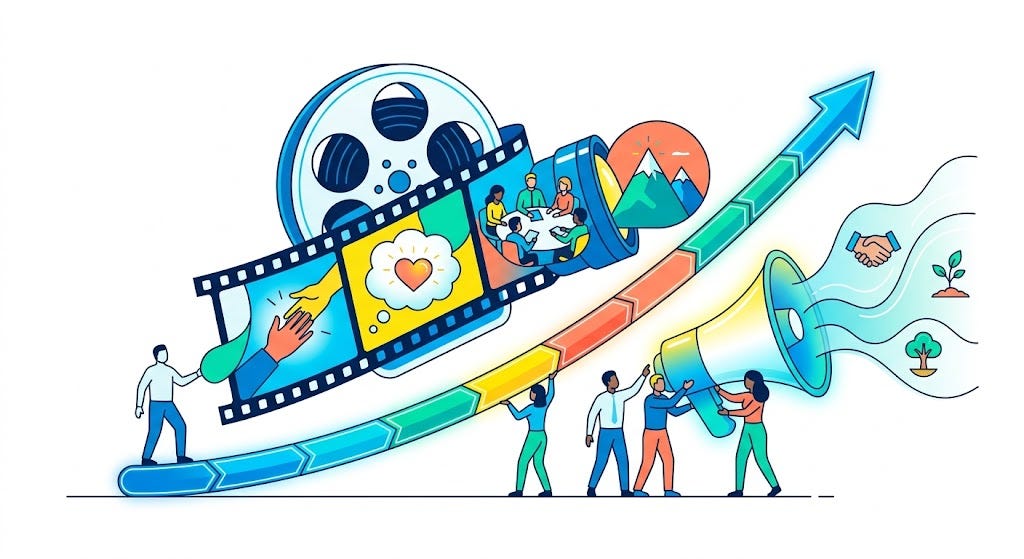
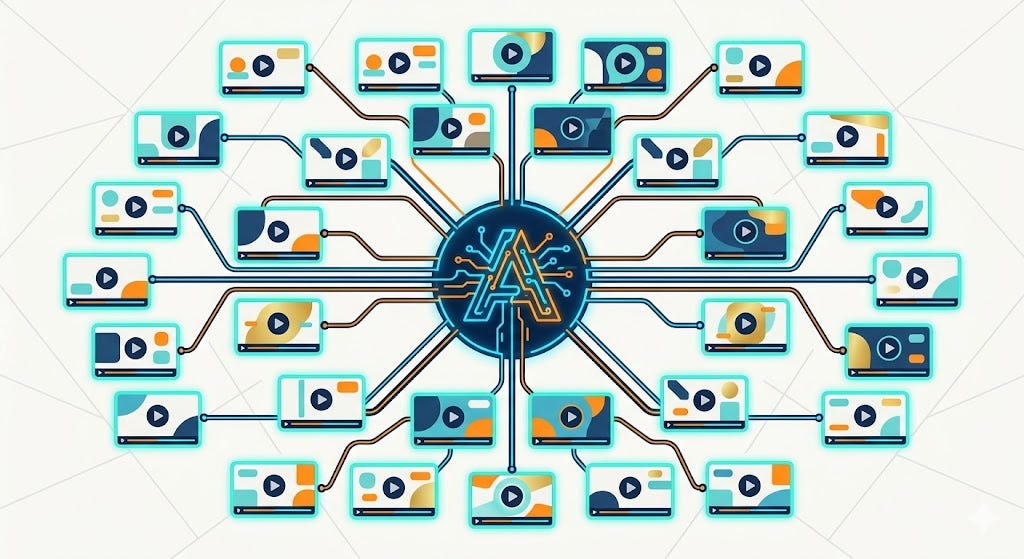
How Advids Integrates AI Without Losing the Human Touch in Video Production
Somewhere around late 2023, I started getting the same question at every industry event, every client dinner, every casual conversation with a founder who had just read yet another article about AI replacing creative workers.
“Are you worried?”
My honest answer, every single time, was no. Not because I was naive about what was happening. Not because I had buried my head in the sand and decided to deal with it later. But because I had already spent six months watching our team at Advids integrate AI tools into our production workflow and seeing something that the worried headlines were completely missing.
AI was not replacing the humans. It was revealing which parts of the humans were irreplaceable.
That distinction, obvious in retrospect and genuinely surprising when you first see it, is the foundation of everything Advids has built around AI integration. And I want to take you through it carefully, because I think it contains something useful for any creative company trying to figure out how to move forward intelligently in a world where the tools are changing faster than most people are comfortable with.
The Question We Asked Before We Touched a Single AI Tool
Before Advids integrated a single AI tool into production, we asked ourselves a question that I think is the most important question any creative company can ask in this moment.
Not “what can AI do?” Not “how much can AI save us?” Not even “how do our competitors use AI?” The question we asked was: “What is the thing our clients are actually paying for when they come to Advids?”
We spent two weeks with our senior team answering this question as honestly as we could. And what emerged was a clarity that has shaped every AI decision we have made since.
Clients come to Advids for three things. They come for strategic insight: the ability to understand their audience, their objectives, and their competitive context well enough to know what a video needs to do before a single frame is considered. They come for creative judgment: the accumulated taste, experience, and human intuition that knows when something is working and, more importantly, why. And they come for the relationship: the trust, the transparency, the collaborative energy that makes working on a creative project feel genuinely enjoyable rather than stressful.
Not one of those three things is something AI can deliver. All three require human beings who are curious, experienced, emotionally intelligent, and genuinely invested in the client’s success.
What AI can do is handle the mechanical, the repetitive, the computationally intensive work that used to consume large amounts of human time without producing much human value. And once we understood that distinction clearly, the integration question became a lot simpler. We use AI wherever it frees our humans to do more of what only humans can do.
That is the whole framework. Everything else is implementation.
Where AI Actually Lives in the Advids Production Workflow
Let me be specific, because vague claims about “leveraging AI” are one of the least useful phrases in the current creative industry vocabulary and I refuse to add to the pile.
Here is exactly where AI lives in our production process at Advids, and what it is doing in each place.
Research and Competitive Intelligence
Before a single creative decision is made on a new project, our Strategic team needs to understand the client’s competitive landscape, their audience’s content consumption habits, and the visual and narrative conventions of their industry category. This research used to take days. With AI-assisted tools integrated into our Strategic Foundation process, it takes hours, and it is more comprehensive than what was possible manually.
The AI does the gathering. Our strategists do the interpreting. The insight that ends up shaping the creative brief is always human-generated, built on top of a richer information foundation than we could have assembled efficiently before.
Script Development and Iteration
Our writers use AI as a brainstorming partner during the early stages of script development. Not to write the script. To generate options, explore directions, stress-test angles, and surface approaches that might not have emerged from a single human brain working in isolation.
The analogy I use internally is that AI is like having a very fast, very well-read research assistant who can generate twenty rough directions in the time it would take a writer to develop three. The writer’s job is not diminished. The writer’s job is actually elevated, because they are now choosing between twenty options rather than developing three in a vacuum. Their judgment, their taste, their understanding of the client’s voice, those things become more important, not less, when there are more options to evaluate.
Every script that leaves Advids was written by a human being. AI helped that human being think more broadly before they committed to a direction.
Visual Reference and Mood Board Generation
In the early stages of creative development, our Art Directors use AI image generation tools to rapidly prototype visual directions and mood concepts. This has compressed the visual development phase significantly and, more importantly, it has given clients a much richer set of creative options to respond to before any expensive production work begins.
The Art Director’s job in this process is curatorial and directorial. They are deciding which AI-generated directions are worth exploring, pushing them toward the client’s aesthetic context, and making the creative calls that turn a rough visual direction into a coherent visual language. The taste, the judgment, the understanding of what will resonate with a specific audience, that is all human. The speed of exploration is AI.
Animation Assist and Motion Efficiency
For certain categories of animation work, particularly repetitive motion tasks and technical rendering processes, our animation team uses AI-assisted tools that compress timelines without compromising the quality of the output. A motion design sequence that previously required two days of rendering time now renders overnight. That is not a creative change. It is an operational one, and it means our animators spend more of their time on the creative decisions that actually require their expertise.
Quality Control and Consistency Checking
Across long-form projects or multi-video campaigns, maintaining visual and narrative consistency is a genuine operational challenge. We use AI-assisted review tools to flag inconsistencies in brand colours, typography, pacing patterns, and audio levels across large volumes of content. Our editors review and make final calls on every flag. The AI does not make creative decisions. It makes sure we do not accidentally miss something mechanical when we are deep in the creative flow.
The Human Layer That AI Will Never Touch
Now I want to talk about the things that have not changed at all since we started integrating AI, because I think this is the part of the story that matters most.
The Narrative Mapping session at the start of every project, where our Creative Strategists sit with a client and listen for the human truth underneath the product brief, that is entirely human. You cannot prompt your way to genuine curiosity. You cannot automate the quality of listening that turns a client’s stumbling attempt to describe their customer’s experience into a story that moves people.
The Feedback Translation Layer, where our team receives creative feedback that is often emotional and imprecise and translates it into production-ready direction without losing what the client was actually trying to say, that is entirely human. Understanding what someone means when they say “it feels a bit corporate” requires emotional intelligence and contextual awareness that no current AI system can replicate.
The Milestone Celebration Practice, where a team member takes the time to write a personal, specific, genuine note about what made a particular moment in the project special, that is entirely human. And it matters to clients in a way that a generated message never could, because clients can feel the difference.
The Creative Partnership Lead relationship, the ongoing human connection that turns a transaction into a partnership, that is entirely human. The Wednesday afternoon Slack message that says “just wanted to say hello” goes both ways. Nobody sends that message to an algorithm.
And the creative judgment that decides, in the final edit, that the version which is technically correct is not the version that will actually move a viewer, that is entirely human. It is the most valuable thing we produce at Advids, and it is the thing that AI integration was designed to protect and amplify, not replace.
What Our Clients Actually Notice
I want to tell you what our clients say when they ask about AI, because the response has surprised me.
Most of them do not ask. And the ones who do ask are almost never worried about the question they appear to be asking.
When a client asks “do you use AI?” what they are really asking is “do you still care?” They are asking whether the video we make for them will be generic or specific. Whether the creative thinking behind it will be genuine or automated. Whether the relationship they are investing in is with humans who are paying attention to their particular situation or with a system that is processing their brief the same way it processes everyone else’s.
Our answer is always the same, and it is always completely honest. Yes, we use AI tools, in specific parts of our workflow, to do specific things faster and better than we could do manually. And the creative strategy, the human storytelling, the genuine relationship, the judgment that makes your video yours and not anyone else’s, that is entirely, irreducibly human.
Every client who has heard this answer has felt relieved. Not because they are anti-technology. But because what they came to Advids for was never technology. It was people who would care about their project the way they care about it.
We have those people. AI makes those people more effective. That is the whole story.
The Internal Culture Question: Bringing Our Team Along
I want to be honest about something that does not get discussed enough in the AI integration conversation, which is what it feels like for the humans on the creative team when the tools around them start changing rapidly.
At Advids, we made a deliberate decision early in our AI integration journey to bring the team into the process completely rather than rolling out changes and asking everyone to adapt. We created what we call AI Integration Circles: small, cross-functional groups of team members from different disciplines who would explore new tools together, share what they found, and collectively decide what belonged in our workflow and what did not.
The AI Integration Circles did something important. They turned a potentially anxiety-inducing shift into a shared creative adventure. Our animators were not told “here is a new tool, use it now.” They were invited to play with new tools, report back on what was interesting, and participate in the decision about whether and how it changed their process.
The result was a team that feels ownership over our AI integration rather than displacement by it. Our Creative Directors have strong opinions about which AI tools serve creative quality and which ones produce a homogenized aesthetic they will not put their names on. Our writers have developed clear personal frameworks for how they use AI in brainstorming versus how they protect their voice in the drafting stage. Our strategists have built AI-assisted research workflows that they designed themselves and are genuinely proud of.
This ownership matters enormously. Because the risk of AI integration in a creative company is not that the AI produces bad work. It is that the humans stop bringing their full creative selves to the work because they feel the tools have reduced their role. We have not let that happen. Our team is more engaged, more curious, and more creatively ambitious than at any point in Advids’ history, precisely because they feel their human contribution is valued and protected even as the tools around them evolve.
The Clients Who Have Noticed Something Different
I want to share something that has happened several times in the past year that I find genuinely moving.
Clients who have worked with Advids across a multi-year period have mentioned, unprompted, that the quality of our creative output has increased noticeably over the past eighteen months. Not the production speed, although that has improved. The creative quality. The specificity and originality of the ideas. The depth of strategic thinking in the brief. The emotional resonance of the finished work.
This is AI integration working exactly as it is supposed to. Not as a replacement for human creativity but as an amplifier of it. Our humans are spending more of their time on the things that require humans, because AI is handling the things that do not. The result is creative work that is more distinctly human, not less.
One client, a founder in the SaaS space who has made eleven videos with us over three years, said something in a recent conversation that I keep returning to. “I cannot explain what it is,” she said, “but the work keeps getting better in a way that feels like you are getting to know us more deeply over time. Like you understand something about how we see the world that you could not have known when we first started.”
She was describing the compound effect of a deepening human relationship, informed and supported by smarter, faster tools. She was describing exactly what we built AI integration to produce.
I did not explain any of this to her. I just said thank you, and meant it completely.
Where We Are Going: AI as Creative Infrastructure
Looking ahead, the role AI will play at Advids is infrastructure rather than surface. The tools will become more capable, more integrated, more invisible. The creative decisions, the human relationships, the strategic judgment, the emotional intelligence, those will become more prominent, more valued, and more distinctly ours.
The future of video production for companies like Advids is not human versus AI. It is humans made more fully human by AI that handles everything that was never human work to begin with.
We are building toward a version of Advids where every person on our team, across our global community of over 1,200 creators, spends their working hours doing the things that only they can do. The things that require experience and taste and curiosity and care. The things that produce work that is specific and surprising and genuinely moving.
AI will handle the rest. And the rest, it turns out, was never the interesting part anyway.
The interesting part is and has always been the conversation between a creative team that is paying close attention and a client who has something important to say to the world. Everything else is just getting the room ready.
We are very good at getting the room ready.
And we are even better at what happens once everyone is in it.
Avilash Behera is the Co-Founder of Advids, one of the world’s most globally distributed and creatively rigorous video production companies. With a team of over 1,200 specialized creators, a track record of 700+ five-star Google reviews, and an AI integration philosophy built around amplifying human creativity rather than replacing it, Advids produces video content that is faster, smarter, and more distinctly human than ever before. Learn more at advids.co
메타데이터
- post_id
- c2b583fb2497
- slug
- how-advids-integrates-ai-without-losing-the-human-touch-in-video-production-c2b583fb2497
- url
- https://medium.com/@avilash_advids_founder/how-advids-integrates-ai-without-losing-the-human-touch-in-video-production-c2b583fb2497
- canonical_url
- https://medium.com/@avilash_advids_founder/how-advids-integrates-ai-without-losing-the-human-touch-in-video-production-c2b583fb2497
- author_url
- https://medium.com/@avilash_advids_founder
- status
- ok
- fetched_at
- 2026-07-10 11:40:45