Opay: How a Fintech App Became The Bank Nigeria Never Had
The intricacies of financial inclusion
Opay: How a Fintech App Became The Bank Nigeria Never Had
The intricacies of financial inclusion
Picture credit: Pinterest
It was 2025, and I was an NYSC corps member living in Osogbo, a city that quickly exposed me to the reality of what a language barrier could truly feel like. On this particular afternoon, I stood, anxious, in front of a market trader after making an OPay transaction that had not reflected on her end, having bought a substantial amount of goods, most of which could not be returned I stood there, a reversal ticket raised, but with very little hope, because if you have ever waited for a traditional bank to reverse a failed transaction, you already know that feeling. Imagine my shock when the reversal came through within the hour. That was the day I fell in love with OPay after using it for about 5 years.
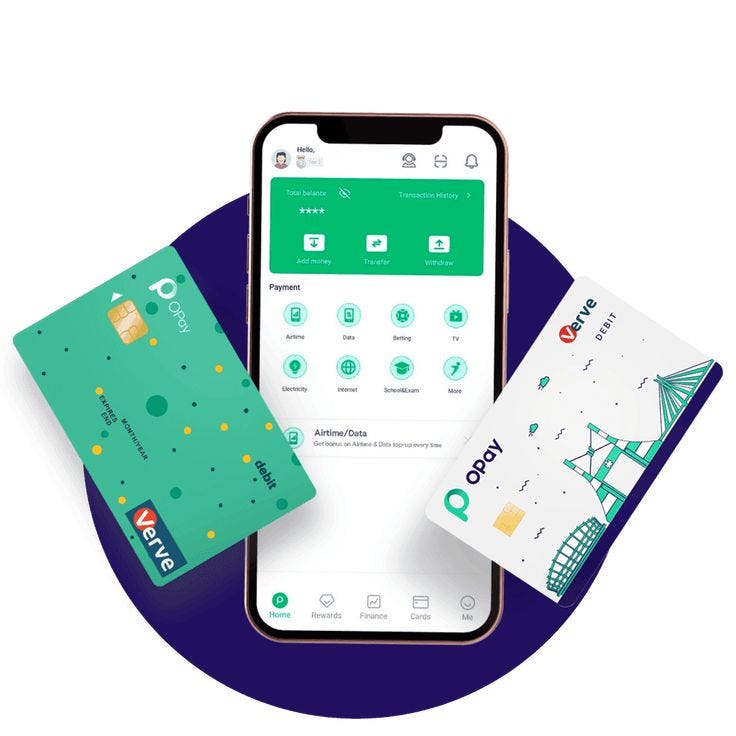
OPay is a fintech app driving Nigeria’s push for financial inclusion, built for anyone who needs seamless daily transactions without the stress of traditional banking. It has become a staple for the people who need it most, the career professional transferring money to his Bolt rider without reaching for cash, the foodstuff seller in the market who can now receive payments instantly on her phone. OPay’s reach continues to grow because it didn’t just create a new app, it replaced the most frustrating parts of banking with something that actually works for everyday Nigerians.
Picture a public transport driver in Lagos during the height of COVID-19. Markets were shuttered, movement was restricted, and handling physical cash had become a genuine health risk. Yet people still needed to move, and he still needed to earn. With OPay on his phone, he collected bus fares digitally, no cash exchanged, no counting change, no risk. He was not a banker’s idea of a customer. He had no formal employment, no salary history, no collateral. But OPay didn’t ask for any of that. It met him exactly where he was, on the road, on his phone, trying to survive. That is the user OPay was built for.
Before OPay launched, nearly 40% of Nigerian adults were completely unbanked. Traditional banks only served urban, wealthy, formal-sector workers, and the barriers to entry were steep: lengthy documentation, minimum balance requirements, and monthly maintenance fees that low-income earners simply could not afford. Withdrawing cash often meant travelling hours to the nearest bank branch. Sending money to family was slow and expensive. Accepting digital payments as a small business owner was almost impossible. Market traders, Okada riders, artisans, and rural communities, the true backbone of Nigeria’s economy relied entirely on cash and lived completely outside the financial system. OPay entered that gap and gave the excluded a genuine alternative.
Three Features That Show Smart Product Thinking
Feature 1: Reliability and Speed of Transactions
OPay’s transaction system is highly reliable and fast. It rarely experiences network issues, unlike traditional banks that frequently freeze, hang, or refuse to work during critical times.
The founders built OPay with this reliability because they knew everyday Nigerians, especially low-income users like market traders and transport workers who couldn’t afford to have transactions fail when they needed to send money to family, pay for goods, or receive payments from customers. Frequent failures would destroy trust and push users back to cash. The system was designed with robust infrastructure to handle high transaction volumes without downtime.
Users can send money, pay bills, or accept payments instantly, 24/7, without worrying about the app freezing or transactions failing. This reliability means an Okada rider can send money to their village immediately after earning, a market trader can pay a supplier without delay, and anyone can trust that their money will move when they need it to.
PM Lesson: Make your core function’s success rate your north star metric. If the one thing your product is supposed to do fails regularly, no amount of beautiful design or extra features will save it. Build for resilience first.
Feature 2: Simple and Accessible User Interface
OPay’s app is easy to navigate. The interface is simple, clean, and intuitive even for users who aren’t tech-savvy or who have never used a banking app before.
OPay was built for low-income and underserved Nigerians, many of whom have limited digital literacy, use basic phones, and may not have formal education. The founders knew that if the app felt complicated or required training, these users would abandon it. Simplicity was essential to reach mass adoption across rural and urban users alike.
A 50-year-old market trader in a rural village can open OPay, find the “Transfer” button, and complete a transaction without asking for help. No confusion, no frustration, no need to call customer support. The app works for everyone from teenagers to elderly users, from tech experts to first-time smartphone users.
PM Lesson: Design for your least experienced user, not your most tech-savvy one. If a first-time user can complete their first action without guidance, your product is ready for scale.
Feature 3: Built-in Savings and Loan Structure
Through OWealth, OPay allows users to save money and earn daily interest. Loans are also available based on a user’s transaction history — no documentation, no collateral, no bank visit required.
Traditional banks locked low-income users out of savings and credit products through impossible requirements. OPay’s founders recognized that the same traders and artisans banks rejected had real financial behaviour they earned, spent, and saved daily. By using that transaction history to assess creditworthiness, OPay extended financial products to people who had never had access to them before.
A street vendor can save ₦500 daily and watch it grow automatically. When she needs to buy stock ahead of a busy season, she can access a loan in minutes from the same app she already trusts.
PM Lesson: Use the behavioural data your users already generate to unlock features that rigid systems would otherwise deny them. Trust the history your platform sees.
This is one of those very good and beautiful moments where a particular need is acknowledged and a solution made solves the need down to the t, the testimony is one that would live on the mouths of its users for as long as it runs
Does It Opay Work?
By almost every observable measure, yes. OPay has grown to over 45 million users, processes over $12 billion in payments every month, and has contributed to Nigeria’s formal financial inclusion rate rising from 56% in 2020 to 64% in 2023. But the numbers only tell part of the story. The more telling evidence is behavioural, people who once had perfectly functional bank accounts have quietly made OPay their primary financial tool because it simply works better for their daily lives. When users migrate to your product not out of necessity but out of preference, that is the clearest signal that a product is genuinely delivering on its promise.
OPay’s story is bigger than one app. It is proof that when you build for the people that traditional systems ignored the trader, the driver, the rural grandmother- you do not build a niche product. You build something the whole country reaches for. Nigeria’s financial exclusion rate dropped from 32% to 26% between 2020 and 2023, and fintech platforms like OPay were a primary driver of that shift. Over a million Nigerians now earn their livelihoods as OPay agents, many in communities where no bank branch has ever existed. What OPay demonstrated is that the underserved market is not a charity case; it is the largest, most loyal, and most underestimated market on the continent.
My Verdict
OPay is one of the clearest examples of what happens when a product is built with genuine understanding of its user rather than a generic idea of what a user should be. It is not a perfect product, but it is a purposeful one, and in a country where nearly half the adult population was once locked out of the financial system, purposeful is exactly what was needed. For any product manager studying what it means to build for real people in a real market, OPay is required reading.
메타데이터
- post_id
- c2c55faab0db
- slug
- opay-how-a-fintech-app-became-the-bank-nigeria-never-had-c2c55faab0db
- url
- https://medium.com/@naghajosephine023/opay-how-a-fintech-app-became-the-bank-nigeria-never-had-c2c55faab0db
- canonical_url
- https://medium.com/@naghajosephine023/opay-how-a-fintech-app-became-the-bank-nigeria-never-had-c2c55faab0db
- author_url
- https://medium.com/@naghajosephine023
- status
- ok
- fetched_at
- 2026-06-23 17:05:31



