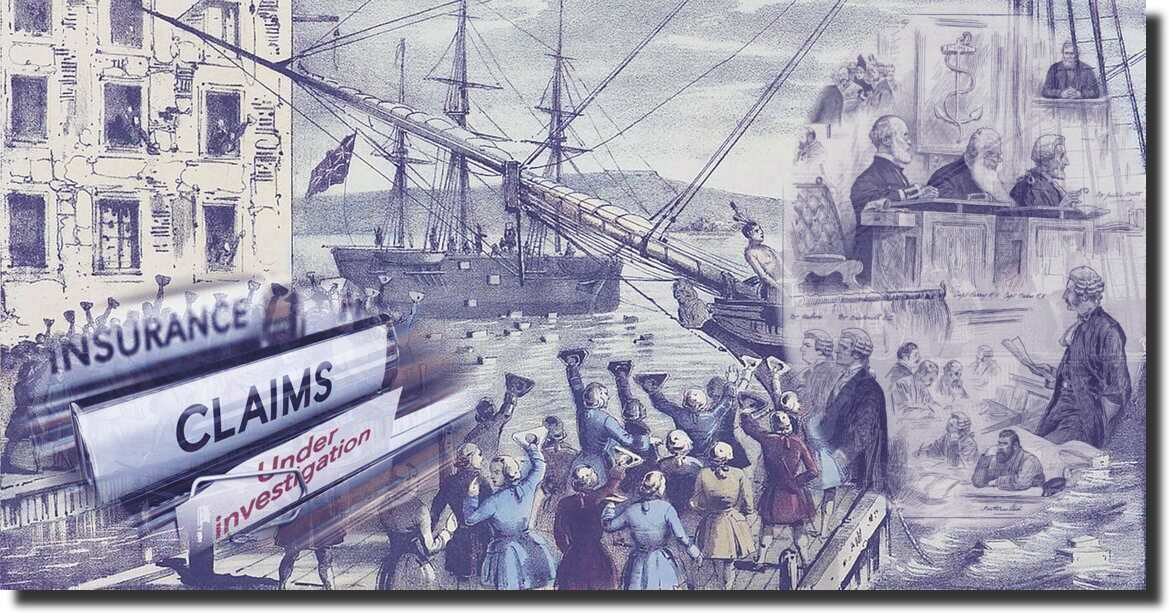
Between Cross and Compass: How the Society of Jesus Encountered the World of Admiralty Law Across…
An Academic / Legal / Historical Inquiry
Between Cross and Compass: How the Society of Jesus Encountered the World of Admiralty Law Across Five Centuries of Naval Power
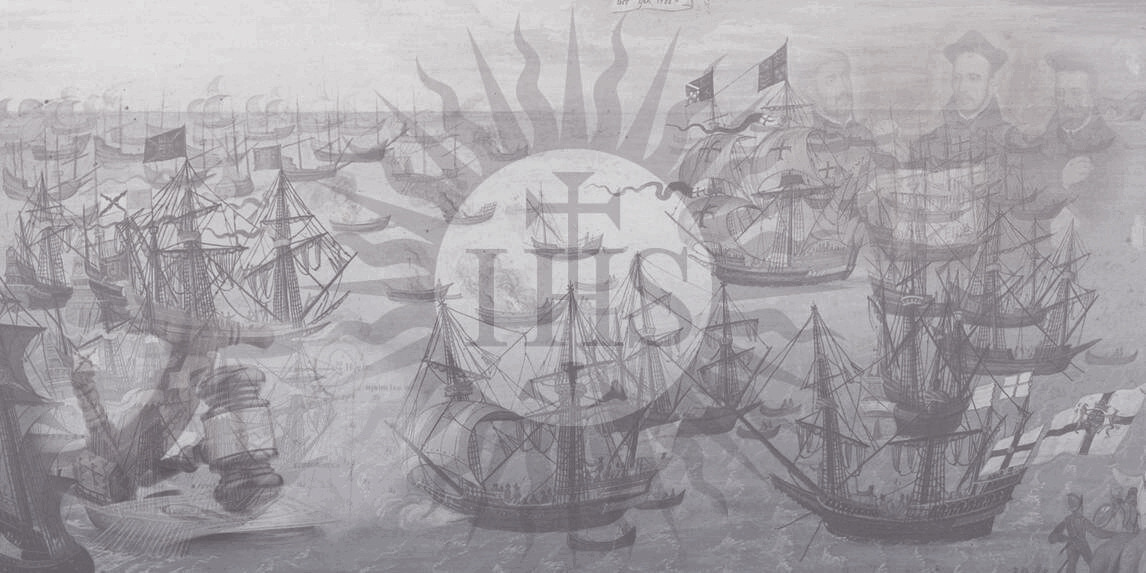
An Academic / Legal / Historical Inquiry
Introduction
Since its foundation in 1540, the Society of Jesus (Jesuits) emerged within a world shaped profoundly by maritime empires, international trade, naval warfare, and the juridical frameworks governing the seas. Admiralty Law — concerned with jurisdiction over maritime commerce, navigation, offenses at sea, and the legal status of ships and sailors — was neither central to Jesuit theology nor a frequent topic of Jesuit treatises. Yet, across five centuries, Jesuits operated in spaces where naval power, maritime law, and missionary strategy intersected.
Although the Jesuit order produced no formal “Admiralty Law school” and authored no systematic works dedicated solely to maritime law, Jesuits nevertheless engaged — directly and indirectly — with the maritime legal regimes of major naval powers. Through missionary reports, legal-theological commentaries, correspondence, moral treatises, and involvement in controversies touching on sovereignty, navigation, slavery, piracy, and global commerce, the Jesuits participated in the intellectual world that maritime law shaped.
This essay explores these intersections through a historical-legal lens, examining how Jesuit activity unfolded alongside the rise of major naval powers from the 16th century to the present and identifying Jesuit-authored material with implications for maritime or naval governance.
The Maritime World of the 16th Century: Jesuit Origins amid Expanding Naval Empires
At the moment of its inception, the Society of Jesus emerged in a world dominated by several naval powers:
- The Spanish Armada
- The Portuguese Navy (Armada da Índia)
- The Venetian and Genoese maritime republics
- The fleets of the Ottoman Empire
The Iberian powers, in particular, exercised significant influence over early Jesuit missions due to the royal patronage systems — the Padroado (Portugal) and the Patronato Real (Spain) — which linked missionary activity to imperial maritime expansion.
These patronage regimes were undergirded by a web of laws regulating:
- jurisdiction over new territories,
- maritime sovereignty,
- the circulation of goods and people,
- naval protection of missionary journeys.
While Jesuits did not formulate admiralty statutes, their correspondence reveals an acute awareness of:
- piracy affecting missionary routes,
- naval quarantine procedures,
- legal constraints governing missionary mobility,
- contractual arrangements for ship passage,
- disputes involving ship captains, colonial administrators, and missionaries.
Jesuit letters from this period (e.g., Monumenta Historica Societatis Iesu) frequently reference maritime hazards and legal constraints encountered en route to Asia, Africa, and the Americas.
The Age of Global Missions and the Rise of Admiralty Regimes (16th–18th Centuries)
Engagement with Iberian Maritime Law
Jesuits travelling to India, Japan, China, Brazil, New France, and Africa routinely navigated the legal frameworks of the Iberian maritime world. Their experience appears in:
- annual letters (litterae annuae),
- mission chronicles,
- correspondence in the Monumenta volumes.
These sources include commentary on:
- impressed sailors and forced labor aboard ships,
- the moral legitimacy of naval warfare,
- the legal treatment of shipwreck survivors,
- rights of native populations encountered via maritime expeditions.
Jesuit Moral Theology and Maritime Legal Questions
Jesuit theologians such as Francisco Suárez, Luis de Molina, Gabriel Vásquez, and Francisco de Vitoria (pre-Jesuit but highly influential) contributed to doctrines central to maritime governance, including:
- just war theory applied to naval conflict,
- sovereignty over non-European maritime zones,
- freedom of the seas vs. exclusive maritime dominion,
- contracts involving sailors, merchants, and insurers,
- moral questions related to the slave trade.
Vitoria, though not a Jesuit, significantly shaped early Jesuit thinking on international and maritime law through his elaboration of:
- ius peregrinandi (right of travel),
- ius communicandi (right of communication).
These concepts later influenced emerging admiralty and international maritime law.
Jesuits and the Sovereign Military Order of Malta
Operating alongside the naval forces of the Sovereign Military Order of Malta, Jesuits occasionally served as chaplains, correspondents, or advisors in contexts shaped by:
- corsair conflict in the Mediterranean,
- Ottoman–Christian naval confrontations,
- issues of piracy, slavery, ransom, and maritime prisoners.
Jesuit sources provide indirect but rich commentary on naval captivity, ransom negotiations, and the legal-moral terrain surrounding privateering.
19th and Early 20th Centuries: Naval Modernization, Suppression, and Restoration of the Jesuit Order
Decline of Pre-modern Maritime Empires
The collapse of the Spanish and Portuguese empires, the disbanding of the Spanish Armada as a world power, and the rise of:
- the Royal Navy,
- the French Marine Nationale,
- the United States Navy,
- the Imperial Japanese Navy
reconfigured global maritime law.
During this period, the Jesuits — restored in 1814 — operated primarily through education, scientific missions, and scholarship. Their direct exposure to naval jurisdiction continued in regions where they served as:
- naval chaplains,
- educators for naval academies,
- scientists participating in naval-sponsored expeditions.
Jesuit Scholars and International Maritime Norms
While no Jesuit became a major figure in the codification of 19th-century Admiralty Law, Jesuit academics contributed to:
- international legal theory,
- moral evaluations of naval warfare,
- commentary on sovereignty and colonialism.
Jesuit publications sometimes analyzed:
- prize law,
- blockades,
- treatment of naval prisoners,
- laws of naval humanitarian aid.
These analyses engaged with the legal frameworks used by the Royal Navy and Marine Nationale at the height of their power.
The Contemporary Era: Modern Naval Powers and Jesuit Engagement
Today’s global naval landscape — shaped by:
- the U.S. Navy (USN),
- the People’s Liberation Army Navy (PLAN),
- the Japanese Maritime Self-Defense Force (JMSDF),
- the Marina Militare (Italy),
- the French Marine Nationale,
presents a maritime environment governed by international agreements such as UNCLOS.
Jesuit Contributions in the Modern Context
While Jesuits rarely intervene directly in contemporary admiralty disputes, their engagement appears in three areas:
- Humanitarian Maritime Ethics Jesuit institutions discuss migration, search and rescue operations, and the moral dimensions of naval humanitarian aid.
- International Law Scholarship Jesuit universities (e.g., Georgetown, Fordham, Ateneo de Manila) produce research on maritime boundaries, naval de-escalation, and human rights at sea.
- Historical and archival studies Jesuit scholars continue to analyze early modern maritime encounters and the legal frameworks that shaped mission expansion.
Traceable Jesuit-Authored Material Relevant to Maritime or Naval Contexts
Although none of these works constitute formal admiralty law treatises, they include discussions of maritime issues or legal-ethical reflections on naval activities:
- Monumenta Historica Societatis Iesu (multiple volumes)
- Litterae Annuae (Annual Mission Letters)
- Francisco Suárez, De Bello, De Legibus
- Luis de Molina, De Iustitia et Iure (includes maritime contract analysis)
- Alessandro Valignano, Sumario de las Cosas de Japón
- José de Acosta, Historia Natural y Moral de las Indias
- Christoph Clavius, astronomical works supporting Jesuit navigation contributions
- Jesuit scientific works utilized by Portuguese and Spanish navies for navigation and cartography
- Jesuit participation in naval expeditions documented in national naval archives (Portuguese, Spanish, French)
These materials provide insight into how Jesuits encountered legal, ethical, and operational questions tied to maritime power.
Conclusion
From the age of the Spanish Armada to the era of the United States Navy and PLAN, the Society of Jesus has continuously operated within a world shaped by maritime powers and the legal regimes governing them. Although Jesuits did not produce systematic admiralty law treatises, their extensive global activity placed them at intersections where Admiralty Law, naval power, and missionary strategy converged, generating a substantial corpus of indirect but relevant commentary preserved in their global archives.
References
- Monumenta Historica Societatis Iesu (various volumes, Rome: Institutum Historicum S.I.).
- Suárez, Francisco. De Legibus ac Deo Legislatore (1612).
- Suárez, Francisco. De Bello et de Duello.
- Molina, Luis de. De Iustitia et Iure (1593–1609).
- Acosta, José de. Historia Natural y Moral de las Indias (1590).
- Valignano, Alessandro. Sumario de las Cosas de Japón (1583).
- Boxer, C. R. The Portuguese Seaborne Empire (1969).
- Israel, Jonathan. Empires and Entrepots: The Dutch, the Spanish Monarchy and the Jews, 1585–1713 (1982).
- Parry, J. H. The Age of Reconnaissance (1963).
- Tracy, James D. The Rise of Merchant Empires (1990).
- Glete, Jan. Navies and Nations: Warships, Navies and State Building in Europe and America, 1500–1860 (1993).
- Global Jesuit archives (Rome, Lisbon, Madrid, Goa, Macau).
메타데이터
- post_id
- c2d6986057ac
- slug
- between-cross-and-compass-how-the-society-of-jesus-encountered-the-world-of-admiralty-law-across-c2d6986057ac
- url
- https://medium.com/@fratercrc/between-cross-and-compass-how-the-society-of-jesus-encountered-the-world-of-admiralty-law-across-c2d6986057ac
- canonical_url
- https://medium.com/@fratercrc/between-cross-and-compass-how-the-society-of-jesus-encountered-the-world-of-admiralty-law-across-c2d6986057ac
- author_url
- https://medium.com/@fratercrc
- status
- ok
- fetched_at
- 2026-07-15 16:53:31