Lo Shu Grid for Wealth: What Your Numbers Reveal About Money
Money is not only about income. It is also connected with discipline, confidence, planning, risk tolerance, decision-making, patience, and…
Lo Shu Grid for Wealth: What Your Numbers Reveal About Money
Money is not only about income. It is also connected with discipline, confidence, planning, risk tolerance, decision-making, patience, and the ability to use opportunities wisely.
Two people may earn similar amounts but experience completely different financial outcomes. One may save consistently and build long-term security, while the other spends impulsively or delays important decisions. Someone may have strong business ideas but lack the confidence to act. Another person may work hard yet struggle to organise their finances.
In numerology, the Lo Shu Grid for wealth is sometimes used to study these behavioural patterns.
The Lo Shu Grid is created from the numbers present in a person’s date of birth. Numerologists examine which numbers appear, which are repeated, and which are missing. These patterns are traditionally associated with personality, communication, discipline, ambition, adaptability, responsibility, and practical thinking.
When applied to money, the grid may offer symbolic insights into how a person earns, spends, saves, plans, negotiates, and responds to financial pressure.
However, the Lo Shu Grid does not guarantee wealth or predict a specific income. A strong money-related number does not automatically make someone rich, and a missing number does not mean permanent financial struggle.
Numerology can reveal tendencies. Real financial success still depends on education, skills, opportunities, discipline, market conditions, responsible planning, and consistent action.
Used wisely, the Lo Shu Grid can become a self-awareness tool that helps people understand their financial strengths and improve weak habits.
What Is the Lo Shu Grid?
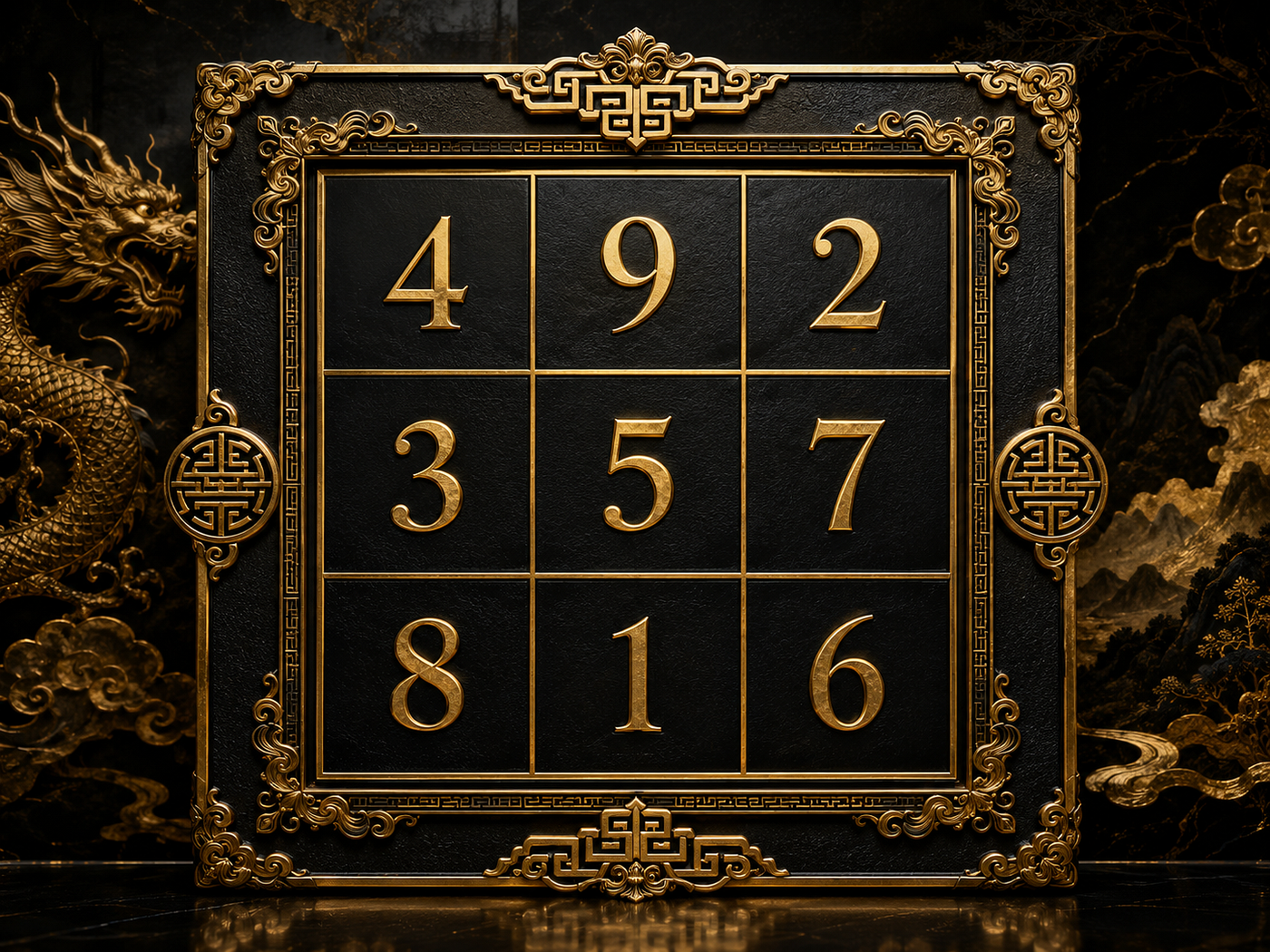
The Lo Shu Grid is a traditional numerology system that arranges the numbers 1 to 9 within a fixed three-by-three pattern.
Numbers 4, 9, and 2 traditionally occupy the upper row. Numbers 3, 5, and 7 form the middle row, while Numbers 8, 1, and 6 appear in the lower row.
To create a personal grid, every digit from the complete date of birth is placed in its assigned position. Zero is generally excluded.
If a number appears twice, it is entered twice. If it appears three times, it is entered three times. Numbers that do not occur in the birth date remain missing.
Numerologists study the complete pattern to understand possible qualities, abilities, behavioural tendencies, and developmental lessons.
For wealth analysis, the Lo Shu Grid may be used to examine confidence, planning, adaptability, communication, responsibility, ambition, discipline, and long-term thinking.
These qualities influence money, even though no single number can determine financial success.
Can the Lo Shu Grid Predict Wealth?
The Lo Shu Grid should not be treated as a guaranteed wealth-prediction tool.
It cannot tell you exactly how much money you will earn, which investment will succeed, or when a business will become profitable.
What it may reveal are tendencies that influence financial behaviour.
A person with strong Number 8 energy may focus naturally on organisation, authority, and material security. Someone with Number 4 may prefer structured budgeting and careful planning.
A person with Number 5 may adapt quickly to changing markets but may also take inconsistent decisions. Strong Number 1 energy may support entrepreneurship and leadership, while Number 2 may help with partnerships and negotiation.
These qualities can support wealth creation when used responsibly.
However, every strength has a possible imbalance. Ambition can become workaholism, confidence can become overconfidence, and flexibility can become instability.
The most useful question is not, “Will my grid make me wealthy?”
The better question is, “Which financial habits does my grid suggest I should strengthen or manage?”
Number 1 and Financial Independence
Number 1 is traditionally associated with confidence, independence, initiative, leadership, and self-expression.
In money matters, Number 1 may support entrepreneurship, decision-making, negotiation, and the ability to begin new projects.
A person with balanced Number 1 energy may prefer earning through their own skills, ideas, or leadership. They may feel motivated by independence and dislike relying completely on others.
This quality can be valuable in business, sales, management, consulting, freelancing, and self-employment.
However, strong Number 1 energy may also create overconfidence. The person may reject useful advice, make decisions too quickly, or assume that they can manage every financial challenge alone.
Repeated Number 1 can intensify ambition and independence, while missing Number 1 may create hesitation around asking for higher pay, starting a business, or making important financial decisions.
The balanced expression of Number 1 involves confidence supported by research, planning, and accountability.
Number 2 and Financial Partnerships
Number 2 is connected with cooperation, sensitivity, diplomacy, intuition, and relationships.
In wealth matters, Number 2 may support partnerships, client relationships, negotiation, collaboration, and emotionally intelligent communication.
A person with balanced Number 2 energy may work well with others and understand what people need. This can be valuable in consulting, counselling, hospitality, customer service, human resources, partnerships, and relationship-driven businesses.
However, sensitivity may also affect financial decisions.
The person may avoid negotiating because they fear conflict. They may lend money emotionally, accept unfair agreements, or delay difficult conversations about payment.
Repeated Number 2 can increase intuition and cooperation but may also strengthen emotional dependence or financial anxiety.
Missing Number 2 may create challenges in teamwork, empathy, or partnership management.
Financial growth improves when Number 2 qualities are supported by boundaries, written agreements, and clear communication.
Number 3 and Earning Through Creativity
Number 3 is traditionally associated with creativity, communication, optimism, learning, and expression.
In wealth creation, Number 3 may support careers involving writing, teaching, marketing, media, design, public speaking, entertainment, content creation, or social communication.
A person with strong Number 3 energy may generate ideas easily and communicate them attractively.
This can create opportunities in industries where visibility, storytelling, and creativity matter.
However, Number 3 may struggle with consistency. The person may begin several ideas without completing them or spend money on exciting projects without a clear financial plan.
Repeated Number 3 can strengthen creativity but also increase distraction.
Missing Number 3 may make it harder to promote skills, communicate value, or express ideas confidently.
For wealth, Number 3 needs structure. Creativity becomes profitable when it is supported by deadlines, systems, and focused execution.
Number 4 and Financial Discipline
Number 4 is strongly connected with organisation, discipline, logic, structure, and practical planning.
This number may support budgeting, accounting, administration, operations, financial tracking, and long-term saving.
A person with balanced Number 4 energy often prefers clear systems. They may feel more comfortable when income, expenses, debt, and savings are organised.
Number 4 can support careers in engineering, finance, technology, project management, auditing, compliance, research, and operations.
However, excessive Number 4 energy may create rigidity. The person may become overly cautious and miss useful opportunities because they fear uncertainty.
Repeated Number 4 may strengthen discipline but also perfectionism or resistance to change.
Missing Number 4 may create inconsistency in budgeting, record-keeping, or financial follow-through.
The best expression of Number 4 combines structure with flexibility. A strong plan should guide decisions without preventing necessary adjustment.
Number 5 and Financial Adaptability
Number 5 occupies the centre of the Lo Shu Grid and is associated with balance, adaptability, movement, communication, and freedom.
In wealth matters, Number 5 may support sales, trading, travel, negotiation, entrepreneurship, communication, and fast-changing industries.
A person with strong Number 5 energy may adapt quickly when circumstances change. They may recognise new opportunities and feel comfortable experimenting with different income sources.
However, flexibility can become instability.
The person may change plans too frequently, spend impulsively, or take risks without sufficient research.
Repeated Number 5 can increase adaptability and social intelligence but may also create restlessness.
Missing Number 5 may make a person uncomfortable with change. They may remain attached to an outdated financial plan because uncertainty feels stressful.
Balanced Number 5 energy uses flexibility without abandoning discipline. Opportunity should be evaluated, not chased blindly.
Number 6 and Financial Responsibility
Number 6 is associated with family, care, responsibility, service, comfort, and stability.
In financial life, Number 6 may create a strong desire to provide for family and build a secure home.
The person may work hard because they feel responsible for loved ones. They may also be attracted to careers involving education, healthcare, hospitality, counselling, design, property, or family services.
However, Number 6 can create financial over-giving.
The person may spend excessively on family, take responsibility for other people’s debts, or neglect personal savings while supporting everyone else.
Repeated Number 6 can strengthen loyalty and responsibility but may also create control or financial pressure.
Missing Number 6 may indicate difficulty maintaining long-term family responsibilities or balancing personal and household expenses.
Healthy Number 6 wealth management requires care with boundaries. Supporting others should not destroy personal financial security.
Number 7 and Financial Analysis
Number 7 is linked with analysis, observation, research, intuition, knowledge, and introspection.
In money matters, Number 7 may support research-based decision-making, technical knowledge, specialised expertise, investigation, strategy, and long-term learning.
A person with strong Number 7 energy may prefer understanding a financial subject deeply before acting. They may be attracted to research, technology, psychology, data, science, healing, philosophy, or specialised consulting.
This can create strong expertise, which may eventually become financially valuable.
However, Number 7 can also produce overthinking. The person may delay action while waiting for perfect information.
Repeated Number 7 may deepen analysis but increase isolation or excessive caution.
Missing Number 7 may lead to decisions without sufficient reflection or failure to learn from previous mistakes.
Balanced Number 7 energy combines research with action. Knowledge creates wealth only when it is applied.
Number 8 and Material Success
Number 8 is traditionally one of the strongest numbers connected with wealth, authority, management, organisation, and material responsibility.
A person with Number 8 may be ambitious and motivated to create financial security. They may manage resources, teams, property, investments, or business operations effectively.
Number 8 can support careers in finance, banking, management, law, administration, real estate, manufacturing, government, and large organisations.
However, Number 8 should not automatically be interpreted as guaranteed wealth.
The person still needs discipline, knowledge, and ethical decision-making.
Repeated Number 8 may strengthen ambition and organisational power, but it can also create workaholism, control, or excessive focus on status.
Missing Number 8 may indicate difficulty with long-term financial planning, authority, or material organisation.
Balanced Number 8 energy uses ambition responsibly. Wealth becomes sustainable when it is supported by patience, transparency, and long-term planning.
Number 9 and Wealth With Purpose
Number 9 is associated with intelligence, idealism, compassion, emotional intensity, recognition, and broader purpose.
A person with strong Number 9 energy may want money to serve a larger goal. They may be attracted to leadership, education, social impact, creative work, spirituality, healthcare, or humanitarian projects.
Number 9 can inspire generosity and vision.
However, the person may become unrealistic about finances. They may spend emotionally, give too much, or believe that good intentions alone will create success.
Repeated Number 9 can strengthen vision and influence but may also create disappointment when financial reality does not match expectations.
Missing Number 9 may indicate difficulty thinking beyond immediate material needs or connecting money with a broader purpose.
Balanced Number 9 energy combines compassion with practical financial management.
Which Numbers Are Most Important for Wealth?
No single number determines wealth.
Number 8 is often strongly associated with material success, organisation, and authority. Number 4 supports discipline and planning, while Number 1 contributes initiative and independence.
Number 5 may create adaptability and opportunity awareness. Number 3 can support creativity and communication, while Number 7 strengthens analysis and knowledge.
Number 6 may encourage financial responsibility, and Number 2 can improve partnerships and negotiation.
Number 9 may connect money with vision and wider influence.
The strongest financial pattern usually comes from balance rather than one powerful number.
A person may have Number 8 but lack the discipline of Number 4. Another may have excellent ideas through Number 3 but struggle to execute them.
The complete grid shows how different money-related qualities interact.
Repeated Numbers and Wealth Potential
Repeated numbers may amplify financial qualities.
Double Number 1 may strengthen entrepreneurship but also increase overconfidence. Double Number 4 can support disciplined financial planning while creating excessive caution.
Double Number 5 may help someone adapt rapidly but may also lead to impulsive decisions.
Double Number 8 can intensify ambition and organisational ability. However, it may also create material pressure or a tendency to measure self-worth through money.
Repeated Number 6 may produce strong responsibility toward family but increase financial burden.
Double Number 7 can support research and expertise while delaying action.
The key is moderation.
A repeated number becomes a financial strength when its excesses are managed consciously.
Missing Numbers and Financial Challenges
Missing numbers may highlight areas that require development.
Missing Number 1 may create hesitation in asking for better pay or beginning a new project.
Missing Number 2 may make partnerships and negotiation more difficult. Missing Number 3 can affect marketing, communication, or creative income.
Missing Number 4 may lead to inconsistent budgeting and poor financial organisation.
Missing Number 5 may reduce adaptability, while missing Number 6 may affect responsibility or family financial planning.
Missing Number 7 can create insufficient analysis. Missing Number 8 may weaken long-term material organisation, while missing Number 9 may reduce broader financial vision.
A missing number is not a permanent limitation.
Financial skills can be learned through education, systems, mentors, and disciplined habits.
Lo Shu Grid and Career Choice
The Lo Shu Grid may help identify natural professional tendencies.
Strong Number 1 may support leadership or self-employment. Number 2 may favour partnership-based and people-focused work.
Number 3 may suit communication and creative fields, while Number 4 may thrive in structured and technical roles.
Number 5 may prefer flexible, fast-moving careers. Number 6 may feel fulfilled in service, care, education, or family-related industries.
Number 7 may be drawn to research and specialised knowledge. Number 8 may succeed in management, finance, or business, while Number 9 may prefer purposeful or influential work.
However, career choices should not be made from numerology alone.
Skills, education, interests, market demand, and opportunities remain essential.
The grid can suggest tendencies, but practical research should guide career decisions.
Lo Shu Grid and Business Success
Business requires multiple qualities: initiative, planning, communication, adaptability, financial management, and patience.
Strong Number 1 can help someone begin, while Number 3 supports promotion and communication. Number 4 may create systems, and Number 5 helps the business adapt.
Number 8 may support management and financial control, while Number 7 strengthens research and strategy.
A person may have excellent business energy but still need partners or team members who provide missing qualities.
For example, a highly creative person may need operational support. A disciplined planner may need someone more adaptable in sales or marketing.
The Lo Shu Grid can help identify which business strengths are natural and which may need support.
Lo Shu Grid and Saving Habits
Saving requires discipline, patience, and the ability to delay immediate pleasure.
Number 4 may support regular budgeting and saving. Number 8 can encourage long-term material security, while Number 6 may motivate saving for family.
Strong Number 5 may create inconsistent saving if the person prefers experiences and flexibility. Number 3 may spend on creativity, entertainment, or social life.
Number 2 may spend emotionally to maintain relationships, while Number 9 may give generously.
Understanding these patterns can help create better financial systems.
Automatic savings, separate accounts, written budgets, and clear goals reduce dependence on mood or impulse.
Lo Shu Grid and Spending Behaviour
Spending is often emotional.
A strong Number 3 may spend on expression, appearance, or entertainment. Number 5 may spend on travel, variety, and experiences.
Number 6 may spend heavily on family and comfort, while Number 8 may invest in status, business, or material assets.
Number 2 may spend to please others. Number 9 may give money generously or support meaningful causes.
These tendencies are not automatically negative.
The problem begins when spending consistently exceeds income or prevents long-term security.
Awareness helps a person separate meaningful spending from emotional impulse.
Lo Shu Grid and Investment Style
The Lo Shu Grid may suggest broad risk and decision-making tendencies, but it should never replace professional financial analysis.
Strong Number 4 or Number 7 may prefer research, structure, and caution. Number 8 may focus on long-term growth and material outcomes.
Number 5 may feel comfortable with changing markets but may also take excessive risks.
Number 1 may act independently and confidently, while Number 2 may depend heavily on advice.
Investing should always be based on financial goals, risk capacity, time horizon, diversification, and reliable information.
Numerology may encourage self-awareness about behaviour, but it cannot identify which asset will rise or fall.
How to Strengthen Wealth-Related Qualities
Financial improvement begins with habits.
A person with missing Number 4 can use a written budget and regular financial reviews. Someone with weak Number 8 qualities can create long-term savings and investment goals.
A person with strong Number 5 can reduce impulsive decisions by introducing a waiting period before major purchases.
Someone with Number 2 may need clear financial boundaries in relationships. A strong Number 6 person should avoid taking responsibility for every family expense.
Number 7 individuals may need deadlines that turn research into action, while Number 1 personalities should seek independent advice before making high-risk decisions.
The best numerology remedy is practical behaviour aligned with the quality being developed.
Common Mistakes in Wealth Numerology
One common mistake is assuming that Number 8 guarantees riches.
Another is believing that a missing money-related number makes success impossible.
People may also focus on symbolic remedies while ignoring budgeting, skill development, debt management, and financial education.
Numerology should not encourage gambling, impulsive investing, or unrealistic expectations.
It cannot replace qualified financial, tax, legal, or investment advice.
Its most useful role is helping people understand their habits and develop greater responsibility.
Can Your Wealth Pattern Change?
Your birth-date numbers remain the same, but your financial behaviour can change significantly.
A person can learn budgeting, negotiation, investing, communication, and business management.
Someone who once avoided financial decisions can develop confidence. A person who spent impulsively can create discipline.
The Lo Shu Grid may describe an initial tendency, not a permanent destiny.
Awareness allows people to use strong qualities more effectively and build missing qualities consciously.
Financial growth is often the result of repeated small decisions rather than one lucky event.
Questions to Ask After Reading Your Grid
After identifying your numbers, consider how you currently manage money.
Do you save consistently or only when income is high? Do you make decisions through research, emotion, fear, or pressure?
Are you comfortable negotiating compensation? Can you discuss money honestly with a partner?
Do you have written financial goals? Are your spending habits aligned with those goals?
Which qualities in your grid support wealth creation, and which patterns may create financial difficulty?
These questions make numerology more practical and useful.
What Truly Creates Wealth?
Wealth is usually created through a combination of earning ability, spending control, saving, investing, skill development, patience, and opportunity.
Confidence helps people seek better opportunities. Communication supports negotiation and business development.
Discipline creates consistent saving, while adaptability helps people respond to change.
Knowledge reduces avoidable mistakes, and long-term planning allows growth to compound.
The Lo Shu Grid may help identify which of these qualities come naturally and which require more work.
However, numbers do not build wealth by themselves. Habits, knowledge, and action do.
Final Thoughts
The Lo Shu Grid for wealth can offer meaningful insights into financial personality, earning tendencies, spending habits, saving discipline, business ability, and long-term planning.
Number 1 may support independence and initiative. Number 2 can strengthen partnerships, while Number 3 encourages communication and creativity.
Number 4 brings structure, and Number 5 supports adaptability. Number 6 may create family responsibility, while Number 7 strengthens analysis.
Number 8 is strongly connected with material organisation and ambition, while Number 9 may link money with vision and purpose.
Repeated numbers may amplify financial strengths and weaknesses. Missing numbers may highlight areas that require conscious development.
However, no number guarantees wealth.
Financial success depends on skills, discipline, planning, market opportunities, responsible risk management, and consistent action.
Use the Lo Shu Grid to understand your natural tendencies. Then build practical systems that support better decisions.
Your numbers may reveal how you approach money, but your habits determine what you eventually create.
Explore your present, repeated, and missing wealth-related numbers with the AstroDunia Lo Shu Grid Calculator and gain deeper insights into your financial personality, strengths, challenges, and growth potential.
메타데이터
- post_id
- c2dd4dd553d6
- slug
- lo-shu-grid-for-wealth-what-your-numbers-reveal-about-money-c2dd4dd553d6
- url
- https://medium.com/@astroamazingq/lo-shu-grid-for-wealth-what-your-numbers-reveal-about-money-c2dd4dd553d6
- canonical_url
- https://medium.com/@astroamazingq/lo-shu-grid-for-wealth-what-your-numbers-reveal-about-money-c2dd4dd553d6
- author_url
- https://medium.com/@astroamazingq
- status
- ok
- fetched_at
- 2026-08-03 03:05:58