Navigating Complex Spinal Anatomy with Dr. Larry Davidson
Navigating the Spine with Greater Accuracy with Dr. Larry Davidson
Navigating Complex Spinal Anatomy with Dr. Larry Davidson
Navigating the Spine with Greater Accuracy with Dr. Larry Davidson
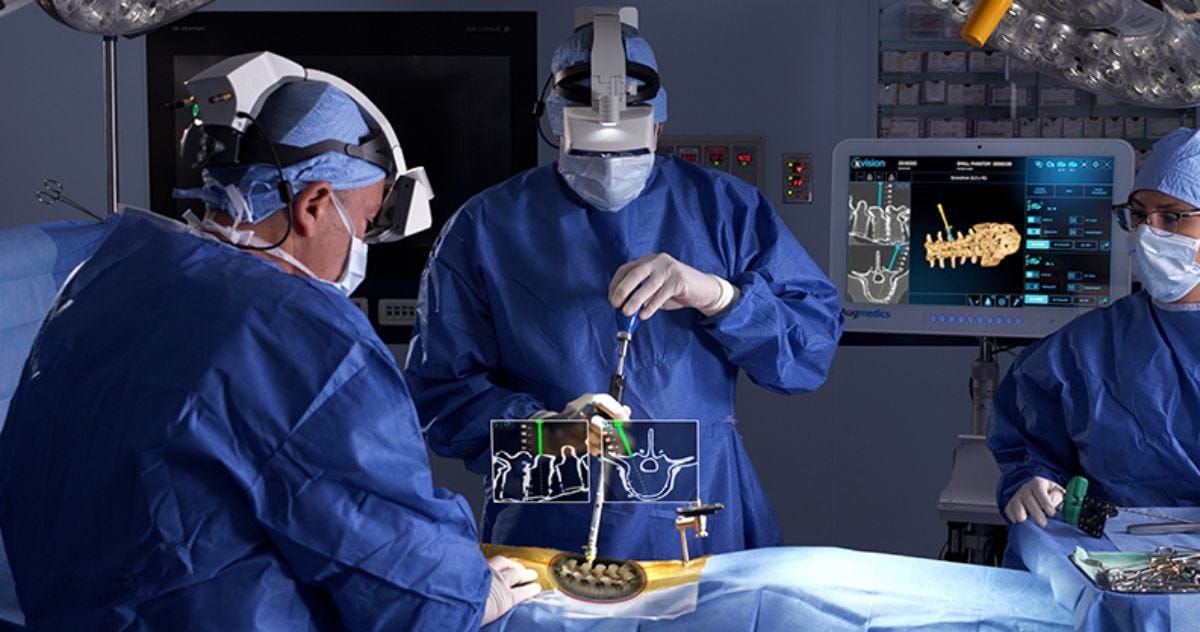
Navigating the intricate landscape of the spine requires more than surgical skills. It demands real-time insight, fast decision-making and a deep understanding of anatomy in motion. As spinal procedures grow increasingly complex, surgeons are turning to a powerful combination of real-time imaging and Artificial Intelligence (AI) to enhance precision and reduce risk. Dr. Larry Davidson, a leading expert in spinal care, sees how dynamic imaging and AI-driven guidance are reshaping how spine surgery is visualized, planned and executed.
Why Navigation Matters in Spine Surgery
Unlike more predictable regions of the body, the spine is a constantly shifting structure surrounded by critical nerves, blood vessels and soft tissues. Small anatomical variations can significantly impact hardware placement, alignment correction and decompression efforts.
Traditionally, surgeons have relied on preoperative imaging and intraoperative fluoroscopy to guide their work. While effective, these tools have limitations. Static images can become outdated once a patient is positioned on the table, and 2D fluoroscopy lacks depth perception, making it difficult to gauge spatial relationships in real-time.
The Power of Real-Time 3D Imaging
Technologies like intraoperative CT, 3D fluoroscopy and O-arm systems provide dynamic, high-resolution images during surgery, updating in real-time as instruments move and patient positioning shifts. These imaging platforms create a comprehensive 3D spine map, allowing the surgical team to visualize vertebrae, discs, nerves and existing hardware with incredible detail.
In spinal fusion, for example, this allows for exact pedicle screw placement with minimal guesswork. Surgeons can verify alignment, trajectory and depth with live feedback, reducing the risk of nerve damage or misplaced hardware.
Real-time 3D imaging is particularly valuable in minimally invasive spinal procedures, where visibility is limited. Surgeons no longer need to expose wide tissue sections to ensure accuracy; instead, they can rely on precise, up-to-the-moment visual data.
How AI Is Enhancing Surgical Decision-Making
While imaging shows what’s happening now, artificial intelligence helps interpret that data, offering predictions, suggestions and alerts that support better decision-making.
AI systems are trained on thousands of previous spinal procedures and can identify subtle patterns that might go unnoticed. For example, they can:
- Suggest optimal screw paths based on a patient’s anatomy and previous outcomes.
- Flag unusual tissue densities or vascular structures that may complicate dissection.
- Predict stress points that could lead to implant failure or adjacent segment degeneration.
- Guide alignment corrections by comparing live anatomy to ideal spinal curvature models.
By working alongside the surgeon, AI is an intelligent support system, reinforcing clinical decisions with data-backed guidance.
Combining Imaging and AI for Seamless Navigation
The true innovation lies in combining real-time imaging and AI guidance into a single workflow. This synergy allows for continuous visualization and interpretation throughout the procedure. Let’s say a surgeon is placing hardware for lumbar fusion. The imaging system updates with each movement, while the AI layer overlays projected outcomes, risk alerts and trajectory suggestions, all on a single screen or through Heads-Up Display (HUD) technology.
Augmented reality-style experience ensures that surgeons stay focused on the surgical site while accessing a wealth of contextual information. The result is faster decisions, greater accuracy and improved safety.
Reducing Errors and Avoiding Complications
Even the most experienced spinal surgeons are not immune to the challenges of navigation errors, especially in patients with prior surgeries, complex deformities or abnormal anatomy.
With real-time imaging and AI support, the risk of these errors drops dramatically. For example:
- Misplaced screws, a leading cause of revision surgeries, are caught and corrected before closure.
- Monitoring tissue response in real-time prevents over-decompression of nerve tissue, which can lead to instability or persistent pain.
- Hidden bleeding risks are flagged early, giving anesthesiologists and surgical teams time to adjust plans proactively.
This technological combination offers surgeons a dynamic, intelligent view of the operative field, ensuring fewer surprises and that when they do occur, they are addressed immediately.
Enhancing Minimally Invasive Workflows
Minimally invasive surgery depends heavily on navigation. The smaller the incision, the more critical it is to know exactly where the tools are. In traditional setups, limited visualization meant relying on tactile feedback or frequent X-ray checks.
With AI-supported real-time imaging, MISS becomes more precise and less dependent on repeated radiation exposure. Surgeons can confidently insert tools through tiny portals guided by live feedback and AI-generated pathways.
Improving Patient Outcomes and Surgeon Confidence
When procedures run smoother, outcomes improve. With better visualization and predictive insight, patients experience:
- Shorter hospital stays
- Faster healing
- Fewer complications
- Reduced need for revision procedures
At the same time, surgeons benefit from increased confidence and reduced mental fatigue. Rather than making constant decisions in the dark, they’re supported by intelligent tools that highlight the best path forward.
AI-Powered Robotics and Predictive Platforms
Emerging technologies are rapidly reshaping spinal care, and real-time imaging and AI are just the beginning.
Looking ahead, these tools are expected to integrate more deeply with robotic surgical systems and digital twins, enabling fully synchronized planning, execution and postoperative evaluation. AI may soon simulate entire surgical outcomes in advance, adjust plans in real time and continuously learn from each case to enhance future results.
Navigating with Clarity and Confidence
In spinal surgery, every millimeter counts. The integration of real-time imaging and artificial intelligence provides surgeons with the clarity needed to operate with greater confidence and precision, especially during minimally invasive procedures or when correcting complex deformities.
This powerful combination goes beyond enhanced navigation by illuminating the surgical path and delivering predictive insights. It’s redefining spinal care into a safer, smarter and more personalized patient experience.
As technology advances, *Dr. Larry Davidson *continues to observe how data-driven tools empower surgeons to deliver better outcomes, one informed decision at a time.
메타데이터
- post_id
- c2f2c762c99d
- slug
- navigating-complex-spinal-anatomy-with-dr-larry-davidson-c2f2c762c99d
- url
- https://medium.com/@drlarrydavidson/navigating-complex-spinal-anatomy-with-dr-larry-davidson-c2f2c762c99d
- canonical_url
- https://medium.com/@drlarrydavidson/navigating-complex-spinal-anatomy-with-dr-larry-davidson-c2f2c762c99d
- author_url
- https://medium.com/@drlarrydavidson
- status
- ok
- fetched_at
- 2026-08-07 21:57:10


