Why Gadamer Made Art the Paradigm of Understanding
How Hans-Georg Gadamer Replaced Scientific Objectivity with Art, Play, Language, and Historical Consciousness as the Foundation of…
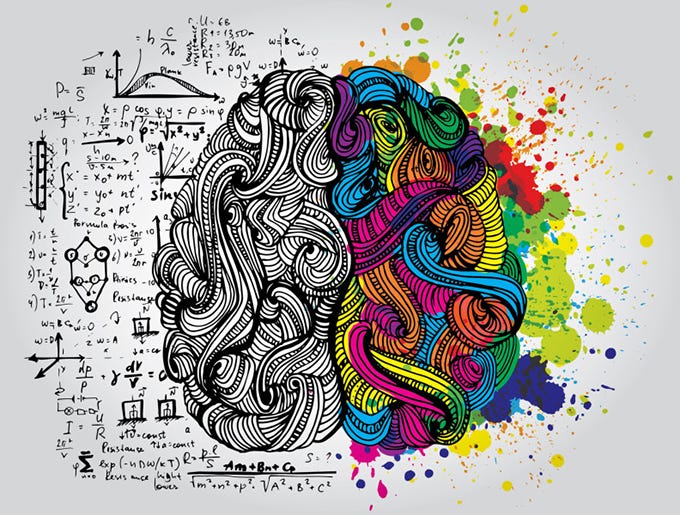
Art—especially aesthetics—is taken as the paradigm for understanding, rather than science. In other words, Gadamer reverses the traditional approach. Instead of making science the paradigm for understanding, as had long been the case, he proposes art as the paradigm of interpretation.
https://ime.springerhealthplus.com/art-vs-science-in-a-global-pandemic/
In Truth and Method, Gadamer explicitly questions why understanding has been dominated by science for so long. The weakness, in his view, is that science is grounded too heavily in the subject–object framework. Rather than treating this subject–object model as the paradigm, Gadamer turns to art. What he means is that the model for understanding and interpretation should not come from science, but from art, because art operates precisely in the space of interaction between subject and object.
Why is art so often used as a paradigm? First, because art is not merely concerned with beauty or aesthetic pleasure. For a very long time, art itself was misunderstood. As we have often discussed in aesthetics, art was traditionally confined to the domains of beauty and pleasure. These two concepts have repeatedly dominated the Western philosophical tradition whenever aesthetics or art is discussed. The discussion almost always revolves around beauty and enjoyment.

But for Gadamer, that is not the point. Art is fundamentally about truth—the truth of reality. This is something he consistently emphasizes in Truth and Method. The real issue is truth.
Second, art becomes the paradigm because it occupies the space between subject and object. Art functions through play. Play exists precisely in that in-between space. Our experience of a work of art is never purely subjective, nor is it purely objective. We cannot simply dismiss interpretation as "merely subjective." Many people ask that question because they are still viewing interpretation through the lens of science: "If that's the case, isn't interpretation just subjective?"
![Notes on Art and [ Subject, Object, Context + You ] https://www.linkedin.com/pulse/notes-art-subject-object-context-you-john-maeda?utm_source=share&utm_medium=member_android&utm_campaign=share_via](https://miro.medium.com/v2/resize:fit:1280/1*6HjpQ2FciYVSCmz76EWmAA.jpeg)
Notes on Art and [ Subject, Object, Context + You ] https://www.linkedin.com/pulse/notes-art-subject-object-context-you-john-maeda?utm_source=share&utm_medium=member_android&utm_campaign=share_via
Gadamer's answer is no. Because of play, interaction, and participation, understanding itself is fundamentally playful. Play therefore becomes an essential concept in understanding.
One additional point concerns truth itself, which Gadamer—following Heidegger—understands as truth manifested through symbols. Truth is disclosed through symbols, yet no symbol ever exhaustively reveals truth. No symbol expresses truth completely or once and for all. There is always something that remains mysterious, something left over. Whenever we say, "Ah, this is the truth," we immediately sense that something is still missing.
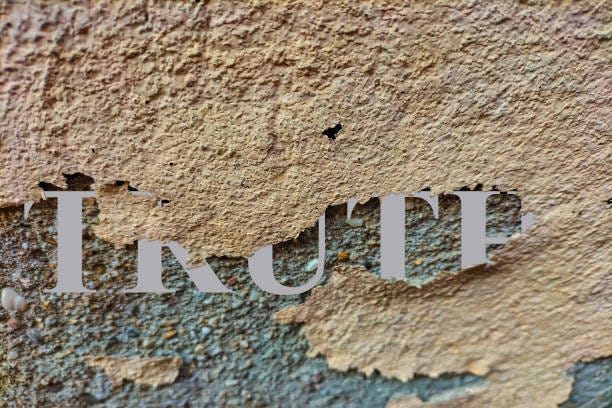
This is why the symbolic world is dialectical: symbols simultaneously reveal and conceal. Every symbol both discloses truth and hides part of it. What remains concealed must later be expressed through another symbol, which in turn will also leave something concealed.
From this perspective, truth is never complete or final. It can never be formulated once and for all in a definitive manner. Reality is far too rich and too complex for that. Every formulation captures something true, yet at the same time leaves something beyond its grasp. Truth therefore always remains open to further articulation through new symbols.
Reality is far too rich and expansive, which is why it can always be formulated again through new symbols. At the same time, the moment we formulate reality in a symbol, we immediately realize that there is always something more than what the symbol expresses. There is always an excess that escapes formulation.
Perhaps this is the human predicament. We must formulate reality because without formulation we cannot understand it. Yet the moment we formulate it, we also realize that the formulation is incomplete. That, roughly speaking, is the logic behind it.
So once again, we return to the notion of play. Within play, what appears is not an object. As we discussed before, the consequence of understanding play is that neither the subject nor the object becomes primary. What emerges is something else—what Gadamer later describes as the fusion of horizons. More fundamentally, what appears is not the isolated subject or object. In a football match, for example, what truly matters is not simply the players themselves. Rather, what emerges is the event of play itself.

https://www.magnific.com/free-photos-vectors/event-illustration
The important point is that this new framework, the paradigm of play, is centered neither on the subject nor on the object, but on the in-between—the dynamic relation between them. What takes place is a fusion, a merging that occurs within the event itself.
However, this fusion is never final. Every time you watch another football match—or even participate in one—new aspects of the game reveal themselves. Truth appears again and again, each time in a new way.
To make this more concrete, consider reading a text. The first reading reveals one kind of truth. Reading it a second time discloses something different. A third reading reveals yet another dimension. Understanding is always playful; it is an ongoing process of play.
There is another important aspect of Gadamer's thought: historicity. He argues that every act of understanding is always shaped by our past. Therefore, when we speak of history, we are not referring merely to events that happened long ago and are now finished. Rather, we are talking about effective history (Wirkungsgeschichte), history that continues to shape us in the present.

https://annbeedham.com/heritageeducation/historical-illustration/
This is a key concept. Effective history refers to a past that has never truly disappeared. It continues to influence and determine our present understanding.
This matters because it forms our horizon—our perspective on the world. In one way or another, our worldview has been shaped by thinkers such as Aristotle and countless others. Their bodies may long since have turned to dust, but their ideas remain alive in our thinking and continue to shape the way we understand reality.

Finally, the third point—which I briefly mentioned earlier—is the importance of language. Gadamer places language at the center of his philosophy. However, he is not claiming that everything that exists is nothing but language. The world exists independently of language.
His point is different: whatever aspect of the world we come to understand or recognize always appears through language. Whether we agree with him or not, this is his claim. Our understanding of the world comes to presence through language.
In that sense, Gadamer is strongly logocentric, centered on language. He argues that when it comes to meaning and understanding, there is no path other than language.

Personally, I sometimes wonder whether that is entirely correct.
메타데이터
- post_id
- c314b6294d25
- slug
- why-gadamer-made-art-the-paradigm-of-understanding-c314b6294d25
- url
- https://medium.com/@shrimpmindparadox/why-gadamer-made-art-the-paradigm-of-understanding-c314b6294d25
- canonical_url
- https://medium.com/@shrimpmindparadox/why-gadamer-made-art-the-paradigm-of-understanding-c314b6294d25
- author_url
- https://medium.com/@shrimpmindparadox
- status
- ok
- fetched_at
- 2026-07-29 19:51:06






