the art of not thinking
Life quietly unfolds in whatever we repeatedly pay attention to
the art of not thinking
Life quietly unfolds in whatever we repeatedly pay attention to

FREE ACCESS
the pain of thinking too much
We are capable of thinking; that’s a gift that nature grants to humankind.
It is through the act of thinking that we became intellectual, that we captured the movements of the moon and the sea and manipulated nature for agriculture, that we built (and destroyed) civilisation, that we created art and felt its impact in our hearts.
But this gift sometimes also feels like a curse.
Especially now, we live in a landscape where silence is almost impossible to find. Endless videos, notifications, opinions, headlines, and perfectly engineered distractions compete for our attention, while our own minds continue producing thoughts of their own.
Our mind does not have time to take a break — even when we rest, it keeps running and running to different places.
I, too, am incapacitated by this unresting brain syndrome.
A few days ago, I decided to meditate properly for the first time.
I sat still, closed my eyes, and followed my breath — in and out, in and out. For a brief moment, there was a strange sensation of total calmness, of only air entering my lungs.
Then, abruptly, I thought to myself, “This feels great. Why didn’t I do this sooner? If I did this when I was 7, I could have achieved a fully regulated nervous system by now! What a waste of time!”
This led to a full-minute sprint of every opportunity I had missed in the past, every version of me that could have existed if I were more hardworking, more talkative, more courageous.
It surprised me how difficult it was to remain in one ordinary moment.
I have many thoughts — this I knew. It’s the realisation of how little control I have over them that unsettled me. My train of thought keeps running at full speed, never truly arriving at any destination. It has become so accustomed to movements that stillness feels like danger.
As a modern human, I have become expertly trained to distract myself.
A walk always needs to be paired with an acutely curated playlist.
A meal must come with a reality show playing in the background while my thumb flickers through 5 different apps on the phone.
Showering, exercising, or waiting for the kettle to boil must be accompanied by some form of noise — either from external stimulants or internal conversations, or both. It’s like I have a phobia of complete silence.
My mind is plagued with thoughts, and I’m getting sick without even realising it.
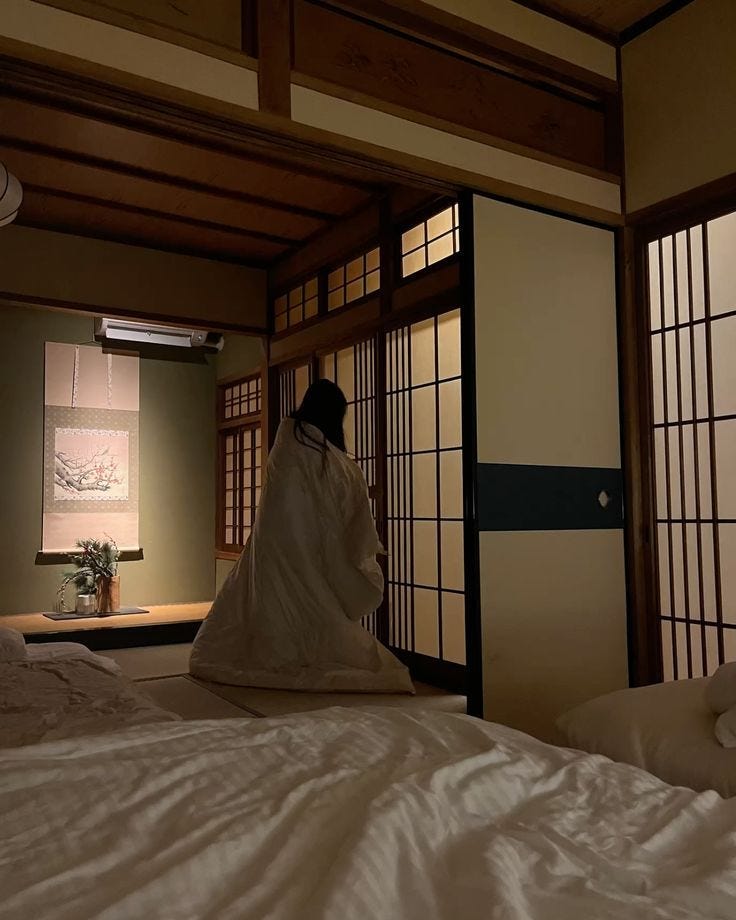
a clean bedroom
Mediation taught me something that day.
We spend so much of our time learning how to think — how to reason, analyse, rationalise, and intellectualise — that we forget the equally important practice of stepping outside of our thoughts. We do not need more thoughts. We need fewer ones, held with greater care.
Visualise your mind as a bedroom.
The room should not be completely empty. It should contain what helps you rest. Your compassion is the bed, your kindness is the blanket, your curiosity is the lamp; these are your essentials, the things worth making space for.
Now imagine filling that same room with 10 speakers, each blasting a different podcast simultaneously. Old leftovers rot on the bedside table because you never found the time to throw them away. Piles of clothes crowd the floor and bed. Mountains of crumpled papers and unwanted Temu products. Can you truly rest anymore?
Because that’s the state of most of our metaphorical bedrooms right now.
Every regret claims its own territory.
Every imagined future is an uninvited guest.
Every comparison, every anxiety, every insecurity, every fear of falling behind adds another object to a room that was never built to carry so much.
Then, amidst all that noise, life quietly slips past.
We miss the new lines forming around our parents’ eyes. We fail to hear birds performing the same morning song they have sung for centuries. We walk beneath sunlight scattered across the pavement without ever holding our gaze long enough to take in its beauty.
So absorbed are we by the stories unfolding inside our heads that we stop meeting the world as it is.
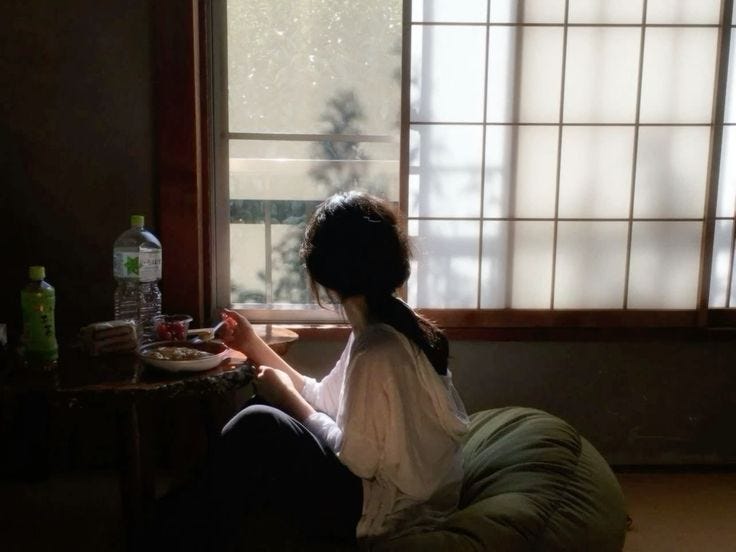
where attention goes, life follows
I read somewhere that life is not merely measured by the years we spend living, but by the attention we pay to those years.
If you spend every waking moment searching for what’s missing, then your life will feel defined by absence.
If you constantly seek validation, you will only be reminded of its scarcity.
If you replay every mistake you’ve ever made, you convince yourself that you are only the sum of your regrets.
For a long time, this was how I moved through life. I thought that constantly noticing my shortcomings would somehow make me a better person — that relentless self-criticism was simply another form of self-improvement. But it never truly offered me any solutions. It only chased away all of my motivation and convinced me that I was too far behind to begin.
When we take a stroll on a gloomy day and we notice only the grey sky looming above our heads, we fail to catch the wildflowers pushing through cracks in the pavement. Neither observation is more real than the other; together, they make up the same landscape. Yet each leaves you carrying home a completely different experience of the day.
I am slowly learning to divert my attention to things that help me grow lighter.
Instead of screaming out my mistakes, I’m reciting the lessons I gained from them.
Instead of comparing myself to other people, I notice the ant and the tree — one small enough to be invisible, the other impossible to miss; yet neither spends its life trying to be the other; both belong exactly where they are.
Instead of distracting myself with another stream of content, I pay attention to the soft warmth of sunlight enveloping my skin, the evening breeze moving through the leaves, the astonishing miracle of being alive.
Life quietly unfolds in whatever we repeatedly pay attention to.
The world has always been offering you countless things to notice.
Which ones would you like to return to?
the art of not thinking
The art of not thinking does not mean erasing all thoughts — this is biologically impossible for us anyway. It is more about stopping the thoughts that distort our perception of reality.
To practise the art of not thinking is to recognise that not every thought deserves to be believed, and not every feeling demands to be followed.
Let a thought pass through your mind, observe it with full respect, and politely ask it to leave so we can rest.
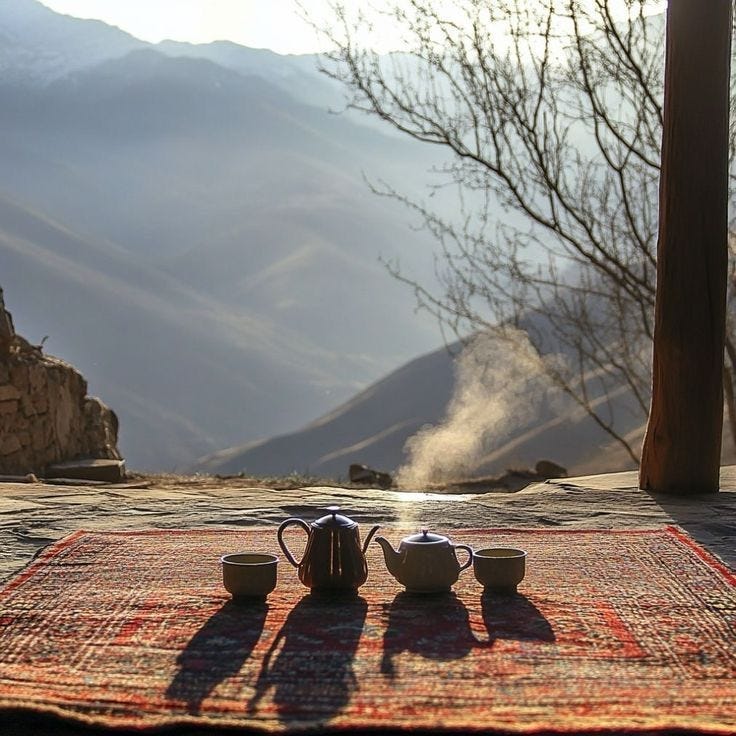
When you return to your breath, to the warmth of the sun on your skin, to the steam flying up from the teapot, to the rise and fall movement of your belly, you finally return to reality.
Peace has ever been the absence of thought. It lives in the freedom of knowing that you do have control over them.
One day at a time.
One step at a time.
One breath at a time.
Hi, I’m Janelle☆
Whoever you are, I hope today has been kind to you.
If you resonate with my writing, you can buy me a coffee or support me with as many claps as you’d like. Follow me on Substack for more exclusive content.
Don’t forget to comment and subscribe to receive my newest posts ♡
Your support means the world and helps me keep doing what I love. Thanks for walking this path with me, one step at a time ──★
메타데이터
- post_id
- c345efd4fa5c
- slug
- the-art-of-not-thinking-c345efd4fa5c
- url
- https://medium.com/@onecup.oftea/the-art-of-not-thinking-c345efd4fa5c
- canonical_url
- https://medium.com/@onecup.oftea/the-art-of-not-thinking-c345efd4fa5c
- author_url
- https://medium.com/@onecup.oftea
- status
- ok
- fetched_at
- 2026-08-12 11:02:35