Smart Home Without the Show Effect
How invisible technology truly improves everyday life — and how it can be retrofitted
Smart Home Without the Show Effect
How invisible technology truly improves everyday life — and how it can be retrofitted
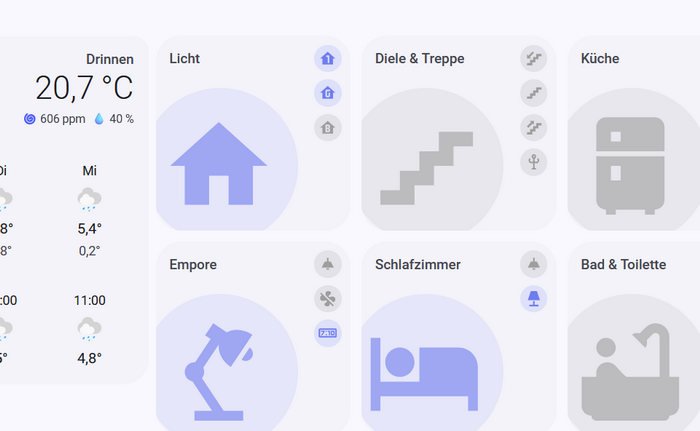
When we built our house 17 years ago, smart home technology was a dream, but not a realistic option. That changed over the past year. Since then, I’ve been retrofitting smart functionality all over the house. The goal was a solution that is visually pleasing, perfectly integrated, and provides real value — without being intrusive or overwhelming.
In this series of articles, I share my very practical experiences: what works, what doesn’t, and what I would do differently today.
For me, the initial trigger was being able to control all lights remotely. Why? Laziness. Annoyance. And that persistent thought: “This has to be possible nowadays, right?!” 😁 Out of that grew a smart home that accompanies us reliably — and, above all, is genuinely fun to live with.
Today, there are countless ways to make lighting controllable: Philips Hue, smart plugs, Alexa, battery-powered switches, and much more. For me, the question was therefore not whether, but how — and especially how to do it without bending the house visually or conceptually. Retrofitting smart actuators into existing light switches turned out to be the solution of choice.
Smart actuators — unobtrusive, but essential
At the core of my smart lighting retrofit are so-called smart actuators. That may sound complicated — but it really isn’t.

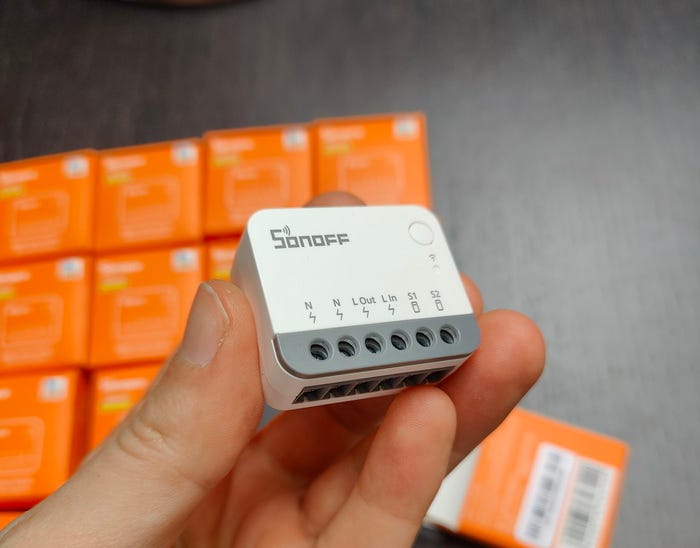
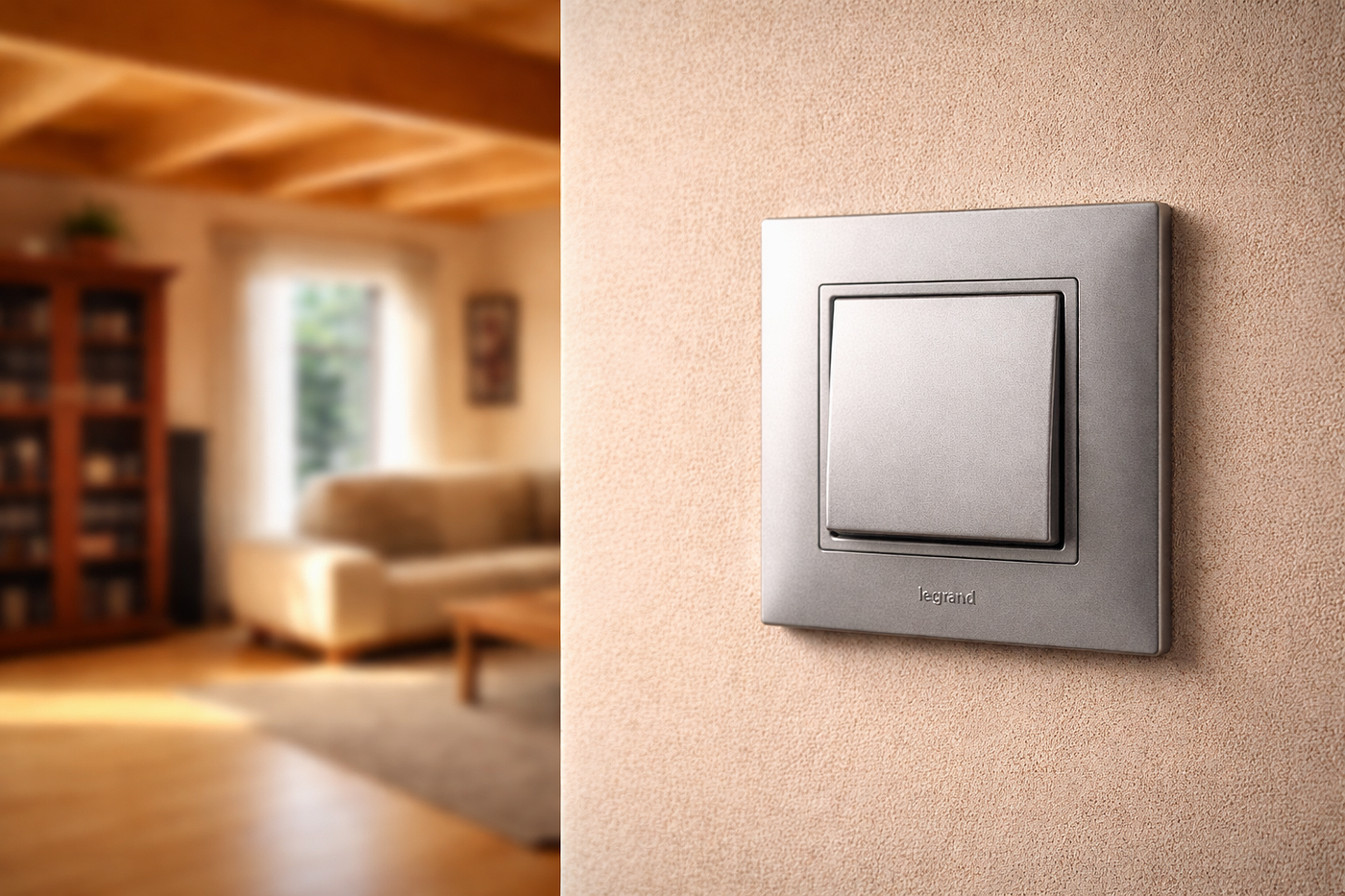
Put simply, these are small, remotely controllable relays that sit directly behind the existing wall switch, invisibly installed in the flush-mounted box. The physical switch stays exactly where it is and continues to work as usual. At the same time, the light can also be controlled via app, automation, or schedules. Smart light bulbs such as Philips Hue can be integrated just as elegantly.
The big advantage is this: I didn’t have to replace any switches, change the look of the rooms, or introduce new control concepts. The house still feels “normal” and looks “normal” — just smarter.
I use several different actuators (among others, Sonoff ZBMINI and Shelly 1). They switch instantly, have been running flawlessly for over a year, and can be operated entirely locally — without any cloud dependency. In everyday life, you simply don’t notice them. And that is precisely their greatest strength.
Classic scenarios such as two-way switches or push buttons continue to work as well. You can still turn the lights on and off from multiple locations — and additionally control or automate them remotely. For users, nothing changes; for the system, almost everything does.
Of course, there are technical details to consider (such as permanent live, space in the wall box, or a neutral wire). These are solvable issues, and I’ll go into them in more detail in a this article. For a basic understanding, however, one thing is enough to know:
Smart actuators make existing light switches intelligent without replacing them.
At this point, a more fundamental question inevitably arises: how do all these devices actually communicate with each other? And how can an existing house be retrofitted in a sensible way?
Thread, Matter, Zigbee, KNX, Z-Wave, Wi-Fi… what?
Anyone who starts looking into smart home technology quickly stumbles over an entire alphabet of standards, wireless protocols, and buzzwords. The good news is: you don’t need to understand everything — you just need to make a sensible decision.

After some research — and a few deliberate trade-offs — I decided on Zigbee. Not because it is perfect, but because it has proven itself in everyday use and for me the question was: Which system is mature, widely used, and at the same time future-proof?
Why Zigbee?
- Wide range of devices Sensors, switches, light bulbs, sockets — from many manufacturers and across all price ranges. Because major providers such as Philips Hue and IKEA also rely on Zigbee, it is unlikely to disappear anytime soon.
- Very low energy consumption Ideal for battery-powered devices that are expected to run for months (or longer).
- Stable thanks to a mesh network Mains-powered devices act as repeaters, making the network more robust with every added device.
- Independent of Wi-Fi No additional congestion in the home network and no dependency on the router or cloud services.
- Affordable hardware Sensors are often significantly cheaper than comparable solutions, for example in the KNX ecosystem.
Of course, Zigbee also has its downsides.
The most commonly mentioned are potential incompatibilities due to limited standardisation and the relatively low data rate. I currently use 34 Zigbee devices of various types, all of which integrate flawlessly into the network. The limited data rate is only noticeable during firmware updates, which take about ten minutes per device — and, in my experience, occur quite rarely.
Naturally, there are alternatives.
- KNX is technically excellent, but expensive and typically requires dedicated bus wiring, making it more suitable for new builds or major renovations.
- Z-Wave is stable, but more expensive and less widespread.
- Matter is promising — but still evolving. Unlike KNX, Zigbee, or Z-Wave, Matter is not a communication protocol itself, but a common language for smart home and IoT devices. For me, it is currently more of a future topic than a basis for decision-making. Although new devices and sensors for Matter are constantly being released, it still feels to me like a rocket that just hasn’t quite taken off yet. The most important thing to remember is that using Zigbee does not prevent you from accessing Matter.
- Thread — unlike Zigbee or Z-Wave — is an IP-based wireless protocol built on IPv6. It is low-power, mesh-capable, and specifically designed for smart-home devices. From a technical perspective, it is a very clean and well-thought-out solution. It is primarily intended as a transport layer for Matter, not as a complete smart-home system in its own right. Its real strengths will therefore likely only become apparent once Matter is widely established. In practice, however, Thread still feels somewhat unfinished to me. The range of available devices is limited, many products require additional border routers, and integration depends heavily on the surrounding ecosystem (Apple, Google, Amazon). Truly standalone use of Thread is still rare. For me, Thread is therefore currently more of a building block for the future than a solid foundation for today. One important point remains, though: choosing Zigbee does not block access to Thread or Matter. Both worlds can coexist very well through appropriate bridges and systems.
Each of these technologies has its place, depending on budget, construction phase, and requirements. For me, Zigbee is the pragmatic middle ground: mature, affordable, reliable — and therefore the foundation of my smart home.
What’s next?

In the next article, I’ll show concrete, real-world examples of how I retrofitted my light switches with smart actuators in different situations — including the pitfalls you’ll want to be aware of beforehand.
If you’re planning a smart home retrofit yourself, feel free to follow this series.
메타데이터
- post_id
- c34834fe6855
- slug
- smart-home-without-the-show-effect-c34834fe6855
- url
- https://medium.com/@fwmone/smart-home-without-the-show-effect-c34834fe6855
- canonical_url
- https://medium.com/@fwmone/smart-home-without-the-show-effect-c34834fe6855
- author_url
- https://medium.com/@fwmone
- status
- ok
- fetched_at
- 2026-07-14 08:54:03