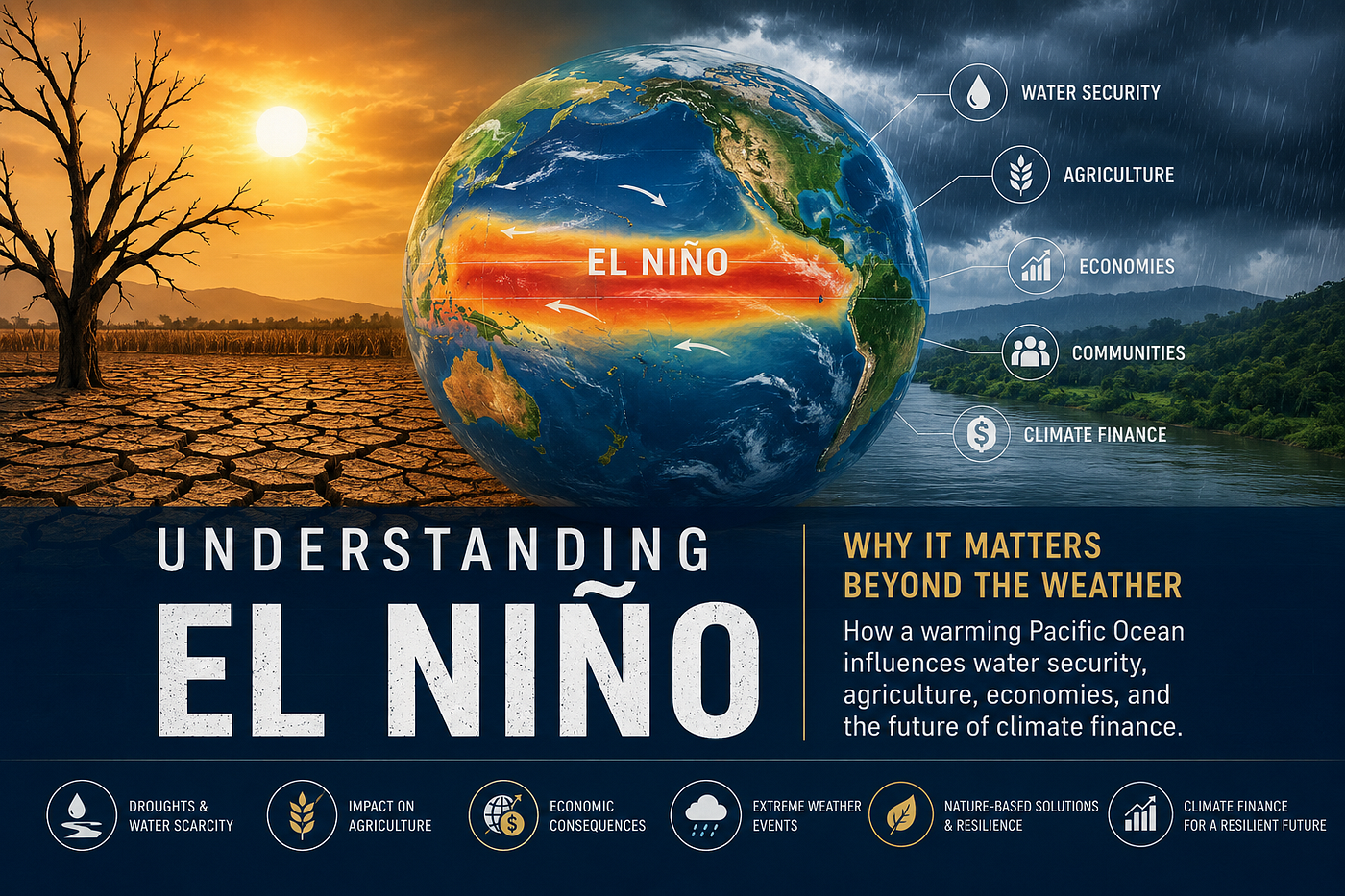
What Does El Niño Have to Do With Carbon Credits?
What Does El Niño Have to Do With Carbon Credits?
What Does El Niño Have to Do With Carbon Credits?
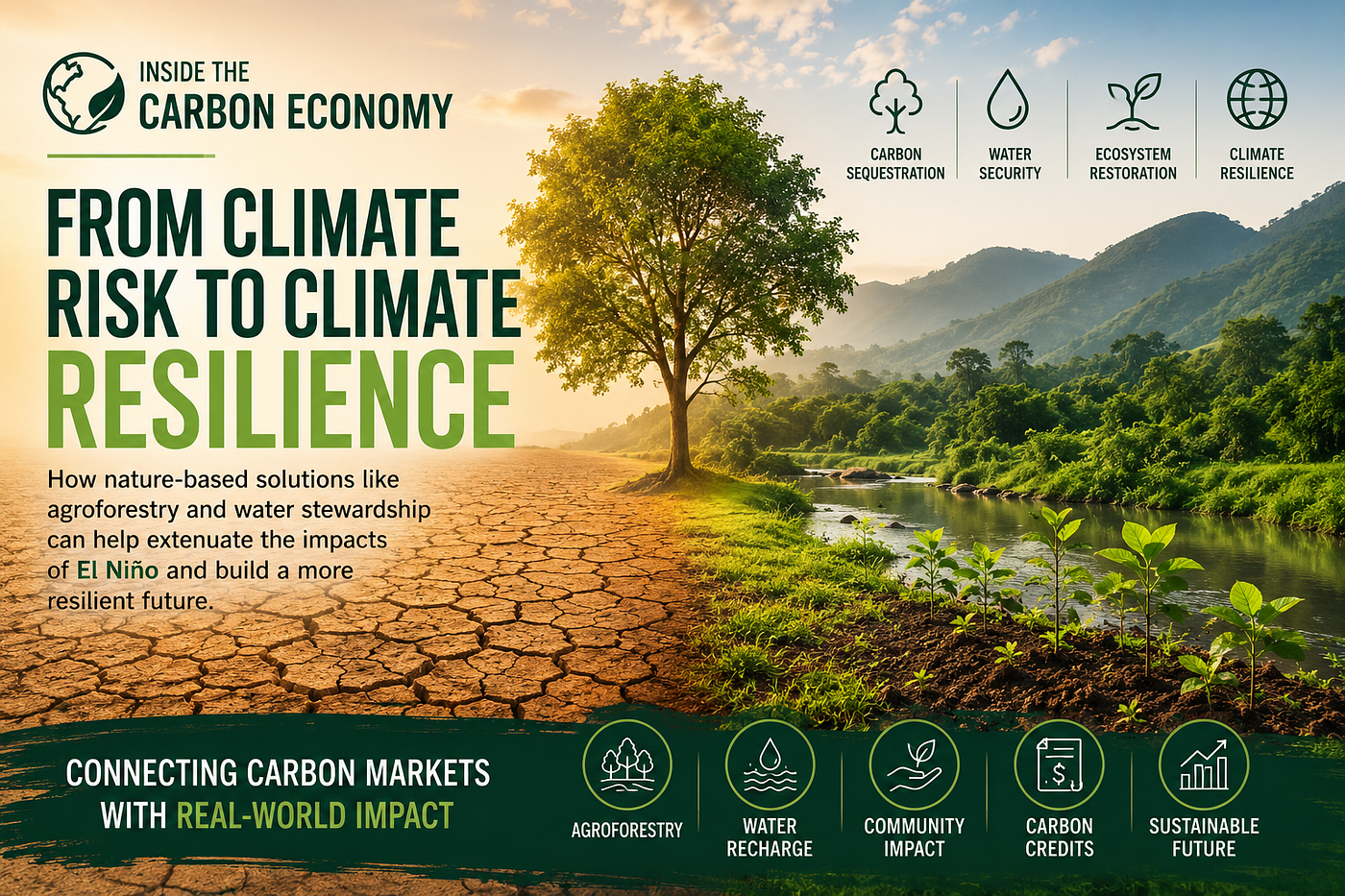
Carbon markets aren’t just about carbon. They’re about resilient ecosystems. And El Niño is a reminder of why that matters.
What Does El Niño Have to Do With Carbon Credits?
Why climate resilience may become the next big challenge for carbon markets
When people hear the term “carbon credits,” they often picture forests quietly absorbing carbon dioxide from the atmosphere.
The idea seems simple.
Protect forests. Plant more trees. Store carbon. Reduce climate change.
But nature doesn’t always cooperate with our plans.
One climate phenomenon that rarely enters carbon market discussions is El Niño — a naturally occurring weather pattern that can trigger droughts, heatwaves, wildfires, and water shortages across large parts of the world.
And as carbon markets continue to grow, understanding the relationship between El Niño and carbon credits is becoming increasingly important.
A Climate Solution Dependent on Nature
Many carbon credits are generated through nature-based projects.
These include:
- Reforestation
- Afforestation
- Agroforestry
- Forest conservation
The value of these projects depends on one fundamental assumption:
The ecosystem will continue storing carbon over time.
However, ecosystems are living systems.
They are influenced by weather, water availability, biodiversity, and climate conditions.
And that is where El Niño enters the picture.
When Climate Becomes a Risk to Climate Solutions
El Niño occurs when ocean temperatures in parts of the Pacific Ocean become unusually warm.
Although it begins thousands of kilometers away from many carbon projects, its effects can be felt globally.
In some regions, El Niño can contribute to:
- Severe droughts
- Reduced rainfall
- Increased wildfire risk
- Agricultural losses
- Water scarcity
For nature-based carbon projects, these risks are significant.
A prolonged drought can weaken forests.
Extreme heat can reduce tree growth.
Wildfires can release years of stored carbon back into the atmosphere within days.
In other words, the same climate system carbon markets are trying to improve can also threaten the projects that generate carbon credits.
The Permanence Problem
One of the most important concepts in carbon markets is permanence.
Permanence refers to how long carbon remains stored.
If a forest captures carbon and remains healthy for decades, the climate benefit is substantial.
But what happens if that forest is destroyed by drought or wildfire?
The carbon may eventually return to the atmosphere.
This challenge becomes more relevant as extreme weather events become increasingly common.
As climate risks grow, project developers, investors, and buyers are being forced to ask difficult questions:
How resilient are carbon projects?
How should climate risks be incorporated into project design?
Are current safeguards enough?
Why Resilience Matters
For years, the carbon market conversation has focused primarily on emissions.
But the next chapter may focus on resilience.
The ability of ecosystems to withstand droughts, heatwaves, floods, and climate variability could become just as important as their ability to store carbon.
This is one reason why interest in agroforestry and regenerative land management continues to grow.
Unlike monoculture systems, diversified landscapes often improve:
- Soil health
- Water retention
- Biodiversity
- Climate resilience
While no system is immune to climate shocks, healthier ecosystems are generally better equipped to recover from them.
Carbon Markets Are Really Ecosystem Markets
Perhaps the biggest lesson from El Niño is that carbon markets are not simply financial markets.
They are ecosystem markets.
The value of a carbon credit ultimately depends on the health of the ecosystem behind it.
As climate risks intensify, the market may need to place greater emphasis on:
- Water security
- Ecosystem restoration
- Biodiversity
- Climate adaptation
- Landscape resilience
Because in the end, a carbon credit is only as strong as the ecosystem that supports it.
Final Thoughts
El Niño is not a new phenomenon.
But its implications for carbon markets are becoming harder to ignore.
As the world invests more heavily in nature-based climate solutions, understanding climate resilience may become just as important as understanding carbon accounting.
The future of carbon markets may not simply depend on how much carbon we can store.
It may depend on how well we protect the ecosystems that store it.
메타데이터
- post_id
- c3742aeb2be8
- slug
- what-does-el-niño-have-to-do-with-carbon-credits-c3742aeb2be8
- url
- https://medium.com/@vishrutbuch2406/what-does-el-ni%C3%B1o-have-to-do-with-carbon-credits-c3742aeb2be8
- canonical_url
- https://medium.com/@vishrutbuch2406/what-does-el-ni%C3%B1o-have-to-do-with-carbon-credits-c3742aeb2be8
- author_url
- https://medium.com/@vishrutbuch2406
- status
- ok
- fetched_at
- 2026-06-14 11:28:49