The Uneven Future That We Call Progress……………
Sometimes, I feel like I am asking for too much.
The Uneven Future That We Call Progress……………
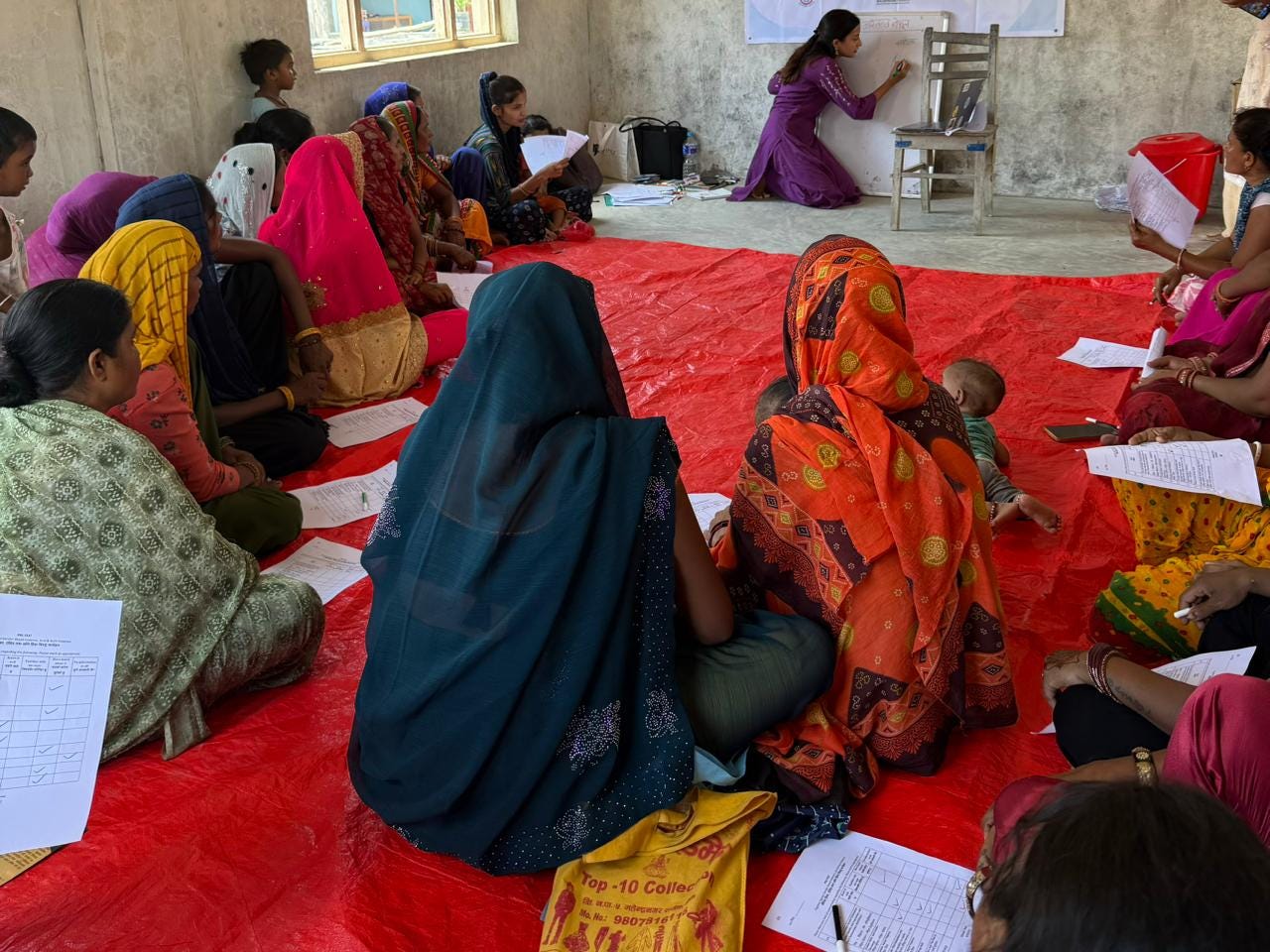
The picture is from the Sexual and Reproductive Health Rights (SRHR) Workshop in Madhesh Province
Sometimes, I feel like I am asking for too much.
There are days when I question whether my work makes any sense at all. Days when I wake up and wonder if the things I advocate for matter in a world where so many people are simply trying to survive.
Every morning I wake up, and that itself feels like a privilege.
Because somewhere, someone did not get that chance. A child did not wake up. A mother is still waiting for help that may not arrive in time. A family has lost everything in a single moment. And life continues elsewhere, as if nothing happened.
That contrast sits heavily with me.
How do we talk about dignity when people are still struggling to survive?
What does it mean to advocate for access to menstrual products when some people are struggling to find shelter? How do we talk about Sexual and Reproductive Health and Rights (SRHR) when communities are fighting for food, clean water, or basic healthcare? Sometimes, demanding SRHR in crisis settings feels disconnected from the realities people face.
But then I remind myself that survival and dignity are not separate needs. They are deeply connected to the same system of inequality. Still, some days feel heavier than others.
These days, opening Instagram or turning on the television often leaves us feeling anxious. I worry about what news will appear next. Another conflict. Another disaster. Another story of a woman crying. Another child is suffering from malnutrition.
Why does so much suffering continue to exist?
Recently, I came across a TikTok video from a rural village in the far-western side of Nepal. A young girl child had died on her way to a health post. She had been suffering from severe fever, loss of appetite, and symptoms of pneumonia.
Nothing rare. Nothing untreatable. But the health post was far. Too far….
Even today, there are communities in our country where people must walk one and a half days to reach a health facility. There are no roads. No vehicles. No emergency transportation.
The video went viral for a few days. People expressed sympathy. They tagged politicians, journalists, and influencers, hoping someone would notice. But as happens with most viral content, the engagement faded. The algorithm moved on.
But the reality stayed.
Suffering does not disappear when we stop watching it.
When a child can die because treatment for a fever or pneumonia arrives too late, conversations about SRHR can sometimes feel like a luxury. Yet I know they are not.
I understand these realities because they are not entirely unfamiliar to me.
When I was growing up, reaching a health post often required a full day’s walk. We lived without electricity for most of my childhood. It has only been around seven years since our house got electricity, and just a few years since we gained reliable internet access.
Life has changed tremendously for me and for my village. Like my mother shared stories of hardship with me, I, too, will have stories to tell future generations about what life once looked like.
Yet despite all the progress we celebrate, situations like these still exist.
And that makes me question what we mean when we talk about development.
We are living in the age of artificial intelligence. Groceries arrive at our doorsteps. Information travels across continents in seconds. We constantly speak about innovation and transformation.
But are we transforming the lives of those who need it most?
We have spent decades creating resources, campaigns, and programmes to empower young people through education, innovation and SRHR. Yet many young people have never heard of these resources. For many women and girls, the world extends only as far as the hills surrounding their villages. They do not know that another world exists beyond those forests and mountains.
Last year, I travelled to a marginalised community in Madhesh to facilitate SRHR workshops. The community hall had no electricity. There were no fans. The temperature outside was around 43 degrees Celsius. We sat on a tarpaulin spread across the floor. Women arrived carrying their children. As the room filled, the heat became almost unbearable.

The image is of the Day 1 of Sexual and Reproductive Health Rights (SRHR) Workshop with young women from marginalised communities
I remember sweating through my clothes and feeling overwhelmed. At one point, I wanted to leave.
Then a man walked into the room carrying a bottle of water.
What happened next caught me by surprise.
Every woman immediately pulled her scarf over her face. Some began giggling nervously.
I had worked in many communities before, but I had never witnessed this so strongly.
When I asked why, they explained that they should cover their faces in front of men who were not their husbands.
Most of the women were around my age — 20, 21, 22.
All of them were married.
When I told them my age, they looked at me with disbelief. They examined me from head to toe. I was used to those looks by then. But in that moment, I realised how differently our lives had unfolded despite being born in the same country and belonging to the same generation.
During the session, I spoke about consent.
I told them that if they did not want to have sex, they had the right to say no.
The room fell silent.
One woman asked me, “Does that right exist for us too?”
That question has stayed with me since that day.
Another said, “Our purpose in marriage is to fulfil our husband’s wishes. He has rights over us.”
Some shared that it was normal for husbands to slap their wives when angry.
Normal.
That word still echoes in my mind. I saw a younger version of my mom in them.
What struck me was not simply the existence of patriarchy. It was how deeply patriarchy had been internalized. These women were not describing oppression as oppression. They were describing it as ordinary life.
And that is perhaps one of the hardest realities to confront. I left that community with more questions than answers.
Every minute, a new technological innovation promises to make life easier. We celebrate breakthroughs, advancements, and digital revolutions. We gather in conference halls with bright lights and polished presentations, discussing impact and transformation.
Yet the realities I encounter on the ground often feel worlds apart from those conversations.
Sometimes I struggle to connect the language of development with what I actually see.
Teaching someone about artificial intelligence means very little if they do not own a smartphone. Talking about digital opportunities means little if there is no internet connection. We speak about choice. But some women are still asking if they are allowed to say no.
Speaking about empowerment feels incomplete when a young woman’s greatest dream is the freedom to ride a bicycle, visit a festival, but not to make decisions about her own body.
The world is often described as limitless.
But for whom?
When I imagine girls attaining the highest standards of sexual and reproductive health, exercising bodily autonomy, and making their own choices, I realise that these rights still feel like privileges for many.
Perhaps that is why this work matters.
I grew up believing that a woman’s life followed a predetermined path: marriage, family responsibilities, and sacrifice. Over time, I challenged those beliefs and built a different future for myself.
But not everyone gets the same opportunity.
Not everyone gets the same choices.
And so I keep returning to the same question:
Who built this system?
We are all living within systems created long before us, trying to challenge them while still being shaped by them.
Some days, the progress we celebrate feels real.
Other days, it feels painfully incomplete.
And in those moments, I find myself standing between two worlds; one racing toward the future and another still waiting for basic rights, dignity, and opportunities to arrive.
Development is not only about progress. It is about presence. It is about whether that progress reaches the last person in the line. A girl in a remote village should not die because help is too far. A woman should not grow up believing violence is normal. A young person should not need permission to make decisions about their own body.
And until that changes, I do not think the story of progress is complete.
Because I have learned this much:
Progress that leaves people behind is not progress at all.
It is just distance.
And I hope we learn to measure that distance more honestly.
메타데이터
- post_id
- c3861d70262b
- slug
- the-uneven-future-we-call-progress-c3861d70262b
- url
- https://medium.com/@ritawrites.np/the-uneven-future-we-call-progress-c3861d70262b
- canonical_url
- https://medium.com/@ritawrites.np/the-uneven-future-we-call-progress-c3861d70262b
- author_url
- https://medium.com/@ritawrites.np
- status
- ok
- fetched_at
- 2026-06-09 15:37:30