Management à la Française: Order, Authority, and Coherence in an Age of Uncertainty
By Prof. Dr. M.F. Haraké
Management à la Française: Order, Authority, and Coherence in an Age of Uncertainty

By Prof. Dr. M.F. Haraké
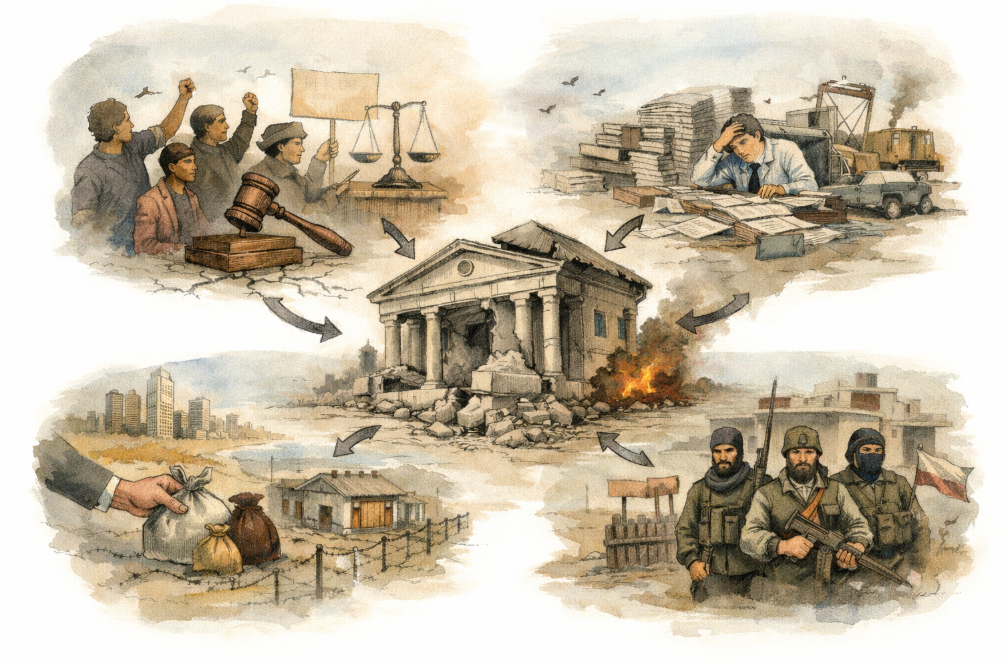
In periods of calm, management debates often revolve around performance, innovation, agility, and competitiveness. In periods of crisis, these debates change abruptly. When systems are shaken by uncertainty, complexity, and cascading failures, the central question becomes far more fundamental: can institutions still hold together?
It is in these moments that management models reveal their deepest assumptions. Some fragment under pressure. Others harden, centralize, and impose coherence. Among the latter, Management à la Française occupies a distinctive place. Frequently criticized in normal times, it repeatedly demonstrates an ability to preserve order and continuity when uncertainty becomes overwhelming.
Understanding why requires stepping back from managerial fashions and examining the historical, institutional, and philosophical foundations of this model.
1. A Management Culture Forged by State-Building and Crisis
1.1. Management as an instrument of political order
Management à la Française did not emerge from the logic of markets or shareholder value. It emerged from the necessity of governing a complex political community over long periods of instability. Wars, revolutions, territorial fragmentation, and social upheaval forced the French state to develop administrative and managerial capacities oriented toward survival rather than optimization.
In this tradition, management is inseparable from governance. It is not merely about organizing work efficiently, but about ensuring the continuity of authority, legality, and collective action. The organization, whether public or private, is treated as a political system that must be stabilized before it can be optimized.
This explains why French management places such importance on hierarchy, procedure, and institutional legitimacy. These are not accidental features. They are defensive mechanisms against disorder.
1.2. Continuity as a superior value
Where many contemporary management models prioritize adaptability and disruption, Management à la Française prioritizes continuity. Institutions are designed to outlast individuals, political cycles, and temporary shocks. Roles, procedures, and chains of authority are deliberately formalized to reduce dependence on charismatic leadership or informal arrangements.
In stable environments, this emphasis can appear excessive. In unstable ones, it becomes invaluable. Continuity allows systems to absorb shocks without disintegrating.
2. The Structural Logic of Management à la Française
2.1. Centralized strategy, decentralized execution
A defining characteristic of this model is the clear separation between strategic authority and operational implementation. Strategic decisions are centralized to ensure coherence and unity of direction. Execution is decentralized through administrative layers that apply decisions within a defined framework.
This structure limits the risk of contradictory actions across units. Local actors retain discretion, but only within boundaries that preserve alignment with collective objectives. In complex systems, this balance between authority and delegation prevents both paralysis and fragmentation.
2.2. Procedures as stabilizers rather than obstacles
Procedures are often portrayed as bureaucratic burdens. In the French model, they serve a different function. They create predictability, protect fairness, and insulate institutions from arbitrary decisions.
Procedures also function as memory. They encode past lessons and hard-earned compromises. In times of crisis, this procedural memory allows organizations to respond without reinventing governance from scratch.
3. Why the Model Appears Ill-Suited to Stable Environments
3.1. Slowness as a structural cost
In periods of stability, the procedural density of Management à la Française becomes more visible than its stabilizing benefits. Decision-making can be slow, approval chains long, and experimentation constrained. Compared to decentralized or market-driven models, responsiveness to incremental change is limited.
This slowness is not accidental. It reflects a deliberate trade-off between speed and control. In calm times, that trade-off appears inefficient. In turbulent times, it becomes protective.
3.2. Technocracy and distance from the field
Another frequent criticism concerns the central role of elites trained in highly selective institutions. This technocratic orientation reinforces analytical rigor and institutional loyalty, but it can also create distance from operational realities.
In non-crisis contexts, this distance may reduce engagement, creativity, and adaptability. It can foster a perception of management as detached and overly abstract.
4. Crisis as a Radical Test of Management Models
Crises act as stress tests that expose the hidden assumptions of management systems. Practices that perform well under stable conditions may fail abruptly when uncertainty, time pressure, and interdependence intensify. Management à la Française reveals its distinctive logic precisely at this moment.
4.1. When uncertainty overwhelms coordination mechanisms
In normal conditions, coordination can emerge through routines, market signals, or negotiated agreements. In crisis situations, these mechanisms often break down. Information becomes incomplete or contradictory, incentives misalign, and actors prioritize local survival over collective outcomes.
Under such conditions, decentralized coordination becomes fragile. Negotiation slows decision-making, and reliance on prediction proves ineffective. The French management model responds by reasserting centralized authority as a substitute for unavailable certainty. Clear direction replaces fragmented interpretation. Even imperfect decisions provide a reference point that allows action to proceed.
This shift does not eliminate uncertainty, but it contains it. By reducing ambiguity about priorities and responsibilities, centralized authority prevents paralysis and limits the multiplication of incompatible responses.
4.2. Why crisis favors authority over optimization
Crises redefine what it means to manage effectively. In stable environments, optimization and efficiency dominate. In unstable ones, these goals can become dangerous. Attempts to optimize individual units under crisis conditions often undermine system-wide coherence.
Management à la Française accepts that crisis management is not about maximizing performance, but about maintaining collective functionality. Authority is used to impose trade-offs that markets or decentralized actors cannot negotiate quickly enough. Efficiency is temporarily sacrificed to preserve alignment, continuity, and control.
This explains why the model often appears heavy-handed in calm times but effective under pressure. It is designed not to extract maximum value, but to prevent systemic collapse when normal coordination mechanisms fail.
5. Central Authority as a Source of Systemic Coherence
5.1. Preventing fragmentation
One of the greatest risks in crisis is fragmentation. Different units pursue divergent strategies, resources are hoarded, and collective capacity erodes.
Central authority limits this dynamic by imposing shared priorities. Even imperfect decisions can be preferable to uncoordinated ones. Coherence becomes more valuable than correctness.
5.2. Authority grounded in institutions, not personalities
Crucially, authority in the French model is institutional rather than personal. It resides in roles, laws, and structures rather than individuals. This reduces dependence on charismatic leadership and increases predictability.
In crises, this institutional authority sustains compliance even when decisions are unpopular.
6. The General Interest as a Managerial Compass
6.1. Managing unavoidable trade-offs
Crises force painful trade-offs. Resources must be allocated, freedoms restricted, and losses distributed. Market mechanisms alone struggle to manage such decisions.
Management à la Française is comfortable treating the general interest as a legitimate justification for coercive or redistributive measures. Authority is used to arbitrate conflicts rather than allowing them to escalate.
6.2. Social cohesion as an operational objective
Unlike models that treat social outcomes as externalities, the French approach integrates social cohesion into management logic. Redistribution, protection, and solidarity are considered necessary conditions for system stability.
This orientation reduces the risk of social breakdown during prolonged crises.
7. Expertise, Rationality, and Decision-Making Under Pressure
7.1. Expertise as a stabilizing resource
French management culture places strong trust in technical expertise and analytical reasoning. In crises, this trust acts as a stabilizer. Decisions are framed as rational responses rather than arbitrary commands.
Expertise does not eliminate disagreement, but it structures it. It provides a common language for debate and justification.
7.2. Institutional memory and learning
Stable administrative corps preserve institutional memory across crises. Lessons learned are embedded in procedures, doctrines, and organizational culture.
This continuity allows organizations to avoid repeating past mistakes and reduces dependence on improvisation.
8. Legalism as an Enabler of Exceptional Action
8.1. Exceptional powers within a legal framework
What appears as rigidity in normal times becomes flexibility in crisis. Emergency powers, exceptional procedures, and temporary suspensions of norms are legally defined in advance.
This allows rapid action without undermining legitimacy. Exceptional measures are perceived as temporary and justified rather than arbitrary.
8.2. Law as a source of trust
In crisis, compliance depends on trust. Legal framing reassures stakeholders that authority is exercised within limits. This sustains cooperation even when sacrifices are demanded.
9. Coherence Over Optimization in Complex Systems
9.1. Accepting inefficiency as a resilience strategy
Management à la Française accepts that not all parts of a system can be optimized simultaneously during crises. It tolerates inefficiency to preserve overall functionality.
This aligns with insights from complexity science, which emphasize robustness and redundancy over peak performance.
9.2. System survival as the primary metric
Success is measured not by efficiency metrics, but by the system’s ability to continue functioning. Survival precedes performance.
10. The Limits of Permanent Crisis Governance
10.1. The danger of over-centralization
When crisis logic persists too long, it becomes counterproductive. Over-centralization suppresses initiative, reduces innovation, and erodes legitimacy.
Management à la Française must therefore be contextual, intensified during crises and relaxed afterward.
10.2. The need for hybridization
The future lies not in choosing one model, but in combining them. French-style authority and coherence must coexist with decentralized experimentation and learning in non-crisis periods.
Conclusion: A Management Model for Turbulent Times
Management à la Française is often judged through the lens of efficiency and innovation. This misses its fundamental purpose. It was designed to preserve order, legitimacy, and continuity under stress.
In a world increasingly defined by uncertainty, complexity, and cascading crises, these qualities are no longer secondary. They are strategic assets.
Management à la Française does not offer a universal solution. It offers something more modest and more valuable: a reminder that when systems are fragile, the ability to hold them together matters more than the ability to optimize them.
In times of crisis, survival is the first success.
How to cite this work: Haraké, M. F. (2025). Management à la Française: Order, authority, and coherence in an age of uncertainty. Medium.
메타데이터
- post_id
- c39ccbed6cfe
- slug
- management-à-la-française-order-authority-and-coherence-in-an-age-of-uncertainty-c39ccbed6cfe
- url
- https://medium.com/@drmfharake/management-%C3%A0-la-fran%C3%A7aise-order-authority-and-coherence-in-an-age-of-uncertainty-c39ccbed6cfe
- canonical_url
- https://medium.com/@drmfharake/management-%C3%A0-la-fran%C3%A7aise-order-authority-and-coherence-in-an-age-of-uncertainty-c39ccbed6cfe
- author_url
- https://medium.com/@drmfharake
- status
- ok
- fetched_at
- 2026-08-15 14:23:34