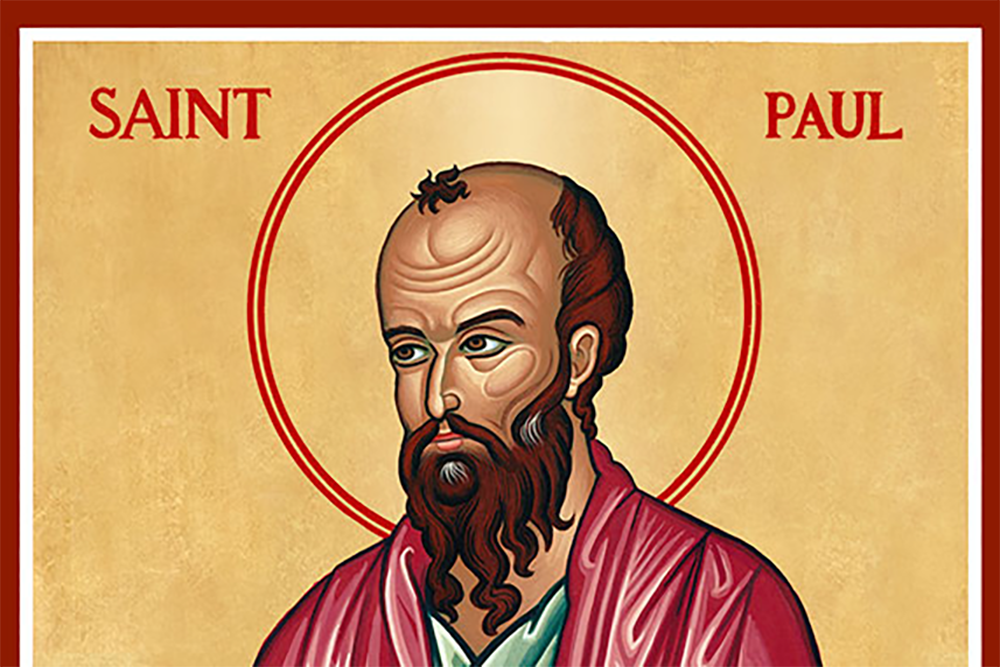
Did Paul Change Christianity?
Many people believe Paul transformed the simple message of Jesus into something entirely different. But is that really what happened?
Did Paul Change Christianity?
Many people believe Paul transformed the simple message of Jesus into something entirely different. But is that really what happened?

A Roman road. Paul’s ministry was not about creating a new faith but carrying an existing message into new places.
By far one of the most common claims in the comments sections of my articles is that Paul invented Christianity as we know it.
The idea appears so frequently that I have almost come to expect it.
Sometimes it is presented as a statement of fact. Sometimes it appears as a question from a curious reader. At other times, it arrives as a criticism of organised religion itself.
The argument is usually some variation of the same theme. Jesus preached love, compassion, forgiveness, and the Kingdom of God. Paul came later and transformed that simple message into a religion centred on doctrine, creeds, sin, salvation, and belief in Christ. According to this view, Christianity gradually shifted from being about Jesus to being about Paul.
It is an intriguing claim that deserves to be taken seriously.
After all, Paul wrote a substantial portion of the New Testament. He never travelled with Jesus during his earthly ministry and, in fact, rarely quotes Jesus directly. His letters are often theological and argumentative, whereas Jesus frequently taught through stories, parables, and memorable sayings.
For many readers, the contrast feels obvious enough to raise an uncomfortable question:
Did Paul faithfully continue the work of Jesus, or did he fundamentally change it?
The debate has been going on for well over a century, and the answer is more interesting than either side often admits.
Why So Many People Believe It
The idea that Paul changed Christianity did not originate on social media or in modern sceptical circles. It has a long academic history.
In the nineteenth century, several influential scholars argued that a significant gap existed between the teachings of Jesus and those of Paul. One scholar famously described Paul as “the second founder of Christianity.” Others suggested that Jesus was primarily a Jewish teacher announcing the coming Kingdom of God, while Paul transformed him into the centre of a new religion focused on his death and resurrection.
The argument gained traction because there are obvious differences between the way Jesus and Paul speak.
Jesus talks constantly about the Kingdom of God. Paul talks extensively about justification by faith. Jesus spends much of his ministry teaching crowds and engaging with ordinary people. Paul writes letters to churches wrestling with practical and theological disputes. Jesus tells stories. Paul constructs arguments.
When viewed from a distance, they can almost seem to be addressing completely different subjects.
The appeal of this theory has also been strengthened by wider cultural trends. Many people are attracted to Jesus as a moral teacher while feeling less comfortable with organised religion. They admire his compassion, his concern for outsiders, and his challenge to established power structures.
Paul, by contrast, is often associated with complex theological ideas and some of the New Testament passages that modern readers find most difficult. As a result, a simple narrative emerges: Jesus started a movement, and Paul created a religion.
The story's simplicity is part of its appeal.
The difficulty is that history is rarely that simple.
The Places Where Tension Appears
Those who raise concerns about Paul are not imagining differences that do not exist. There are genuine tensions that deserve honest examination.
One of the most frequently cited examples concerns the Jewish Law. Jesus famously declared that he had not come to abolish the Law, while Paul argued that people were not made right with God simply by observing religious rules and customs.
To many readers, those statements sound fundamentally incompatible. If Jesus was upholding the Law and Paul was setting it aside, surely they could not both be teaching the same thing.
It is precisely this sort of apparent contradiction that has convinced many people that Paul took Christianity in a different direction.
Another apparent tension concerns emphasis. Jesus consistently proclaims the Kingdom of God, while Paul devotes much of his attention to explaining the significance of Christ’s death and resurrection. Jesus focuses heavily on discipleship and following him. Paul spends considerable time discussing faith, grace, and the implications of salvation.
These differences are real, and there is little value in pretending otherwise.
The more important question is whether they represent contradiction or development. Most contemporary scholars increasingly favour the latter explanation.
Paul was not writing biographies of Jesus. Nor was he attempting to produce a collection of Jesus’s teachings. He was writing letters to churches facing specific challenges. Questions about circumcision, food laws, relationships between Jewish and Gentile believers, church conflict, sexual ethics, and worship practices required practical guidance. Paul was applying the message of Jesus to situations that arose after Jesus’s earthly ministry had ended.
That inevitably led him to emphasise different themes.
Different emphasis, however, is not necessarily evidence of a different religion.
The Overlap Is Greater Than Many Assume
When we move beyond surface impressions and examine the substance of their teaching, significant areas of agreement begin to emerge.
Both Jesus and Paul place extraordinary emphasis on faith and trust in God. Both stress the importance of forgiveness and reconciliation. Both insist that love sits at the centre of faithful living. Both challenge religious hypocrisy and condemn outward displays of piety that conceal inward corruption. Both proclaim a message that extends beyond traditional boundaries and welcomes those who might previously have been excluded.
Even the debate surrounding the Law becomes more nuanced when examined carefully.
Paul was not arguing that morality no longer mattered. His letters are full of instructions about honesty, generosity, self-control, faithfulness, and love. The question he was wrestling with was much more specific. As increasing numbers of non-Jews joined the church, many believers wondered whether they first needed to adopt Jewish customs and practices before they could follow Jesus.
Did they need to be circumcised? Did they need to follow Jewish food laws? Did they need to keep all the religious rules that had shaped Jewish life for centuries?
Paul’s answer was no. People were welcomed into God’s family through faith in Christ, not by adopting every aspect of Jewish religious life.
That position was undoubtedly controversial, but it was not disconnected from Jesus' ministry. Throughout the Gospels, Jesus repeatedly crosses social, ethnic, and religious boundaries. He speaks with Samaritans, welcomes tax collectors, touches those considered unclean, and extends grace to people whom respectable society would rather avoid.
The context changes dramatically when Paul carries the message across the Roman Empire, but the underlying trajectory remains remarkably similar.
The inclusion of outsiders is not a Pauline invention. It is woven throughout the ministry of Jesus himself.
The Evidence That Changed My Perspective
For me, the most persuasive evidence against the idea that Paul invented Christianity comes from Paul’s own letters.
Many people assume that Paul was creating new doctrines from scratch. Yet whenever Paul discusses the core claims of the Christian faith, he repeatedly presents himself as someone passing on traditions that he has already received.
One of the clearest examples appears in 1 Corinthians 15. In his letter to the church in Corinth, Paul reminds his readers of the message he originally preached to them. He explicitly states that he is passing on what he himself received concerning Christ’s death, burial, resurrection, and appearances to witnesses.
That language is important because it reflects the formal transmission of established traditions. Paul is not claiming authorship. He is claiming stewardship.
What makes this especially significant is that many scholars believe the creed contained in this passage predates Paul’s letter by several years. Some scholars suggest it originated astonishingly close to the events it describes. Rather than inventing Christian belief, Paul appears to be preserving and transmitting material that was already circulating within the earliest Christian communities.
The same pattern appears in his discussion of the Lord’s Supper. In 1 Corinthians 11, Paul again speaks of receiving a tradition and passing it on. His account is actually our earliest written reference to the practice, predating the Gospel accounts by decades. Yet even here, he presents himself not as an innovator but as a link in a chain of transmission reaching back to Jesus himself.
This is not the language of someone creating a new religion.
It is the language of someone preserving an existing one.
The Question Critics Often Overlook
There is another difficulty with the theory that Paul fundamentally changed Christianity.
If he had done so, why did the original apostles allow it?
This question is often overlooked. Peter, James, and John were not distant figures reading Paul’s letters centuries later. They were leaders of the earliest Christian movement and, in Peter and John’s case, companions of Jesus himself. If Paul had been inventing an entirely new religion, they were in the best possible position to recognise it.
The New Testament makes clear that Paul was not universally trusted at first. His dramatic conversion from persecutor to preacher naturally raised suspicions. Even after gaining acceptance, disagreements persisted. The early church was far from a perfectly harmonious community.
Yet despite these tensions, Paul eventually received recognition from key leaders within the Jerusalem church. Peter, James, and John acknowledged his ministry and extended fellowship to him. The Jerusalem Council addressed the growing dispute over Gentile converts and ultimately affirmed the principle that Gentiles need not fully adopt Jewish customs and practices to belong to the Christian community.
This does not mean every disagreement disappeared. It does mean that the people closest to Jesus did not regard Paul as a rogue teacher inventing a rival faith.
If Paul had truly been preaching a fundamentally different message, it is difficult to explain why the leaders of the earliest church eventually recognised his ministry as legitimate.
Why the Debate Still Matters
The claim that Paul changed Christianity remains popular because it resonates with modern instincts.
Many people admire Jesus while remaining suspicious of institutions, doctrines, and organised religion. It is easy to understand why. In popular culture, Jesus often appears approachable and uncomplicated, while Paul can seem dense, argumentative, and difficult. Many readers naturally warm to one and become suspicious of the other.
In that context, it can be tempting to separate Jesus from everything that followed and to place responsibility for Christianity’s more difficult features on Paul’s shoulders.
The narrative is appealing because it offers a clear hero and a clear villain. Jesus becomes the compassionate teacher everyone can admire. Paul becomes the architect of everything people dislike.
The trouble is that the historical evidence refuses to cooperate in this way.
Over the past several decades, scholarly opinion has moved increasingly away from the idea of a vast gulf between Jesus and Paul. Important differences remain, and debates continue about how best to understand them. Yet the older picture of two fundamentally opposed messages has largely fallen out of favour.
The relationship appears far more complex and interconnected than earlier generations often assumed.
So, Did Paul Change Christianity?
The answer depends on what we mean by the word “change.”
Did Paul influence Christianity? Undoubtedly. Every major Christian thinker has influenced the faith in some way.
Did he help believers understand the significance of Jesus’s life, death, and resurrection? Certainly.
Did he apply the teachings of Jesus to new cultures, new communities, and new challenges? Without question.
Yet none of that is the same thing as inventing Christianity.
The evidence suggests that Paul saw himself not as a replacement for Jesus but as an interpreter of Jesus. He inherited traditions, preserved teachings, and wrestled with what the message of Christ meant in a rapidly expanding movement that stretched far beyond its original Jewish context.
That does not make every passage in Paul easy to understand or any less challenging, nor does it resolve every tension between his letters and the Gospels. Christians have debated those questions for centuries and will no doubt continue to do so.
What it does suggest is that the popular claim that Paul invented Christianity is far weaker than many people realise.
The more historians and scholars have examined the evidence, the harder it has become to sustain the idea that Jesus and Paul stood on opposite sides of a theological divide.
Perhaps the real question is not whether Paul changed Christianity.
Perhaps the better question is whether he spent his life trying to explain the full implications of what Jesus had already begun.
Questions like this are one of the reasons I started Sacred & Secular. I have always been fascinated by the places where faith, history, doubt, and curiosity meet. If that interests you too, I would love to invite you to join my Substack community, where I publish reflections like this throughout the week.
You can subscribe below to receive new articles directly in your inbox.
메타데이터
- post_id
- c3cc68bc2f09
- slug
- did-paul-change-christianity-c3cc68bc2f09
- url
- https://medium.com/sacred-secular/did-paul-change-christianity-c3cc68bc2f09
- canonical_url
- https://medium.com/sacred-secular/did-paul-change-christianity-c3cc68bc2f09
- author_url
- https://medium.com/@paulianclarke
- status
- ok
- fetched_at
- 2026-06-20 20:29:01