I Got Sweded
Sweded. A word I now hold with a certain tenderness, like a secret code only those who have experienced it fully understand.
I Got Sweded
Sweded. A word I now hold with a certain tenderness, like a secret code only those who have experienced it fully understand.
When we watched Be Kind Rewind during the BIP exchange program in Sweden, it didn’t just feel like a film screening; it felt like stumbling upon the missing piece of a puzzle I didn’t know I was putting together. The movie’s delightfully absurd premise, ordinary people remaking blockbuster films with cardboard props, neighbourhood backdrops, and unfiltered imagination, suddenly became a mirror of our own days. We, too, were armed with scraps of cardboard, scissors, paper, and wild ideas. Creativity was spilling from every corner. It wasn’t about perfection; it was about the joy of making something together, however clumsy, however messy.
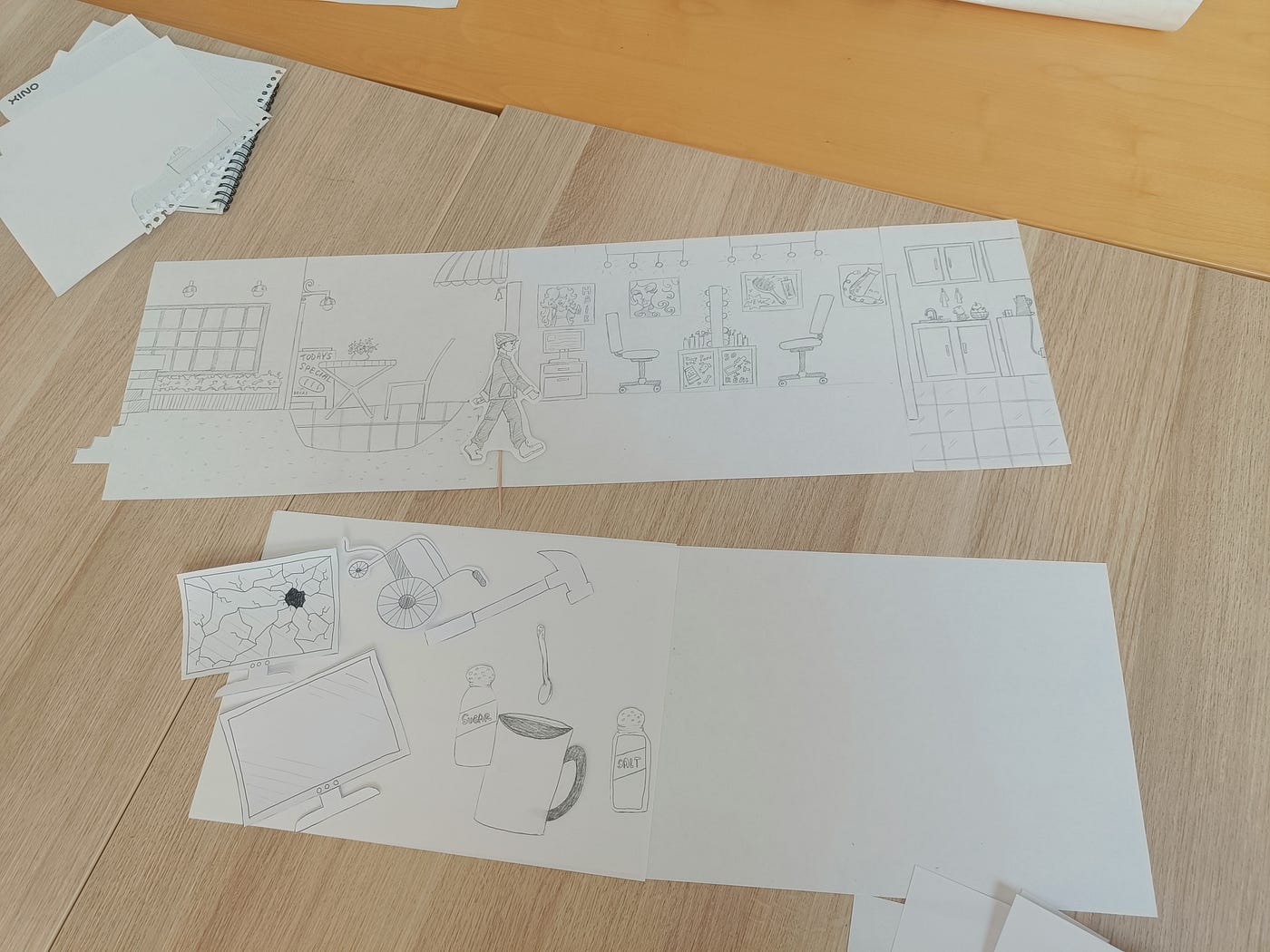
The term “Sweded,” coined by the film, means to re-create something with limited means, exaggeratedly and playfully. But sitting in that Swedish classroom, the word seemed to expand. I realised I was being “Sweded” myself, my routines, my assumptions, my ideas of how stories could or should be told. Everything I thought was fixed was being remade, stripped down and reassembled in ways I hadn’t considered before.
For me, to be Sweded was also to dip fully into the experience of Sweden. The exchange program wasn’t only about lectures, prototyping, and networking. It was about feeling creativity seep into the cracks of daily life, and noticing how culture, cinema, and coffee could shape learning just as much as formal sessions.
One of the most unforgettable moments was watching Nosferatu: A Symphony of Horror. Not in a lecture hall or a cinema, but at the PlayLab, a high-tech performance space where researchers, artists, and game designers experiment together. We sat together in front of a large projector, and instead of silence (as the film was originally intended), live musicians filled the room with a haunting, improvised soundtrack. The familiar black-and-white shadows of Nosferatu suddenly felt alive, breathing through sound. That experience alone made the silent film ten times more fascinating.

Nosferatu concert at PlayLab
Afterwards, we toured the PlayLab. Lars Kristensen spoke passionately about its vision, a creative hub where incompleteness is celebrated. Unlike most places that only showcase finished products, PlayLab welcomes projects in their raw, unfinished form. They believe in feedback loops, in nurturing an idea while it’s still new, in giving people the chance to refine rather than present perfection. For us, digital narratives students, this was especially helpful. We are strong believers in prototyping, and here we found a perfectly aligned space.

360 degree projection at PlayLab
But exchange programs, as I came to realise, aren’t just defined by screenings, workshops, or tours. They exist in all the spaces between, in the hostel corridors, in the kitchens, in the laughter that carried us late into the night. One evening, this spirit took the form of a student party. We played beer pong, talked passionately about games and stories, and sang along to whatever music was playing in the background. It was silly, it was chaotic, and yet it was deeply bonding. Creativity doesn’t always need to look like a workshop; sometimes it looks like a messy table full of cups and friends yelling out-of-tune lyrics.

Student group party
And, of course, there was fika. That untranslatable Swedish ritual of pausing for coffee and pastries, but also for connection. Fika was where we unwound, where we processed the day’s ideas, and where, in between bites of cinnamon buns, someone would casually say something that stuck with me far longer than a formal lecture. Just like sweding a film, fika is about using what you have, slowing down, and finding joy in the small rituals that sustain creativity.
Looking back now, “I got Sweded” feels like the most accurate way to describe the experience. Not because I remade any blockbuster with cardboard props (though I could be persuaded), but because I was re-made. My ways of seeing, thinking, and creating were taken apart and put back together, with a dose of humour and a lot of imagination.

Quickly finishing cookies ar Fika
Exchange programs teach you things inside the classroom, yes. But the real learning, the kind that lingers, often happens outside: in the gaps between hostel rooms and cinema screens, in laughter that echoes down the hallways, in cups of coffee shared across cultures, and in moments where you let yourself be unfinished.
And so, I carry this word with me now: Sweded. A reminder that creativity doesn’t need polish, only courage. A reminder that being unfinished is not failure, but possibility. And most of all, a reminder that sometimes the best stories aren’t the ones we perfect, but the ones we re-make together.

A small visit to the museum
메타데이터
- post_id
- c3d69eac6019
- slug
- i-got-sweded-c3d69eac6019
- url
- https://medium.com/digital-narratives/i-got-sweded-c3d69eac6019
- canonical_url
- https://medium.com/digital-narratives/i-got-sweded-c3d69eac6019
- author_url
- https://medium.com/@k.bisen
- status
- ok
- fetched_at
- 2026-07-17 19:33:32